Last Updated: November 8, 2026
Quick Summary
Sealing commercial pavers extends their lifespan by putting a protective layer over the surface that slows moisture soaking into the joints, stains setting in and color fading in the sun. A well-sealed surface may go 2 to 3 years before needing a full reseal, though you should check it yearly.
- Sealing does not stop wear, but it creates a barrier that keeps water, dirt and oil out.
- A well-sealed paver surface may go 2 to 3 years before a full reseal.
- Clean the surface and remove debris before applying any sealer.
- Choose penetrating, film-forming or breathable sealer based on traffic and climate.
- Refill joint sand before sealing to block weeds and keep pavers locked in place.
Table of Contents
- Why Sealing Commercial Pavers Extends Their Lifespan
- What You Need Before You Start Sealing Commercial Pavers
- Step 1: Clean and Remove Debris From the Paved Surface
- Step 2: Choose the Right Paver Sealer for Your Material and Site
- Step 3: Refill Joint Sand and Seal to Prevent Weeds
- Step 4: Apply the Sealer and Protect Curing Time
- How Long Paver Sealing Lasts and When to Reseal
- Weighing the Pros and Cons of Sealing Your Pavers
- Frequently Asked Questions
Why Sealing Commercial Pavers Extends Their Lifespan
Commercial paver walkways, parking areas and plazas take heavy foot and vehicle traffic every day. Commercial surfaces across South Florida tend to face the same problems again and again: moisture soaking into the joints, stains setting into the surface and color fading in the sun. A good sealing job puts a protective layer over the pavers that helps slow all three.
Sealing does not stop wear. It gives the surface a barrier so water, dirt and oil have a harder time getting in. Over time, that barrier is what helps a commercial paver surface stay usable for longer.
A well-sealed paver surface may go 2 to 3 years before it needs a full reseal (How Long Does Paver Sealing Really Last?). A 2026 article from Best Version Media notes that the exact interval depends on traffic and other factors, so a fixed annual schedule is not always necessary (Best Version Media, “Why You Don’t Need to Seal Your Pavers Every Year”). Check the surface each year rather than resealing on the calendar alone.
What You Need Before You Start Sealing Commercial Pavers
Good results start with the right supplies and a clear plan. Gather these before the crew arrives:
- A pressure washer and surface cleaner attachment
- Stiff brooms and a flat-tip scrubbing brush
- Joint sand that matches the existing material
- A commercial-grade paver sealer suited to your paver type
- Roller, sprayer or applicator wand
- Drop cloths, cones and signage to keep people off the work area
- Protective gear: gloves, eye protection and closed-toe shoes
Plan the work around the site’s operations. Schedule the job during low-traffic hours, tell tenants and staff ahead of time, and confirm the weather forecast. Sealer needs dry conditions and stable temperatures to cure properly.
Step 1: Clean and Remove Debris From the Paved Surface
Start with a clean surface. Sealer applied over dirt, oil or old residue will trap those contaminants underneath and can cause cloudy or uneven patches.
- Sweep the entire area to remove leaves, grit and loose debris.
- Scrape out any weeds, gum or stuck-on material by hand.
- Treat oil and grease stains with a degreaser, then let them sit as directed.
- Pressure wash the surface, using a wide fan tip to avoid etching the pavers.
- Rinse away all cleaning solution and let the surface dry fully.
Watch out: Using too much pressure can wash out joint sand and damage the paver edges. Keep the nozzle at a steady distance and move in smooth passes.
Step 2: Choose the Right Paver Sealer for Your Material and Site
Not every sealer fits every paver, and on a commercial site the wrong choice can cost more than the sealer itself. Concrete, clay brick and natural stone each absorb sealer differently, and the finish you want matters too. Matte, semi-gloss and wet-look finishes all change how the surface looks and how slippery it can feel when wet.
Start with the paver material. Concrete pavers are dense and typically take a penetrating sealer well; clay brick is more porous and may need a breathable formula to avoid trapping moisture; natural stone varies widely and often requires a product specifically labeled for that stone type.
Then match the sealer to the site’s traffic and exposure. A heavily trafficked loading area needs a tougher sealer than a plaza that sees light foot traffic. In humid conditions, choose a sealer that lets trapped moisture escape, sometimes called a breathable sealer. For more on products that handle local humidity, read our guide on Best Paver Sealer for South Florida Humidity 2026.
Use this decision framework to narrow the field:
- Penetrating sealers soak into the paver and leave little or no film. They are a good fit for high-traffic commercial surfaces where a film could wear unevenly, and they generally preserve the paver’s natural look.
- Film-forming sealers sit on top and can enhance color and add a sheen. They work well on lower-traffic plazas and decorative areas, but they can peel or whiten if moisture gets trapped underneath.
- Breathable sealers allow vapor to escape and are the safer choice in humid climates and on pavers that stay damp, such as shaded walkways or pool deck cleaning areas.
Watch out: A sealer that is too slick when wet can create a slip hazard on commercial walkways, so check the product’s slip-resistance data and consider a textured additive where foot traffic is heavy.
Finally, think about how the sealer fits the rest of your exterior maintenance plan. A sealed surface makes driveway cleaning and pool deck cleaning easier, and it pairs well with routine house wash and exterior home cleaning schedules. If your property also has a roof that needs attention, soft wash roof cleanings can be scheduled alongside paver sealing to minimize disruption.
The right sealer depends on the paver material, the traffic it sees and the climate, and the article lays out three main types.
| Sealer type | Best for | Key difference |
|---|---|---|
| Penetrating | High-traffic commercial surfaces | Soaks in and leaves little or no film |
| Film-forming | Lower-traffic plazas and decorative areas | Sits on top, enhances color and adds sheen |
| Breathable | Humid climates and damp, shaded pavers | Lets trapped vapor escape |
Step 3: Refill Joint Sand and Seal to Prevent Weeds
Joint sand locks the pavers in place and blocks weed growth. Pressure washing can wash it out, so refill the joints before sealing.
- Spread joint sand over the surface.
- Sweep it into every joint until the joints are full.
- Lightly mist the surface to help the sand settle.
- Remove the extra sand from the surface so it does not dry into a haze.
Filling joints with the right sand is one of the simplest ways to slow weed growth. A sealed surface with full joints is much harder for weeds and insects to get into.
Step 4: Apply the Sealer and Protect Curing Time
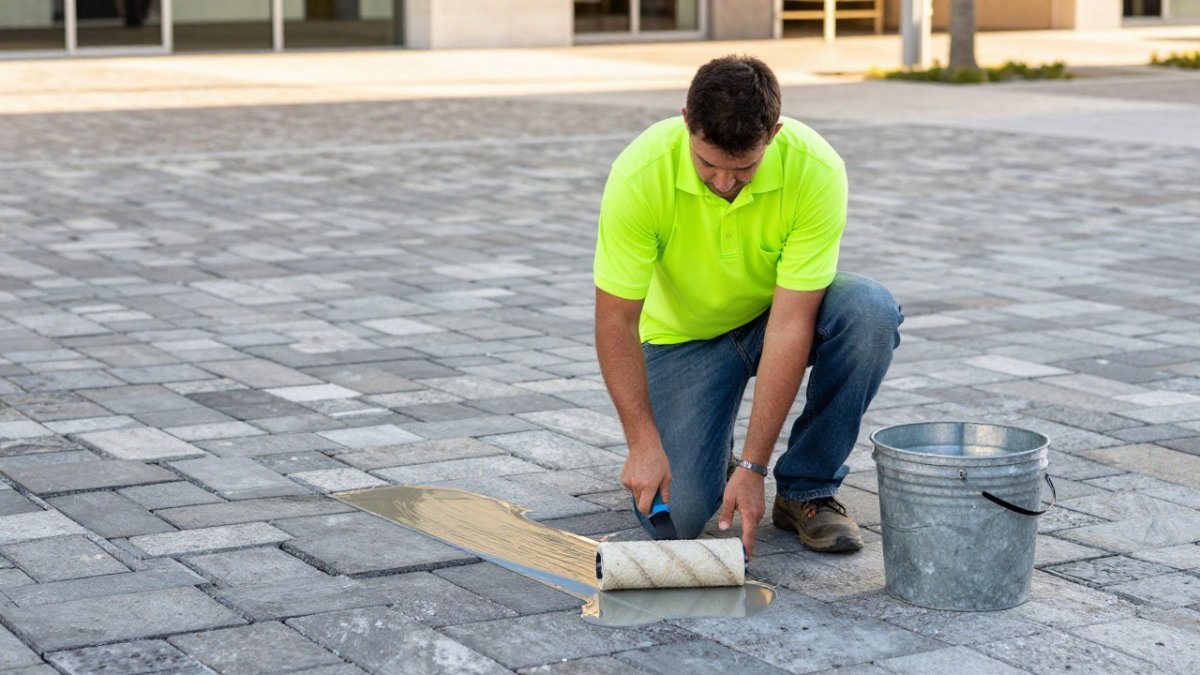
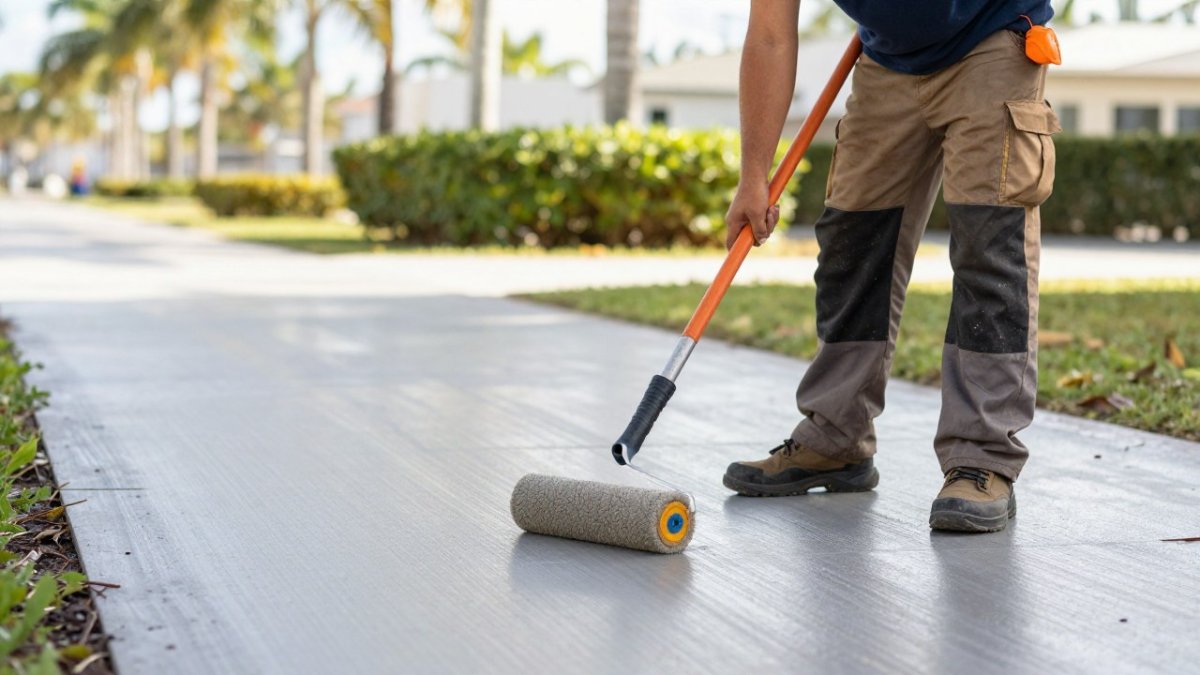
This step makes or breaks the job. On a commercial site, treat application as a repeatable process with checkpoints, not a one-time task. Apply the sealer in thin, even coats, and follow the manufacturer’s directions for drying and curing time.
- Make sure the surface is completely dry before applying. Moisture trapped under sealer is the most common cause of whitening and peeling.
- Work in small sections so you can keep a wet edge and avoid lap marks.
- Apply the first thin coat with a roller or sprayer, then back-roll to even it out.
- Let the first coat dry fully before adding a second coat, if the product calls for one.
- Keep foot and vehicle traffic off the surface until the sealer has cured.
Before the full application, run a test patch in an inconspicuous area. A test patch shows how the sealer reacts to the specific paver and reveals any sheen or color shift you may not want across the whole site. It also gives the crew a chance to confirm dry time and coverage rates under current weather conditions.
Quality control matters as much as the application itself. Check for puddles, drips and uneven sheen as you go, and correct them while the sealer is still wet. Keep a written record of product, batch, application rate and weather conditions so you can diagnose any issue later and plan the next reseal interval.
Plan the work around the site’s operations. Schedule the job during low-traffic hours, tell tenants and staff ahead of time, and confirm the weather forecast. Sealer needs dry conditions and stable temperatures to cure properly.
Watch out: Applying sealer in direct sun or on a hot surface can cause it to dry too fast and leave lap marks or bubbles, so work in cooler periods and shade where possible.
Protect the surface from fading while the sealer cures and ages. UV exposure and weathering are the main reasons pavers lose color over time, and a quality sealer with UV protection helps hold the look longer. Once cured, keep up with routine cleaning and pair sealing with other exterior maintenance to extend the surface’s life.
How Long Paver Sealing Lasts and When to Reseal
How long paver sealing lasts depends on traffic, weather, the sealer type and how well the surface was prepared. Heavy vehicle traffic and direct sun wear sealer down faster than a quiet courtyard does.
Check your pavers every year. Signs it may be time to reseal include:
- Water no longer beads up on the surface
- Stains soak in quickly
- Color looks dull or faded
- Joint sand is washing out
- Weeds are starting to grow between the pavers
For brick pavers in particular, the timing question comes up often. Our guide on How Often Should You Reseal Brick Pavers? covers the typical intervals. For commercial walkways specifically, see How Do You Maintain Commercial Paver Walkways in Florida? for upkeep between sealing jobs.
Weighing the Pros and Cons of Sealing Your Pavers
Sealing has clear benefits. It can improve stain resistance, help preserve color, slow moisture problems and make cleaning easier. For commercial property managers, it also supports a professional look that tenants and visitors notice.
There are trade-offs, too:
- Cost: Sealing is an ongoing expense, not a one-time purchase.
- Downtime: Areas must be closed while the sealer dries and cures.
- Finish changes: Some sealers add a sheen or make the surface slicker when wet.
- Mistakes are costly: Poor prep or the wrong product can trap moisture and cause failure.
For most commercial properties, the benefits outweigh the costs when the job is done correctly and on schedule. If you want help deciding whether sealing makes sense for your site, contact Freedom Wash Club for a quote. Our crews are licensed and insured, and you can schedule by phone or text. Schedule a visit to get started on protecting your commercial pavers.
Frequently Asked Questions
Is there a downside to sealing pavers?
Yes. Sealers can make some surfaces slippery when wet, especially film-forming sealers applied too thickly, and they can trap moisture if the wrong product is used on a paver that needs to breathe. Some finishes also darken or change the look of the paving. Choosing a sealer matched to the paver material and site conditions, applying it at the manufacturer’s coverage rate, and avoiding over-application reduces these risks. Test a small area first, and ask the applicator about slip resistance before committing to a full property.
How long does sealing your pavers last?
A properly sealed paver surface commonly goes two to three years before a full reseal, though traffic, weather exposure and cleaning practices all shift that timeline. High-traffic commercial walkways and drive lanes often need attention sooner than low-traffic patios. Inspect the surface at least once a year, looking for faded color, dull patches, dirt that no longer rinses off, or water that soaks in instead of beading. Those signs indicate the sealer is wearing and a resealing schedule should be planned.
What do professionals use to seal pavers?
Professionals typically choose between film-forming acrylic or polyurethane sealers, which add a glossy or wet-look finish and strong stain resistance, and penetrating or breathable sealers, which soak into the concrete matrix and keep moisture able to escape. The right choice depends on the paver material, the desired finish, and whether the site has heavy traffic, salt exposure or standing water. Ask any contractor which product they plan to use, why it fits your pavers, and what coverage rate they will apply.
How can you seal pavers to help prevent weeds?
Weeds grow in the joints between pavers, so sealing works best as part of a sequence. Clean out debris and weed growth first, then refill joints with polymeric or fine joint sand, compact it, and seal the surface so the sand stays locked in place. Stable joints discourage new seed from taking hold. Inspect joints periodically and remove any sprouting weeds early, before roots establish, to keep the surface looking maintained between resealing cycles.