Quick Summary
The best practices for house wash services are matching the method to each surface, using soft washing on siding, stucco, and painted areas, and working in a top-down sequence. A proper house wash also requires biodegradable cleaning solution, adequate dwell time, and protection of plants and fixtures. Hire a licensed, insured provider who confirms the scope and method before work begins.
- Soft washing is the safer choice for most residential siding, stucco, and painted surfaces.
- Apply cleaning solution from the bottom up, then rinse from the top down.
- Allow solution to dwell, but never let it dry on the surface.
- Protect light fixtures, outlets, and window seals before the job starts.
- Confirm the provider is licensed and insured, and ask about its solutions.
Table of Contents
- Why House Washing Matters in South Florida’s Climate
- Soft Wash House Cleaning vs. Pressure Washing
- How to Properly Perform a House Wash
- How to Prepare Your Home for Professional Power Washing
- House Washing Checklist for Homeowners and HOAs
- Equipment Care, Post-Wash Protection, and Troubleshooting Common Mistakes
- Booking Your House Wash With Freedom Wash Club
- Frequently Asked Questions
Best Practices for House Wash Services in South Florida
Last Updated: November 11, 2026
Why House Washing Matters in South Florida’s Climate
Humidity, heat, and a steady rain of airborne spores make South Florida one of the toughest environments in the country for exterior surfaces. Algae streaks on stucco, mildew creeping along soffits, and dark staining on siding are common across South Florida homes, and some of these stains never fully lift with a garden hose. Knowing best practices for house wash services is the first step toward protecting the investment you have in your home.
Regular house washing removes organic growth before it bonds to the surface. Left alone, that growth holds moisture against paint and siding, which accelerates wear and makes future cleanings harder. A consistent maintenance schedule keeps curb appeal intact and helps protect your property’s value, a point that matters to homeowners, snowbirds, and HOA boards alike.
Soft Wash House Cleaning vs. Pressure Washing
Soft washing uses low pressure and a biodegradable cleaning solution to kill algae, mold, and mildew at the root, while pressure washing relies on force to blast surface dirt away. Compare when each method suits a surface before you choose. For most residential siding, stucco, and painted surfaces, soft washing is the safer choice.
High pressure still has a place on hard, unpainted surfaces like concrete driveways and pool decks. See which method fits each surface if you are also weighing roof cleaning services. The mistake is applying the same method everywhere. Pressure that works on a driveway can etch painted trim or force water behind siding, so matching the method to the surface is one of the core best practices for house wash services.
How to Properly Perform a House Wash
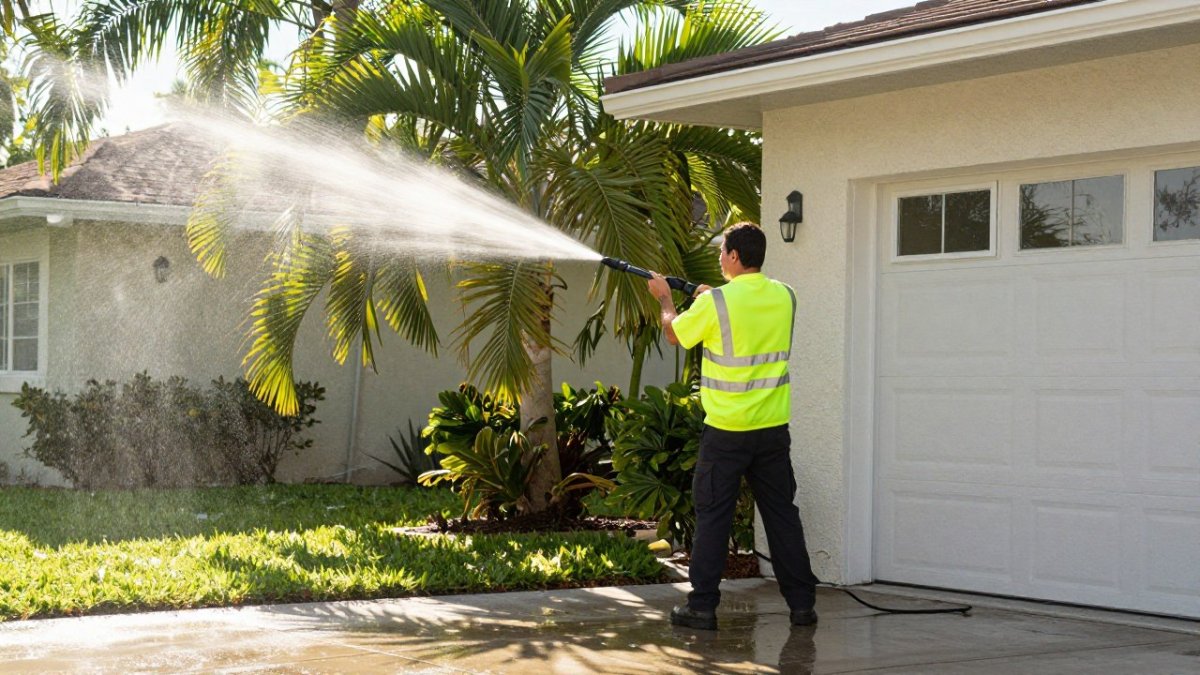
A proper house wash follows a top-to-bottom sequence. Start by wetting plants and surrounding areas, then apply cleaning solution from the bottom of the structure upward. Working from the bottom prevents streaking, because solution running down a dry section leaves visible lines. Rinse from the top down so the solution and debris drain away from the house instead of settling into seams.
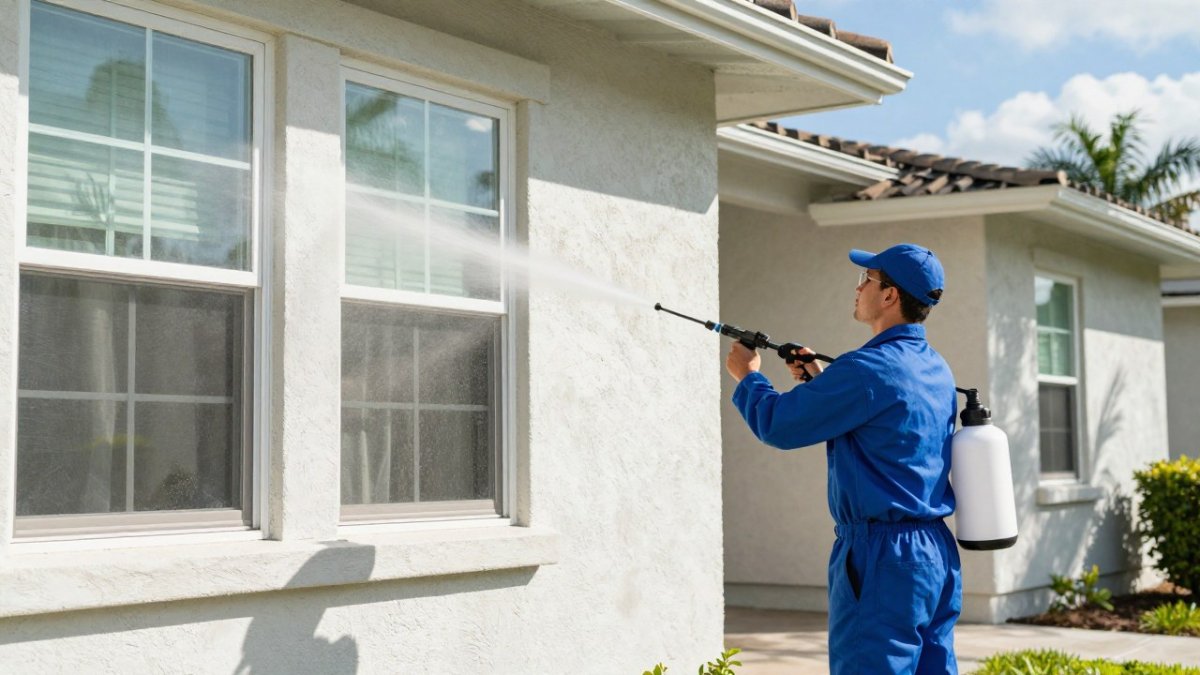
Safety comes first throughout the job.
Choosing the Right Cleaning Solution and Dwell Time
Solution selection depends on the growth you are treating and the surface beneath it. Biodegradable, surfactant-based cleaners are standard for organic growth, and many operators pair them with citrus extracts or diluted vinegar for stubborn staining. Dwell time, the period the solution sits before rinsing, lets the product break down algae and mildew. Allow the solution to work, but never let it dry on the surface, since drying can leave residue and staining.
Protecting Plants, Fixtures, and Surfaces
Light fixtures, outlets, and window seals need care as well. Keep spray away from electrical components, and check that seals and caulking are intact before the job begins.
How to Prepare Your Home for Professional Power Washing
Preparation makes the job faster and safer. Close all windows and doors, and remove outdoor furniture, decor, and vehicles from the work area. Move potted plants, and cover delicate landscaping if the crew recommends it. Clear hoses, cords, and toys from the path where technicians will walk.
House Washing Checklist for Homeowners and HOAs
Use this checklist before booking, whether you manage a single home or coordinate an entire community:
- Confirm the provider is licensed and insured for exterior work
- Ask which cleaning solutions are used and whether they are biodegradable
- Verify the method (soft wash or pressure) matches each surface
- Walk the property and note cracks, loose trim, and delicate landscaping
- Confirm the scope: walls, roof, driveway, pool deck, or patio
- Ask how runoff and plant protection are handled
- Schedule a date that fits your HOA’s cleanliness deadline
- Review the satisfaction guarantee and what it covers
HOA boards in particular benefit from a documented schedule, since it shows the community is maintaining exterior standards consistently. Review residential pressure washing pricing to plan your budget before scheduling.
Equipment Care, Post-Wash Protection, and Troubleshooting Common Mistakes
Equipment condition is one of the most overlooked variables in exterior cleaning.
Nozzle Tips and Pressure Consistency
Nozzle tips wear unevenly. As the orifice enlarges, the spray fan widens and pressure at the surface drops, which can leave streaks and uneven cleaning. A tip that has worn in one spot can also create a directional jet that etches siding or chips paint in a line. Inspect tips before each job by checking the spray pattern on a test surface, and replace any tip whose pattern looks uneven or whose output has drifted.
Pressure should be verified rather than assumed. A gauge at the pump outlet and a check at the wand show whether the system is delivering what the unit is rated for, and a drop between the two often points to a clogged inlet filter, a worn unloader, or a kinked hose.
Hoses, Seals, and Routine Maintenance
Pumps, hoses, and injector systems fail in predictable ways. Check hoses for bulges, abrasion, and cracked couplings before use, because a hose failure under pressure is both a safety hazard and a source of spray that can damage fixtures. Watch out: running a pump dry, even briefly, can damage the seals, so confirm water supply before starting.
Post-Wash Protection for Siding, Stucco, and Concrete
Cleaning removes growth, but it does not stop it from returning. Protective sealers are not universal, and the right product depends on the surface. Ask any provider which protective product is used, whether it suits your surface, and whether it is compatible with any existing sealer.
Troubleshooting Streaks, Staining, and Damage
Streaking usually has one of two causes: the solution dried before it was rinsed, or the rinse order was reversed so runoff from a dry section ran over cleaned areas. If streaks appear, rinse the affected section from the top down with clean water before any further cleaning, and avoid scrubbing, which can burnish the surface.
Staining that remains after a wash often means one of three things. Dwell time may have been too short for the growth to break down, the product may be mismatched to the organism, or the stain may be mineral or rust rather than organic growth, which cleaning solutions do not remove. Rust streaks from fasteners or gutters require a different treatment than algae, so identify the stain before re-treating.
If you see paint lifting, a soft or raised board, or a wet line behind siding after a wash, ask the provider to stop work on that area and review it before the job continues.
Protective sealers and the right cleaning method both depend on the surface being treated, as the steps below show.
| Surface | Method or product | Key point |
|---|---|---|
| Siding, stucco, painted surfaces | Soft washing | Low pressure, biodegradable solution |
| Concrete driveways, pool decks | Higher-pressure cleaning | Suited to hard, unpainted surfaces |
| Painted trim | Soft washing | Pressure can etch or chip paint |
| Post-wash protection | Protective sealer | Not universal; depends on surface |
| Streaking | Rinse top-down with clean water | Avoid scrubbing, which burnishes surface |
Booking Your House Wash With Freedom Wash Club
Freedom Wash Club is a locally owned and operated South Florida company with over 10 years of experience. We are licensed and insured, and our team handles residential and commercial exterior cleaning, from roofs and driveways to walls, windows, and patios. Scheduling is simple by phone or text, and there is no need for an in-person estimate before we begin.
Freedom Wash Club stands behind its work with a 100% satisfaction guarantee. Schedule your house wash today and see how a professional, licensed team restores your home’s curb appeal. Ready to get started? RECEIVE YOUR FREE QUOTE.
BUTTON: Schedule Your House Wash
CARD_TITLE: Ready for a cleaner exterior?
CARD_TEXT: Freedom Wash Club is licensed, insured, and locally owned, serving South Florida homes and businesses.
Frequently Asked Questions
What is the proper way to power wash a house?
A safe house wash starts with a low-pressure pre-rinse, then applies a cleaning solution from the bottom up so streaks do not form. Let the solution dwell for the recommended time, scrub stubborn areas gently, and rinse from the top down. Keep the wand moving and maintain a consistent distance from the surface. Overly high pressure can damage siding, stucco, and painted finishes, so use the lowest effective setting. Pair the wash with proper plant protection and surface prep for the best results.
What is the difference between soft washing and pressure washing?
Pressure washing uses high water pressure to blast away dirt, which suits hard surfaces like concrete driveways and pool decks. Soft washing uses low pressure combined with a cleaning solution to kill mold, mildew, and algae at the root. Soft washing is generally the safer choice for roofs, painted siding, and stucco, where high pressure can strip coatings or force water behind materials. Most professional exterior cleaning jobs combine both methods depending on the surface.
How should I prepare my home for a professional house wash?
Close all windows and doors, and cover exterior outlets and light fixtures. Move vehicles, outdoor furniture, and decor away from the work area. Wet plants and shrubs with plain water before the wash, and cover delicate ones if needed. Remove loose items from gutters and patios. Tell your provider about any cracked caulking, loose siding, or known weak spots so they can adjust their approach before work begins.
Can house washing remove mold, mildew, and algae?
Yes, a properly performed soft wash can remove mold, mildew, and algae from siding, walls, and many roof surfaces. The cleaning solution needs adequate dwell time to kill growth at the root rather than just removing the visible surface layer. Growth often returns in humid South Florida conditions, so periodic maintenance keeps surfaces cleaner between washes. Ask your provider which solution they use and how they protect nearby landscaping.
How often should a house be professionally washed in South Florida?
Most South Florida homes benefit from a professional house wash once or twice a year, since humidity, rain, and sun encourage mold, mildew, and algae growth year-round. Homes near trees, shaded areas, or coastal exposure may need more frequent service. Snowbirds and seasonal residents often schedule a wash before the home is occupied again. Your provider can recommend a schedule based on your property’s specific conditions.