Last Updated: November 9, 2026
Quick Summary
The best pool deck cleaning method matches the technique to the surface and the stain. Pressure washing suits sturdy concrete with heavy grime, while soft washing with low pressure and a cleaning solution is safer for delicate pavers, stone and painted surfaces. Keeping cleaner and runoff out of the pool protects the water.
- Identify the surface first, since concrete tolerates more pressure than travertine, stone or wood decking.
- Soft washing relies on cleaning solution and low pressure, which makes it safer for fragile surfaces.
- Test an inconspicuous corner before cleaning the whole deck at the chosen pressure.
- Never let ammonia or bleach products drain into the pool, since they can raise chloramine levels.
- A rubber berm or shop vac at the low point keeps dirty water from reaching the pool edge.
Table of Contents
- Why Pool Deck Cleaning Method Matters
- Pressure Washing vs. Soft Washing for Pool Decks
- Best Concrete Pool Deck Cleaner Options and Solutions
- Pool Deck Cleaning Solution Choices and Eco-Friendly Alternatives
- Pool Deck Cleaner Machine Options for Homeowners
- How to Clean a Pool Deck Without Draining the Pool
- Scheduling Your Next Deck Cleaning With Freedom Wash Club
- Frequently Asked Questions
Most pool decks get damaged by the cleaning, not by the dirt. A homeowner grabs the highest-pressure wand in the garage, blasts the algae off a travertine deck, and etches the surface in the process. Keeping a pool deck clean without damage comes down to matching the method to the surface, the stain and the risk to the pool water. This guide from Freedom Wash Club walks through the methods that work, the ones that do not, and how to choose between them.
Why Pool Deck Cleaning Method Matters
The wrong method costs more than a good-looking deck. High pressure can strip the sealer from concrete, scour the surface of pavers, and drive grime into joints where it is harder to remove later. Dirty runoff that washes into the pool adds organic load to the water, which means more chlorine and more filter work.
Start by identifying the surface. Concrete tolerates more pressure than travertine or natural stone, and wood decking needs a gentler approach altogether. Identify the surface before choosing a method, since surface type drives the right approach.
Pressure Washing vs. Soft Washing for Pool Decks
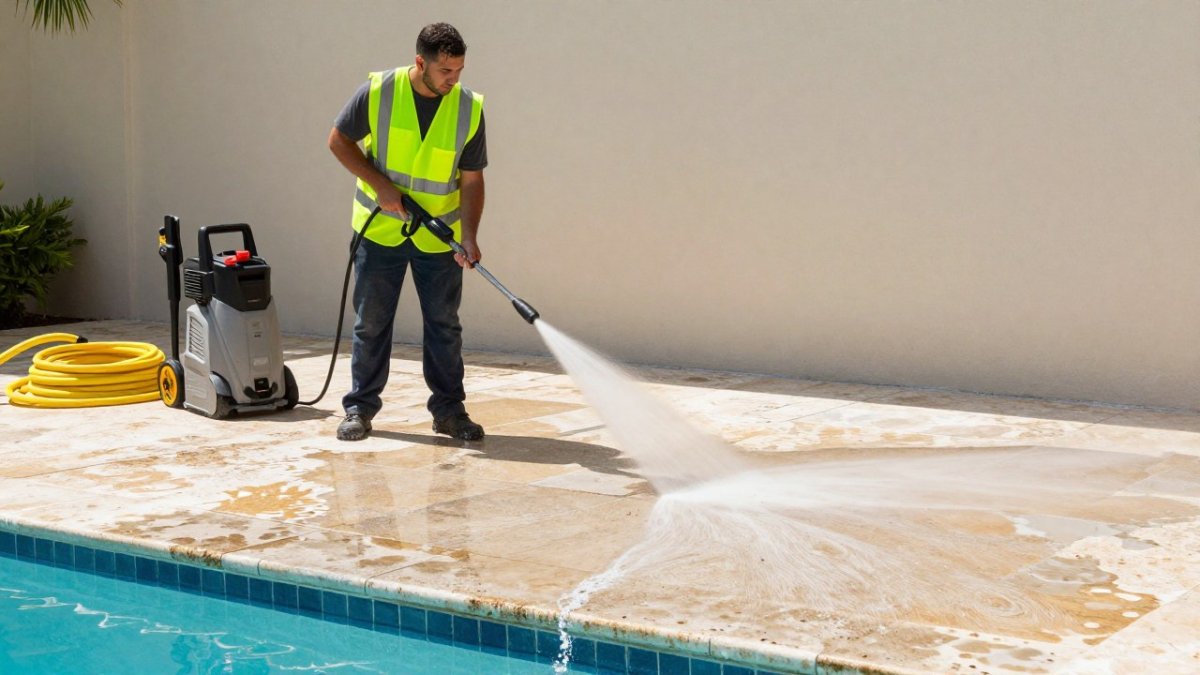
Pressure washing uses high pressure to blast away dirt and staining. It works well on sturdy concrete, but the right pressure depends on the material. Pressure should be matched to the material, with concrete tolerating more than pavers or natural stone. Test an inconspicuous corner before working across the whole deck.
Soft washing uses low pressure combined with a cleaning solution that kills algae, mildew and mold at the root. Because the chemistry does most of the work, it is the safer choice for delicate pavers, stone and painted surfaces. The tradeoff is time: soft washing needs dwell time and careful rinsing, and it requires attention to chemical runoff.
The two methods differ in pressure, speed and the surfaces they suit best.
| Method | Best for | Key difference |
|---|---|---|
| Pressure washing | Sturdy concrete with heavy grime | Uses high pressure; faster on heavy concrete grime |
| Soft washing | Delicate pavers, stone and painted surfaces | Uses low pressure plus solution; needs dwell time and careful rinsing |
| Combined approach | Mixed surfaces | Soft wash first, pressure wash only where the surface can take it |
Best Concrete Pool Deck Cleaner Options and Solutions
For concrete, a few options stand out. A mild dish soap and water mix handles light dirt and is the gentlest choice. For tougher grime, a diluted cleaning solution applied with a low-pressure pump sprayer works better. Compare concrete-safe mold and stain solutions before choosing a product.
Pay attention to the sealer. A wet-look sealer and a matte sealer respond differently to cleaners and pressure, so the sealer type should shape how aggressively you clean.
Whatever you choose, pre-wet the deck, apply the solution, allow it to dwell briefly without letting it dry, then rinse thoroughly. Do not let cleaning solution sit on the deck or drain into the pool.
Pool Deck Cleaning Solution Choices and Eco-Friendly Alternatives
Chemical choice matters for both the deck and the pool. The wrong cleaner can etch stone, strip sealer, or, if it reaches the water, raise chloramine levels and force you to shock the pool.
Dilution and application matter as much as the product. Most concentrated cleaners are designed to be diluted; using them at full strength wastes money and increases the risk of surface damage.
Protecting the pool and landscaping. Keep runoff away from planting beds and the pool itself. A rubber berm or a shop vac at the deck’s low point captures dirty water before it reaches the pool edge.
Pool Deck Cleaner Machine Options for Homeowners
Homeowners have two realistic machine options. A standard pressure washer paired with a surface cleaner attachment is the most practical choice for a large concrete deck. A rotary surface cleaner, such as a 15-inch model, covers ground quickly and reduces the streaking and uneven pressure that a wand produces.
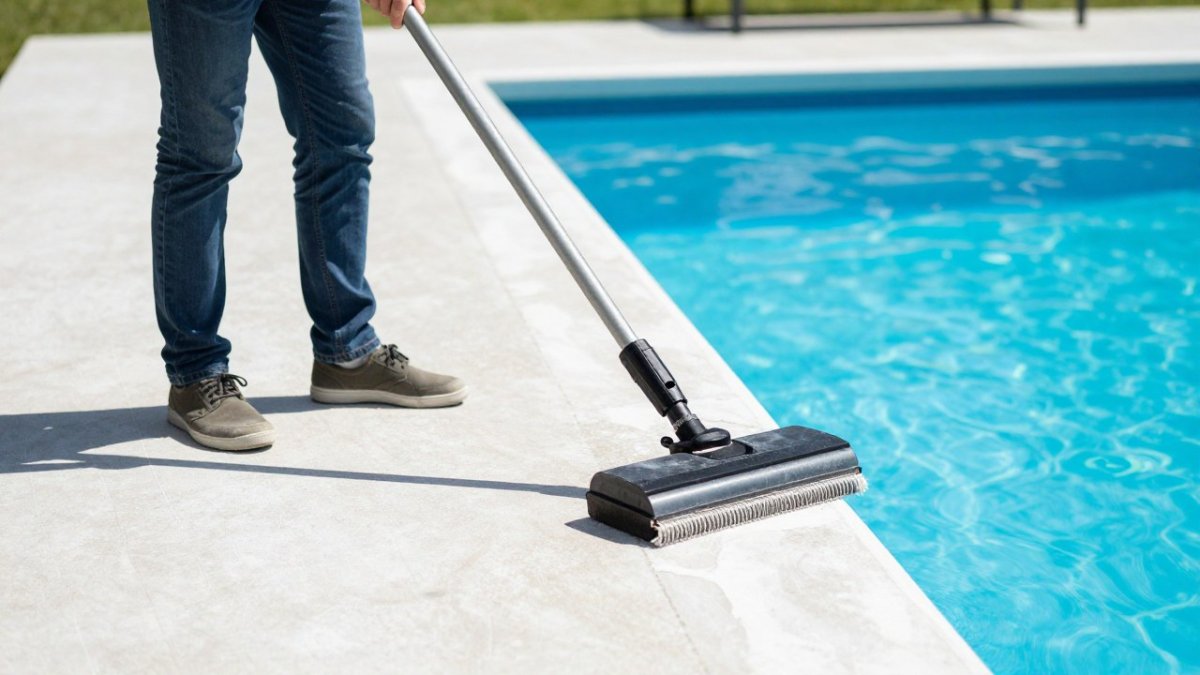
For a deck that also needs debris kept out of the pool, a vacuum-integrated surface cleaner is worth considering. Vacuum-integrated surface cleaners can help recover water and debris during cleaning. Automated pool cleaners can also collect debris that falls in during deck work, though they represent a higher upfront cost.
Pick a machine that matches your deck size and your tolerance for setup. If you are not comfortable adjusting pressure and nozzle tips, a professional service may be the safer route.
How to Clean a Pool Deck Without Draining the Pool
You do not need to drain the pool to clean the deck. The goal is to keep debris and cleaning solution out of the water while still removing the grime that makes the surface slippery and stained. The process below works for concrete, pavers, and natural stone, with adjustments noted where the material demands a gentler touch.
-
Clear the deck and set up containment. Remove furniture, toys, planters, and loose debris so nothing gets pushed into the pool. Before you start, place a rubber berm or a rolled towel along the pool edge to divert runoff away from the water. A wet/dry shop vac positioned at the low point of the deck can capture dirty water as you work, which is the same water-recovery logic professionals use but scaled for a homeowner.
-
Pre-wet the surface and nearby plants. Wet the deck with plain water to reduce the chance of surface damage from the solution and to prevent the cleaner from drying too quickly. Pre-wetting also saturates adjacent planting beds so they absorb less chemical runoff. Watch out: letting cleaning solution dry on the surface can leave streaks or etch delicate stone, so work in sections small enough to rinse before the solution dries.
-
Pre-treat stains with the right chemistry. Apply your chosen cleaner with a low-pressure pump sprayer. For organic staining like algae and mildew, an oxygen-based cleaner or a diluted bleach solution works, but allow five to ten minutes of dwell time, no longer, or the solution can begin to attack the surface itself. For rust or mineral stains, use a dedicated acid-free remover; muriatic acid should never touch natural stone or pavers because it can permanently etch the surface.
-
Scrub or clean with the right pressure. Use a rotary surface cleaner for large concrete areas, or a wide fan tip (25-degree or 40-degree) at the pressure appropriate for the material. Concrete tolerates more pressure than pavers and natural stone, which need a lower range, and wood decking should be cleaned with a soft wash or low-pressure approach only. Keep the wand moving and overlap your passes to avoid striping.
-
Control runoff at every stage. Use a squeegee, a berm, or a vacuum-integrated surface cleaner to direct water away from the pool. If you are using a shop vac, empty it into a utility sink or a lawn area, never into the pool. A common pattern is to work from the farthest point from the pool toward the containment barrier, so dirty water never crosses clean deck.
-
Rinse fully and check the pool. Remove all solution from the deck with a thorough rinse, then skim the pool surface and test the water chemistry. Residual organics or cleaning agents can shift chlorine demand, so a quick test after cleaning catches problems before they cloud the water. If you notice foaming or a strong chemical smell near the pool, stop and flush the area with fresh water.
-
Clean your equipment before storage. Flush the pressure washer and sprayer with clean water to prevent chemical residue from corroding nozzles or seals. This step is easy to skip but extends the life of your machine and prevents cross-contamination the next time you clean a different surface.
Work in sections and keep the water flowing away from the pool edge at every stage. For homeowners who also maintain a driveway or exterior siding, the same containment approach applies, and if you decide to bring in a crew for house wash and exterior home cleaning, ask how they plan to protect the pool during the job.
Scheduling Your Next Deck Cleaning With Freedom Wash Club
Regular cleaning keeps the deck in better shape and makes each session quicker, so plan the next one before the grime builds up. Freedom Wash Club provides licensed and insured pressure cleaning and paver sealing for South Florida homes and commercial properties, and scheduling is simple: you can book by phone or text, with no in-person estimate required. Contact Freedom Wash Club for a current quote.
Frequently Asked Questions
What is the best way to clean a pool deck?
For most concrete pool decks, start with a rinse, pre-treat organic growth like algae and mildew with a diluted cleaning solution, and then clean with a low-pressure method or a surface cleaner. Use pressure settings suited to the surface, keeping pressure lower with a wide fan tip for pavers and natural stone. Work in sections, keep the spray moving, and rinse away from the pool. Pricing for professional service depends on deck size, surface type, and condition, so request a quote for current rates.
Is it better to pressure wash or soft wash a pool deck?
Pressure washing removes heavy grime quickly on durable concrete, while soft washing uses low pressure and chemical treatment to kill mold and algae at the root. Soft washing is generally the safer choice for pavers, natural stone, and wood, where high pressure can etch or damage the surface. Many homeowners combine both: soft wash to treat organic growth, then a light pressure rinse to finish. Freedom Wash Club can advise which approach fits your specific deck material.
How can you clean a pool deck without getting debris in the pool?
Sweep and clear loose debris before cleaning, then use a surface cleaner with vacuum or water recovery features to capture dirty water. Keep spray directed away from the pool edge and skim the water once the deck is dry. Cleaning in sections and working from the pool outward reduces the chance of runoff reaching the water. Test your pool water chemistry after cleaning, since some cleaning products can affect pH and chlorine levels if not rinsed properly.
How often should a pool deck be cleaned?
Most South Florida pool decks benefit from cleaning several times a year, with more frequent attention where algae, mildew, or heavy foot traffic are present. Decks shaded by trees or near landscaping tend to grow organic material faster. Regular cleaning prevents stains from setting and keeps surfaces safer underfoot. A scheduled maintenance plan can keep timing consistent, and Freedom Wash Club offers easy scheduling by phone or text.
Can you pressure wash a paver pool deck?
Yes, but pressure must be controlled. For pavers and natural stone, keep pressure low and use a wide fan tip to avoid dislodging joint sand or etching the surface. Soft washing is often preferred for pavers because it removes mold and algae with less mechanical force. Sealing pavers after cleaning helps protect the surface and maintain its appearance, and Freedom Wash Club provides paver sealing services.
What do professionals use to clean pool decks?
Professionals typically combine a low-pressure soft wash system or a rotary surface cleaner with chemical pre-treatment for organic growth. Vacuum-integrated water recovery systems help keep debris and dirty water out of the pool. Cleaning solutions are chosen by surface type, and concentrations are adjusted to avoid damaging the deck or introducing excess chemicals into the pool. Because results depend on the deck material and condition, a professional assessment is the most reliable starting point.
Is it better to power wash a deck or use a deck cleaner?
Using both usually gives the best result. A deck cleaner loosens mold, algae, and oil stains, and power washing then lifts the residue. Using power washing alone may leave organic growth behind, while cleaner alone may not remove heavy grime. Always choose a cleaner appropriate for your surface and rinse thoroughly to protect nearby plants and pool water.