Table of Contents
- How Often Should You Reseal Brick Pavers?
- How Long Does Paver Sealer Last?
- Signs Pavers Need Resealing
- What Shortens or Extends Sealer Lifespan
- How to Clean Brick Pavers Before Sealing
- How Often to Re-Sand Pavers
- When to Call a Professional Paver Sealing Service
- Frequently Asked Questions
Last Updated: October 13, 2026
How Often Should You Reseal Brick Pavers?
Most brick paver driveways and patios need resealing every two to three years. In South Florida, sun exposure and heavy rain push many surfaces toward the shorter end of that range. This guide from Freedom Wash Club explains how to tell when your pavers are due, and what changes the timeline.
Sealer does not fail all at once. It wears thin in the spots that take the most abuse first. That is why two homes on the same street can need completely different schedules.
Below, we cover how long paver sealer lasts, the signs it is time to reseal brick pavers again, and a simple water test you can run this weekend.
How Long Does Paver Sealer Last?
Paver sealer typically lasts two to five years, but that range is wide because it bundles together very different surfaces and very different products. A penetrating sealer on a shaded patio can hold up noticeably longer than a film-forming sealer on a sun-baked driveway. The interval is set by three things working together: the paver material, the sealer chemistry, and the exposure the surface sees.
According to industry guidance on paver sealing and maintenance, the right schedule depends on the sealer chemistry, the paver material, and how much weather the surface sees.
How Paver Material Changes the Interval
Not all pavers absorb sealer the same way, and porosity is the reason.
- Clay brick pavers: Dense and fired hard, so they absorb less sealer. A penetrating sealer may need to go on in thinner coats, and the surface can hold its protection longer between reseals. The trade-off is that a film-forming sealer has less texture to grip, so it can flake sooner on brick than on rougher stone.
- Concrete pavers: More porous than clay brick and often cast with a chamfered edge. They drink in penetrating sealer readily, which is good for protection but means the product can wear through faster in high-traffic lanes.
- Natural-stone pavers (travertine, bluestone, flagstone): Porosity varies wildly by stone. Travertine is porous and can stain quickly if sealer wears thin, while dense bluestone sheds water longer. Natural stone also reacts to acidic cleaners, so product choice matters more than on brick or concrete.
The practical takeaway: two driveways on the same street, one brick and one concrete, can be on different resealing clocks even with identical traffic and weather.
Penetrating vs. Film-Forming Sealers
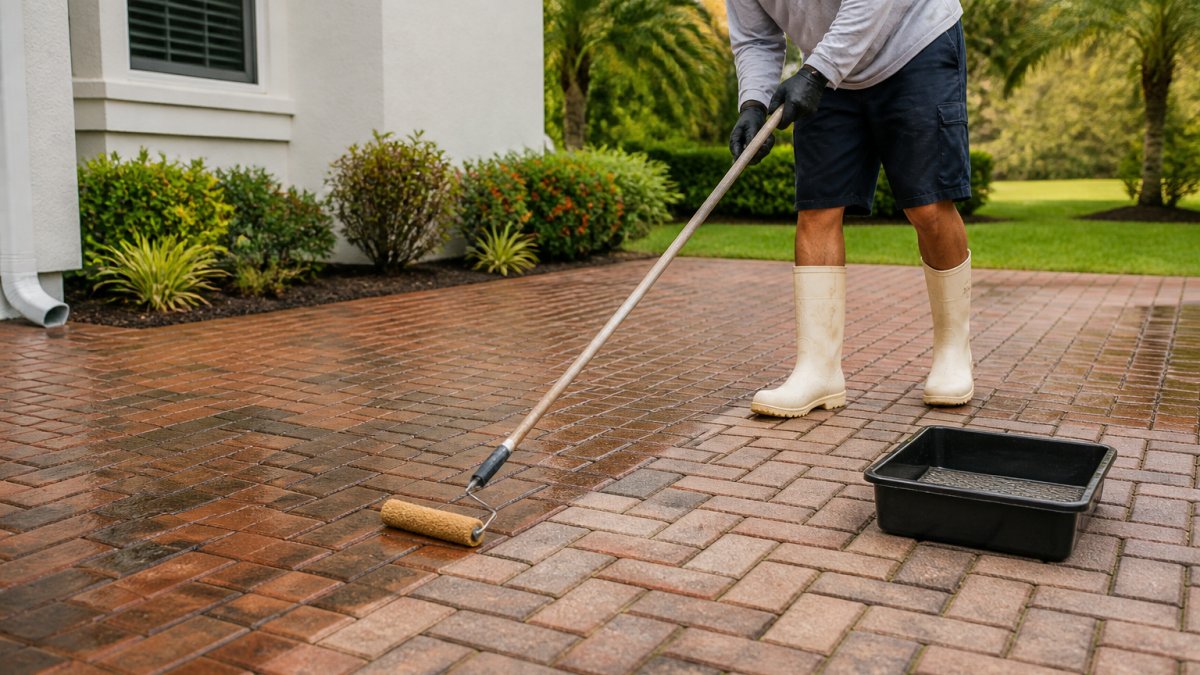
Penetrating sealer soaks into the paver and blocks water from inside the stone. It leaves a natural, matte look, does not peel, and generally lasts longer because there is no surface film to scuff off. It will not add gloss or deepen color much.
Film-forming sealer coats the surface and adds shine or color. It protects well and can enhance faded pavers, but it shows scratches, can flake in high-traffic spots, and traps moisture if the pavers were not fully dry. Film-forming products usually need more frequent attention than penetrating ones.
Finish choice is a separate trade-off from chemistry:
- Matte / natural: Lowest maintenance, no sheen to scratch, but no color enhancement.
- Wet-look / enhanced: Deepens color and adds gloss, but every scuff and tire mark shows, and recoating is more frequent.
- Wet-look with a topcoat: Maximum shine and color, highest maintenance, and the topcoat is the layer that wears first.
A common mistake is sealing too soon after installation. New pavers release moisture and minerals for weeks. Sealing early traps that moisture and causes a cloudy, milky look that is hard to fix. Wait until the pavers have weathered and any efflorescence has stopped rising before the first seal.
Matching the Product to the Paver
Sealer and paver have to be compatible. A solvent-based film-former on a damp concrete paver is a recipe for whitening. A water-based penetrating sealer on dense clay brick may need a second coat to reach full protection. Before buying, confirm the product is labeled for your paver type and check whether it is breathable, breathable sealers let trapped vapor escape, which is what prevents the milky haze that ruins an otherwise good job.
Signs Pavers Need Resealing
Water no longer beading on the surface is the clearest sign pavers need resealing. Other signals show up before that. Watch for these:
- Water soaks in within seconds instead of beading up
- Color looks faded, chalky, or washed out
- Joint sand is washing out between the pavers
- Weeds and moss are sprouting in the joints
- Surface feels rough, gritty, or sandy
- Stains from oil or leaves no longer wipe away
- Sealer is peeling, flaking, or turning white
If you spot three or more of these, it is time to reseal brick pavers on your property.
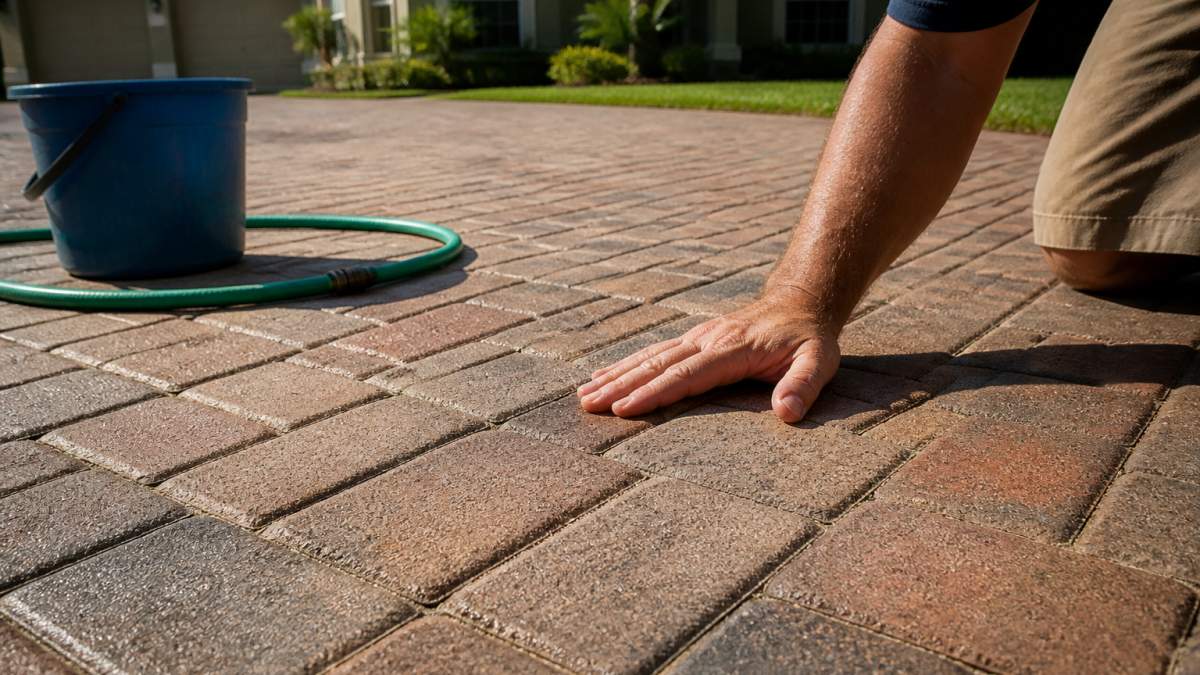
The Water Test: A Simple Inspection Trick
Pour a cup of water on the paver surface. If it beads and rolls off, the sealer is still working. If it soaks in and darkens the stone within a minute, the sealer has worn through. Run the test in three spots: the driveway entrance, the middle, and a shaded corner. The worst result tells you the real story.
What Shortens or Extends Sealer Lifespan
Traffic and weather decide most of the timeline. A driveway with daily vehicle traffic wears faster than a covered patio. Full sun breaks down sealer faster than shade. Heavy rain and standing water speed up the breakdown too.
Traffic, Weather, and Sun Exposure
- Vehicle traffic: driveways wear fastest, especially where tires turn
- Foot traffic: patios and pool decks wear slower but still need care
- Sun exposure: constant UV light dries out and fades sealer
- Rain and pooling water: standing water breaks down the bond over time
- Cleaning habits: harsh chemicals strip sealer faster than gentle washing
Pressure washing at the wrong setting strips sealer and etches the paver surface. Once the sealer is gone, the pavers soak up stains and the damage gets worse with each pass.
How to Clean Brick Pavers Before Sealing
Cleaning is the step most homeowners rush, and it decides how the job turns out. Sealer locks in whatever is on the surface. Dirt, mold, and old flaking sealer must come off first, or the new coat will fail from underneath.
Step-by-Step Prep
- Sweep and clear. Remove loose dirt, leaves, and debris from the surface and joints.
- Pull weeds by hand. Get the root, not just the top growth. Herbicide residue can interfere with sealer bonding.
- Apply a paver-safe cleaner. Use a product labeled for brick or concrete pavers. Let it dwell per the label, usually several minutes, so it lifts dirt and organic growth.
- Rinse at low pressure. A pressure washer on a low setting with a wide fan tip removes residue without etching the surface or blasting out joint sand.
- Strip old failing sealer if present. Flaking or peeling film-former has to come off before recoating, or the new layer will lift with the old one.
- Let the surface dry completely. This is the step that gets skipped. Sealing over damp pavers traps moisture and causes haze.
- Re-sand the joints if sand has washed out. Top off with polymer joint sand and sweep it into the gaps before sealing.
Drying and Weather Thresholds
Drying time matters more than most people expect. A full day of dry weather is a safe minimum, and longer in humid or shaded areas. The surface should be dry to the touch and uniform in color, dark patches mean trapped moisture.
Weather during application matters too. Avoid sealing in direct midday sun, because the product can flash-dry before it levels. Avoid sealing when rain is in the forecast within the product’s cure window, and avoid cool, damp mornings when overnight moisture is still rising out of the pavers. Most manufacturers specify a temperature range on the label; follow it rather than guessing.
Common Prep Failures and How to Avoid Them
- Whitening or milky haze: Usually trapped moisture or over-application. Fix by letting the surface dry fully and applying thinner coats.
- Peeling or flaking: Almost always a prep problem, old sealer left on, or a damp surface. Strip and redo rather than recoating over it.
- Uneven sheen: Caused by applying in patches or in direct sun. Work in sections and keep a wet edge.
- Trapped moisture under film: Shows as dark blotches. Do not seal until the pavers read dry and uniform.
- Over-application: Pools of sealer that never cure properly. Two thin coats beat one heavy coat every time.
If the surface is large, heavily stained, or already failing, the prep work alone can take longer than the sealing itself, which is often the point where a professional paver sealing service makes more sense than a weekend DIY attempt.
How Often to Re-Sand Pavers
Re-sanding usually lines up with resealing, roughly every two to three years. Joint sand locks the pavers in place and blocks weeds. When it washes out, pavers shift and the surface starts to fail.
Check the joints after each cleaning. If sand sits below the paver edge, it is time to top it off. Use a polymer joint sand and sweep it into the gaps before sealing. The sealer locks the sand in place so it lasts longer.
When to Call a Professional Paver Sealing Service
Call a professional when the surface is large, stained, or already failing. A driveway with deep oil stains, loose pavers, or peeling sealer needs more than a weekend DIY job. The prep work alone can take longer than the sealing itself.
At Freedom Wash Club, we handle paver sealing, soft wash roof cleanings, house wash and exterior home cleaning, driveway cleaning, and pool deck cleaning across South Florida. We are licensed and insured, with more than a decade of local experience. You can book by phone or text, with no in-person estimate needed.
The best time to reseal brick pavers is before the surface fails, not after. Catching wear early costs less and protects the pavers underneath.
Brick pavers take a beating from sun, rain, and daily traffic, and once the sealer wears through, stains and shifting joints follow fast. Freedom Wash Club can take that off your list with licensed and insured paver sealing, soft wash roof cleanings, house wash and exterior home cleaning, driveway cleaning, and pool deck cleaning. We offer easy scheduling by phone or text, no in-person estimate required, and a 100% satisfaction guarantee. Get started with Freedom Wash Club and keep your pavers protected and your HOA happy.
Frequently Asked Questions
How often should brick pavers be resealed?
Most brick pavers need resealing every two to three years, though the range can stretch from two to five years depending on the sealer type, weather exposure, and traffic. A penetrating sealer typically lasts longer than a film-forming sealer. In South Florida, intense sun and heavy rain break down sealers faster, so many driveways and patios need attention closer to the two-year mark. Inspect your pavers each year and test with water to decide.
What are the signs that pavers need to be resealed?
Watch for fading or dull color, water soaking in instead of beading, joint sand washing out, weed growth in the joints, and stains that no longer wipe away. A film-forming sealer may peel or flake. If a drop of water sinks in within a few minutes rather than beading on the surface, the sealer has worn through. These signs pavers need resealing show up gradually, so check your driveway and patio after each rainy season.
Can you clean pavers before resealing them?
Yes, and you must. Sealer will not bond to dirt, mold, or old flaking sealer. Start by removing furniture and sweeping. Use a pressure washer on a moderate setting, then treat mold or algae with a suitable cleaner. Let the pavers dry completely, which can take 24 to 48 hours in humid weather. If joint sand is low, re-sand before sealing. Skipping prep is the most common reason a new sealer fails early.
How often should you re-sand pavers?
Re-sand pavers whenever the joints are low, typically every two to three years, often at the same time as resealing. If you can see more than a quarter-inch of the paver edge above the sand, or if sand washes out after storms, it is time. Re-sanding locks the pavers in place, blocks weeds, and gives the sealer a stable base. Use polymeric sand for driveways and high-traffic areas.