Last Updated: October 30, 2026
Quick Summary
Maintain commercial paver walkways in Florida with a schedule that matches the climate: weekly sweeping and rinsing, refilling joint sand after cleaning, and inspecting for trip hazards before storms. Seal the surface every 2 to 4 years or sooner under heavy traffic, and keep a written log of every service.
- Sweep or blow debris off the walkway weekly, and daily during leaf-fall or after storms.
- Refill joint sand after each cleaning, sweeping it into gaps until they are full.
- Note any joint gaps wider than a quarter inch during weekly inspections.
- Reseal every 2 to 4 years, or sooner under heavy traffic, based on condition.
- Keep a dated log of tasks, condition notes, and photos to support liability and budgeting.
Table of Contents
- Why Florida Commercial Paver Walkways Need a Different Schedule
- Paver Walkway Maintenance Checklist for Florida Properties
- How to Clean Pavers Without Damaging Them
- Keeping Joint Sand Full and Weeds Under Control
- Commercial Paver Sealing: When and How Often
- Commercial Walkway Slip Prevention During Florida’s Rainy Season
- Scheduling Your Next Walkway Service With Freedom Wash Club
- Frequently Asked Questions
Commercial paver walkways in Florida take a beating that most property managers underestimate. Daily foot traffic, constant rain, heavy humidity, and salt-laden air all work against the surface. Freedom Wash Club, a locally owned pressure cleaning and paver sealing company serving South Florida, works with these problems regularly, and the right maintenance schedule can keep a walkway safe and attractive for years.
Why Florida Commercial Paver Walkways Need a Different Schedule
Florida’s climate sets the pace for paver care. Frequent rain, high humidity, and long warm seasons create ideal conditions for mold, algae, and weeds to take hold between joints.
A walkway in South Florida may need inspection before the rainy months begin and again as the wet season winds down.
The University of Florida IFAS Extension notes that permeable pavement should be sited where it will not receive sediment-laden run-on, which matters for long-term function and limits maintenance needs Permeable Pavement Systems: Technical Considerations.
Paver Walkway Maintenance Checklist for Florida Properties
A commercial walkway needs a maintenance plan that assigns tasks, sets frequencies, and creates a paper trail. The checklist below is built for property managers and facilities staff, not homeowners. Use it to divide work between in-house staff and contracted services, and to document conditions before and after each rainy season.
Weekly and Monthly Tasks for Property Staff
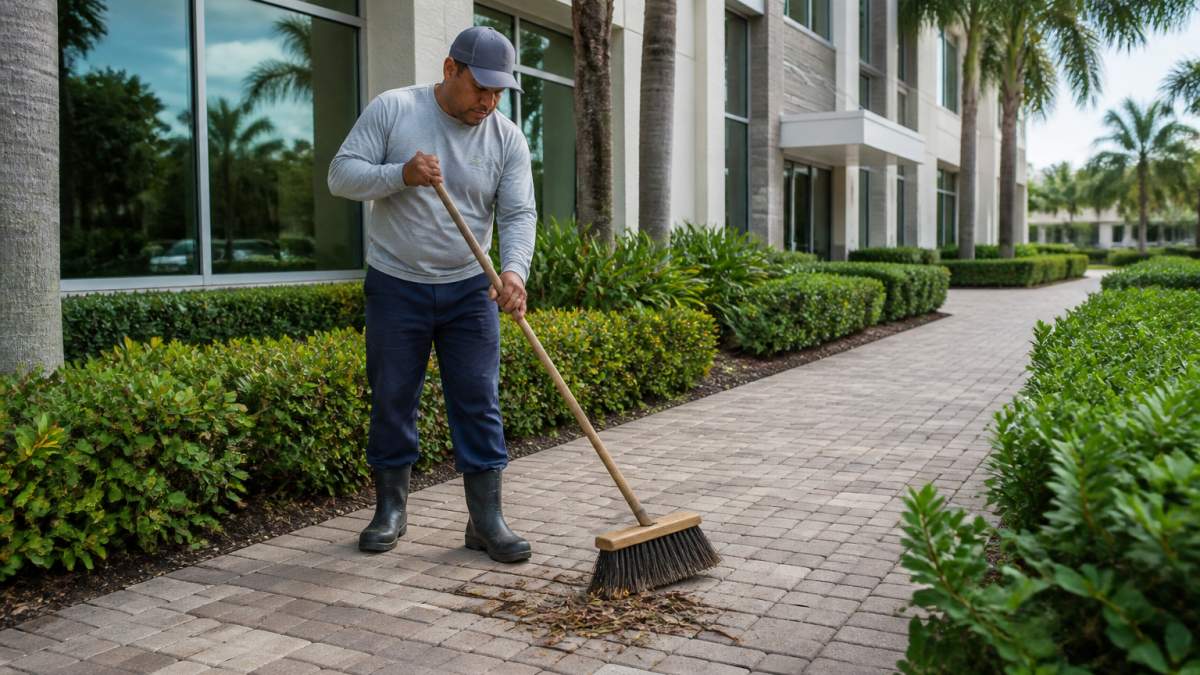
- Sweep or blow leaves, dirt, and debris off the walkway weekly, daily during leaf-fall or after storms
- Rinse the surface with a garden hose to move sand and grit away from edges and drains
- Inspect joints for loose or missing joint sand; note any gaps wider than a quarter inch
- Check for weed growth and early mold or algae, especially in shaded areas and near irrigation heads
- Look for cracked, sunken, or shifted pavers that could become trip hazards
- Confirm drainage paths, swales, and grate inlets are clear before forecast storms
- Log the date of the last professional cleaning and sealing service
Quarterly and Seasonal Tasks for Contractors
- Deep clean with pressure washing using a gentle setting and a paver-safe cleaner
- Refill joint sand after cleaning, sweeping it into gaps until full
- Treat persistent weeds in joints and monitor for return
- Inspect for efflorescence, rust, or oil stains and spot-treat as needed
- Evaluate sealant condition and plan resealing every 2 to 4 years, or sooner under heavy traffic
- Review drainage performance and note any standing water that persists more than 24 hours after rain
A Florida paver guide from Venice Pavers recommends refilling joint sand every year or two, and that advice fits most commercial walkways Best Pavers for Florida Driveways: 2026 Guide. Walk the surface after each inspection and log what you find. For guidance on keeping driveway pavers in good shape after professional cleaning, see our dedicated article. A written record makes it easier to spot patterns and to plan service before small problems grow.
Assign a single staff member to own the walkway log. A simple spreadsheet with date, task, condition notes, and photos creates a defensible record for liability and budgeting.
For properties with mixed surfaces, coordinate walkway care with driveway cleaning and pool deck cleaning schedules to avoid tracking debris between areas. If your property also has a roof or exterior walls that feed runoff onto walkways, soft wash roof cleanings and house wash services can reduce the organic load reaching the pavers.
How to Clean Pavers Without Damaging Them
Cleaning removes the grime that hides a walkway’s original color and creates slip risks. Done wrong, it can also strip joint sand or etch the surface.
Routine Sweeping and Rinsing
Start with a stiff broom or leaf blower to clear loose debris. Then rinse the surface with a garden hose. Rinsing once a week keeps dirt from working into the joints and reduces the buildup that feeds mold.
Deep Cleaning, Stains and Mold Control
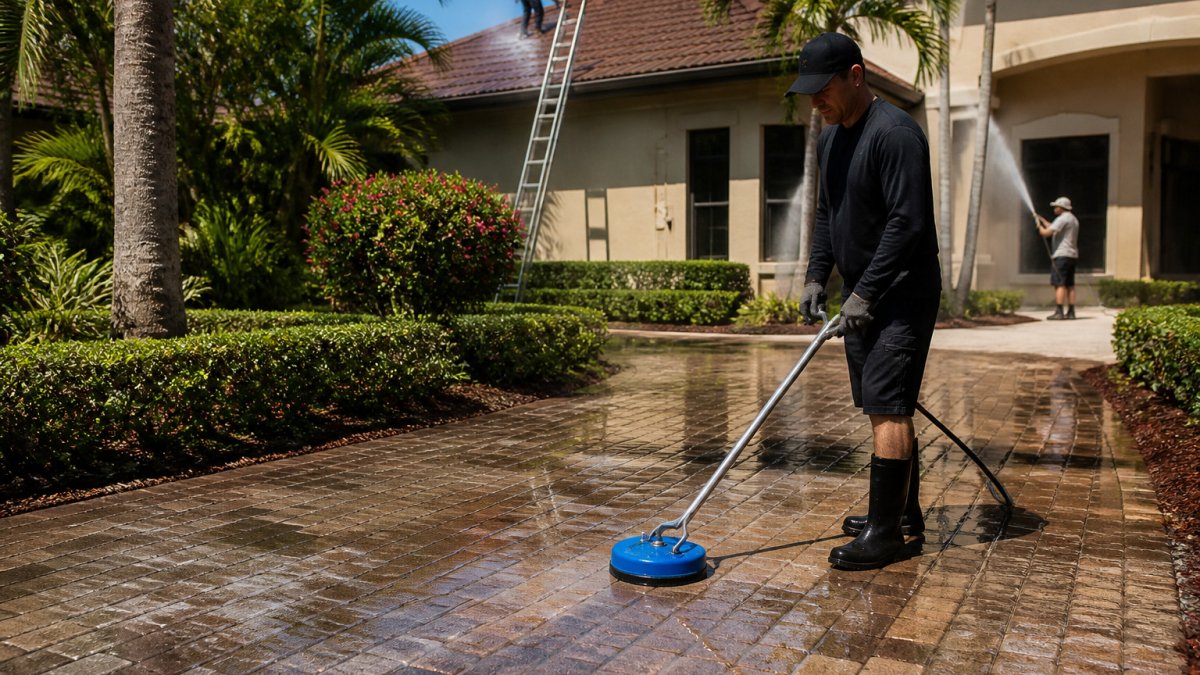
For stubborn stains, tire marks, and mold, a pressure washer can help. Use a gentle setting and a mild cleaning solution suited to pavers. Keep the wand moving to avoid gouging the surface.
Be cautious with harsh chemicals. A seasonal care guide cautions against overusing aggressive acid solutions, chlorine, or vinegar mixtures unless the surface-product manufacturer specifically recommends them Seasonal Paver Maintenance: A Full-Year Care Guide.
Keeping Joint Sand Full and Weeds Under Control
Full joints lock pavers in place and block weeds. Empty joints let water, roots, and soil move through, which leads to shifting and growth.
Refill joint sand after cleaning, sweeping it into the gaps until they are full. Pull weeds by the root when they appear, and treat the joints if growth keeps returning. Consistent attention is far cheaper than repairing a walkway that has settled unevenly.
Keeping joints full and weeds under control is largely a matter of consistent, scheduled attention, and the article’s guidance breaks down into a few clear actions.
| Task | When | Why it matters |
|---|---|---|
| Refill joint sand | After each cleaning | Locks pavers in place and blocks weeds |
| Pull weeds by the root | When growth appears | Prevents regrowth in joints |
| Treat joints | If weeds keep returning | Stops recurring growth |
| Inspect joint gaps | Weekly, during routine checks | Catches gaps wider than a quarter inch early |
Commercial Paver Sealing: When and How Often
Sealing protects the surface from water, stains, and mold, and it helps keep the original color. On a commercial property, sealing also affects slip resistance, joint sand retention, and long-term repair costs. Florida’s sun, rain, and salt air can wear down a sealant faster than in milder climates, so the decision to seal should be based on condition, not just a calendar.
How to Tell When a Walkway Needs Resealing
A Florida contractor guide recommends sealing the surface every 2 to 4 years, though the right interval depends on traffic, exposure, and the paver type Paving Contractors Florida: Top 10 Expert Picks 2026. Clay pavers and permeable systems need their own guidance, so do not apply one schedule to every surface. Ask a professional to inspect the walkway and recommend a sealing interval for your specific installation. Our article on how often to reseal brick pavers covers typical timing for brick surfaces.
Use these field checks to decide whether to seal now or wait:
- Water absorption test: Pour a cup of water on the surface. If it soaks in within a few seconds, the sealant is likely worn.
- Color and texture: Faded color, a chalky appearance, or visible wear paths indicate the protective layer is thinning.
- Joint sand loss: If sand is washing out or blowing away faster than usual, the sealant may no longer be binding the surface.
- Surface feel: A slick or tacky feel after rain can signal sealant breakdown or mildew growth.
Preparation and Application Basics
Sealing is only as good as the prep. A commercial job typically involves:
- Deep cleaning to remove dirt, mildew, and old sealant residue.
- Replacing missing joint sand and stabilizing any loose pavers.
- Allowing the surface to dry completely, often 24 to 48 hours in Florida humidity.
- Applying a breathable, paver-specific sealer in thin, even coats.
- Keeping pedestrians off the surface for the manufacturer’s recommended cure time, often 24 to 72 hours.
Do not seal over damp pavers or before rain. Trapped moisture can cloud the finish and shorten the sealant’s life. Schedule sealing during a dry window and post signs to redirect foot traffic.
Budgeting and Lifecycle Planning
Sealing is a preventive cost, not a cosmetic extra. A planned resealing cycle helps avoid premature paver replacement and reduces the frequency of deep cleaning. If your property includes roofs that shed organic debris onto walkways, periodic soft wash roof cleanings can reduce the load your pavers and sealant must handle.
The risks of skipping sealing are real, and our guide on what happens if you skip paver sealing walks through them in detail.
Commercial Walkway Slip Prevention During Florida’s Rainy Season
Wet pavers become slippery, and algae makes the problem worse. For a commercial property, a slip-and-fall claim is a serious liability.
Build slip prevention into your routine:
- Clear standing water quickly after storms
- Remove algae and mold before it builds up
- Check that drainage routes keep water moving off the walkway
- Post warning signs during active cleaning
- Repair loose or uneven pavers right away
Accessibility matters too. Uneven joints and raised edges can trip visitors, so inspect them as part of your regular walk-through.
Scheduling Your Next Walkway Service With Freedom Wash Club
A regular service plan keeps your walkway safe and your property looking professional. Freedom Wash Club provides licensed and insured pressure cleaning and paver sealing for residential and commercial properties across South Florida. We offer easy scheduling by phone or text, and we back our work with a 100% satisfaction guarantee.
Ready to get your walkway on a maintenance schedule? Request your free quote from Freedom Wash Club today. For more on protecting your investment, read our guide on how often to reseal brick pavers, or see our overview of commercial property exterior maintenance in Florida.
Frequently Asked Questions
How often should commercial paver walkways be cleaned in Florida?
Sweep commercial paver walkways on a regular schedule, because leaves, sand and dirt collect quickly in humid conditions. Rinse the surface periodically and schedule deeper cleaning as needed, especially after the summer rainy season when moisture encourages mold, mildew and algae. Inspect the walkway before and after heavy rain periods so standing water and slick spots are caught early. A written schedule shared with the property manager and maintenance crew keeps the cadence consistent.
What is the safest way to clean pavers without damaging them?
Start with dry sweeping and a garden hose rinse to remove loose debris. For stubborn grime, use a pressure washer on a gentle setting with a mild detergent, keeping the wand moving so joint sand is not blasted out. Avoid aggressive acid solutions, chlorine or vinegar mixtures unless the paver or sealer manufacturer specifically recommends them. Test any cleaning product on a small hidden area first and rinse thoroughly.
When should commercial pavers be resealed?
Sealing intervals vary by traffic, sun exposure and the product used. Signs that a reseal is due include faded color, dull or uneven sheen, and water that no longer beads on the surface. Because intervals differ by paver type, ask the installer or manufacturer for the recommended schedule for your specific surface before committing to a plan.
Why does joint sand matter for paver walkway maintenance?
Joint sand locks pavers in place and prevents shifting, weed growth and water from washing material out of the joints. Refilling joint sand periodically, and sweeping the surface after each refill helps the sand settle. Keeping joints full is one of the most effective ways to prevent weeds and uneven sections on a commercial walkway.