Table of Contents
- Why Humidity Demands a Different Approach to Paver Sealing
- Water-Based vs. Solvent-Based Paver Sealer: Which Performs Better in High Humidity
- Top Paver Sealers for Humid Climates: Product Review
- How to Clean Driveway Without Pressure Washer Before Sealing
- Preventing Mold and Moss on Pavers in Humid Conditions
- Paver Sealing Maintenance Schedule for Long-Term Protection
- Common Sealer Failures in High Humidity and How to Avoid Them
- Hazing: The Most Common Humidity-Related Failure
- Blushing: Subsurface Moisture Entrapment
- Delamination: Adhesion Failure from Poor Preparation
- Efflorescence: Salt Migration and Moisture Movement
- Loss of Water Beading: Sealer Degradation Signal
- Post-Rain Recovery Protocol: What to Do If Rain Hits During Curing
- Professional Paver Sealing vs. DIY Application in Humid Climates
- Frequently Asked Questions
Last Updated: September 30, 2026
Why Humidity Demands a Different Approach to Paver Sealing
High humidity in South Florida creates unique challenges for paver protection, making the best paver sealer for South Florida humidity 2026 essential for long-term durability. Moisture doesn’t just sit on the surface, it penetrates beneath, trapped between pavers and their substrate. Traditional sealers designed for drier climates fail under these conditions, leading to hazing, blushing, and premature failure.
The best paver sealer for South Florida humidity 2026 must breathe, resist UV damage, and prevent moisture entrapment. This isn’t a one-size-fits-all decision. Your choice depends on whether you prioritize aesthetics, durability, or ease of application.
Below, we detail the sealer types that work, top products, and critical mistakes to avoid.
The single biggest mistake homeowners make is applying a sealer without proper surface preparation. Moisture trapped beneath a poorly prepared surface will cause the sealer to fail within 6-12 months, regardless of product quality.
Water-Based vs. Solvent-Based Paver Sealer: Which Performs Better in High Humidity
This choice defines your entire sealing strategy. Water-based and solvent-based sealers behave fundamentally differently in humid conditions, and the wrong pick will haunt you for years.
Water-Based Urethane Sealers: Breathability and UV Protection
Water-based urethane sealers like Ure-Seal H2O allow moisture vapor to escape through the sealer film, critical in Florida to prevent moisture entrapment. They deliver a satin finish that enhances paver color without plastic appearance, include UV inhibitors to prevent yellowing, and typically require two coats for maximum effectiveness.
These sealers cure slower than solvent-based alternatives (24-48 hours before foot traffic).
If you’re applying water-based sealer yourself, invest in a humidity meter. Apply only when relative humidity is below 85% and no rain is forecast for 48 hours. Many DIY failures happen because homeowners ignore weather windows.
Solvent-Based Acrylic Sealers: Durability and Joint Stabilization
Solvent-based acrylics like Super Seal 25 cure faster and lock down polymeric sand, preventing weeds and washout. The wet-look gloss finish appeals to homeowners, but solvent-based formulas don’t breathe, moisture trapped beneath causes blushing. In South Florida‘s humidity, they work best on driveways and walkways but struggle on pool decks.
Top Paver Sealers for Humid Climates: Product Review
Ure-Seal H2O: Best for Breathability and UV Resistance
Ure-Seal H2O is a water-based urethane engineered for humid climates. Its breathable formula prevents moisture entrapment and UV damage. Two-coat application is standard (150-300 sq ft per gallon). Homeowners report minimal hazing when applied during proper weather windows.
Pros:
- Reduces white hazing risk in humid conditions
- Environmentally friendly water-based chemistry
- Natural appearance without plastic look
Cons:
- Requires two-coat application for full effectiveness
- Slower cure time (24-48 hours) demands weather planning
- Lower gloss than solvent-based alternatives
Super Seal 25: Best for Joint Stabilization and Durability
Super Seal 25 is a solvent-based acrylic that locks polymeric sand with a semi-gloss wet-look finish and high-solids formulation for better coverage. Cure time is faster than water-based alternatives, but solvent odor is strong.
Pros:
- Industry-standard choice for high-traffic areas
- Excellent joint sand locking capabilities
- Faster cure time than water-based options
Cons:
- Solvent-based formula doesn’t breathe, risking blushing in high humidity
- Strong odor requires good ventilation
- Higher VOC content
Crystal Coat: Best for Natural Stone Enhancement
Crystal Coat enhances natural paver color with efficient coverage (150-300 sq ft per gallon). It works for DIY and professional application but may require more frequent reapplication than premium alternatives.
Pros:
- Efficient coverage reduces material costs
- Easy application for DIY projects
- Enhances natural stone aesthetics
Cons:
- May require more frequent reapplication than premium alternatives
- Less durable in high-traffic areas
How to Clean Driveway Without Pressure Washer Before Sealing
Proper surface preparation is non-negotiable. Moisture trapped beneath sealer causes hazing, blushing, and failure within 6-12 months.
Manual Cleaning Without Pressure Equipment
Use a stiff-bristled brush and paver degreaser with overlapping strokes to remove dirt, algae, and old sealer, paying special attention to joints. For algae and mold, use diluted bleach (1:10 with water), let sit 10-15 minutes, scrub, and rinse with white vinegar (1:1 with water) to neutralize residue.
The Critical Drying Window in Humid Conditions
Allow 48-72 hours of dry conditions before sealing with relative humidity below 85%, no rain forecast for 48 hours, and surface temperature above 50°F and rising. Many homeowners seal after 24 hours, but subsurface moisture remains trapped, causing hazing or blushing within days or weeks.
Addressing Existing Sealer Residue
Old sealer residue must be removed, new sealer adheres to old sealer, not the paver, causing failure when the old sealer degrades. Use a sealer stripper or hire a professional for pressure washing.
Professional Pressure Washing as a Preparation Investment
Freedom Wash Club recommends professional pressure washing before sealing, especially in humid climates. Pressure washing removes contaminants that manual cleaning misses, opens paver pores for better sealer penetration, and dries the substrate more thoroughly than manual methods.
Never apply sealer to wet or damp pavers. Moisture trapped beneath the sealer will cause hazing, blushing, or complete failure within weeks. In South Florida’s humidity, allow at least 48-72 hours of dry conditions after cleaning before sealing. Use a moisture meter to confirm readiness.
Preventing Mold and Moss on Pavers in Humid Conditions
Breathable sealers like Ure-Seal H2O help by allowing moisture to evaporate, but sealer alone won’t prevent mold and moss. Keep pavers dry, direct water away during irrigation, trim vegetation, and reduce shade. Regular soft-brush cleaning removes surface growth.
Paver Sealing Maintenance Schedule for Long-Term Protection
Water-based urethane sealers typically last 2-3 years in South Florida; solvent-based acrylics may extend to 3-4 years. Annual cleaning at low pressure (below 1500 PSI) extends sealer life. Inspect seasonally for hazing, blushing, water beading loss, or fading, early detection allows spot resealing.
Common Sealer Failures in High Humidity and How to Avoid Them
Hazing: The Most Common Humidity-Related Failure
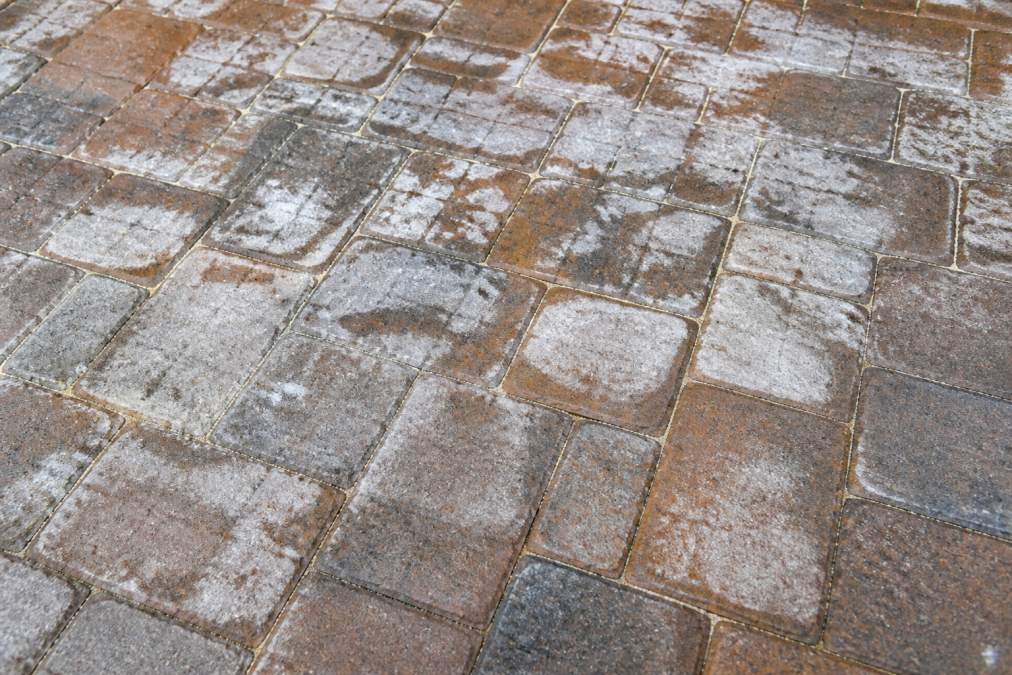
What it is: A white, cloudy film appearing within days of application.
How to prevent it:
- Apply sealer only when relative humidity is below 85%
- Avoid early morning (dew) or late evening (temperature drop) application
- Ensure no rain is forecast for 48 hours after application
- Apply during afternoon hours when temperature is rising and humidity is falling
Blushing: Subsurface Moisture Entrapment
What it is: A white, cloudy haze developing beneath the sealer surface over weeks or months.
How to prevent it:
- Use breathable water-based urethane sealers instead of solvent-based acrylics on high-moisture areas
- Verify substrate moisture with a moisture meter (below 4% before sealing)
- Allow 72 hours of dry conditions after cleaning before sealing
Delamination: Adhesion Failure from Poor Preparation
What it is: The sealer separates from the paver surface, peeling away in patches or sheets.
How to prevent it:
- Pressure wash pavers thoroughly to remove all contaminants
- Strip old sealer completely before applying new sealer
- Ensure pavers are clean and dry before application
Efflorescence: Salt Migration and Moisture Movement
What it is: A white, powdery salt deposit emerging from pavers weeks or months after sealing.
Loss of Water Beading: Sealer Degradation Signal
What it is: Water no longer beads on the sealer surface; it soaks in or spreads.
Post-Rain Recovery Protocol: What to Do If Rain Hits During Curing
If unexpected rain occurs during the sealer curing window, immediate action prevents total failure. Within 2 hours: use tarps to protect and reapply after drying. 2-12 hours: light rain may cause hazing that cures out over time. 12-48 hours: some hazing may occur but typically cures out. Prevention: Check the forecast and apply sealer only when no rain is forecast for 48 hours.
Professional Paver Sealing vs. DIY Application in Humid Climates
DIY sealing saves money but carries risks, improper technique, poor timing, or inadequate preparation leads to failure. Professional applicators understand how humidity affects cure time and adhesion. Freedom Wash Club brings over a decade of experience applying sealers in South Florida’s climate. Our licensed, insured team guarantees proper preparation, application, and results.
Frequently Asked Questions
What is the best paver sealer for high humidity environments?
Water-based urethane sealers like Ure-Seal H2O are ideal for humid climates because they breathe, allowing moisture vapor transmission and preventing hazing. These sealers resist UV yellowing and reduce the risk of white efflorescence. Solvent-based options require careful application timing and may trap moisture if curing conditions are poor. For best results in high humidity, choose a breathable sealer with proven UV inhibitors and plan application during low-humidity windows.
How does humidity affect the paver sealing process?
High humidity slows coalescence (the drying process where sealer particles bond), extends curing times, and increases the risk of blushing, hazing, and moisture entrapment under the sealer film. Relative humidity above 85% can cause solvent-based sealers to cure unevenly, while water-based sealers need at least 48-72 hours of low humidity to fully harden. Temperature fluctuations common in humid climates can also trigger delamination. Professional application accounts for these variables; DIY work often fails because homeowners apply sealer during unsuitable weather windows.
How often should pavers be resealed in humid climates?
Most paver sealers typically last 2-3 years in humid environments, though high-solids acrylics may extend to 3-4 years with proper maintenance. Water-based sealers often require reapplication more frequently because humidity accelerates UV degradation and moisture vapor transmission reduces gloss retention faster. Signs you need resealing include loss of color enhancement, water beading poorly on the surface, and visible mold or moss returning. A professional maintenance schedule prevents costly repairs and keeps your driveway, pool deck, or patio protected year-round.
What causes white hazing on sealed pavers, and how do I prevent it?
White hazing (efflorescence) occurs when moisture vapor becomes trapped under the sealer film and alkaline salts from the paver substrate migrate upward, crystallizing on the surface. This is especially common in humid climates when non-breathable sealers are applied. Prevent hazing by choosing a breathable, water-based sealer with high moisture vapor transmission rates, ensuring proper surface preparation and pressure washing to remove alkaline residue, and applying sealer only when relative humidity is below 85% and no rain is forecast for 48 hours. Professional application minimizes this risk.