Quick Summary
Most residential roofs do best with a soft wash roof treatment every two to four years, though shade, tree cover, roof material and humidity can shorten or extend that interval. Professional treatments often keep a roof looking clean for three to five years. Inspect the roof yearly to decide the right timing for your home.
- Heavy shade under large trees can require soft washing every one to two years.
- Trim branches at least 6 feet back from the roofline to slow regrowth.
- Soft washing uses low pressure, while high pressure can strip shingle granules and shorten roof life.
- Look for dark streaks, moss or lichen, and granules collecting in gutters as warning signs.
- Schedule soft washing in spring or fall to avoid peak algae growth and extreme heat.
Table of Contents
- How Often to Soft Wash a Roof: The General Guidance
- What Affects How Often Your Roof Needs Soft Washing
- How Long Does Roof Soft Washing Last?
- Signs a Roof Needs Cleaning
- Soft Washing Versus Pressure Washing a Roof
- How to Set Up a Roof Soft Washing Schedule, Step by Step
- Book Your Roof Soft Wash With Freedom Wash Club
- Frequently Asked Questions
How Often to Soft Wash a Roof in South Florida
Last Updated: November 6, 2026
How Often to Soft Wash a Roof: The General Guidance
Most residential roofs do best with a soft wash every two to four years, according to guidance from Lucid Bots soft washing roof interval guide. Some professional treatments keep a roof clean for three to five years, as noted by Atlas Exterior Solution roof treatment overview. Those are starting points, not rules.
The honest answer is that no single schedule fits every home. Shade, tree cover, roof material, and how much moisture the roof gets all change the timing. At Freedom Wash Club, we look at the roof first and set the interval from what we see.
What Affects How Often Your Roof Needs Soft Washing
Several factors determine how often a roof needs soft washing, and understanding them helps you set a realistic schedule. The table below summarizes the key factors and their typical impact.
| Factor | Effect on Frequency |
|---|---|
| Shade | Heavy shade keeps the roof damp longer, accelerating algae and moss growth. Roofs under large oaks or palms may need washing every 1-2 years. |
| Tree cover | Falling leaves and debris trap moisture against shingles. Trim branches back at least 6 feet from the roofline to slow regrowth. |
| Roof material | Asphalt shingles are prone to algae streaking; tile and metal roofs shed water differently and may need less frequent washing. |
| Climate | Warm, humid summers and frequent rain create ideal conditions for algae. Coastal areas with salt air may see faster buildup. |
| Roof age and condition | Older roofs with worn granules or previous damage may require gentler, more frequent cleaning. |
| Prior treatments | Roofs treated with preventive solutions may stay clean longer, but these treatments degrade over time. |
Roof material deserves special attention because soft washing methods and cautions vary. Asphalt shingles are the most common and are susceptible to algae (Gloeocapsa magma), which causes dark streaks. Soft washing with a low-pressure solution is safe for shingles when done correctly. Metal roofs can be soft washed, but avoid abrasive tools that scratch the finish. Tile roofs, including clay and concrete, may have fragile edges and require gentle application; avoid walking on tiles. Wood shakes need careful pH control to prevent damage. Always consult a professional to match the method to your roof type.
How Long Does Roof Soft Washing Last?
Results vary, but a professional soft wash commonly looks clean for about three to five years, according to Atlas Exterior Solution treatment longevity notes. Some roofs show regrowth sooner, especially in damp shade.
Treatment longevity is not the same as cleaning frequency. A roof can look fine while still carrying spores that restart growth. Regular inspection tells you more than the calendar does.
Signs a Roof Needs Cleaning
Look for these warning signs from the ground:
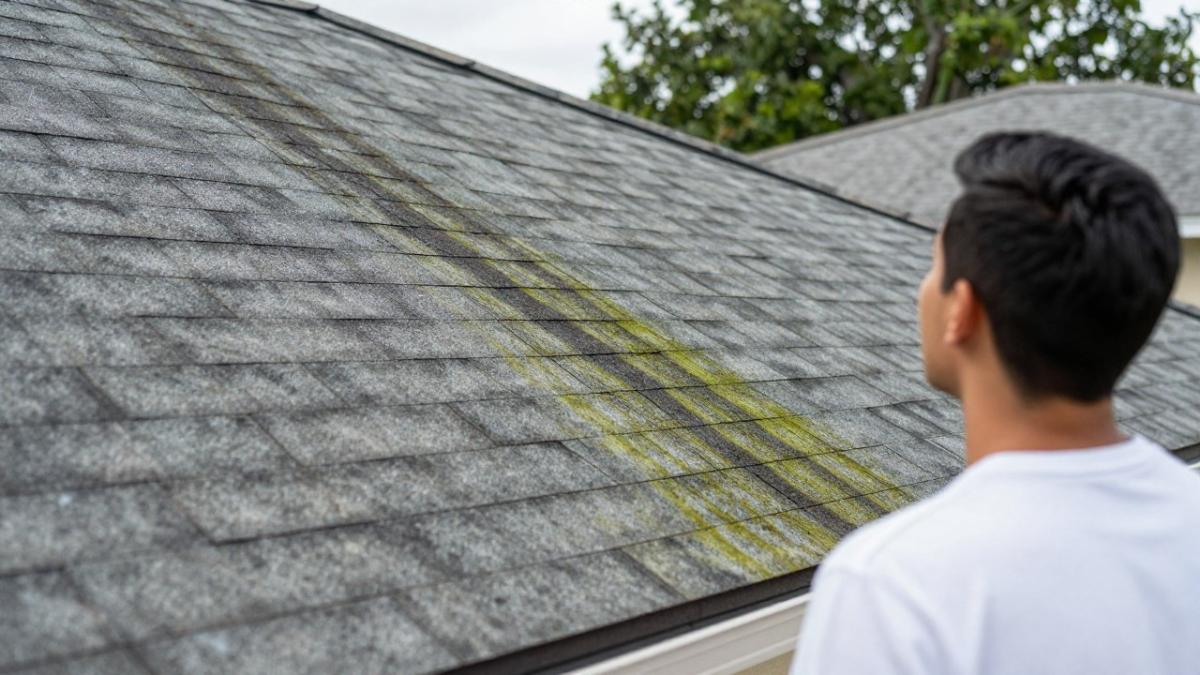
- Dark or greenish streaks running down the shingles
- Patches of moss or lichen near the ridge or valleys
- Black staining that does not rinse off with a garden hose
- Granules collecting in the gutters, which can signal shingle wear
Do not walk on a steep or wet roof to check it yourself. Falls are a serious risk. For ground-level options, see driveway cleaning solutions for concrete.
Soft Washing Versus Pressure Washing a Roof
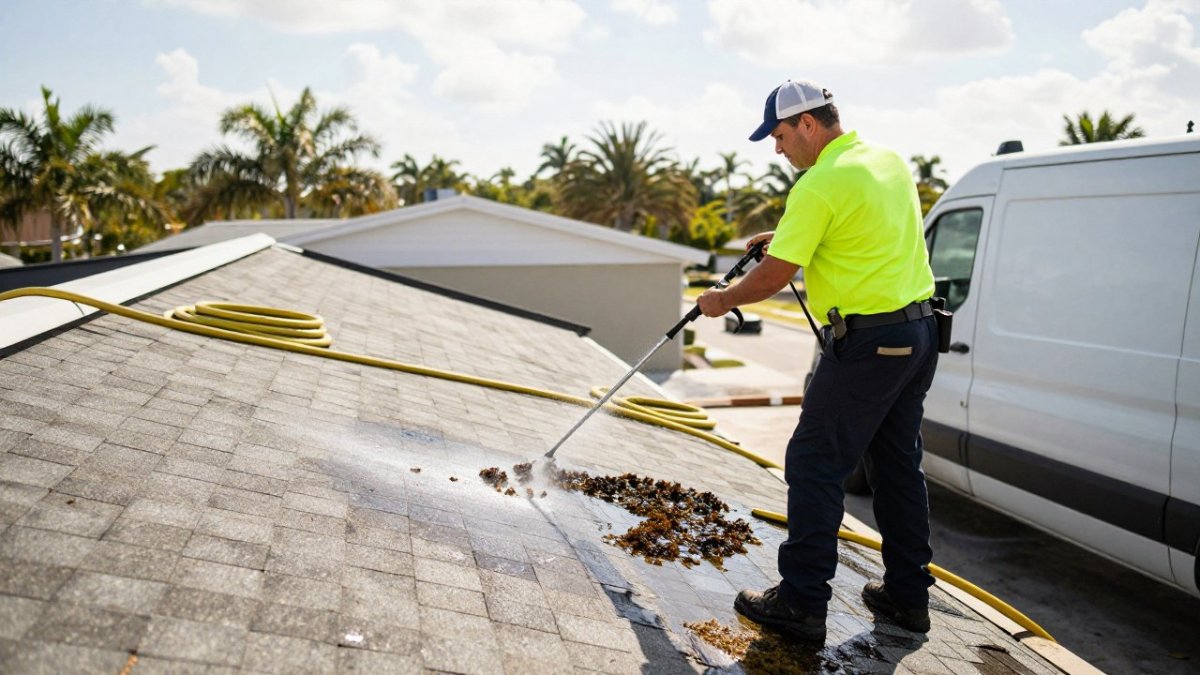
A soft wash roof job uses low pressure and a cleaning solution. Pressure washing uses high force alone. On shingles, high pressure can strip granules, lift tabs, and shorten the roof’s life. Soft washing cleans without that damage.
At Freedom Wash Club, we soft wash roofs to remove the staining.
How to Set Up a Roof Soft Washing Schedule, Step by Step
Setting a soft wash roof schedule means matching the interval to your roof’s condition and local environment.
-
Assess your roof from the ground. Look for dark streaks, moss, or lichen. Note the amount of shade and nearby trees. Do not walk on the roof; use binoculars or a drone if needed.
-
Determine a baseline interval. For most asphalt shingle roofs in moderate conditions, soft wash every 2-3 years. Tile and metal roofs may go 3-5 years. Adjust based on the factors above.
-
Schedule inspections yearly. A professional can spot early signs of growth and recommend whether to wait, treat, or wash. This prevents unnecessary cleaning and reduces wear on the roof.
-
Plan around seasons. In warm, humid climates, schedule washing in spring or fall to avoid peak algae growth and extreme heat.
-
Protect landscaping and manage runoff. Before washing, cover plants and direct runoff away from storm drains. Use biodegradable solutions and follow local regulations for runoff.
For a comprehensive approach to exterior cleaning, consider pairing roof soft washing with house washing, driveway cleaning, and pool deck cleaning to maintain your entire property. Paver sealing can also protect hardscapes from stains and wear.
Book Your Roof Soft Wash With Freedom Wash Club
If your roof shows streaking or growth, schedule a soft wash roof service with Freedom Wash Club and we will set a plan that fits your home. You can also compare soft wash and high-pressure methods before you decide.
For roofs in heavy shade, see when algae and mold need attention. Our team handles driveway, paver, and pool deck cleaning too, so one visit can cover several areas.
Ready to stop guessing about your roof? Schedule service with Freedom Wash Club by phone or text and get a clear plan for keeping your home clean and protected.
Frequently Asked Questions
How often should I soft wash my roof?
The right timing depends on shade, tree cover, and how quickly algae or mold returns. A roof that shows dark streaking or green growth is a good reason to schedule a cleaning sooner. Freedom Wash Club can inspect your roof and recommend a schedule that fits your property.
Do you rinse the roof after soft washing?
Ask any provider how they handle runoff and rinsing before you book.
Can you soft wash a roof too often?
Scheduling a roof cleaning around visible growth and staining is usually more useful than following a fixed calendar. Freedom Wash Club can help you tell whether your roof needs a cleaning now or can wait.
Is soft washing safe for every type of roof?
Soft washing is designed to be gentler than high-pressure cleaning, which makes it suitable for most common roofing materials when it is done correctly. Hiring a licensed and insured professional is a good way to have the roof assessed before work begins.