Table of Contents
- Pressure Washing vs Chemical Cleaning for Driveways: Which Wins?
- How Pressure Washing Works on Concrete
- The Soft Wash Driveway Cleaning Benefits Homeowners Overlook
- How to Clean a Driveway Without a Pressure Washer
- Paver Sealing After Cleaning: Locking In the Results
- DIY vs Professional: Cost, Risk, and HOA Deadlines
- Conclusion: Matching the Method to the Surface
- Frequently Asked Questions
Last Updated: October 4, 2026
Pressure Washing vs Chemical Cleaning for Driveways: Which Wins?
The answer depends on what is growing on your concrete. Pressure washing vs chemical cleaning for driveways is not a contest with one champion; it is about matching force to the problem. At Freedom Wash Club, we have spent over a decade cleaning South Florida driveways, and the pattern is consistent: black and green growth needs chemistry, while embedded grit and tire film respond to pressure.
Winner: Chemical cleaning (soft washing) for mold, algae, and mildew. Choose pressure washing for embedded dirt, sand, and tire marks. Most driveways need both, in that order.
How Each Method Attacks Dirt
Pressure washing removes dirt through mechanical force: a pump pushes water through a nozzle at high PSI, and the impact lifts material off the concrete. Chemical cleaning removes dirt through reaction: a solution breaks down the bond between stain and concrete, so a gentle rinse carries it away. The distinction matters because biological growth anchors itself in the pores of the concrete.
Quick Comparison Table
| Factor | Pressure Washing | Chemical Cleaning |
|---|---|---|
| Best for | Embedded dirt, sand, tire marks | Mold, algae, mildew, organic stains |
| Typical PSI | 2,500-4,000 | Under 500 |
| Chemical use | Minimal | Sodium hypochlorite, surfactants |
| Regrowth risk | Higher on organic stains | Lower when applied correctly |
| Surface risk | Etching, striping, joint damage | Plant and runoff damage if mishandled |
| Skill required | Moderate to high | Moderate |
How Pressure Washing Works on Concrete
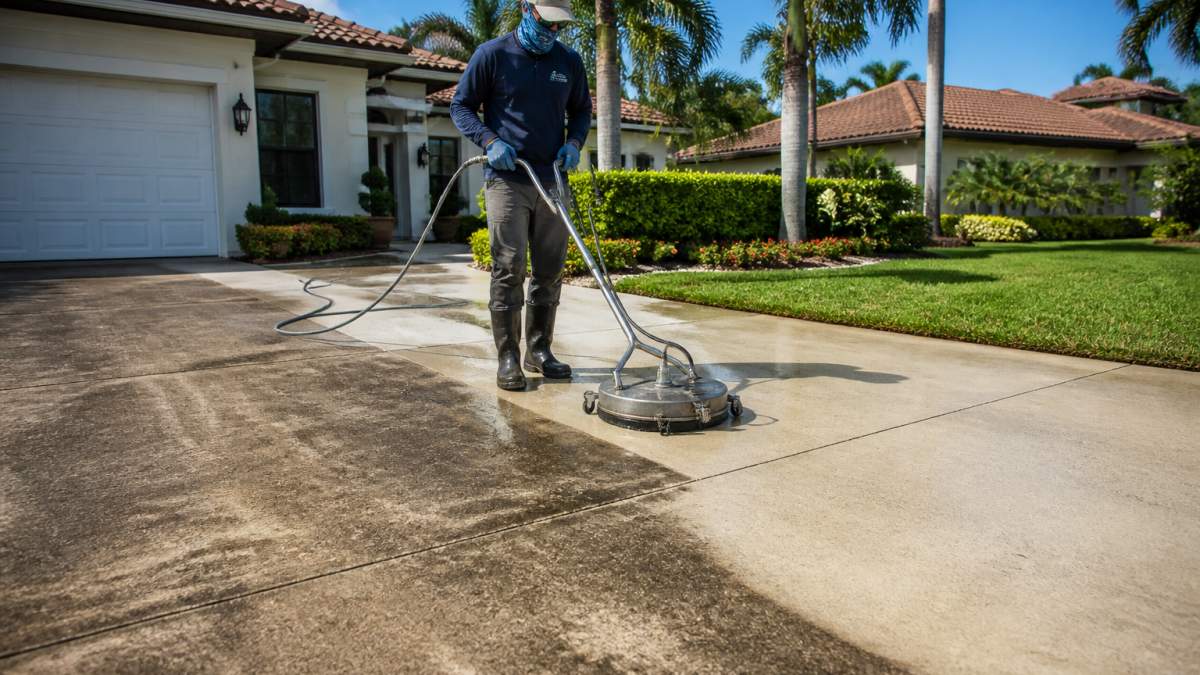
Concrete is porous, and that porosity is both the problem and the opportunity. A pressure washer forces water into those pores and flushes out loose material. Done well, it restores a uniform finish.
PSI, GPM, and Nozzle Choices
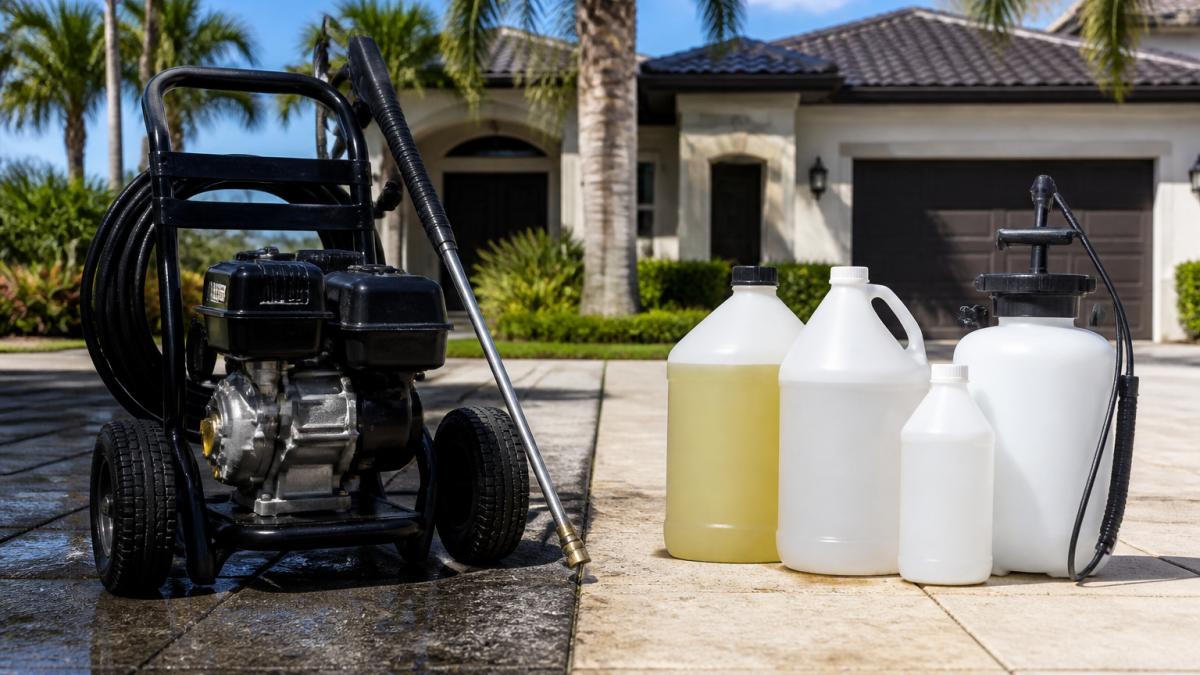
Two numbers decide your result: PSI rating and GPM flow rate. PSI is the force of the water; GPM is the volume delivered per minute. A common mistake is chasing maximum PSI, high pressure with low flow just etches the surface faster. For concrete driveways, a machine in the 2,500 to 4,000 PSI range paired with a surface cleaner delivers even results without streaking.
Where High Pressure Goes Wrong
Etching is the most common failure: the wand lingers in one spot, stripping the top layer of cement paste and leaving a rough, lighter patch that never blends back in. Joint damage is the second, high pressure driven into expansion joints can blow out the filler and undermine the slab edges. The third shows up months later: a driveway that looked clean in April is green again by August, because pressure alone never touched the algae spores underneath.
Never point a pressure washer at full force near the base of a wall, a garage door seal, or a pool deck edge. Water driven into those seams causes damage that costs far more to repair than the cleaning saved.
The Soft Wash Driveway Cleaning Benefits Homeowners Overlook
Soft washing trades force for chemistry, and the result lasts longer. The soft wash driveway cleaning benefits are simple: it kills the organism instead of shaving it off, so the surface stays clean through the rainy season instead of greening over within weeks.
How Sodium Hypochlorite Kills Growth at the Root
Sodium hypochlorite is the active ingredient in most professional soft wash mixes. It destroys the cell structure of mold, mildew, and algae rather than just removing the visible layer. The process relies on dilution ratios and dwell time: the solution goes on, sits long enough to work, then gets rinsed. Rushing the dwell time is the most common reason a soft wash underperforms.
Surfaces That Should Never See High Pressure
Some surfaces fail the moment a pressure wand touches them. Roof shingles lose their granules. Painted wood and stucco strip down to bare material. Paver joints wash out and leave the sand bedding exposed.
That is why soft washing is standard practice for roof cleaning and house wash work, and why we use it on pool decks and screened enclosures too.
How to Clean a Driveway Without a Pressure Washer
You can get a genuinely clean driveway with a pump sprayer, a stiff-bristle brush, and a garden hose. It takes longer, but it is safe for every surface and kills organic growth instead of just blasting it. The part most guides skip: the right cleaner depends on what your driveway is made of, not just what is growing on it.
Match the Cleaner to the Surface, Not Just the Stain
Concrete, clay pavers, and natural stone each react differently to the same bottle of cleaner. Using one product across all three is how homeowners end up with etched pavers or a bleached stone walkway.
| Surface | Safe Approach | Avoid |
|---|---|---|
| Poured concrete | Diluted sodium hypochlorite for organics; degreaser for oil | Acid cleaners on young concrete (under 30 days) |
| Clay or concrete pavers | Oxygen-based or surfactant cleaners; re-sand joints after | High-pressure wands, acid washes that eat joint sand |
| Natural stone (bluestone, travertine, flagstone) | pH-neutral stone cleaner only | Anything acidic, anything with bleach |
| Exposed aggregate | Soft wash with surfactant, low rinse pressure | Direct high-pressure contact that dislodges pebbles |
Eco-Friendly Alternatives Worth Knowing
Most professional soft wash mixes rely on sodium hypochlorite, and it works. But for homeowners who want to avoid it, because of pets, landscaping, a koi pond, or a well, there are legitimate alternatives that still kill organic growth.
- Oxygen-based cleaners (sodium percarbonate): Breaks down into water and oxygen. Slower than bleach, but safe around plants once dry.
- Biodegradable surfactants: Do not kill algae alone, but lift the bond between growth and concrete so a rinse carries it away.
- Citric and oxalic acid blends: Effective on rust and mineral staining. Oxalic is the standard for rust; citric is gentler but needs more dwell time.
None of these match bleach on heavy black mold in shaded areas. Eco-friendly options work best as maintenance between professional cleanings, or on light-to-moderate growth.
Step-by-Step: Chemicals, Dwell Time, and Rinsing
- Clear the driveway and pre-wet surrounding grass and landscaping.
- Mix your cleaner at the label dilution ratio in a pump sprayer. Never mix bleach with ammonia or acid, the fumes are dangerous.
- Apply an even coat, working in sections you can finish before the mix dries.
- Let it dwell for the time the label specifies. Do not let it dry on the surface.
- Agitate stubborn areas with a stiff brush. On pavers, brush along the joints, not across them.
- Rinse thoroughly with a garden hose, pushing residue away from plants and storm drains.
- Repeat on heavy organic staining after the surface dries.
For oil, grease, and tire marks, a dedicated degreaser does what a general cleaner cannot. Simple Green Concrete and Driveway Cleaner is a biodegradable option built to break down petroleum-based stains, and it applies easily with a standard pump sprayer. Deep, aged oil stains usually need a second application and some scrubbing. Rust responds to an oxalic-acid-based product. Efflorescence, the white mineral haze that rises out of concrete, needs a different approach again, and pressure washing alone can make it worse by driving more water into the slab.
Apply your cleaner on an overcast day or in the early evening. Direct sun dries the solution before it finishes working, and a dried chemical film is far harder to rinse off than a wet one.
Never mix cleaning chemicals. Bleach plus acid releases chlorine gas; bleach plus ammonia releases chloramine vapor. Both can send you to the emergency room in a closed garage.
Paver Sealing After Cleaning: Locking In the Results
Sealing is what separates a driveway that stays clean from one that needs redoing twice a year. Paver sealing after cleaning fills the pores and joints so water, dirt, and algae spores have a harder time taking hold. It also decides whether your next cleaning is a light maintenance wash or a full restoration.
Why Sealing Changes the Pressure-vs-Chemical Math
An unsealed paver driveway is a sponge. Water soaks into the joint sand and paver faces, carrying algae spores and dirt with it. That is why an unsealed driveway greens over so fast, and why pressure washing it aggressively is a losing game: every high-pressure pass blows out more joint sand, widening the gaps that collect the next round of growth.
Choosing a Sealer: Film-Forming vs. Penetrating
Two families of sealer dominate residential paver work, and they are not interchangeable.
- Film-forming sealers (acrylic, polyurethane, or urethane): Sit on top of the paver and create a visible sheen. They lock in joint sand well and give a wet-look finish. Downside: they can peel, yellow, or haze if applied over residual moisture or a dirty surface, and they need reapplication every few years.
- Penetrating sealers (siloxane, silane, or siliconate): Soak into the paver and repel water from within. No sheen, no film, no peeling. They breathe better and last longer, but they do not stabilize joint sand the way a film-former does.
For a paver driveway with polymeric sand joints, a film-forming sealer is the common choice because it locks the sand in place. For natural stone or a matte look, a penetrating sealer is usually the better fit.
The Order of Operations That Actually Works
- Clean first, completely. Kill organic growth with a soft wash, treat oil and rust with the right specialty product, and rinse thoroughly.
- Re-sand the joints if needed. If pressure washing or age has left the joints low, top them off with polymeric sand before sealing. Sealer over low joints just locks in the problem.
- Dry fully. Most manufacturers call for 24 to 48 hours of dry time, longer in humid conditions. Sealing over damp pavers traps moisture and clouds the finish.
- Apply in even coats. Two thin coats beat one heavy coat, which pools, dries unevenly, and looks patchy within a season.
- Cure before traffic. Keep vehicles off for the period the label specifies, often 24 to 72 hours depending on the product and weather.
When Sealing Is the Wrong Call
Sealing is not automatic. Skip it if the pavers are still curing (new installations often need 30 to 60 days before sealing), if the surface is efflorescing, or if you are about to pressure wash again soon. Sealing over efflorescence traps the mineral haze under the film, and the only fix is stripping the sealer and starting over. That is why we treat cleaning and sealing as a single service rather than two separate visits: the clean has to be right before the seal goes down, and the seal has to match the surface and the joint sand.
Sealing is not a finishing touch, it is the step that determines how often you clean the driveway and how gently you can clean it. Clean, re-sand, dry, then seal. In that order.
DIY vs Professional: Cost, Risk, and HOA Deadlines
DIY makes sense for light maintenance on a small, flat concrete slab. It stops making sense the moment you add height, chemicals, or a deadline.
Rental equipment, cleaners, and a free weekend will get a homeowner through a basic concrete driveway.
For snowbirds in town only a few months a year, a maintenance plan keeps the property presentable year-round without anyone on site to schedule it.
| Situation | DIY | Professional |
|---|---|---|
| Small flat concrete slab | Good fit | Optional |
| Steep roof or two-story exterior | Not advised | Recommended |
| Active HOA deadline | Risky | Recommended |
| Paver sealing required | Difficult | Recommended |
| Seasonal or vacant property | Impractical | Recommended |
Match the method to the surface, not to the stain. Chemistry handles anything alive; pressure handles anything loose. Get the order wrong and you will be cleaning the same driveway again in a few months.
Conclusion: Matching the Method to the Surface
The pressure washing vs chemical cleaning debate resolves the same way on almost every driveway we see: kill the growth with chemistry, then use pressure only where the surface can take it. Skip either step and the results fade fast.
That is the approach Freedom Wash Club brings to every job. We are licensed and insured, we have more than a decade of experience across driveways, roofs, house washes, and pool decks, and we back the work with a 100% satisfaction guarantee.
Frequently Asked Questions
Is chemical cleaning safer for concrete driveways than pressure washing?
Chemical cleaning is generally safer for the concrete itself because it relies on surfactants and sodium hypochlorite to break down mold, algae, and oil rather than mechanical force. High pressure can erode the cement paste and cause concrete etching when the wand stays too close or the PSI runs too high. That said, chemicals require careful dilution ratios and runoff management to protect landscaping and storm drains, so both methods carry trade-offs.
Does pressure washing damage driveway pavers?
It can. Pavers sit on a sand bed, and a concentrated stream at high PSI can blast out joint sand, loosen individual units, and strip the surface layer. Professionals usually soft wash pavers with lower pressure and then re-sand the joints. After cleaning, paver sealing helps lock the sand in place and slows algae regrowth, which keeps the surface stable through heavy summer rain.
What is the difference between soft washing and pressure washing?
Soft washing uses low pressure, typically under 500 PSI, combined with cleaning solutions to kill mold and algae at the root. Pressure washing relies on high PSI and GPM flow to physically blast away dirt. For driveways, the right choice often depends on the substrate: bare concrete tolerates higher pressure, while pavers, painted surfaces, and screen enclosures need the soft wash approach to avoid damage.
Can I clean my driveway without using harsh chemicals?
Yes. Biodegradable cleaners like Simple Green Concrete and Driveway Cleaner break down oil and grease without harsh solvents, and a stiff brush plus a garden hose handles light dirt. For biological growth, oxygen-based cleaners are a gentler alternative. Heavier mold and algae usually need a stronger treatment, and professionals can choose a dilution that protects nearby plants and lawn.
Will chemical cleaning remove oil stains better than pressure washing?
Usually, yes. Oil soaks into the pores of concrete, so blasting the surface with water only pushes the stain deeper or spreads it. A degreaser applied with dwell time lifts the petroleum out of the pores before rinsing. For old, set-in stains, a hot water extraction pass after the degreaser often finishes the job that cold water and pressure alone cannot.