Table of Contents
- Does Homeowners Insurance Cover Roof Cleaning?
- Does Homeowners Insurance Cover Roof Leaks from Debris and Damage?
- Roof Cleaning After a Storm: What Your Insurance May Cover
- How Often to Clean a Roof and Maintain Coverage
- Soft Wash Roof Cleaning and Insurance Requirements
- What to Do When Your Insurer Requests Roof Cleaning
- Protecting Your Coverage: Documentation and Professional Care
- Frequently Asked Questions
Last Updated: October 10, 2026
Does Homeowners Insurance Cover Roof Cleaning?
Most homeowners don’t realize that does homeowners insurance cover roof cleaning is a more complicated question than it first appears. The short answer is no, routine roof cleaning is not covered by standard homeowners insurance policies. But the longer answer matters much more, especially if your insurer has flagged moss, algae, or debris on your roof.
Here’s what you need to know: insurance covers sudden damage from storms, falling trees, and weather events. It does not cover regular maintenance, including cleaning. That said, ignoring roof buildup can create real problems with your coverage. At Freedom Wash Club, we work with homeowners who face exactly this situation, they receive a notice from their insurer demanding roof cleaning, or they worry that visible mold and algae might affect their policy renewal.
The distinction between cleaning and damage mitigation is where things get tricky. When your insurer asks you to clean your roof, they’re not saying the cleaning itself is covered. They’re saying that visible growth or debris could lead to damage, and they want you to prevent it before a claim becomes necessary.
Does Homeowners Insurance Cover Roof Leaks from Debris and Damage?
Roof leaks caused by sudden damage are covered. Roof leaks caused by neglect are not.
Your homeowners insurance will cover a roof leak if it results from a covered peril, a storm, hail, high winds, or a falling tree. These are sudden and accidental events. What insurance will not cover is a leak that develops because you ignored maintenance or allowed debris to accumulate.
This is where the coverage limits matter. If a storm damages your roof and causes water damage inside your home, your policy covers both the roof repair and the interior damage. But if water seeps in because gutters were clogged with debris, or because moss growth cracked shingles over time, that’s gradual damage. Gradual damage is excluded from coverage.
The key distinction is simple: sudden and accidental damage is covered; gradual wear and neglect are not. Your insurer expects you to maintain your roof. That means clearing debris, removing moss and algae growth, and addressing visible problems before they become expensive ones.
If you receive a notice from your insurer requesting roof cleaning, they are protecting their own interests, and yours. They want to prevent a claim by having you address the condition now. This is not optional if you want to keep your coverage active.
Roof Cleaning After a Storm: What Your Insurance May Cover
After a storm, your roof needs inspection and cleanup. Insurance covers damage repair, but cleanup costs and debris removal are typically your responsibility, unless the debris removal is part of active damage mitigation.
When a storm passes through, branches, shingles, and debris scatter across your roof. Your insurance will pay to repair or replace damaged shingles and cover the cost of fixing leaks that result from the storm damage. However, the labor to remove fallen branches, sweep debris, or haul away storm wreckage is generally considered cleanup, not repair, and falls to you.
There is an important exception: if debris removal is necessary to prevent further damage, for example, removing a large branch that is actively damaging the roof, blocking water drainage, or trapping moisture, some policies may cover it as part of the damage mitigation process. This depends on your specific policy language and how your adjuster evaluates the situation.
The practical sequence after a storm:
- Hire a licensed contractor to inspect your roof. Document any visible damage with photographs before cleanup begins. This establishes the baseline for your claim.
- File a damage claim with your insurer. Include photos and the contractor’s assessment. The adjuster will determine what is covered under your policy.
- Ask the adjuster explicitly what cleanup, if any, is included. Some policies cover debris removal as part of the claim; others do not. Get this in writing.
- Arrange for professional cleanup and repairs separately if needed. If cleanup is not covered, you pay for it. If it is covered, the insurer will authorize it as part of the claim.
- Keep all invoices and correspondence. This protects you if questions arise later.
Why cleanup matters beyond insurance: Many homeowners delay cleanup after a storm, but debris left on the roof causes additional damage. Branches block gutters, preventing proper water drainage. Leaves and twigs trap moisture against the roof surface, accelerating deterioration and creating conditions for moss and algae growth. Shingle granules loosened by the storm wash away if not cleared promptly.
This is also where professional exterior cleaning services become valuable. Beyond roof cleanup, storms often leave debris in gutters, on driveways, and around the foundation. A comprehensive approach to post-storm property care includes roof inspection and cleaning, gutter clearing, driveway cleaning to remove debris and prevent staining, and assessment of other exterior surfaces.
How Often to Clean a Roof and Maintain Coverage
Clean your roof every 1-3 years, depending on your climate and tree coverage. This is not optional if you want to keep your coverage active.
Your homeowners insurance policy includes an implicit requirement: you must maintain your property in reasonable condition. This means regular roof maintenance. If your insurer discovers that you’ve ignored visible moss, algae, or debris accumulation, they can deny a claim or refuse to renew your policy.
The frequency depends on where you live and what’s around your home. Homes in humid climates with heavy tree coverage need cleaning more often, sometimes annually. Homes in drier areas with minimal tree coverage may only need cleaning every 2-3 years. The rule is simple: if you can see visible growth or debris, it’s time to clean.
This is not just about insurance compliance. Moss and algae accelerate shingle deterioration. They trap moisture against the roof surface, which leads to rot and leaks. Debris clogs gutters and prevents proper water drainage. These are genuine threats to your roof’s lifespan.
Keep records of your roof maintenance. Document when you had it cleaned. Take photos showing the roof in good condition. This documentation protects you if your insurer ever questions whether you’ve maintained your property. It also helps if you file a claim, it shows you’ve been responsible.
Soft Wash Roof Cleaning and Insurance Requirements
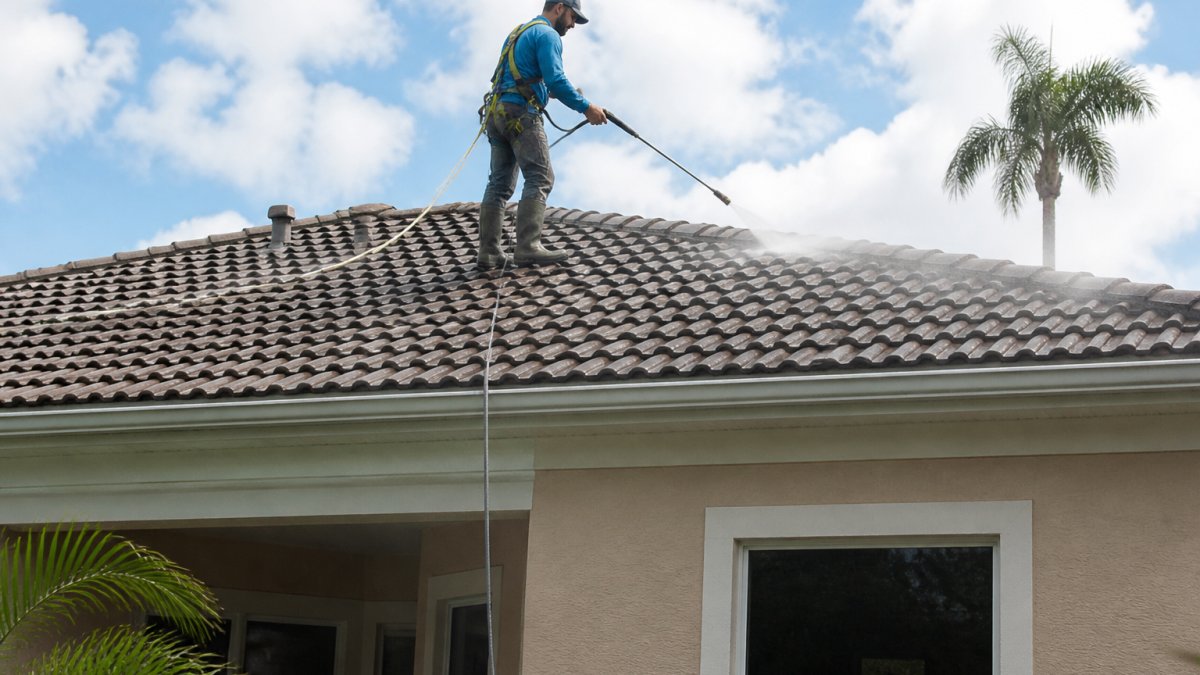
Soft wash roof cleaning is the safe method that insurers prefer. High-pressure washing can void your warranty, damage shingles, and create liability issues that may affect your coverage.
Why pressure washing damages roofs:
High-pressure washers operate at 1,500 to 4,000 pounds per square inch (PSI). At these pressures, water forces its way under shingles, strips protective granules from asphalt shingles, cracks clay and concrete tiles, and can puncture metal roofing. The damage is not always visible immediately, water driven under shingles can cause rot and leaks months later.
How soft washing works safely:
Soft washing uses low-pressure water (typically 500 PSI or less) combined with specialized cleaning solutions designed to remove moss, algae, mold, and debris without damaging the roof surface.
Soft washing is safe for all roofing materials:
- Asphalt shingles: Low pressure preserves the protective granule layer.
- Clay and concrete tiles: Soft wash prevents cracking and water infiltration.
- Metal roofing: Low pressure avoids denting and coating damage.
- Wood shakes: Soft wash prevents splitting and rot without stripping the surface.
What insurers expect:
When your insurer requests roof cleaning, they expect it to be done using methods that do not create new damage or liability. This means soft washing.
Documentation and contractor selection:
When you hire a professional contractor, confirm in writing that they use soft wash methods. Ask whether they are licensed and insured. Request that they provide proof of insurance before work begins. A reputable contractor will have general liability insurance that covers accidental damage during cleaning. This protects you if something goes wrong.
Beyond roof cleaning, professional exterior home cleaning services often include soft wash techniques for other surfaces as well, house wash for siding, driveway cleaning, pool deck cleaning, and paver sealing all benefit from low-pressure, solution-based methods that clean effectively without damage.
After cleaning is complete:
Request a completion certificate from the contractor stating that soft wash methods were used and the roof is clean. Take before-and-after photos. Send this documentation to your insurer along with the invoice. This demonstrates that you’ve complied with their request using safe, industry-standard methods.
What to Do When Your Insurer Requests Roof Cleaning
Respond promptly. Document the work. Keep records. This protects your coverage.
If you receive a letter from your insurer requesting roof cleaning, treat it seriously. This is not a suggestion. It’s a condition of your coverage. Failure to comply can result in policy nonrenewal or cancellation.
Here’s what to do:
- Schedule cleaning within 30 days. Most insurers give you a deadline. Meet it.
- Hire a licensed, insured contractor. Use soft wash methods. Avoid high-pressure equipment.
- Get a written estimate before work begins. This documents the scope and cost.
- Take before and after photos. Document the condition before cleaning and the results after.
- Request a completion certificate. A professional contractor will provide written confirmation that the work is complete.
- Send documentation to your insurer. Include photos and the completion certificate. This shows you’ve complied with their request.
This process protects you in two ways. First, it keeps your coverage active. Second, it demonstrates that you’ve taken reasonable steps to maintain your property. If a problem develops later, you have proof that you addressed the condition when asked.
Don’t delay. Insurance companies track compliance carefully. If you ignore a cleaning request and your policy is canceled, you’ll face difficulty finding new coverage at a reasonable rate.
Protecting Your Coverage: Documentation and Professional Care
Maintenance records are your best defense against claim denial and policy cancellation.
Your homeowners insurance depends on the assumption that you’re maintaining your property. When you have visible problems, moss, algae, debris, and you ignore them, you’re giving your insurer a reason to question whether you deserve coverage.
Create a simple maintenance log. Write down the date you had your roof cleaned. Note the contractor’s name and license number. Keep the invoice. File the photos. This documentation proves you’ve been responsible.
Professional care matters too. When you hire Freedom Wash Club or another licensed contractor, you’re getting work that meets industry standards. This matters if your insurer ever inspects your property. They want to see that maintenance has been done professionally, not with DIY shortcuts.
The relationship between maintenance and coverage is straightforward: insurers cover sudden, unexpected damage. They don’t cover problems that result from neglect. If you maintain your roof regularly, document the work, and respond promptly to insurer requests, you’re protecting your coverage for the things that matter, storm damage, falling trees, and other events beyond your control.
Your homeowners insurance protects you from catastrophic loss, but only if you hold up your end of the agreement. That means maintaining your roof, responding to insurer requests, and documenting your care. If you’re facing a cleaning notice or worried about visible roof growth, Freedom Wash Club can help. We provide professional soft wash roof cleaning that meets insurance standards, protects your roof, and keeps your coverage secure. Get a free quote and take the first step toward protecting your home.
Frequently Asked Questions
Does homeowners insurance cover routine roof cleaning?
Most homeowners insurance policies do not cover routine roof cleaning as maintenance. Insurance covers sudden and accidental damage, not wear and tear. However, if your insurer requests cleaning to prevent damage or as part of damage mitigation, costs may be covered. Check your specific policy and contact your agent to understand what cleaning-related expenses qualify for reimbursement under your coverage.
Will homeowners insurance pay for roof cleaning after a storm?
Insurance may cover roof cleaning after a storm if the cleaning is part of damage mitigation or necessary to assess storm damage. If debris, fallen branches, or hail damage requires cleaning to inspect the roof properly, this could be a covered expense. Document all storm damage with photographs and contact your insurer before cleaning to confirm coverage and avoid claim denial.
Can neglecting roof maintenance affect an insurance claim?
Yes. Failure to maintain your roof can result in claim denial. Insurers expect homeowners to perform reasonable maintenance, including removing debris, cleaning gutters, and addressing visible issues. If your insurer can prove neglect caused damage, they may refuse coverage. Regular maintenance and cleaning help protect both your property and your insurance claim eligibility.
Is soft washing safe for roof shingles and insurance purposes?
Soft washing is generally safer than pressure washing for roof shingles because it uses low pressure and specialized cleaning solutions. Many insurers prefer soft washing over high-pressure methods, which can damage shingles and void warranties. If your insurer requests roof cleaning, confirm they approve the cleaning method before proceeding to ensure the work qualifies for coverage.