Table of Contents
- What Happens If You Ignore HOA Warnings: The Escalation Timeline
- Common HOA Violations That Trigger Warnings
- How Long to Fix an HOA Violation: Cure Periods Explained
- How to Dispute an HOA Fine: A Step-by-Step Response Plan
- How to Write an HOA Warning Letter Response: Template and Tips
- Fines, Liens, and Foreclosure: What the HOA Can Legally Do
- Frequently Asked Questions
Last Updated: October 9, 2026
What Happens If You Ignore HOA Warnings: The Escalation Timeline
Ignoring an HOA warning does not make it disappear. In most homeowners associations, an unanswered warning starts a paper trail that ends in fines, a lien, or a collections file.
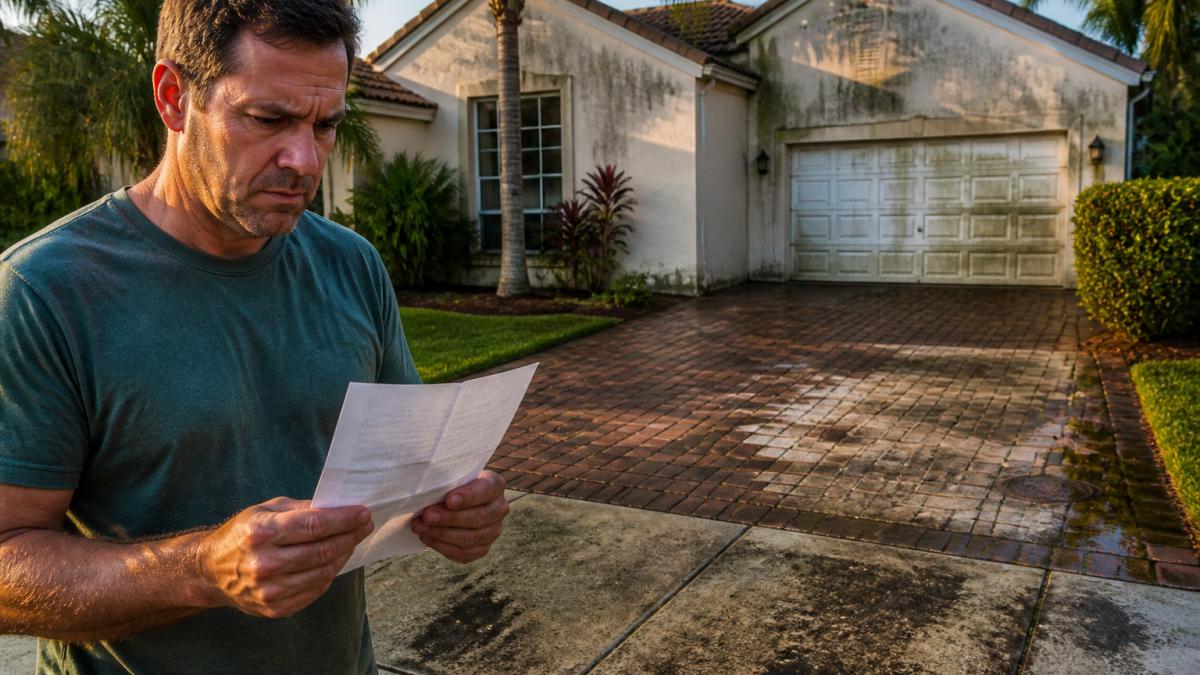
At Freedom Wash Club, we work with homeowners every week who are cleaning up a violation notice under deadline.
Here is the part most guides miss: the association does not have to prove you were wrong to fine you.
Stage 1: Friendly Reminder or Courtesy Letter
The first letter is usually informal. It may come from a manager, a board member, or the management company, and it often carries no fine. Treat it as a warning shot, not junk mail. Save the letter and note the date it arrived, because it starts the clock on everything that follows.
Stage 2: Formal Violation Notice and Cure Period
A formal violation notice is a written notice that names the rule, describes the problem, and gives you a set time to fix it. This window is called a cure period. Many governing documents and state statutes require the association to send this notice before it can fine you. Miss the deadline and the fine usually starts the day after it closes.
Stage 3: Hearing Notice and the Board’s Decision
If the cure period passes without compliance, the board typically schedules a hearing. The hearing notice should state the date, the alleged violation, and your right to attend and present evidence. Many governing documents and state statutes require this step before fines can be imposed. If you do not attend, the board can usually proceed without you and treat its decision as final.
Stage 4: Fines Begin to Accrue
Once the board authorizes fines, they usually accrue on a set schedule, often daily or per occurrence, until the violation is cured. The rate and cap come from your governing documents and, in many states, from statute. A common pattern is a per-day fine that stops only when the condition is fixed and confirmed. This is why a small exterior issue can become a large balance quickly.
Stage 5: Lien, Collections, and Legal Escalation
Unpaid fines can be recorded as a lien against the property, and the association may add late fees, collection costs, and attorney fees. In limited cases, and only where state law and the governing documents allow it, an association may pursue foreclosure. Each stage costs more than the last, and each one is harder to undo.
| Stage | What You Receive | Typical Deadline | If You Ignore It |
|---|---|---|---|
| 1 | Courtesy letter | None stated | Formal notice follows |
| 2 | Violation notice | Cure period (often 14-30 days) | Hearing notice follows |
| 3 | Hearing notice | Set hearing date | Board decides without you |
| 4 | Fine assessment | Accrues per day or occurrence | Balance grows; lien risk rises |
| 5 | Lien or collections notice | Varies by state and documents | Attorney fees, possible foreclosure |
How the Timeline Changes by Violation Type
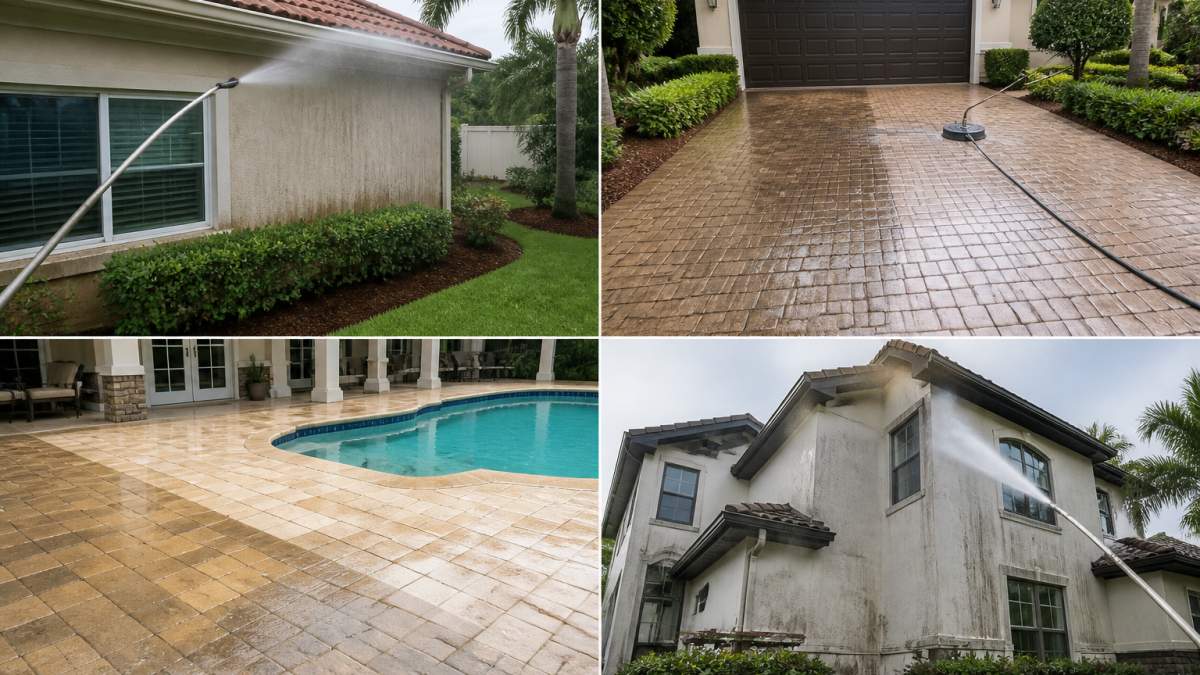
Not every violation moves at the same speed. Minor cosmetic issues, such as a stained driveway or faded paint, often come with a longer cure period and a warning before fines. Ongoing conditions, such as mold or algae streaking on a roof or green growth on a pool deck, tend to escalate faster because they are visible and recurring. Safety-related violations, such as blocked walkways or structural concerns, can trigger immediate action with little or no cure period.
The Practical Takeaway
If you received a notice about roof mold, driveway stains, or algae on a pool deck, the fastest way to stop the clock is to schedule the work and put the date in writing to the board. A confirmed appointment is evidence of good-faith compliance, and it often pauses escalation while the work is completed.
Common HOA Violations That Trigger Warnings
Exterior appearance drives most violation letters. Boards enforce architectural standards, property maintenance rules, and cleanliness requirements because they protect everyone’s property value. In our experience, the same handful of issues come up again and again:
- Mold, mildew, or black algae streaking on the roof
- Driveways stained with oil, rust, or tire marks
- Green algae on pool decks and screened lanais
Roof and driveway complaints spike after a wet season. A roof that looked fine in January can turn streaked and dark by August, and that is usually when the letter arrives.
Photograph the violation the day you get the notice. A dated photo set proves the condition and the date, which matters if you dispute the fine or need to show the work was scheduled.
How Long to Fix an HOA Violation: Cure Periods Explained
Cure periods usually run 14 to 30 days, but the exact number comes from your governing documents, not from a general rule. Some associations allow longer for repairs that need a contractor or permit.
Check these three places, in this order:
- Your CC&Rs, for the enforcement section
- Your bylaws and rules and regulations
- The notice itself, which should state the deadline
If the notice does not state a deadline, ask the management company in writing for the cure period and the rule you allegedly broke. That request creates a record and often slows the process down.
How to Dispute an HOA Fine: A Step-by-Step Response Plan
Disputing an HOA fine starts with a written response, not a phone call. A call leaves no record, and boards act on documents. Follow this plan:
- Read the notice and note the rule cited, the deadline, and the fine amount if one is stated.
- Check your governing documents for the enforcement section, the cure period, and the hearing procedure.
- Gather evidence: dated photos, receipts, contractor quotes, or scheduling confirmations.
- Send a written response before the cure period ends, even if you plan to comply.
- Request a hearing in writing if a fine has already been assessed or is threatened.
- Attend the hearing and bring your documentation, including photos and any written correspondence.
- Ask for the decision in writing, including how the fine was calculated and what must be done to stop it.
Homeowners have real protections here. Many states require written notice, a reasonable opportunity to be heard, and a chance to cure before fines begin. Your governing documents may add more. The Community Associations Institute guide to enforcement and due process explains how boards are expected to apply those procedures.
Sample Language for a Written Response
You do not need a lawyer to write a clear response. Keep it short, factual, and dated. For example:
I received your notice dated [date] regarding [rule cited]. I am requesting a hearing and an extension of the cure period because [brief reason]. I have scheduled the work for [date] and attached a contractor quote. Please confirm in writing how this matter will proceed.
That single paragraph creates a record, requests your hearing, and shows good-faith effort. Boards respond better to facts and dates than to frustration.
What to Do When the Warning Is Mistaken or Never Received
If the violation is not yours, or you never got the letter, respond in writing anyway. State plainly that you did not receive notice, describe the actual condition, and attach photos.
If the notice names the wrong property or the wrong rule, say so directly and ask the board to identify the specific provision in the governing documents. If the condition was already corrected before the notice arrived, send the dated photos and any receipts.
How to Request an Extension or a Compliance Plan
If the work needs a contractor, a permit, or better weather, ask for an extension in writing before the cure period ends. Propose a specific date and explain the reason. Many boards will grant a short extension for exterior work such as roof cleaning, driveway cleaning, or pool deck cleaning when the homeowner shows a scheduled appointment. If the violation is ongoing, ask for a compliance plan with milestones instead of a single deadline.
Never ignore a hearing notice, even if you plan to pay the fine. Skipping the hearing usually waives your right to challenge the fine later, and the board can then treat it as final.
If the violation is exterior dirt, mold, or algae, this is where Freedom Wash Club fits. We handle paver sealing, soft wash roof cleanings, house wash and exterior home cleaning, driveway cleaning, and pool deck cleaning for homes and commercial properties. We are licensed and insured with over a decade of experience, and you can schedule by phone or text with no in-person estimate. One visit often clears the condition the board flagged, and our work is backed by a 100% satisfaction guarantee.
How to Write an HOA Warning Letter Response: Template and Tips
A good response letter is short, calm, and factual. Use this template:
[Date]
[Association name] Board of Directors
Re: Violation notice dated [date], regarding [rule cited]
Dear Board Members,
I received your notice about [issue] at [property address]. I want to resolve this promptly.
I have [scheduled the work for / completed the work on] [date]. Attached are [photos, a contractor quote, or a receipt].
I am requesting [a hearing / an extension of the cure period] because [brief reason].
Please confirm in writing how this matter will proceed.
Sincerely,
[Your name] [Unit or address]
Keep your tone neutral. Boards respond better to facts and dates than to frustration. If you are dealing with roof mold, driveway stains, or algae on a pool deck, booking the work before you write the letter gives you a real date to cite.
Fines, Liens, and Foreclosure: What the HOA Can Legally Do
The short answer: an HOA can fine you, place a lien on your home for unpaid amounts, and in limited cases pursue foreclosure.
What most people do not realize is how much state law varies. The HUD homeowner resources and your state’s statutes are the places to start.
Unpaid fines can also be treated as an assessment, which means late fees and collection costs may pile on top.
Homeowners who received a notice with a hard deadline and need the exterior work done fast, before fines start.
If the violation is exterior dirt, mold, or algae, this is where Freedom Wash Club fits. We handle paver sealing, soft wash roof cleanings, house wash and exterior home cleaning, driveway cleaning, and pool deck cleaning for homes and commercial properties across South Florida. We are licensed and insured with over a decade of experience, and you can schedule by phone or text with no in-person estimate. One visit often clears the condition the board flagged, and our work is backed by a 100% satisfaction guarantee.
Frequently Asked Questions
What happens if you ignore an HOA warning?
Ignoring an HOA warning typically triggers a sequence: a courtesy reminder, then a formal violation notice with a cure period, then a hearing, and finally daily fines. If fines go unpaid, the HOA can place a lien on your home and, in some states, pursue foreclosure. The exact steps depend on your governing documents and state law, but the pattern is consistent: the longer you wait, the more expensive and harder to reverse the outcome becomes.
How long does an HOA have to give you to fix a violation?
Most governing documents and state statutes require a reasonable cure period, commonly 10 to 30 days for exterior maintenance issues like a dirty driveway or moldy roof. Check your CC&Rs and your state’s HOA statute for the specific window. If the deadline is tight, schedule professional cleaning immediately and notify the board in writing that you are addressing it.
Can you dispute an HOA violation notice?
Yes. You have the right to request a hearing, present evidence, and challenge the violation. Common grounds include mistaken identity, selective enforcement, an unenforceable rule, or lack of proper notice. Submit a written request within the deadline stated in your notice. Bring photos, receipts, and any relevant correspondence. If the board denies your appeal, you may have grounds for mediation or legal action under your state’s HOA laws.
What are the most common HOA violations that lead to fines?
The most frequent violations involve exterior maintenance: dirty driveways, mold or algae on roofs, faded paint, overgrown lawns, and unapproved architectural changes. In South Florida, mildew and algae stains on roofs and driveways are a top complaint because they spread quickly in humidity. Other common issues include parked vehicles, trash bins left out, and pet violations. Addressing exterior cleaning promptly is often the fastest way to resolve a violation.
The hardest part of an HOA warning is not the letter. It is the clock. Cure periods are short, fines start quietly, and a lien is much harder to remove than a stain. Freedom Wash Club helps homeowners close out exterior violations before they escalate, with licensed and insured crews, easy phone or text scheduling, no in-person estimate needed, and a 100% satisfaction guarantee. Get started with Freedom Wash Club and get your property back into compliance before the next deadline.