Table of Contents
- Is Pressure Washing Worth It for HOA Compliance?
- Understanding HOA CC&Rs, Bylaws, and Exterior Maintenance Standards
- How Often to Pressure Wash Your Driveway and Home Exterior
- Soft Wash Roof Cleaning Benefits vs. Pressure Washing for HOA Standards
- How to Resolve HOA Maintenance Disputes and Violation Notices
- Paver Sealing for HOA Compliance and Long-Term Property Protection
- DIY Pressure Washing vs. Professional Services: A Cost-Benefit Analysis
- Frequently Asked Questions
Last Updated: October 2, 2026
Is Pressure Washing Worth It for HOA Compliance?
Homeowners in HOA communities face a constant tension: keep your property spotless to avoid violation notices and fines, or risk expensive penalties and legal disputes.
Is pressure washing worth it for HOA compliance? Yes, but only when you understand what triggers violations, how often you truly need cleaning, and which surfaces require soft washing instead of high-pressure methods. The wrong approach costs more in the long run.
Below, we’ll walk you through the real costs of non-compliance, when to pressure wash, and why soft washing your roof might be the smarter choice than traditional pressure washing.
A single violation notice often requires cleaning within 30 days. Professional pressure washing prevents costly fines and legal disputes, and protects your property value in the process.
Understanding HOA CC&Rs, Bylaws, and Exterior Maintenance Standards
Your HOA’s Covenants, Conditions, and Restrictions (CC&Rs) define what “clean” actually means. These aren’t suggestions, they’re enforceable rules that can result in fines, liens, or forced sales if you ignore them consistently.
Most CC&Rs require that homeowners maintain their property’s exterior in a “neat and well-maintained” condition. This typically includes removing visible dirt, mold, algae, and debris from driveways, siding, roofs, and patios.
The problem: CC&Rs are vague by design. “Well-maintained” means different things to different people.
That’s why reading your specific CC&Rs matters.
Freedom Wash Club works with homeowners to interpret their specific HOA requirements and develop cleaning schedules that satisfy their bylaws without over-cleaning.
Ignoring a violation notice doesn’t make it go away, it escalates it. Most HOAs follow a progression: warning letter → violation notice → lien. Once a lien is placed on your property, selling becomes nearly impossible without settling the debt.
How Often to Pressure Wash Your Driveway and Home Exterior
The frequency of pressure washing depends on your climate, the surface material, and your HOA’s specific standards. There’s no universal answer, but understanding your property’s baseline helps you avoid violations.
Driveways and walkways accumulate stains from oil, dirt, and algae growth. In humid climates, algae returns quickly. Most homeowners need driveway cleaning every 12-18 months to maintain HOA compliance.
Siding and exterior walls require less frequent attention unless you live near trees or in a damp environment.
Roofs are where timing gets tricky. Moss, algae, and lichen grow slowly but visibly. Many HOAs don’t require roof cleaning until organic growth becomes obvious, usually 18-24 months in warm, humid climates. However, waiting that long risks structural damage and higher cleaning costs later.
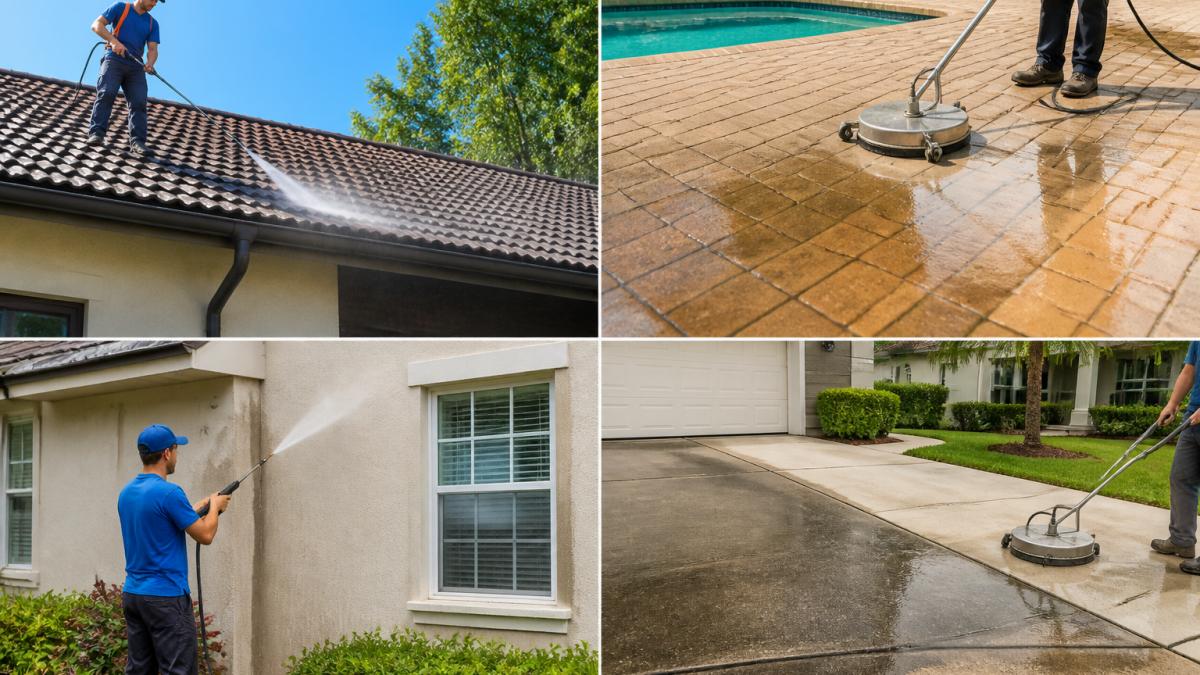
Pool decks and patios show dirt and algae quickly and are often the first surfaces HOAs inspect.
The real cost calculation isn’t just about compliance, it’s about preventing the expensive repairs that come after mold, mildew, and algae damage your property’s structural integrity.
Set a cleaning schedule based on your HOA’s violation history, not just industry averages. If your neighborhood has a pattern of driveway violations, prioritize that surface. If roof violations are common, invest in soft washing your roof before organic growth becomes visible.
Soft Wash Roof Cleaning Benefits vs. Pressure Washing for HOA Standards
This is where most homeowners make a costly mistake.
Pressure washing, high-pressure water jets that blast away dirt, works well for driveways and concrete. On roofs, it’s dangerous and damaging. High-pressure water can:
- Strip protective granules from asphalt shingles, shortening roof lifespan by 5-10 years
- Force water under shingles, causing leaks and rot
- Damage flashing, gutters, and seals
- Create liability issues if a technician falls or causes property damage
Soft washing uses low-pressure water combined with eco-friendly detergents to remove mold, algae, moss, and lichen without damaging roofing materials.
For HOA compliance, soft wash roof cleaning benefits include:
- Longer-lasting results: Algae and moss don’t return for 18-24 months instead of 6-12 months
- No structural damage: Your roof stays intact, protecting your property value
- Safer process: Technicians use safer equipment and methods, reducing liability
- Better for insurance: Many insurers view soft washing favorably; pressure washing can void coverage
The trade-off: soft washing offers a longer interval between cleanings and protection of your roof’s structural integrity, making it a smarter long-term investment for HOA compliance.
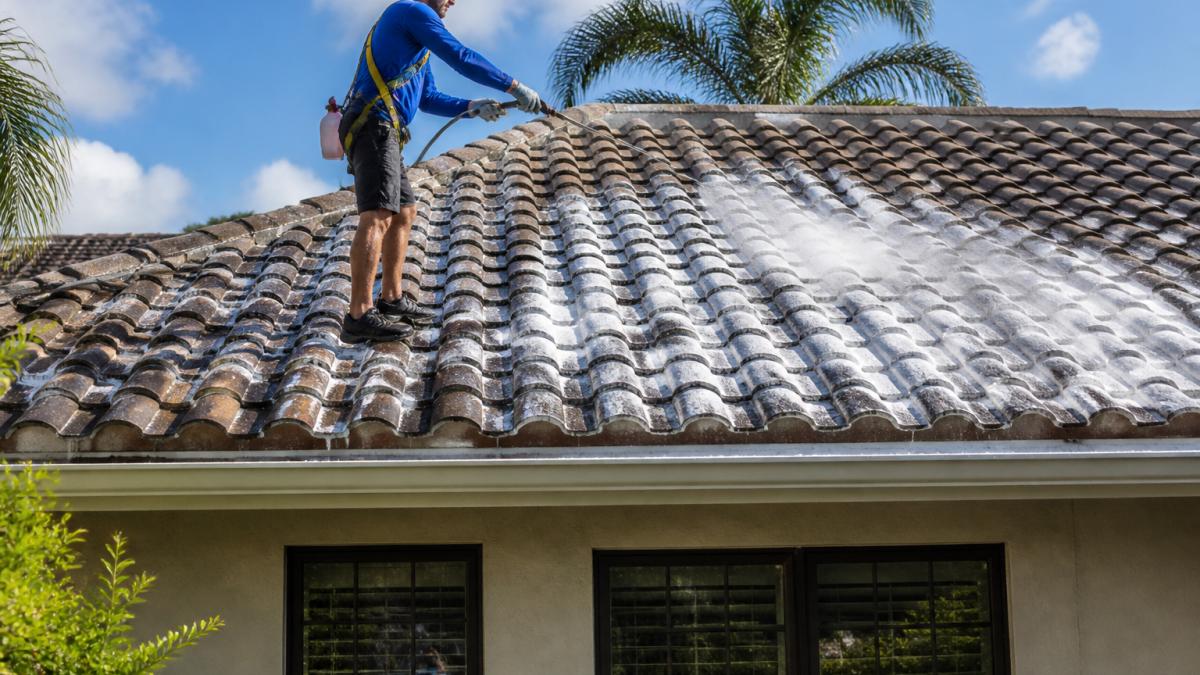
If your HOA has flagged your roof for algae or moss, soft washing is the solution that satisfies the violation while protecting your investment.
How to Resolve HOA Maintenance Disputes and Violation Notices
Receiving a violation notice is stressful, but it’s not the end of the conversation. Many homeowners don’t realize they have options.
Step 1: Understand the violation. Request specific details from your HOA. What surface triggered the violation?
Step 2: Document the baseline. Take dated photos of your property before cleaning.
Step 3: Respond within the timeline. Most HOAs give 30 days to cure a violation. Don’t ignore the deadline.
Step 4: Use professional services strategically. A violation notice is the moment to hire a professional like Freedom Wash Club.
Step 5: Request re-inspection. After cleaning, ask the HOA to formally re-inspect your property.
Step 6: Establish a maintenance schedule. If violations keep recurring, propose a regular cleaning schedule to your HOA in writing.
Paver Sealing for HOA Compliance and Long-Term Property Protection
If your driveway, patio, or pool deck is made of pavers, sealing is one of the most underrated investments for HOA compliance and property protection.
Unsealed pavers absorb water, dirt, and oil stains. Once stains set in, they’re nearly impossible to remove with pressure washing alone. Sealed pavers resist staining, making them easier to clean and maintain at the standard your HOA requires.
Benefits of paver sealing for HOA compliance:
- Prevents staining: Sealed pavers shed water and oil instead of absorbing them, reducing visible dirt and grime
- Easier maintenance: Regular cleaning keeps sealed pavers looking new with minimal effort
- Longer intervals: You can extend time between professional cleanings because stains don’t accumulate as quickly
- Protects against fines: A well-maintained sealed paver surface rarely triggers HOA violations
Long-term property protection:
Unsealed pavers crack, shift, and deteriorate faster because water penetrates the surface and freezes. Sealing protects against freeze-thaw damage, extends paver lifespan, and maintains property value.
Freedom Wash Club combines professional paver cleaning with expert sealing to ensure your driveways, patios, and pool decks stay compliant and protected.
Homeowners with paver driveways or patios who want to reduce staining, extend cleaning intervals, and protect their investment long-term. Sealing is especially valuable if your HOA has a history of driveway violations.
DIY Pressure Washing vs. Professional Services: A Cost-Benefit Analysis
The temptation to DIY pressure washing is understandable, and the work looks simple. But the hidden costs often outweigh the savings.
| Factor | DIY Pressure Washing | Professional Service |
|---|---|---|
| Equipment cost | $100-$400 (purchase) or $50-$100/day (rental) | Included in service price |
| Learning curve | High risk of surface damage | Technicians know safe pressure settings |
| Time investment | 4-8 hours per job | 1-2 hours; scheduled at your convenience |
| Liability | You’re responsible for injuries or damage | Professional insurance covers damage |
| Results quality | Inconsistent; may miss spots or damage surfaces | Consistent, professional results |
| HOA satisfaction | HOA may request re-cleaning if results are poor | Professional work rarely triggers re-inspection |
| Frequency | More frequent (6-12 months) as DIY results fade | Less frequent with proper technique and soft washing |
The real cost of DIY:
A pressure washer in untrained hands damages siding, strips roof granules, and etches concrete.
Many homeowners who attempt DIY cleaning end up hiring a professional anyway because their results don’t satisfy the HOA.
When DIY makes sense:
If you have a small patio or driveway and you’re willing to rent equipment and learn proper technique, DIY can work for maintenance cleaning between professional services.
Freedom Wash Club handles the work, carries liability insurance, and guarantees results.
Is pressure washing worth it for HOA compliance? The answer is yes, when you choose the right method for each surface and invest in professional service that actually lasts.
Freedom Wash Club specializes in HOA-compliant exterior cleaning with soft wash roof cleanings, professional house wash and exterior home cleaning, driveway cleaning, pool deck cleaning, and paver sealing. We’re licensed and insured, offer easy phone or text scheduling, and guarantee your property meets HOA standards. RECEIVE YOUR FREE QUOTE and let us handle the compliance headaches, your property value depends on it.
Frequently Asked Questions
Can an HOA force you to pressure wash your home if you’re not in compliance?
Yes. HOAs enforce CC&Rs and bylaws that typically require homeowners to maintain exterior surfaces free of mold, algae, and excessive dirt. If your property violates community aesthetic standards, the HOA can issue a violation notice requiring you to clean within a specified timeframe, usually 30 days. Failure to comply can result in fines, liens, or enforcement actions. Professional pressure washing for HOA compliance removes these contaminants quickly and documents completion, protecting you from penalties.
How often should you pressure wash your home to stay HOA compliant?
Most HOAs expect exterior surfaces to be cleaned 1-2 times per year, though climate and local conditions affect frequency. In humid areas prone to mold and algae growth, quarterly cleaning may be necessary. Driveways and pool decks accumulate stains faster and may need cleaning every 6 months. Regular preventative maintenance prevents violation notices and keeps your property value intact while meeting community guidelines.
Is soft washing better than pressure washing for HOA standards?
Soft washing is superior for delicate surfaces like roofs, siding, and painted areas because it removes mold, moss, and algae without risking surface damage or streaking. Pressure washing works well for driveways, concrete, and pavers where high pressure effectively removes stubborn stains. Most HOA-compliant properties benefit from a combination: soft wash for roofs and walls, pressure washing for hardscapes. Professional services know which method suits each surface to ensure compliance without damage.
What happens if you ignore an HOA violation notice for exterior cleanliness?
Ignoring an HOA violation notice escalates enforcement. After the initial notice period (typically 30 days), the HOA can issue fines depending on your community’s bylaws. Repeated violations may result in liens against your property, making it harder to sell or refinance. The HOA may also hire a contractor to perform the work and bill you for labor and materials. Professional pressure washing resolves violations quickly and prevents costly legal action and property liens.