Table of Contents
- Soft Washing vs. Pressure Washing: What the Research Shows
- When Soft Washing Is Not Appropriate
- DIY vs. Professional Roof Cleaning: Fall Risks and Warranty Issues
- What to Expect After Treatment and How Often to Clean
- Conclusion: Making the Right Choice for Your Roof
- Frequently Asked Questions
Last Updated: October 8, 2026
Soft Washing vs. Pressure Washing: What the Research Shows
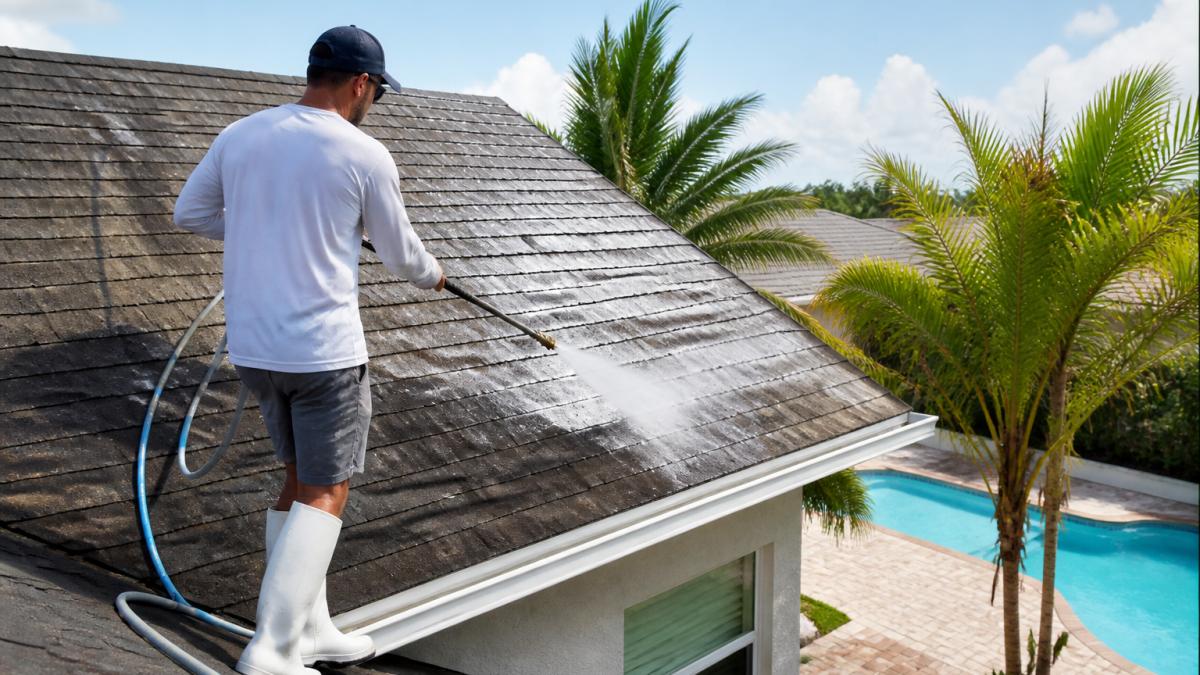
Soft washing is a low-pressure cleaning method that relies on cleaning solutions rather than force to remove algae, mold, and stains from asphalt shingles.
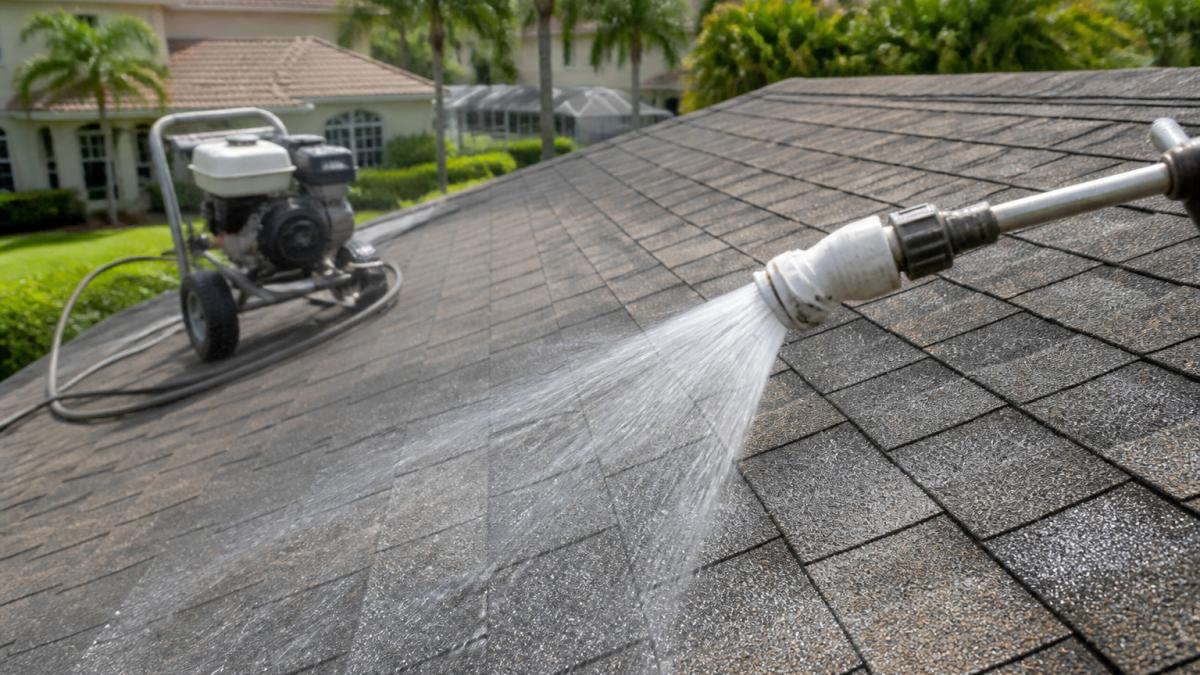
This guide from Freedom Wash Club covers what the research shows, how low-pressure application actually works, and when you should walk away from cleaning a roof altogether.
(/tag/soft-wash-roof-cleaning/) chemicals safety is the part most guides skip. The chemicals that kill algae can also harm plants, so runoff protection has to be planned before the first drop of solution hits the roof. The gap in most articles is that they say “protect your plants” without explaining how, or what strength of solution is actually appropriate.
Solution Strength, Dwell Time, and Rinsing by Roof Condition
There is no single correct mix. Solution strength, dwell time, and rinsing all shift based on how much growth is present, how shaded the roof is, and how porous the shingle surface has become. A few working principles:
- Light growth (faint streaking, mostly sunny roof): A weaker sodium hypochlorite dilution is usually enough. Short dwell, gentle rinse.
- Heavy growth (dark streaks, moss in valleys, shaded slopes): A stronger dilution and longer dwell may be needed, but the solution must not be allowed to dry on the shingle.
- Older or chalky shingles: Reduce strength and shorten dwell. Weathered asphalt absorbs solution faster and can discolor.
Always follow the shingle manufacturer’s written cleaning instructions and the cleaning product’s label directions. Those two documents override any general rule of thumb, including ours. If a manufacturer specifies a maximum concentration or a prohibited ingredient, that is the ceiling.
Protecting Plants, Gutters, and Landscaping
Runoff is where most roof-cleaning damage actually happens, not on the roof itself. A few habits keep landscaping out of harm’s way:
- Pre-wet everything green around the house before starting, and keep it wet during the job. Dry plants absorb solution; wet plants shed it.
- Cover sensitive shrubs and flower beds with plastic sheeting, and weight the edges so runoff cannot pool underneath.
- Rinse gutters and downspout areas after the job, and flush the downspout outlets so solution does not sit in the gutter channel.
- Divert runoff away from ponds, streams, and storm drains. Never let wash water flow directly into a storm drain.
Letting cleaning solution dry on shingles can leave a residue that looks worse than the original stain, and dried solution on plants can burn foliage. Work in manageable sections and rinse before the solution dries.
If you also have concrete or pavers around the house, plan the roof wash so runoff does not stain them, and consider scheduling paver sealing separately after the roof work is done so fresh sealant is not exposed to cleaning solution.
When Soft Washing Is Not Appropriate
Soft washing is not appropriate when the roof is already failing. If shingles are cracked, curling, missing granules, or lifting at the edges, cleaning will not fix the problem and may make it worse. A roof inspection should come before any cleaning.
Other cases where we hold off:
- Active leaks or soft spots in the decking
- Roofs at the end of their service life
- Severely fragile materials that need a specialist, not a cleaning crew
- Storm damage that has not been repaired yet
In those situations, the honest answer is that the roof needs repair or replacement, not a wash.
DIY vs. Professional Roof Cleaning: Fall Risks and Warranty Issues
Fall risk is the number one reason we tell homeowners not to clean their own roof. Roof access means ladders, slopes, and wet surfaces, and a slip from roof height is a serious injury. That risk does not change based on how careful someone is.
The Real Hazards of Roof Access
The hazards are not just the obvious ones. A few that catch homeowners off guard:
- Ladder placement on uneven ground. Gutters, mulch beds, and sloped lawns make a stable base harder than it looks.
- Wet shingles after rinsing. The surface you are standing on becomes slick exactly when you are moving around to rinse.
- Extension poles and overhead lines. Long poles near power lines are a serious electrocution hazard.
- Fatigue on steep or multi-story roofs. Most residential falls happen on the way down, not the way up.
Professional crews manage these with harnesses, anchors, ladder stabilizers, and a second person on the ground. That equipment and training are a large part of what you are paying for.
Warranty Evidence and Manufacturer-Specific Guidance
Warranty coverage is the second reason to think carefully. Many shingle warranties require proper maintenance, and using the wrong cleaning method can void coverage. But “voids the warranty” is thrown around loosely online, so here is the practical version:
- Read your specific warranty. Coverage terms vary by manufacturer and by product line. Do not rely on a general claim that “pressure washing voids all shingle warranties.”
- Keep documentation. Save the cleaning date, the method used, the products applied, and before-and-after photos. If a warranty claim ever comes up, that record is your evidence.
- Check for a maintenance requirement. Some warranties condition coverage on keeping the roof free of damaging organic growth, which means neglect can be as much of a problem as the wrong method.
- Ask the manufacturer directly if the warranty language is unclear. A short call or email creates a written record.
Manufacturer recommendations usually name low-pressure methods specifically and prohibit high pressure, so a DIY mistake can cost more than the cleaning itself.
If you are a snowbird who is only in town part of the year, a maintenance plan makes more sense than a one-time cleaning. Algae regrows fastest in warm, humid conditions, so a scheduled visit keeps the roof ahead of the problem instead of reacting to it. The same logic applies to the rest of the exterior, pairing a soft wash roof cleaning with house wash and exterior home cleaning, driveway cleaning, and pool deck cleaning on one schedule keeps the whole property consistent and avoids repeated setup and runoff planning.
When to Call a Professional Instead of DIY
A simple decision rule: if the roof is more than one story, steep, or already showing damage, hire it out. If you have no harness and no spotter, hire it out. If the warranty language is unclear, hire it out and ask the contractor to document the method. The cost of a professional cleaning is almost always less than the cost of a fall or a denied warranty claim.
What to Expect After Treatment and How Often to Clean
Expect the roof to look noticeably cleaner within a day or two, with full results showing after the roof dries and any remaining growth dies off. Some staining fades over a week or two rather than disappearing instantly.
On frequency, most roofs in warm, humid climates need cleaning every one to three years. Shade, tree cover, and how much organic growth is already present all push that timeline shorter.
The best defense against repeat algae growth is prevention: keep gutters clear, trim overhanging branches, and schedule roof maintenance before streaks return.
Conclusion: Making the Right Choice for Your Roof
The real challenge is not deciding whether soft washing is safe. It is finding someone who will use the right method, protect your landscaping, and stand behind the work. We also handle paver sealing, soft wash roof cleanings, house wash and exterior home cleaning, driveway cleaning, and pool deck cleaning, all with easy phone or text scheduling and a 100% satisfaction guarantee.
Frequently Asked Questions
Does soft washing damage asphalt shingles?
No, soft washing is safe for asphalt shingles when done correctly. It uses low pressure (under 500 PSI) and specialized cleaning solutions to kill algae and mold without stripping the protective granules. High-pressure washing, by contrast, can force water under shingles and remove granules, leading to leaks and premature roof failure. Always verify the contractor uses low-pressure equipment and follows manufacturer recommendations for your shingle type.
What chemicals are used in professional soft washing?
Most professional soft washing uses a diluted sodium hypochlorite (bleach) solution, often mixed with a surfactant to help it cling to the roof. Concentrations typically range from 1% to 3% for asphalt shingles, but the exact mix depends on the level of organic growth. Some contractors also use biodegradable additives. Always ask what chemicals will be used and whether they are safe for your landscaping and pets.
How often should you soft wash your roof?
In humid climates like South Florida, most roofs need soft washing every 2 to 3 years to prevent algae and mold from returning. Homes with heavy tree cover or north-facing roofs may need cleaning more often. Regular roof maintenance, including annual inspections, helps you catch stains early. If you see black streaks or moss, it’s time to schedule a cleaning before the growth causes shingle deterioration.
Can I soft wash my roof myself or should I hire a professional?
While DIY soft washing kits exist, hiring a licensed and insured professional is safer and more effective. Roof access is the leading cause of fall injuries for homeowners, and improper chemical mixing can damage shingles or plants. Professionals also have the right equipment to apply the solution evenly and rinse thoroughly. For warranty coverage and peace of mind, a pro is your best bet.
Does soft washing remove the protective granules from shingles?
No, soft washing does not remove granules when performed correctly. The low-pressure application and gentle chemicals lift away algae and dirt without abrasive force. Granule loss usually happens from high-pressure washing, foot traffic, or natural aging. If you notice granules in your gutters after a cleaning, it’s a sign the wrong method was used. Always confirm your contractor uses soft washing techniques.