Table of Contents
- Does Roof Cleaning Void Shingle Warranty? The Short Answer
- What Voids a Shingle Warranty: 5 Actions That Kill Coverage
- Can You Pressure Wash Roof Shingles Without Damage?
- Soft Wash Roof Cleaning: The Warranty-Safe Alternative
- Roof Shingle Cleaning Instructions for Warranty Protection
- What to Do If Your Roof Was Already Pressure Washed
- Documenting Roof Cleaning to Protect Your Warranty
- Conclusion: Clean Your Roof Without Risking Coverage
- Frequently Asked Questions
Last Updated: October 5, 2026
Does Roof Cleaning Void Shingle Warranty? The Short Answer
No, does roof cleaning void shingle warranty automatically? It does not. What voids coverage is the method you use.
Here is the part most homeowners get wrong: the warranty does not ban cleaning. It bans damage.
Most asphalt shingle warranties cover manufacturing defects, not damage caused by the homeowner or a hired crew.
Below, we break down the five actions that void coverage, the safe alternative, and what to do if your roof was already pressure washed.
What Voids a Shingle Warranty: 5 Actions That Kill Coverage
Most coverage losses trace back to a handful of avoidable mistakes. Here are the five that come up again and again, with the mechanism behind each one.
- Pressure washing at high PSI. High-pressure water blasts the mineral granules off the shingle surface. Once the granules are gone, the asphalt mat underneath is exposed to ultraviolet light and weather, which accelerates cracking and failure. Manufacturers classify this as physical damage or abuse, not a manufacturing defect.
- Harsh chemicals at the wrong concentration. Undiluted bleach or full-strength pool chlorine can corrode metal flashing, fasteners, and vents, and can dry out the shingle surface. Residue left behind after an incomplete rinse can continue degrading the roof for weeks.
- Walking on a hot roof. Asphalt shingles soften in high heat. Foot traffic on a warm day can crack brittle shingles, loosen seals, and displace granules in the traffic path.
- Scrubbing with a stiff brush. Abrasion wears away the granule coating the same way pressure washing does, just more slowly. A stiff brush also lifts the edges of shingles and can break the self-sealing strips.
- Ignoring manufacturer instructions. Every major shingle maker publishes its own cleaning guidance and exclusions. Ignoring that guidance gives the manufacturer a documented reason to deny a claim, even if the damage itself was minor.
Notice the pattern. The problem is never “cleaning.” The problem is force, chemistry, or carelessness.
Pressure Washing and Granule Loss
Pressure washing is the single biggest warranty risk. Asphalt shingles get their weather protection from a layer of mineral granules pressed into the surface. High-pressure water blasts those granules off.
Once granules are gone, the asphalt underneath bakes in the sun. The shingle dries out, cracks, and fails years early. Water intrusion follows.
To a warranty adjuster, stripped granules look like physical damage, not a defect. That distinction decides whether your claim is approved or denied.
Harsh Chemicals and Improper Application
Strong chemicals carry their own risks. Pool chlorine poured on at full strength can bleach shingles and eat away at metal flashing and fasteners.
Improper application makes it worse. Spraying a chemical and letting it sit too long, or failing to rinse properly, can leave residue that speeds up wear. Runoff matters too. Whatever you put on the roof ends up in your landscaping and storm drains.
The fix is simple: use a manufacturer-approved cleaning solution at the right dilution, and rinse thoroughly.
How to Read Your Own Warranty for Cleaning Exclusions
Warranty language varies by manufacturer and by shingle line, so the only reliable answer for your roof is in your own documents. Here is how to find it.
- Locate the printed warranty that came with the shingles, or download the current version from the manufacturer’s website using the product name and series.
- Search the document for terms like “cleaning,” “maintenance,” “pressure washing,” “abuse,” “neglect,” and “improper installation or maintenance.”
- Look for a maintenance section that lists approved cleaning methods or directs you to a separate care guide.
- Note any requirement to use approved contractors or to keep records of service.
- Check the exclusions section, which is usually where pressure washing and chemical damage are named.
If the warranty is silent on cleaning, that does not mean anything goes. Most warranties still exclude damage from abuse, neglect, or improper maintenance, and a manufacturer can place a pressure-washed roof in that category.
Photograph or scan the cleaning and exclusion sections of your warranty before any work begins. If a claim ever comes up, you will have the exact language in hand instead of trying to remember it.
Can You Pressure Wash Roof Shingles Without Damage?
No. There is no safe way to pressure wash asphalt shingles without risking granule loss. Even at lower settings, the force of a pressure washer works against a surface that is designed to hold a thin mineral coating in place.
Some crews claim they can “dial it down.” In practice, that still means blasting water at a material that was never built to take it. You might not see damage on day one.
If a contractor quotes you a roof cleaning and mentions a pressure washer, walk away. The short-term savings are not worth a denied warranty claim or an early roof replacement.
Soft Wash Roof Cleaning: The Warranty-Safe Alternative
Soft washing is a low-pressure cleaning method that uses a gentle stream of water and a manufacturer-approved cleaning solution to remove algae, moss, and stains without touching the shingle surface. It cleans by chemistry, not force.
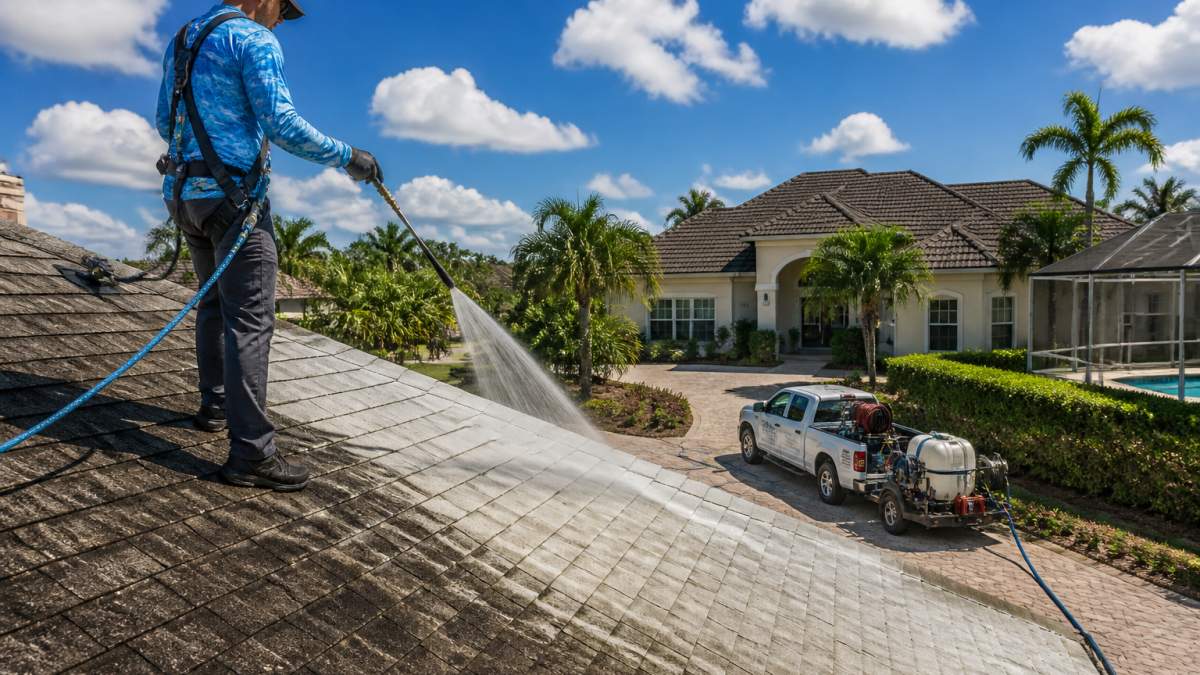
The process is straightforward. A technician applies the solution, lets it dwell, and rinses at low pressure. No scrubbing. No blasting. The granules stay put.
This is the method Freedom Wash Club uses on every roof we clean. It removes organic growth while leaving the shingle coating intact, which is exactly what a warranty requires.
How Soft Washing Removes Algae and Black Streaks
Those black streaks running down your roof are not dirt. They are algae, a living organism that feeds on the limestone filler in asphalt shingles. It spreads in warm, humid climates.
Soft washing kills the algae at the root instead of just bleaching the surface. The solution breaks down the organism, then a low-pressure rinse washes the dead growth away.
Because the treatment targets the cause, results last far longer than a simple wash.
Roof Shingle Cleaning Instructions for Warranty Protection
A warranty-conscious cleaning follows a clear sequence. Here is the procedure we recommend.
- Check your warranty document and note any cleaning requirements
- Inspect the roof for existing damage before you start
- Clear gutters and remove debris from the roof surface
- Cover plants and protect landscaping from runoff
- Apply a manufacturer-approved cleaning solution at the correct dilution
- Let the solution dwell, then rinse at low pressure
- Never walk the roof on a hot day or use a pressure washer
- Photograph the roof before and after the job
The last step matters more than most people think. Documentation is your proof that the roof was cleaned properly, and it protects you if a claim ever comes up.
What to Do If Your Roof Was Already Pressure Washed
Do not panic. One pressure washing does not automatically end your coverage, but it does raise the risk. The goal now is to document what happened, assess the damage, and build a record that supports you if a claim ever comes up.
Step 1: Inspect for Granule Loss and Surface Damage
Wait for the roof to dry, then look for the signs that pressure washing leaves behind.
- Bald patches or dark spots where the granular surface is missing
- Exposed asphalt mat, which looks smooth or shiny compared to surrounding shingles
- Granules collecting in gutters or at the base of downspouts
- Shingles lifted, cracked, or missing sealant along the edges
- Streaks or patterns that match the spray path of the washer
If you are not comfortable on a ladder, use binoculars from the ground or ask a qualified roofer to inspect. Do not walk the roof yourself, especially on a warm day.
Step 2: Document Everything
Build a file the same day you notice the issue.
- The date of the pressure washing
- The name of the company and the technician who did the work
- Any invoice, estimate, or text messages related to the job
- Photos of the roof from multiple angles, including close-ups of any damage
- Photos of granules in gutters or on the ground
- Notes on any changes you have noticed since the cleaning, such as leaks or curling shingles
This file is your evidence that the damage came from a specific event, not from age or neglect.
Step 3: Get a Written Assessment
Contact a licensed roofing contractor for a written inspection report. Ask them to note granule loss, exposed mat, and any conditions that could shorten the roof’s life.
If the damage is significant, contact the shingle manufacturer directly. Ask what documentation they need and whether the cleaning method affects coverage. Some manufacturers will review the situation case by case, especially if the rest of the roof is in good condition.
Step 4: Switch to a Warranty-Safe Method Going Forward
A single mistake is far easier to recover from than a pattern of them. From this point on, use soft washing for roof cleanings and avoid pressure washing entirely.
If you also need house wash and exterior home cleaning, driveway cleaning, pool deck cleaning, or paver sealing, schedule those services with the same care. The same documentation habits that protect your roof warranty also protect your records for the rest of the property.
Do not try to hide a pressure washing from your manufacturer or insurer. If damage is discovered later and the cause is traced back to an undisclosed cleaning, the claim outcome is far worse than if you had reported it upfront.
Documenting Roof Cleaning to Protect Your Warranty
Documentation is the difference between a smooth claim and a denied one. Keep a simple file for every cleaning.
- The date of service
- The name of the company and technician
- The cleaning method used
- Before-and-after photos
- Any product labels or dilution records
If your roof is later inspected for a claim, this file shows you followed the manufacturer’s guidance. That is powerful evidence.
We provide before-and-after photos with every job, so homeowners have a record on hand. If you are a snowbird who is away for part of the year, that record matters even more, since you are not there to watch the work happen.
Conclusion: Clean Your Roof Without Risking Coverage
Roof cleaning does not have to put your warranty on the line. The risk comes from pressure washing, harsh chemicals, and careless crews, not from cleaning itself.
Freedom Wash Club handles this the right way. We also offer paver sealing, house wash and exterior home cleaning, driveway cleaning, and pool deck cleaning, so your whole property stays protected.
Get started with Freedom Wash Club and keep your roof clean without risking your warranty.
Frequently Asked Questions
What voids a shingle warranty?
Most asphalt shingle warranties are voided by pressure washing, which strips protective granules and exposes the shingle mat to premature wear. Other warranty-voiding actions include using harsh chemicals not approved by the manufacturer, improper installation, foot traffic damage, and failure to follow maintenance guidelines. The key is to check your specific manufacturer’s terms because some brands allow soft washing with approved solutions while others prohibit any chemical cleaning. Always read the fine print before scheduling any roof cleaning service.
Is it okay to pressure wash a shingle roof?
No. Pressure washing asphalt shingles is never recommended by manufacturers. The high-pressure water stream, often 1,500 to 3,000 PSI, blasts away the protective granules that shield shingles from UV rays and weather. Once granules are gone, the shingle ages rapidly and may leak. Even a single pressure washing session can cause enough granule loss to trigger a warranty exclusion. For safe roof cleaning, use soft washing with low pressure and approved cleaning solutions.
Can soft washing damage roof shingles?
Soft washing does not damage shingles when done correctly. It uses low pressure, typically under 100 PSI, combined with manufacturer-approved cleaning solutions to kill algae, moss, and mold at the root. The key is proper dilution and application. Using too strong a mix or letting chemicals sit too long can harm shingles. Professional soft wash roof cleaning follows manufacturer instructions for solution concentration and rinse times, keeping your warranty intact while removing black streaks and organic growth.
How can I check whether roof cleaning affects my shingle warranty?
Start by finding your shingle warranty document, which lists approved cleaning methods and exclusions. Look for terms like ‘pressure washing,’ ‘power washing,’ or ‘abrasive cleaning’ in the exclusions section. If soft washing is allowed, check for approved cleaning solutions and concentration limits. When in doubt, call the manufacturer’s warranty department with your shingle model and ask directly. Also document your roof’s condition before cleaning with dated photos, and keep receipts from any professional service to protect a future warranty claim.