Table of Contents
- Why Eco-Friendly Driveway Cleaning Matters
- DIY Eco-Friendly Driveway Cleaning Solutions
- How to Clean Driveway Without Pressure Washer
- Commercial Eco-Friendly Driveway Cleaners
- Soft Wash Exterior Cleaning Benefits
- Paver Sealing and Maintenance for Long-Term Protection
- Protecting Soil, Plants, and Runoff During Cleaning
- Removing Oil and Grease Stains Naturally
- Frequently Asked Questions
Last Updated: September 29, 2026
Why Eco-Friendly Driveway Cleaning Matters
Dirty driveways aren’t just an eyesore. They’re a liability. Oil stains, tire marks, and exhaust buildup accumulate over months, creating surfaces that look neglected and invite mold and mildew growth. But here’s where most homeowners make a mistake: they reach for the strongest chemical cleaner available, assuming power equals results.
At Freedom Wash Club, we’ve seen the real cost of that approach. Harsh chemicals don’t just kill weeds and moss, they damage soil structure, harm plants, and contaminate runoff that flows into storm drains. The stronger the cleaner, the more environmental damage occurs. An eco-friendly driveway cleaning approach delivers the same results without the collateral damage.
The best eco-friendly driveway cleaning solutions use biodegradable ingredients, lower pH levels, and natural surfactants that break down stains without poisoning the landscape around your property. Whether you choose DIY methods or professional soft wash exterior cleaning, the principle remains the same: effective cleaning doesn’t require chemical warfare.
Below, we’ll walk you through DIY recipes, commercial biodegradable options, and professional services, all proven to remove oil, grease, and organic stains while protecting your soil, plants, and local water systems.
DIY Eco-Friendly Driveway Cleaning Solutions
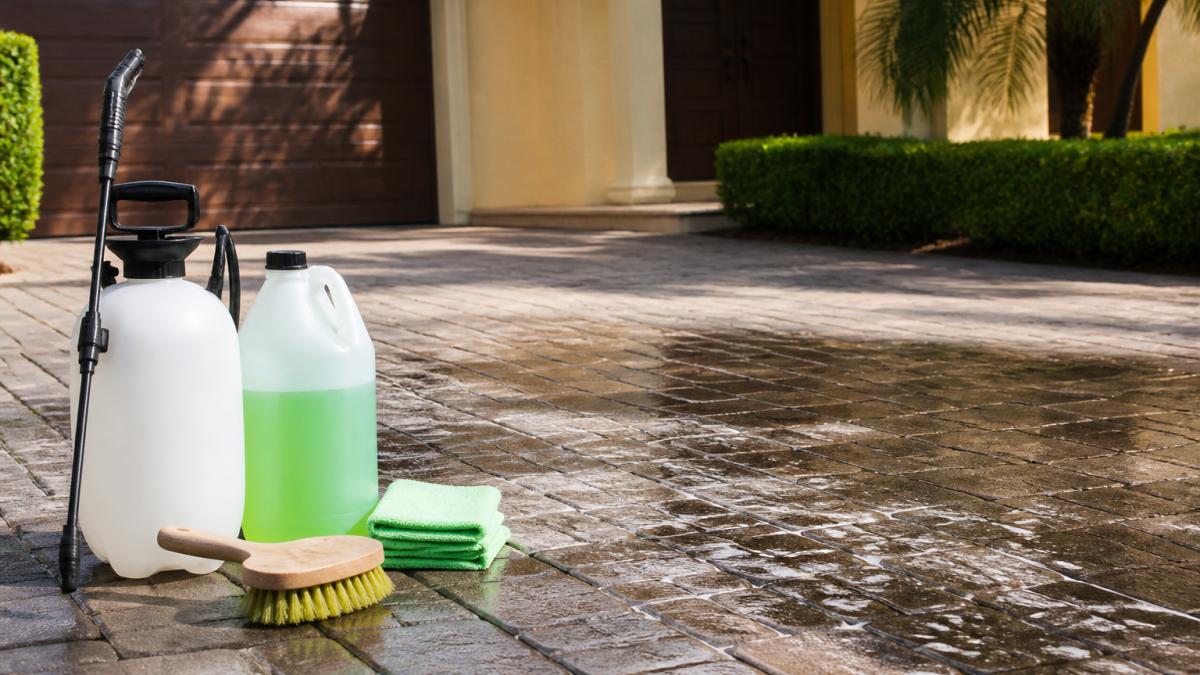
The cheapest way to clean your driveway is often the most effective. Household staples like vinegar, baking soda, and castile soap create powerful cleaning solutions for a fraction of commercial product costs. These natural ingredients work through different mechanisms, some are mildly acidic, others are mild abrasives, and some are surfactants that break down grease.
Vinegar and Baking Soda for Light Stains
White vinegar’s acetic acid content makes it effective for breaking down mineral deposits and light moss growth. Baking soda acts as a mild abrasive that won’t scratch concrete or pavers when used with a stiff brush.
For light surface grime and tire marks:
- Mix one part white vinegar with one part water in a bucket
- Pour the solution directly onto the stained area
- Let it sit for 15-20 minutes
- Scrub with a stiff-bristled brush using circular motions
- Rinse thoroughly with a garden hose
For stubborn stains, create a paste by combining baking soda with a small amount of water. Apply the paste to the stain, let it set for 10 minutes, then scrub aggressively. The mild alkaline nature of baking soda pairs well with vinegar’s acidity, together they create a gentle fizzing action that lifts debris.
One important caveat: vinegar can etch natural stone and certain pavers if left on too long. For marble, limestone, or decorative stone surfaces, limit contact time to under 10 minutes and test on a hidden area first.
Citrus-Based and Castile Soap Recipes
Citrus-based cleaners contain natural d-limonene, a compound extracted from orange peels that breaks down grease and oil without harsh fumes. Dr. Bronner’s Sal Suds Biodegradable Cleaner is a plant-based surfactant that works similarly, it reduces surface tension and allows water to penetrate and lift grease.
For moderate grease and oil spots:
- Dilute castile soap at a 1:10 ratio (1 part soap to 10 parts water)
- Apply with a mop or spray bottle
- Scrub for 2-3 minutes with a stiff brush
- Rinse thoroughly and allow to dry
The advantage of castile soap is versatility. It works on concrete, pavers, and asphalt without damaging surrounding plants. It’s biodegradable, so runoff poses no environmental risk. The downside is that it requires more elbow grease than commercial degreasers, expect 15-20 minutes of scrubbing for heavy stains.
Mix castile soap with lemon juice for added degreasing power. The citric acid enhances the soap’s ability to break down stubborn oil spots, and the combination smells far better than vinegar alone.
How to Clean Driveway Without Pressure Washer
Pressure washers are effective but risky. High-pressure water can damage mortar between pavers, etch concrete surfaces, and force water into foundation cracks. For eco-friendly driveway cleaning, the manual approach often delivers better results with zero risk of surface damage.
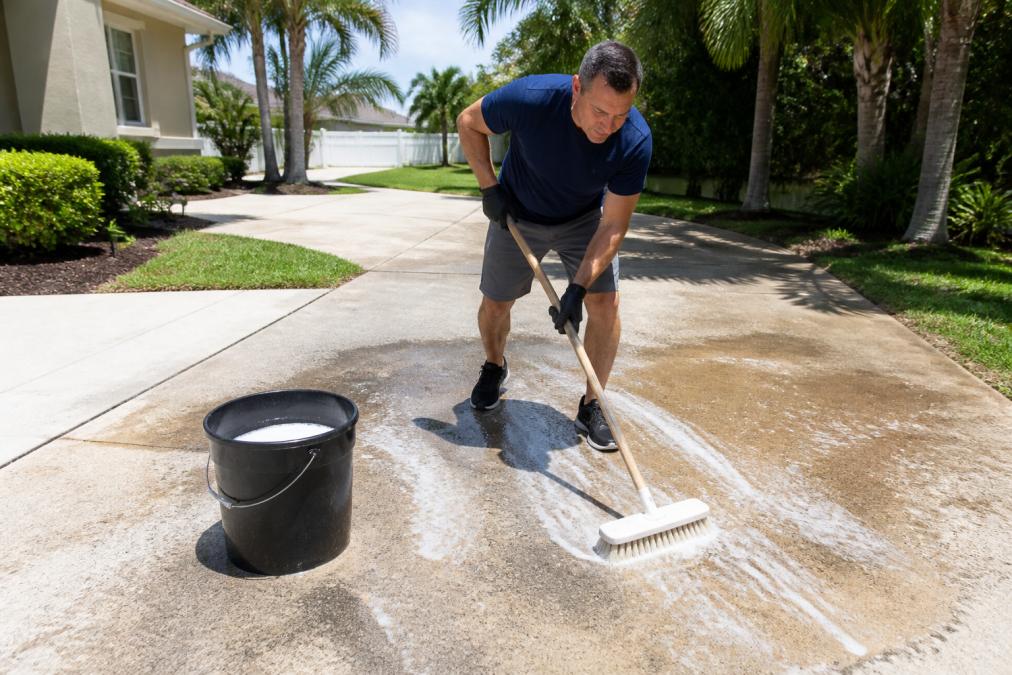
Start with the right tools: a stiff-bristled deck brush (not soft bristles), a bucket, a garden hose with a standard spray nozzle, and your chosen cleaning solution. Avoid pressure washers entirely, they’re unnecessary for most residential driveways.
The step-by-step process:
- Sweep the driveway thoroughly to remove loose debris
- Apply your chosen eco-friendly cleaner (vinegar, castile soap, or citrus-based solution)
- Let it sit for 10-20 minutes depending on stain severity
- Scrub in circular motions, working from one end to the other
- Rinse with a standard garden hose at low pressure
- Allow to air dry completely before allowing foot or vehicle traffic
This method works for concrete, asphalt, and pavers. For heavy oil stains that resist initial scrubbing, apply the cleaner a second time and let it sit longer, patience beats force every time.
Never use a pressure washer on pavers or decorative stone. The force dislodges sand between pavers and can crack brittle materials. Even on concrete, pressure over 3000 PSI risks surface damage.
Commercial Eco-Friendly Driveway Cleaners
When DIY methods don’t deliver results, commercial biodegradable cleaners offer a middle ground between homemade solutions and professional services. These products use engineered formulas to target specific stain types while remaining safe for plants and soil.
| Product | Best For | Key Benefit |
|---|---|---|
| Simple Green Oxy Solve | Organic stains, mold, mildew | Peroxide-based, safe for plants |
| ACT Concrete Cleaner | Oil and grease spots | Microbial formula, no scrubbing needed |
| Dr. Bronner’s Sal Suds | General grime and light stains | Plant-based surfactant, multi-purpose |
Biodegradable Peroxide and Microbial Formulas
Simple Green Oxy Solve uses hydrogen peroxide as its active ingredient. Peroxide breaks down organic matter, mold, mildew, algae, through oxidation. It’s safe for lawns and plants because it degrades into water and oxygen. The formula is pH-neutral, meaning it won’t damage concrete or alter soil chemistry.
ACT Concrete Cleaner takes a different approach with microbial enzymes. Microbes literally consume hydrocarbon molecules in oil and grease, breaking them down at the molecular level. This process takes longer than chemical cleaners, expect 24-48 hours for full results, but it’s extraordinarily effective on deep-set stains and completely non-toxic.
Both products are biodegradable, meaning they break down into harmless compounds rather than accumulating in soil. Neither requires scrubbing, which reduces labor and the risk of surface damage. The trade-off is cost: commercial eco-friendly cleaners run higher than DIY solutions, though still lower than professional services.
For oil stains specifically, microbial cleaners outperform everything else. They attack the problem at the molecular level, which is why they’re worth the wait time and premium price.
Soft Wash Exterior Cleaning Benefits
Soft wash technology applies cleaning solutions at low pressure, typically under 500 PSI, allowing the chemistry to do the work rather than force. This approach prevents damage to delicate surfaces and is ideal for pavers, stucco, wood, and roofs.
Freedom Wash Club uses soft wash methods for driveway cleaning because they deliver superior results without risk.
Paver Sealing and Maintenance for Long-Term Protection
Cleaning is temporary. Sealing is permanent protection. Paver sealing and maintenance creates a barrier that repels water, oil, and stains before they penetrate the surface. This single step reduces future cleaning needs by 50-70% and extends paver life by decades.
The sealing process:
- Clean pavers thoroughly with eco-friendly solutions
- Allow 48 hours for complete drying
- Apply penetrating sealer in thin, even coats
- Allow 24-48 hours curing time before foot traffic
- Reapply every 2-3 years depending on wear
Homeowners with decorative pavers, natural stone, or high-traffic driveways. Sealing is essential for preserving appearance and preventing permanent stains.
Protecting Soil, Plants, and Runoff During Cleaning
Runoff from driveway cleaning flows directly into your yard and storm drains. Chemical cleaners accumulate in soil, harm beneficial microbes, and eventually contaminate groundwater. Eco-friendly driveway cleaning solutions eliminate this risk entirely.
Removing Oil and Grease Stains Naturally
Oil and grease are the toughest stains because they’re hydrophobic, water alone won’t remove them. Natural solutions work by using surfactants (substances that reduce surface tension) or microbial action to break down hydrocarbon chains.
Frequently Asked Questions
What are the most eco-friendly options for cleaning concrete driveways?
The most eco-friendly driveway cleaning options include DIY solutions like vinegar and baking soda for light stains, plant-based cleaners such as Dr. Bronner’s Sal Suds, and commercial biodegradable products like Simple Green Oxy Solve or microbial-based ACT Concrete Cleaner. These solutions break down stains without harsh chemicals and are safe for surrounding plants and pets. For stubborn oil stains, microbial cleaners use natural biological action to consume hydrocarbons, making them both effective and environmentally responsible.
Can I clean my driveway without harming surrounding plants?
Yes. Eco-friendly driveway cleaning solutions are specifically formulated to be safe for vegetation. Biodegradable cleaners like Simple Green Oxy Solve and plant-based surfactants break down naturally in soil without accumulating toxins. When using DIY solutions, dilute them properly and direct runoff away from garden beds. Avoid leaving acidic solutions like vinegar on porous stone surfaces too long, as they can leach into soil. Professional soft wash services use pH-neutral, biodegradable formulas designed to protect landscaping while removing dirt and grime effectively.
How do I remove oil stains from a driveway using eco-friendly methods?
For eco-friendly oil stain removal, microbial-based cleaners like ACT Concrete Cleaner are highly effective because they use enzymes to consume hydrocarbon buildup without scrubbing. Apply the product, allow it to work (usually 24-48 hours), then rinse. For lighter oil marks, combine castile soap with hot water and scrub manually. Baking soda paste can absorb fresh spills before they set. These methods avoid harsh chemical degreasers and prevent toxic runoff from entering storm drains, protecting local water systems while restoring your driveway’s appearance.
Are homemade driveway cleaning solutions effective?
Homemade solutions work well for light to moderate stains but have limitations. Vinegar and baking soda effectively remove surface grime, light moss, and mineral deposits on concrete and pavers. Lemon juice brightens surfaces and tackles light rust. Castile soap diluted in water handles general dirt and foot-traffic stains. However, these DIY recipes are less effective on heavy-set oil, grease, and exhaust buildup compared to commercial biodegradable cleaners. For best results, match the solution to the stain type: use baking soda for scrubbing, vinegar for mineral deposits, and castile soap for general grime. Stubborn stains may require commercial products or professional soft wash services.