Table of Contents
- Best Manual Driveway Cleaning Tools at a Glance
- How to Clean Driveway Without Pressure Washer
- Best Eco-Friendly Concrete Cleaner Options
- Removing Oil Stains from Driveway Naturally
- Essential Manual Tools for Driveway Cleaning
- Step-by-Step Manual Driveway Cleaning Process
- When to Call Professional Driveway Cleaning Services
- Frequently Asked Questions
Last Updated: September 30, 2026
Manual driveway cleaning with the right tools and eco-friendly solutions is just as effective as pressure washing, and more controlled. This guide covers essential tools, techniques, and strategies for removing dirt, oil stains, and grime while protecting your concrete, pavers, and landscaping.
Best Manual Driveway Cleaning Tools at a Glance
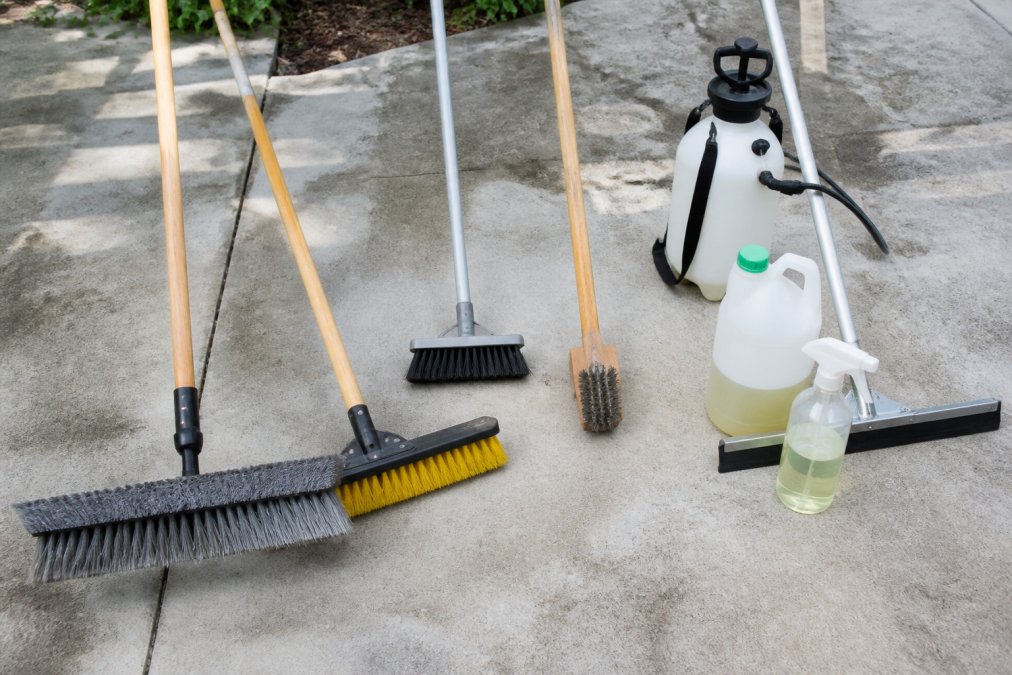
Effective manual driveway cleaning uses four core tools: a stiff-bristled push broom, handheld wire brush, pump sprayer, and squeegee. These cover 90% of residential cleaning jobs.
The Quickie Bulldozer Heavy-Duty Push Broom handles initial scrubbing with stiff synthetic bristles and reinforced design. The Grip-Rite Wire Scrub Brush removes embedded oil and moss from cracks. The Chapin 1-Gallon Industrial Sprayer applies solutions evenly, and the Carlisle 36-inch Floor Squeegee clears dirty water efficiently.
| Tool | Best For | Key Feature |
|---|---|---|
| Quickie Bulldozer Push Broom | Initial surface scrubbing | 60-inch handle, stiff synthetic bristles |
| Grip-Rite Wire Scrub Brush | Spot stain removal | Tempered steel, compact size |
| Chapin 1-Gallon Sprayer | Even solution application | Adjustable nozzle, chemical-resistant seals |
| Carlisle Floor Squeegee | Water and debris removal | 36-inch blade, covers large areas |
| Scotch-Brite Heavy Duty Sponge | Edge and corner detail | Dual-sided, ergonomic grip |
How to Clean Driveway Without Pressure Washer
Manual driveway cleaning follows four steps: prepare the surface, apply cleaning solution, scrub mechanically, and remove dirty water. This process takes longer than pressure washing but offers precise control over water usage and surface protection.
Start by sweeping away loose debris with your push broom. Removing leaves, dirt, and gravel before applying liquid prevents mud and reduces scrubbing work. Pay special attention to cracks and edges where debris accumulates.
Apply your cleaning solution using the pump sprayer, diluting according to product instructions (typically 1:3 or 1:4 ratio). Allow 10-15 minutes dwell time for the solution to break down stains before scrubbing.
Don’t let the solution dry completely. If you see the surface turning light in color, spray it again lightly. Dried cleaning solutions become harder to work with and may leave residue.
Scrub aggressively with your push broom in overlapping circular motions. For stubborn oil spots, switch to the wire brush with downward pressure. Scrub for 5-10 minutes depending on stain severity.
Use the floor squeegee to clear dirty water, pushing toward storm drains or landscaping areas. This prevents pooling and mineral deposits.
Best Eco-Friendly Concrete Cleaner Options
Eco-friendly cleaners protect landscaping, pets, and water systems. Simple Green Oxy Solve and Zep Driveway Cleaner use different mechanisms to break down grime effectively.
Simple Green Oxy Solve uses a peroxide-based formula that’s biodegradable and non-toxic, releasing oxygen molecules to lift stains. It’s gentler on surrounding soil and plants than high-alkaline degreasers, ideal for driveways bordering flower beds or lawns.
Zep Driveway Cleaner uses a high-alkaline formula engineered for automotive fluids and grease, with faster dwell times (5-10 minutes). Wear protective gloves and avoid skin contact.
High-alkaline degreasers can damage surrounding vegetation if runoff flows directly onto plants or into planting beds. Always direct rinse water toward areas where it can be absorbed by soil rather than flowing into landscaping.
For natural solutions, mix one part white vinegar with three parts water and add a tablespoon of castile soap per gallon. This works best on algae and organic stains and is safe for pets and plants.
Removing Oil Stains from Driveway Naturally
Oil stains are the most stubborn challenge in manual driveway cleaning because automotive fluids bond tightly to concrete. Water alone won’t remove them; you need a degreaser that breaks the oil’s molecular structure.
Combine baking soda with a degreasing agent for effective natural oil removal. Sprinkle baking soda on the stain, spray with diluted castile soap and vinegar, let sit 15-20 minutes, then scrub vigorously with your wire brush.
For set-in oil stains, use Simple Green Oxy Solve or Zep Driveway Cleaner with proper dwell time and firm scrubbing. Oil stains often require multiple applications. Repeat the process if discoloration remains after drying.
Oil stains fade gradually with repeated cleaning cycles rather than disappearing completely in one attempt. Patience and consistent technique matter more than finding a “miracle” product.
Prevent future oil stains by addressing vehicle leaks. For stains you can’t fully remove, consider paver sealing as a long-term solution, sealed surfaces resist oil penetration and make future cleaning easier.
Essential Manual Tools for Driveway Cleaning
Building a complete manual driveway cleaning toolkit requires understanding what each tool does and when to use it. The right combination handles 95% of residential driveway cleaning scenarios without needing pressure washing equipment.
Push Brooms and Squeegees
The Quickie Bulldozer Heavy-Duty Push Broom is the workhorse of manual cleaning. Its 60-inch steel handle reduces back strain, stiff synthetic bristles maintain shape, and reinforced block design handles both dry sweeping and wet scrubbing.
The Carlisle 36-inch Floor Squeegee clears dirty water and debris efficiently. High-quality rubber resists wear, and the tapered handle allows directional water control toward storm drains or landscaping areas.
Brushes and Scrubbing Tools
The Grip-Rite Wire Scrub Brush excels at precision work with tempered steel bristles that penetrate concrete pores. It’s ideal for removing embedded oil, tire marks, and moss from cracks and edges.
The Scotch-Brite Heavy Duty Scrub Sponge handles detail work with dual-sided design, aggressive abrasive on one side, softer material on the other. Use for edges, corners, and final cleanup.
Application and Cleanup Equipment
The Chapin 1-Gallon Industrial Sprayer applies cleaning solutions evenly across the driveway surface. The adjustable nozzle lets you switch between a fine mist for initial application and a focused stream for problem areas. Chemical-resistant seals handle both acidic vinegar solutions and alkaline degreasers. The easy-to-pump handle mechanism requires minimal effort, making it practical for extended application sessions. One gallon covers approximately 400-600 square feet depending on dilution ratio and nozzle setting.
The Rubbermaid Commercial Products Lobby Dust Pan collects loose debris after sweeping and rinsing. The long handle prevents bending, reducing strain on your back. The self-opening and closing lid contains debris during transport to your trash or compost. While bulky to store, this tool’s ergonomic design makes it worth the space investment if you’re doing frequent driveway maintenance.
Step-by-Step Manual Driveway Cleaning Process
Following a systematic process ensures consistent results and prevents common mistakes that waste time and cleaning solution.
Preparation and Safety
Start with a safety assessment. Check your driveway for cracks, loose concrete, or areas where water might pool and create hazards. If you’re using any chemical cleaner, read the label carefully, wear gloves, eye protection, and ensure good ventilation if you’re in an enclosed area. Keep children and pets away during application and scrubbing.
Sweep the entire driveway surface with your push broom, moving debris toward the edges. Pay special attention to cracks, expansion joints, and areas where leaves and dirt accumulate. This step prevents you from creating mud when you apply cleaning solution. Remove any large debris by hand, sticks, gravel, or trash that could interfere with your scrubbing motion.
Identify problem areas before you start scrubbing. Mark oil stains, algae patches, or areas with heavy grime so you know where to concentrate your effort. This prevents you from wasting energy on already-clean areas and ensures problem spots get adequate attention.
Application and Scrubbing
Fill your pump sprayer with diluted cleaning solution according to product instructions. Start at the highest point of your driveway and work downward, applying solution in overlapping passes. Avoid oversaturating, you want the surface wet but not puddled. Allow 10-15 minutes for the solution to dwell and begin breaking down stains.
Begin scrubbing with your push broom using firm, overlapping circular motions. Work in sections, tackle a 10-by-10-foot area completely before moving to the next section.
Rinsing and Debris Removal
Once you’ve scrubbed the entire driveway, use your squeegee to clear dirty water and debris. Push in one direction, working from the highest point downward. This directs water toward storm drains or landscaping areas where it can be absorbed by soil. Make multiple passes to remove as much dirty water as possible.
When to Call Professional Driveway Cleaning Services
Manual driveway cleaning works well for regular maintenance and moderate staining. However, certain situations benefit from professional help. If your driveway has extensive oil staining that multiple manual cleaning cycles haven’t resolved, or if you’re dealing with deep-set algae or moss that penetrates concrete pores, a professional service like Freedom Wash Club can deliver results that manual methods can’t match.
Frequently Asked Questions
What is the most effective way to clean a driveway without a pressure washer?
Start by sweeping loose debris with a stiff-bristled push broom, then apply an eco-friendly concrete cleaner or degreaser using a pump sprayer. Let the solution sit for 10-15 minutes to break down stains, then scrub with a wire brush or heavy-duty push broom. Use a squeegee to remove dirty water and rinse thoroughly. This manual method works well for oil stains, moss, and general grime while protecting surrounding landscaping from harsh chemical runoff.
Can I use household items to clean oil stains from my driveway naturally?
Yes. Baking soda mixed with water creates a paste for scrubbing; vinegar solutions help break down grease; castile soap combined with hydrogen peroxide lifts oil effectively. For best results, apply your chosen solution, let it sit 15-20 minutes, then scrub with a wire brush. These biodegradable options avoid environmental damage to soil and storm drains while still removing stubborn stains from concrete and masonry surfaces.
Which tools are best for removing moss and weeds from driveway cracks manually?
A handheld wire brush excels at targeting moss in cracks and crevices where larger tools can’t reach. Pair it with a citrus-based degreaser or vinegar solution applied through a pump sprayer. For larger cracks, a stiff push broom works for initial loosening. After treatment, use a dustpan to collect debris. This approach is safer for surrounding plants and soil than chemical-heavy products, making it ideal for HOA-compliant maintenance.
How often should I manually clean my driveway to maintain curb appeal?
Light sweeping monthly keeps foot-traffic grime from accumulating. Deep manual cleaning every 3-6 months removes oil stains, moss, and surface buildup depending on weather and usage. High-traffic driveways or those near trees may need quarterly attention. Regular maintenance prevents permanent staining and extends the life of concrete and paver surfaces, helping maintain property value and HOA compliance.