Last Updated: November 16, 2026
Quick Summary
Cleaning pool deck stains starts with identifying the stain, because algae, rust, leaf tannin, and efflorescence each need a different treatment. Match the cleaner and method to both the stain and the deck material, then scrub, rinse away from the pool, and repeat on old stains after the surface dries.
- Scrubbing a rust mark with bleach can spread the iron and make the stain permanent.
- Oxygen bleach handles algae, mold, and mildew; oxalic or citric remover handles rust.
- Pre-wet the surface so cleaner spreads evenly and does not soak in unevenly.
- Keep pressure low with a 25- or 40-degree tip held 12 to 18 inches away.
- Rinse toward a drain or lawn, never into the pool, and test pool chemistry after.
Table of Contents
- Identify the Stain Before You Clean It
- The Best Concrete Pool Deck Cleaner for Each Stain Type
- How to Clean Concrete Around a Pool Without Damaging It
- How to Clean a Concrete Pool Without Draining It
- Pressure-Washer Settings and Technique for Pool Decks
- Protecting Pool Water, Landscaping, and Yourself
- Finding Pool Deck Cleaning Near Me: When to Call a Pro
- Book Your Pool Deck Cleaning and Paver Sealing
- Frequently Asked Questions
Identify the Stain Before You Clean It
Cleaning pool deck stains starts with knowing what the pool deck stains are. Algae, rust, leaf tannin, and efflorescence each need a different treatment, and the wrong cleaner can set a stain deeper or damage the concrete. Scrubbing a rust mark with bleach can spread the iron and turn a small spot into a permanent stain.
So look first. Then clean.
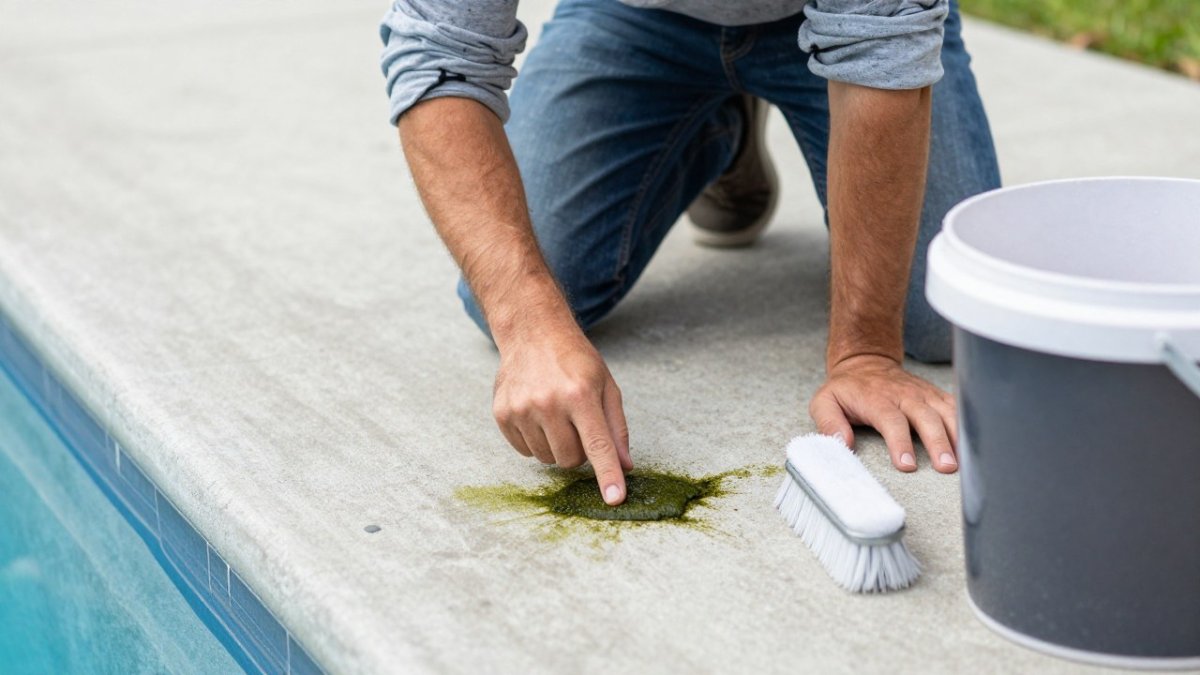
A Simple Stain Identification Decision Tree
Work through these questions in order:
- Is it green, black, or fuzzy? That is algae, mold, or mildew. It grows in shade and humidity.
- Is it brown or orange, and does it bleed when wet? Rust, usually from furniture legs, fertilizer, or rebar.
- Is it a leaf-shaped shadow that will not scrub out? Tannin from plant debris.
- Is it white and powdery? Efflorescence, a mineral deposit pulled up from the concrete.
- Is it dark and greasy? Oil, sunscreen, or grill drippings.
The Best Concrete Pool Deck Cleaner for Each Stain Type
The best concrete pool deck cleaner depends on the stain, not the label on the bottle. A neutral cleaner handles dirt and grime. Oxygen bleach handles organic growth. A dedicated rust remover handles metal marks. Acid products handle minerals, but they etch concrete if you rush them.
Here is how we match cleaner to stain:
| Stain | Best Cleaner | Method | Watch For |
|---|---|---|---|
| Algae, mold, mildew | Oxygen bleach solution | Apply, dwell, scrub, rinse | Do not let it dry |
| Dirt and grime | Mild dish soap and water | Scrub with stiff brush | Rinse before it films |
| Rust | Oxalic or citric rust remover | Spot treat, rinse fast | Never use bleach |
| Leaf and plant tannin | Oxygen bleach or hydrogen peroxide | Repeat treatment | Old stains need patience |
| Efflorescence | White vinegar or commercial descaler | Scrub, rinse, dry | May return without sealing |
| Oil and grease | Degreaser or baking soda paste | Lift, then rinse | Avoid spreading the slick |
For stubborn oil marks, our team follows the same method laid out in this guide to removing oil stains from a concrete driveway. The steps transfer directly to a pool surround.
Mixing and Diluting Cleaners Correctly
Dilution ratio matters more than product choice. Too strong, and you etch the surface or kill landscaping. Too weak, and you waste an afternoon.
- Oxygen bleach: follow the label ratio, usually a scoop per gallon of water.
- Dish soap: a few drops per gallon. More soap means more residue.
- Vinegar: equal parts with water for light mineral film.
- Commercial cleaners: never exceed the label. Stronger is not faster.
Mix in a bucket, never in a sprayer you also use for pool chemicals.
How to Clean Concrete Around a Pool Without Damaging It
To clean concrete around a pool without damaging it, match the method to the surface, not just the stain. Concrete, pavers, natural stone, coated decks, and wood all react differently to the same cleaner and the same pressure.
Match the Method to the Deck Material
- Poured concrete (broom or exposed aggregate): A neutral cleaner or oxygen bleach, a stiff nylon brush, and low pressure. Avoid acid on exposed aggregate because it opens the pores and speeds regrowth.
- Concrete pavers: Use a paver-safe cleaner and a stiff brush, and keep the pressure low so you do not blow out the joint sand. Re-sanding joints after cleaning is normal maintenance.
- Natural stone (travertine, flagstone, bluestone): Use a pH-neutral stone cleaner. Acid etches travertine and limestone, and high pressure pits softer stone. Spot test in an inconspicuous corner first.
- Coated or painted decks: Use a mild cleaner and a soft brush. Pressure washing lifts coating at the edges, and strong solvents soften the film.
- Wood decking: Use an oxygen-based wood cleaner and a soft brush, and keep water volume low. High pressure furs the grain and opens checks.
A Surface-Safe Cleaning Sequence
- Sweep or blow off leaves and pollen first. Wet debris stains and feeds algae.
- Pre-wet the surface with plain water so cleaner spreads evenly and does not soak in unevenly.
- Mix in a bucket at the label ratio, usually one scoop of oxygen bleach per gallon of water, or a few drops of dish soap per gallon. Never mix stronger than the label.
- Apply with a pump sprayer or watering can, working in sections you can finish before the cleaner dries.
- Let it dwell for the label time, usually a few minutes. Do not let it dry on the surface.
- Scrub with a stiff brush, following the slope so dirty water runs off.
- Rinse thoroughly toward a drain or lawn, not into the pool.
- Repeat on old stains after the surface dries, and spot test any new product first.
Watch out: letting cleaner dry on the deck or on plant leaves is the most common way a simple wash turns into a repair bill.
Protecting the Pool and Landscaping While You Clean
Runoff is the part most guides skip. Pre-rinse plants near the deck, cover or shield the pool edge, and direct rinse water away from the pool and storm drains. Test pool chemistry after cleaning and adjust as needed. Keep pets and kids inside until everything is rinsed and dry.
For a deeper walkthrough of safe methods, see our guide on cleaning a pool deck without damage.
How to Clean a Concrete Pool Without Draining It
You can clean a concrete pool without draining it, and in most cases you should. Draining a pool carries real risk, especially in a high water table. The shell can shift or crack when the weight of the water is gone.
Instead, work around the water:
- Lower the water level slightly if splash risk is high.
- Cover the pool surface with a tarp if you use stronger cleaners near the edge.
- Rinse away from the pool, not toward it.
- Test pool chemistry after cleaning and adjust as needed.
Clean in sections so runoff never sits against the coping.
Pressure-Washer Settings and Technique for Pool Decks
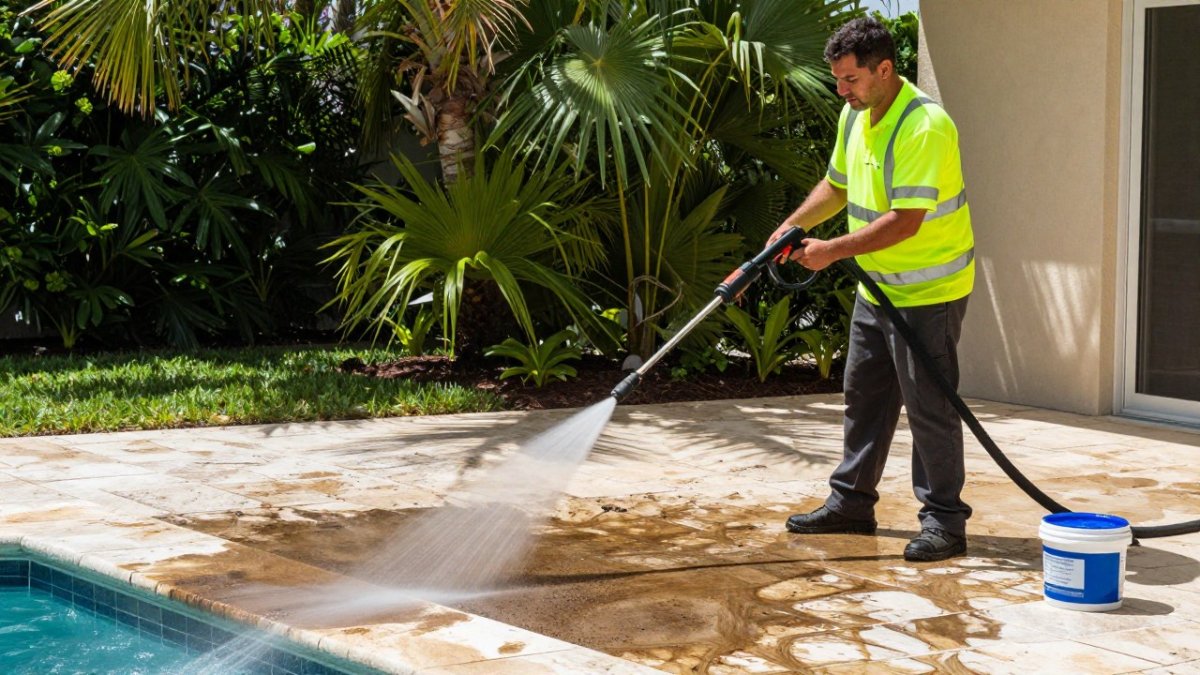
Pressure washing a pool deck works when you treat pressure as a tool with a dial, not a default. The right setting depends on the surface, and the wrong one etches concrete, pits stone, and blows out paver joints.
When Pressure Washing Is Appropriate, and When It Is Not
- Appropriate: bare concrete, concrete pavers in good condition, and hard stone that has been spot tested.
- Use caution: coated or painted decks, exposed aggregate, and older pavers with loose joint sand.
- Avoid: soft natural stone like travertine or limestone, wood decking, and any surface with failing coating. Use a brush and low-volume rinse instead.
Recommended Settings and Technique
- Nozzle: a wide fan tip, 25-degree or 40-degree, never a 0-degree pinpoint stream.
- Pressure: keep it low. Use the lowest pressure that cleans the surface effectively, and reduce it further for pavers and stone. If the wand is lifting joint sand or leaving lines, you are too high.
- Distance: hold the nozzle about 12 to 18 inches from the surface and keep it moving at a steady pace.
- Overlap: overlap each pass by about half the fan width so you do not leave stripes.
- Direction: work with the slope so dirty water runs off, and never hold the trigger in one spot.
- Coping and edges: reduce pressure near the coping and pool edge, and keep the stream angled away from the water.
Watch out: holding the wand still, using a pinpoint tip, or working too close is how etching, stripes, and loosened joints happen.
The practices in our guide to pool deck cleaning best practices cover the rest, including edge work and coping.
Protecting Pool Water, Landscaping, and Yourself
Protecting the pool, the plants, and yourself matters. Cleaner runoff can throw off pool chemistry, burn shrubs, and irritate skin.
Pre-rinse plants near the deck. Cover or shield the pool edge. Wear gloves and eye protection. Keep pets and kids inside until everything is rinsed and dry.
Watch out: letting cleaner dry on the deck or on plant leaves is the most common way a simple wash turns into a repair bill.
Our article on avoiding property damage during a pressure wash lists the full precautions we take on every job.
Finding Pool Deck Cleaning Near Me: When to Call a Pro
Searching for pool deck cleaning near me usually means one of three things: the stain keeps coming back, the deck is too large to handle, or an HOA deadline is closing in. All three are good reasons to call.
Some jobs need more than a bucket and brush:
- Black algae that has rooted into the concrete pores
- Rust that keeps bleeding after treatment
- A deck that needs sealing after cleaning
- HOA notices with a firm deadline
- Large pool surrounds or commercial properties
Freedom Wash Club is a locally owned and operated South Florida pressure cleaning and paver sealing company with over a decade of experience. We are licensed and insured, and you can schedule by phone or text with no in-person estimate needed. Our 100% satisfaction guarantee backs every job.
Book Your Pool Deck Cleaning and Paver Sealing
Paver sealing protects the deck after cleaning and slows stain regrowth. Cleaning without sealing leaves the surface open to the same algae and grime within months.
Freedom Wash Club also offers soft wash roof cleanings, house wash and exterior home cleaning, driveway cleaning, and pool deck cleaning, which help keep your property looking consistent and your HOA happy.
Once your deck is sealed, keep it that way with our paver sealing maintenance steps. They cover the routine that makes a seal last.
Your pool deck will not clean itself, and the longer a stain sits, the harder it fights back.
Frequently Asked Questions
What is the best cleaner for pool deck stains?
It depends on the stain. For algae, mold, and mildew, a diluted bleach solution or a dedicated algae remover works well on concrete and pavers. Rust stains need an oxalic-acid or rust-specific remover, not bleach, because bleach can set rust deeper. Organic leaf and plant stains usually lift with a neutral cleaner and a stiff brush. Match the product to the stain and the deck material, then test a small patch first.
Can I clean concrete around a pool without draining the water?
Yes. You can clean concrete around a pool without draining it by keeping runoff out of the water. Work in small sections, apply cleaner sparingly, and rinse away from the pool edge. Block the deck drains or use a berm of sandbags to divert rinse water. Avoid acid-based cleaners near the water, and check pool chemistry after cleaning in case splash or runoff changed the balance.
Will Dawn dish soap clean a pool deck?
Dawn and similar dish soaps cut light dirt and grime on concrete and pavers, and they are gentle on surrounding plants. They will not kill algae roots or lift rust and mineral stains. Use dish soap for routine dirt, then switch to an algae remover or rust remover for the specific stain. Rinse thoroughly so the soap does not leave a slippery film on the deck.
When should I hire a professional pool deck cleaning service?
Call a pro when stains keep returning after cleaning, when the deck is large or heavily soiled, or when you are unsure which cleaner is safe for your surface. Freedom Wash Club also offers paver sealing, soft wash roof cleaning, house washing, and driveway cleaning. Licensed and insured crews know the right pressure settings and can protect your pool water and landscaping.