
Table of Contents
- Why Oil Stains Sink Into Concrete and Why Speed Matters
- What You’ll Need Before You Start
- Step 1: Blot and Lift Fresh Spills With Absorbent Materials
- Step 2: Treat Light Stains With Household Remedies
- Step 3: Use the Best Concrete Degreaser for Driveway Stains
- Step 4: Apply a Poultice for Deep-Set Stains
- Step 5: Scrub, Rinse, and Pressure Wash Safely
- How to Clean Oil Off Pavers Without Damaging Them
- Frequently Asked Questions
Last Updated: September 27, 2026
Why Oil Stains Sink Into Concrete and Why Speed Matters
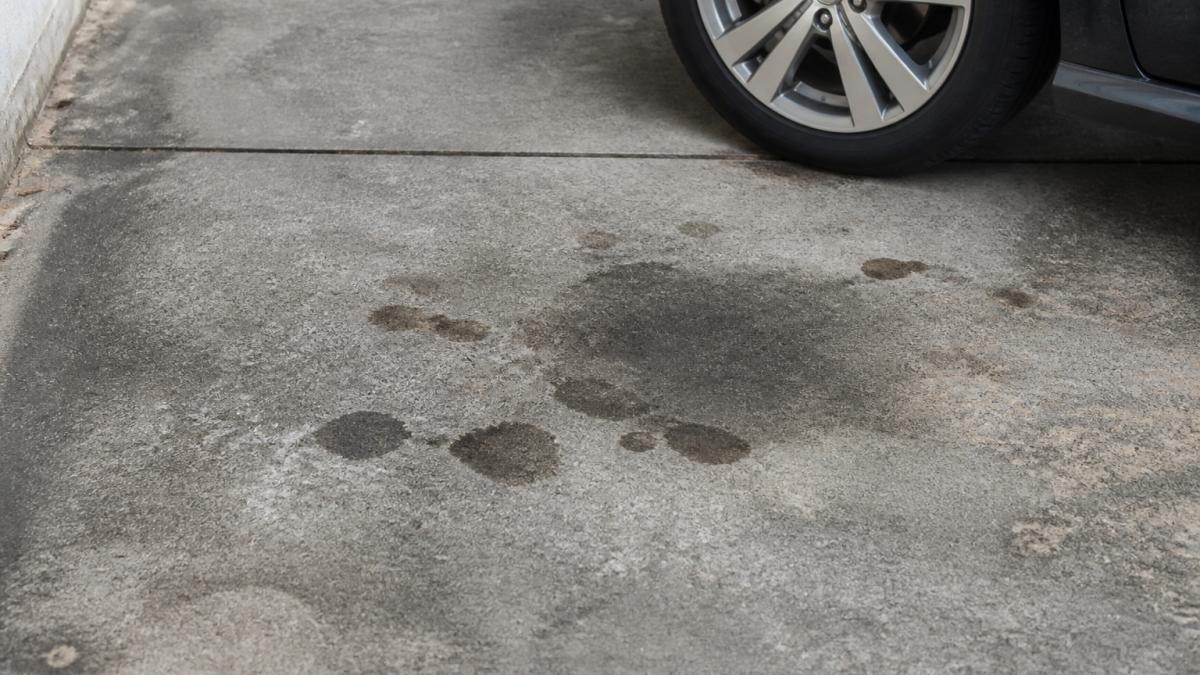
Oil stains concrete in a way that isn’t just surface marks. Concrete is porous, full of tiny holes that act like a sponge. When oil drips onto your driveway, gravity pulls it in, and the longer it sits, the deeper it goes.
How Porosity and Stain Age Change Your Approach
How oil stains concrete decides your method. Fresh oil sits near the surface, so an absorbent pulls most of it out. Older stains have penetrated deep into the pores, where surface scrubbing won’t reach.
Here’s the rule we give customers:
- Under 24 hours: Blot and lift. Easy.
- 1 to 7 days: Household remedies or a degreaser.
- Weeks to months: A poultice or professional cleaning.
The faster you treat a spill, the less product and scrubbing you’ll need. Time is the single biggest factor in whether a stain comes out.
What You’ll Need Before You Start
Gather your supplies first, most of what you need is already at home.
For fresh spills:
- Kitty litter, sawdust, or cornstarch
- A stiff-bristle brush
- Rubber gloves
For light stains:
- Dish soap or laundry detergent
- Baking soda
- A bucket and water
For deep stains:
- A commercial concrete degreaser
- A poultice material like cat litter or diatomaceous earth
- Plastic wrap and tape
- A pressure washer (or a garden hose)
Never mix bleach with ammonia-based cleaners. The fumes are toxic. Also skip any cleaner that contains acid on a sealed driveway, since it can eat through the sealer and etch the surface.
Step 1: Blot and Lift Fresh Spills With Absorbent Materials
Fresh oil is easiest to remove, so act within the first few hours. Pour a thick layer of absorbent over the stain and let it sit.
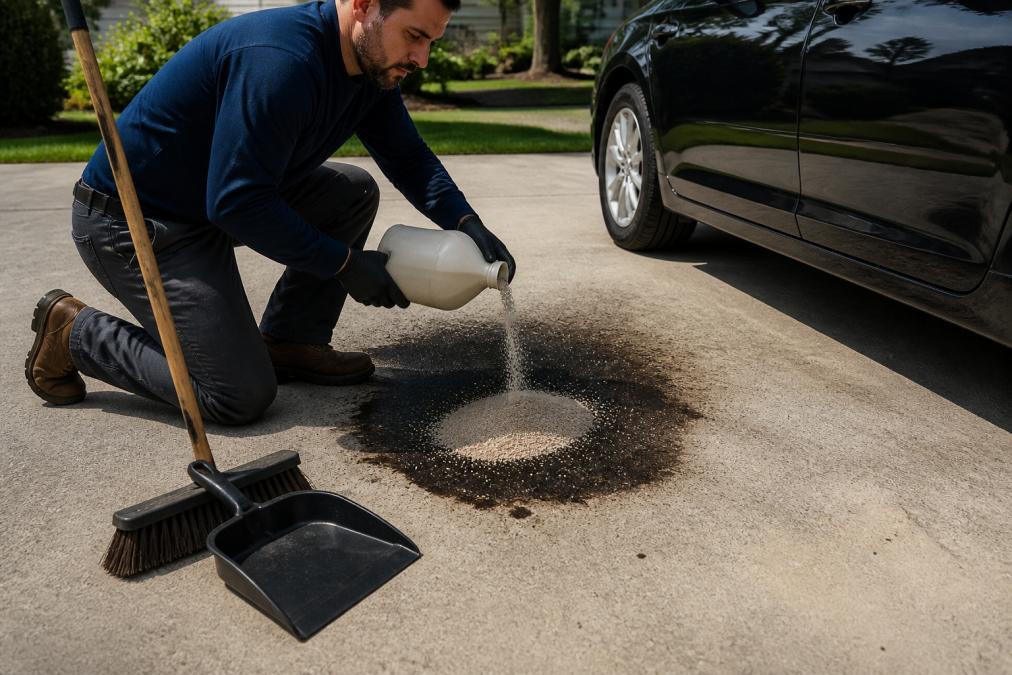
Here’s the process:
- Cover the stain with a half-inch layer of absorbent.
- Let it sit for 30 minutes to an hour.
- Grind it in with your shoe to push it into the pores.
- Sweep it up and check the stain.
- Repeat until the absorbent comes up dry.
Step 2: Treat Light Stains With Household Remedies
For stains that have set in but haven’t gone deep, household products handle the job: soap and detergent break the oil down so water can carry it away.
Dish Soap and Laundry Detergent Solutions
Dish soap is a degreaser by design. Mix a quarter cup of grease-cutting dish soap with warm water, pour it over the stain, let it sit 15 minutes, scrub, and rinse. Powdered laundry detergent works the same way with more power: sprinkle it on, add hot water to make a paste, scrub, let it sit 30 minutes, then rinse.
Baking Soda and Trisodium Phosphate
Baking soda pulls oil out through absorption: spread a thick paste of baking soda and water, let it dry, then sweep it away. Trisodium phosphate (TSP) is stronger, mix per label directions, apply with a brush, and wear gloves and eye protection, since TSP is caustic.
For a light stain, try the gentlest method first and work your way up. You’ll save money and avoid damaging the concrete.
Step 3: Use the Best Concrete Degreaser for Driveway Stains
When household remedies stall, use a commercial degreaser formulated for concrete, not a kitchen or automotive cleaner. They work two ways: surfactants surround oil molecules so water lifts them, or solvents dissolve the oil so it can be absorbed or rinsed away. Knowing which tells you how long to let it dwell.
Match the Product to the Stain
Match the chemistry to the stain:
- Light film or tire-shine residue: A water-based, surfactant degreaser is enough. These are the gentlest on sealed concrete and usually biodegradable.
- Dark, set-in stain (days to weeks): A solvent-based or citrus-based degreaser penetrates deeper. Citrus (d-limonene) products are popular because they’re less harsh-smelling than petroleum solvents, but they still need dwell time to work.
- Heavy, black, months-old stain: Look for a caustic or butyl-based degreaser labeled for concrete. These are the strongest and require full PPE, gloves, eye protection, and ventilation.
What to Look For on the Label
- Concrete-safe formula, no acid on sealed surfaces, since acid etches both the sealer and the concrete beneath it.
- Biodegradable ingredients if runoff is a concern. Many municipalities restrict what can enter storm drains, and biodegradable surfactants break down faster once they leave your driveway.
- Dwell time instructions, most products need 10 to 15 minutes, but solvent-based formulas often need longer. Never let a solvent degreaser dry on the surface; if it starts to dry, mist it with water to keep it active.
- Coverage rate, a concentrate you dilute yourself usually goes further than a ready-to-use spray, which matters on a large driveway.
How to Apply It Correctly
Apply to a dry surface so it soaks in rather than being diluted, and work in sections no larger than a few square feet so it doesn’t dry before you scrub.
- Pour or spray the degreaser onto the stain.
- Let it dwell for the full time on the bottle.
- Agitate with a stiff-bristle brush in circles from the outside in, to avoid spreading oil.
- Rinse with a garden hose or pressure washer, keeping runoff away from storm drains.
- Repeat if the stain lightens but doesn’t disappear.
Test any new degreaser on a small, inconspicuous spot first, near the garage door or along the edge of the driveway. Wait 24 hours to confirm no discoloration or sealer damage before treating the whole stain.
Where the Runoff Goes
Most guides stop at “rinse thoroughly,” but the oil and degreaser have to go somewhere, in many areas, storm drains lead straight to waterways without treatment. Rinse toward grass or gravel when possible, use a shop vac or absorbent pads to pick up the oily slurry, choose biodegradable degreasers for routine jobs, and check with your local water authority before rinsing a large job.
Step 4: Apply a Poultice for Deep-Set Stains
Deep-set stains need a poultice, a paste that draws oil up out of the concrete as it dries. Through capillary action, the drying paste wicks oil from the pores and traps it in the powder, which is why drying matters as much as application.
Match the Poultice to the Stain Age
Match the solvent to how deep the oil has gone:
- Stains a few weeks old: A water-based poultice with powdered laundry detergent or dish soap is often enough. The oil hasn’t fully polymerized, so surfactants can still lift it.
- Stains one to three months old: Use a solvent-based poultice. Acetone, mineral spirits, or a commercial concrete degreaser as the liquid phase penetrates deeper than water alone.
- Stains older than three months: Oil has oxidized and bonded to the concrete. Use the strongest solvent you’re comfortable handling, typically acetone or a dedicated poultice solvent, and expect to repeat the process two or three times.
Choosing Your Poultice Materials
Powder (the absorbent):
- Cat litter (clay-based), cheap and widely available
- Diatomaceous earth, finer particles, better penetration into pores
- Powdered laundry detergent, adds surfactant action
- Fuller’s earth, a traditional poultice powder sold at pharmacies and hardware stores
Liquid (the carrier):
- Water, for light, recent stains
- Acetone, fast-evaporating, strong solvent
- Mineral spirits, slower-evaporating, gives more dwell time
- Commercial degreaser, combines solvent and surfactant action
How to Apply a Poultice
- Wet the stain with the liquid so the powder has something to bond to.
- Mix powder and liquid into a thick paste, roughly peanut-butter consistency.
- Spread it a quarter-inch thick, an inch past the stain edges.
- Cover with plastic wrap, taping the edges down to slow evaporation and force oil up into the paste.
- Let it sit 24 hours.
- Remove the plastic and let the paste dry completely, this pulls the oil out.
- Sweep it up and repeat if the stain remains.
Old, deep stains may need two or three rounds.
Disposing of the Oily Waste
A poultice is the most effective DIY method for deep stains, but its success depends on three things: the right solvent for the stain’s age, full drying time, and proper disposal of the oily waste.
Once the stain is gone, seal the concrete. Sealing blocks oil from entering the pores, so future spills wipe up instead of soaking in, and it protects color and slows wear. For pavers, paver sealing keeps oil and water on the surface and prevents sand joints from washing out. For roof stains, house wash, and exterior home cleaning, the same rule applies: treat the problem before it sets. Soft wash roof cleanings remove mold and algae without the damage a pressure washer would cause.
Step 5: Scrub, Rinse, and Pressure Wash Safely
After any treatment, scrubbing and rinsing finish the job: a stiff-bristle brush loosens the oil, and water carries it away.
How to Clean Oil Off Pavers Without Damaging Them
- Use a degreaser made for pavers.
- Scrub by hand with a soft-bristle brush.
- Rinse with a garden hose, not a pressure washer.
- Re-sand the joints if any sand washes out.
Sealing is the single best way to prevent deep stains. It blocks oil from entering the pores in the first place.
For roof stains, house wash, and exterior home cleaning, the same rule applies: treat the problem before it sets. Soft wash roof cleanings remove mold and algae without the damage a pressure washer would cause.
Frequently Asked Questions
Can old oil stains be removed from concrete?
Old oil stains are harder to remove because the oil has penetrated deep into the concrete’s pores. A poultice made from an absorbent powder and a solvent draws the oil out over 24 to 48 hours. For stains that have been set for months or years, a commercial degreaser combined with scrubbing and rinsing may still lighten the stain significantly. In some cases, a professional driveway cleaning service can achieve results that DIY methods cannot.
Will Dawn dish soap remove oil from concrete?
Dish soap can lift light, fresh oil stains because it breaks the surface tension of the oil and helps it emulsify with water. Apply a generous amount directly to the stain, scrub with a stiff-bristle brush, and rinse thoroughly. For older or deeper stains, dish soap alone will not pull oil out of the concrete’s pores. You will need a poultice or a commercial degreaser to reach the oil below the surface.
What is the best method for deep-set driveway stains?
A poultice is the most effective DIY method for deep-set stains. Mix an absorbent powder like kitty litter or sawdust with a solvent such as acetone or a commercial degreaser to form a paste. Spread it over the stain, cover with plastic wrap, and let it sit for 24 to 48 hours. The poultice draws the oil out of the concrete. After removing the paste, scrub and rinse the area. For very old stains, professional cleaning may be needed.
How often should you pressure wash your driveway to prevent staining?
Pressure washing your driveway once or twice a year helps prevent oil, dirt, and mold from building up. If you park cars on the driveway daily, quarterly cleaning is better. Regular cleaning also lets you spot fresh oil drips early, before they penetrate the surface. For paver driveways, pair pressure washing with periodic paver sealing to block oil from soaking in and to keep the surface easier to clean.