Last Updated: November 7, 2026
Quick Summary
Driveway pressure cleaning is most effective with a surface cleaner, which keeps pressure consistent and prevents striping. Matching the pressure and nozzle to the surface, treating oil stains before rinsing, and working in overlapping passes produce an even, clean finish. Freedom Wash Club also offers paver sealing, soft wash roof cleaning, house washing, and pool deck cleaning across South Florida.
- A surface cleaner gives the most even results on most driveways.
- Overlap each pass by about a third of the surface cleaner’s width.
- Treat oil and grease with a degreaser before rinsing to avoid spreading the stain.
- Use a wide spray pattern for general cleaning; narrow streams can etch concrete.
- Inspect cracks before cleaning, since high pressure can widen them.
Table of Contents
- Why Driveway Pressure Cleaning Matters for Curb Appeal and Property Value
- Choosing the Right Pressure Washer and Matching Equipment to the Job
- How to Pressure Wash a Driveway with a Surface Cleaner
- How to Pressure Wash a Driveway Without a Surface Cleaner
- Treating Oil Stains, Algae, and Embedded Dirt Before You Rinse
- Pressure Washing Concrete Driveway Tips to Prevent Damage
- Scheduling Your Driveway Cleaning With Freedom Wash Club
- Frequently Asked Questions
Most driveways look worse than their owners realize. Oil spots, green algae, and grit ground into the concrete all add up, and by the time the stains are obvious, the surface has usually been dirty for a long while. Driveway pressure cleaning is the fastest way to reverse that, but the method you choose determines whether you get a clean, even finish or streaks, etching, and wasted water. At Freedom Wash Club, we clean driveways, pool decks, and paver surfaces across South Florida.
Driveway pressure cleaning is the process of using a high-pressure water stream, often combined with detergent and a surface cleaner, to remove dirt, organic growth, and stains from concrete. The right approach depends on the surface, the staining, and the equipment you have on hand.
Here is how the rest of this guide breaks down. We cover why a clean driveway matters for curb appeal and property value, how to match a pressure washer to the job, the two main cleaning methods, how to treat stains before rinsing, and the damage-prevention habits that protect the concrete.
Why Driveway Pressure Cleaning Matters for Curb Appeal and Property Value
A driveway is one of the largest visible surfaces on a property, and buyers and neighbors notice it first. Algae, oil, and dirt make a home look neglected even when the rest of the property is well kept. Regular cleaning restores the surface and keeps small problems from becoming permanent stains.
For homeowners in HOA communities, a dirty driveway can also draw violation notices. Keeping the surface clean is often the simplest way to stay in compliance without a large repair bill. Prompt cleaning also prevents embedded grime from working deeper into the concrete, where it becomes harder and more costly to remove.
Choosing the Right Pressure Washer and Matching Equipment to the Job
Pressure washers are rated by pressure (PSI) and water flow (GPM). Pressure does the scrubbing, but flow determines how quickly you can rinse what you loosen. For driveways, a unit with a moderate PSI and a healthy GPM cleans faster and more evenly than a high-pressure unit with little flow. Equipment choice should match the surface and the level of soiling.
Match the equipment to the job and the surface:
Surface cleaner size and nozzle selection should be matched to the machine and the surface being cleaned, since a narrow stream can etch concrete.
Always wear protective eyewear and closed-toe footwear, and keep the spray away from people, pets, and windows. If you are also maintaining other exterior surfaces, such as pool decks, each surface has its own pressure limits.
How to Pressure Wash a Driveway with a Surface Cleaner
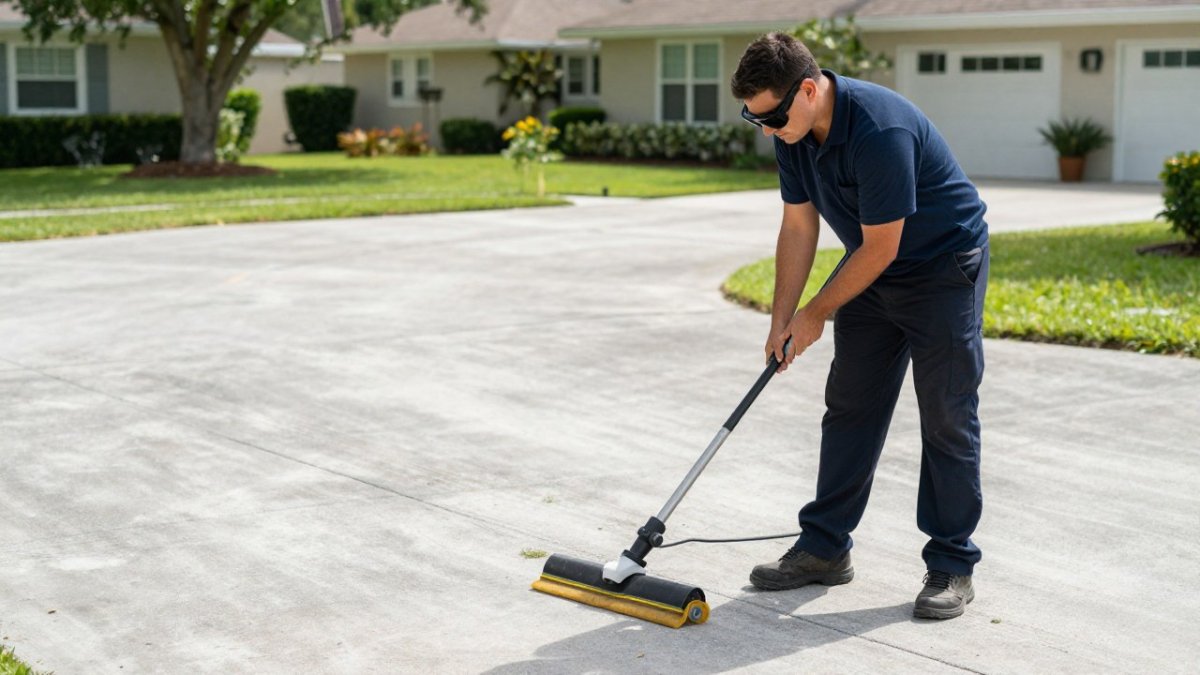
A surface cleaner is the most efficient method for most driveways. It is a wide cleaning head that rolls on the surface and keeps the pressure consistent, which prevents the striping that often happens with a wand.
- Clear the driveway. Remove vehicles, toys, and loose debris. Sweep away leaves and gravel.
- Pre-wet the surface. A light rinse helps the detergent work and reduces splatter.
- Apply detergent. Use a concrete-safe cleaner and let it dwell for the time on the label without letting it dry.
- Attach the surface cleaner. Connect it to the pressure washer and set the height so the head sits flat on the concrete.
- Clean in passes. Move the cleaner in straight, overlapping lines from one edge to the other.
Pressure, Flow Rate, and Nozzle Selection by Task
Different jobs call for different settings. Use a wide spray pattern for general cleaning and a narrower one only for spot work, since a narrow stream can etch concrete.
Cleaning in Overlapping, Consistent Passes
Overlap each pass by about a third of the surface cleaner’s width. This prevents lines between passes and gives an even finish. Keep a steady walking speed, since lingering in one spot concentrates pressure and can leave marks.
How to Pressure Wash a Driveway Without a Surface Cleaner
If you do not own a surface cleaner, a wand with the correct nozzle still works, though it takes more time and more care.
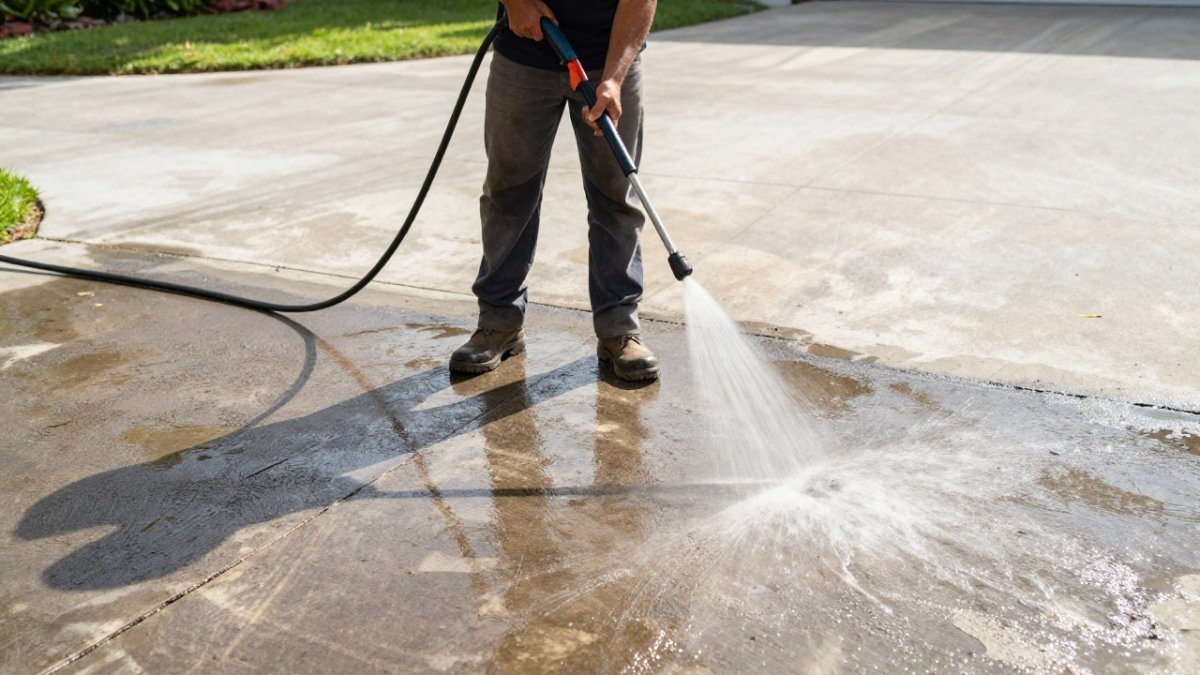
Work in small, controlled sections, holding the wand at a consistent distance and angle. Use a wide fan pattern, keep the nozzle moving, and avoid holding it in one place. Work from the top of the driveway downward so dirty water runs off the cleaned area. Finish with a thorough rinse across the full surface.
Hand cleaning produces more variation than a surface cleaner, so expect to make extra passes on the edges and any heavily soiled spots. For a closer look at whether a non-pressure approach is viable for your driveway, see how to clean a driveway without a pressure washer.
Treating Oil Stains, Algae, and Embedded Dirt Before You Rinse
Stains need treatment before the general wash, and different stains respond to different methods. Our guide to removing oil stains from concrete walks through a dedicated step-by-step method. Compare pressure washing and chemical cleaning to see when treatment works better for stubborn stains and algae. Treat stains before rinsing, not after. Rinsing first can spread oil across the surface and push the stain deeper into the concrete.
- Oil and grease: Pressure washing alone will not remove oil that has soaked into the concrete; a degreaser is typically needed to break it down first.
Watch out: letting detergent dry on the surface can leave a film or damage the concrete, so work in sections and keep the surface wet until you rinse. If you are also scheduling paver sealing or pool deck cleaning, address stains first so the finished surface is uniform.
Pressure Washing Concrete Driveway Tips to Prevent Damage
Pressure can damage concrete. Too much pressure, or holding the wand too close, can etch the surface, remove the top layer, and leave visible tracks. Watch out: the most common damage comes from using a narrow nozzle at close range, which concentrates force on one line.
Protect the surface by testing in an inconspicuous corner first, keeping the wand moving, and maintaining a safe distance. Cracks should be inspected before cleaning, since high pressure can widen them. If the concrete is old or flaking, a gentler method with detergent and low pressure is the safer choice.
Pavers need a different approach. Joint sand can wash out under high pressure, so keep the pressure low and the spray angled, and re-sand the joints after cleaning. For a full walkthrough, see our DIY driveway cleaning guide for paver prep.
Scheduling Your Driveway Cleaning With Freedom Wash Club
If you would rather skip the equipment and the learning curve, Freedom Wash Club handles driveway, sidewalk, pool deck, and paver cleaning for homes and businesses across South Florida. Scheduling is simple: call or text to book, with no need for an in-person estimate. Our team is licensed and insured, and we stand behind our work with a 100% satisfaction guarantee.
Ready to get your driveway looking new? Call or text Freedom Wash Club to schedule your cleaning, and let our team restore your curb appeal.
Frequently Asked Questions
What is the fastest way to pressure wash a driveway?
The fastest method is usually a surface cleaner attachment on a pressure washer, because it cleans a wide, even strip with each pass and avoids the streaks that come from wand work. Clear loose debris first, pre-treat oil and algae spots, then work in overlapping straight lines. Dirt and mildew that are deeply embedded may still need a second pass or a targeted detergent. Pricing for professional driveway cleaning depends on driveway size, condition, and scheduling, so request a quote from Freedom Wash Club for an accurate figure.
How do you pressure wash a driveway without a surface cleaner?
Use a wide-angle nozzle, keep the tip a consistent distance from the concrete, and work in overlapping passes that run in one direction. Start at the far end and move toward the exit so you do not step on cleaned areas. Apply a detergent to stained spots and let it dwell briefly before rinsing. Holding the wand too close or using a narrow tip can etch the surface, so test a small inconspicuous area first. Wand work takes longer than a surface cleaner, but it is workable for smaller driveways.
Can you pressure wash a concrete driveway without damaging it?
Yes, when you match pressure and nozzle to the surface and keep the wand moving. Concrete can streak or etch if the spray is held too close or the pressure is too high for an older, weathered slab. Test a small area before cleaning the full driveway, and avoid pivoting the wand in one spot. A conservative approach is safer on older surfaces. A professional crew can assess the surface and adjust before starting.
What time of year should you pressure wash your driveway?
Many South Florida homeowners schedule driveway cleaning in the drier months, when surfaces dry evenly and mold and algae growth is easier to remove. Heavy rain soon after cleaning can bring back surface staining in humid conditions, so timing around the forecast helps. Freedom Wash Club can help you plan a schedule that fits your property.
Is pressure washing a driveway illegal?
Pressure washing a driveway is generally legal on residential property, but runoff rules and local ordinances can apply, especially when detergents or cleaning chemicals wash into storm drains. Some HOAs also set rules about exterior cleaning schedules and methods. Check with your HOA and local government before cleaning, and ask your service provider how they manage runoff and wastewater. Freedom Wash Club is licensed and insured, which helps protect you during the job.