Quick Summary
Good pool deck cleaning follows a sequence: clear debris, pre-wet the surface, then match the method and pressure to the deck material. Mild soap and a soft brush work for most surfaces, with low-pressure washing reserved for stubborn stains. Always test a hidden spot first and rinse thoroughly.
- Remove leaves, sand, and loose debris before adding any water or cleaner.
- Pre-wet the deck with a garden hose to loosen dirt and slow drying.
- Use a wide fan tip at the lowest pressure that lifts the dirt, held 12 to 16 inches away.
- Never use a zero-degree tip on a pool deck; it can damage surfaces in seconds.
- Clean a light layer every few weeks in pool season and deep clean once or twice a year.
Table of Contents
- Start by Clearing Debris and Pre-Wetting the Deck
- Choose a Cleaning Method for Your Deck Material
- Pool Deck Cleaning Solutions and Safe Dilution
- Cleaning Concrete Pool Deck Without a Pressure Washer
- Pressure Washing a Pool Deck Safely
- Removing Pool Deck Mold and Algae
- How Often to Clean a Pool Deck
- Book a Professional Cleaning With Freedom Wash Club
- Frequently Asked Questions
Last Updated: October 29, 2026
Pool decks take a beating. Sun, pool chemicals, sunscreen, tracked-in sand and algae all work against the surface, and the wrong cleaning method can make things worse. Freedom Wash Club has over a decade of experience in pressure cleaning and paver sealing. The principles below apply to pool deck cleaning.
Good pool deck cleaning is less about power and more about sequence. Clear the debris, match the method to the material, use the right solution at the right strength, and protect the pool water along the way. Here is how to do it well.
Start by Clearing Debris and Pre-Wetting the Deck
Remove leaves, sand, and loose debris before you add any water or cleaner. Wet grit turns into a grinding paste that scratches the surface as you scrub.
Once the deck is clear, wet it down with a garden hose. Pre-wetting does two useful things:
- It loosens dirt so it lifts more easily.
- It keeps the cleaning solution from drying onto the surface too fast.
Work in manageable sections, about one area at a time. Rinse each section before it dries, especially in direct sun.
Choose a Cleaning Method for Your Deck Material
Not every pool deck responds to the same approach. The material decides how hard you can push, what cleaner is safe, and whether sealing should follow. Use this compatibility guide to avoid etching, discoloration, and joint damage.
Concrete and Stone Pool Decks
Concrete and natural stone handle the most cleaning power, but they still have limits. Start with mild dish soap and water. Scrub with a soft-bristled brush, then rinse thoroughly.
Avoid high pressure on cool decking and coping. High PSI can etch these surfaces, so low-pressure cleaning is the safer default. On exposed-aggregate and stamped concrete, keep the nozzle moving and never dwell in one spot, or you will leave lap marks.
Natural stone needs a pH check. Acidic cleaners can etch limestone, travertine, and marble. Test a hidden spot first, and rinse any cleaner off stone promptly.
Pavers
Pavers need gentle handling. Harsh scrubbing can loosen joint sand and dull the surface. Use a soft brush and a mild cleaner, and rinse well so no residue is left in the joints.
Polymeric sand is the weak point. Keep pressure low and angle the spray across the joints rather than straight down. After cleaning, check for missing sand and top off joints before refilling. If the pavers are sealed, inspect the sealer for wear during deep cleanings and plan paver sealing when the finish dulls or water stops beading.
Composite Decks
Composite can warp, fade, or splinter under aggressive cleaning. Stick to mild soap and a soft brush, scrub along the grain, and rinse completely. Avoid pressure washing composite at high settings; a fan tip at low pressure is the most most composite manufacturers recommend. If a stain persists, test a small hidden area first.
Wood Decks
Wood is the most forgiving on pressure but the least forgiving on moisture. Use mild soap, a soft brush, and scrub along the grain. Rinse completely and let the wood dry before walking on it. Avoid saturating the wood, and never use a narrow pressure tip, which can gouge the grain.
Painted or Sealed Concrete
Painted and sealed concrete are finish-sensitive. Use low pressure and a mild cleaner, and avoid solvents that can lift the coating. Test any cleaner on an inconspicuous spot, and rinse before the solution dries. If the coating is already peeling, cleaning will not fix it; plan to recoat after the deck is dry.
When in doubt, start with the mildest method, the lowest pressure, and the shortest dwell time. You can always step up, but you cannot undo etching or joint damage.
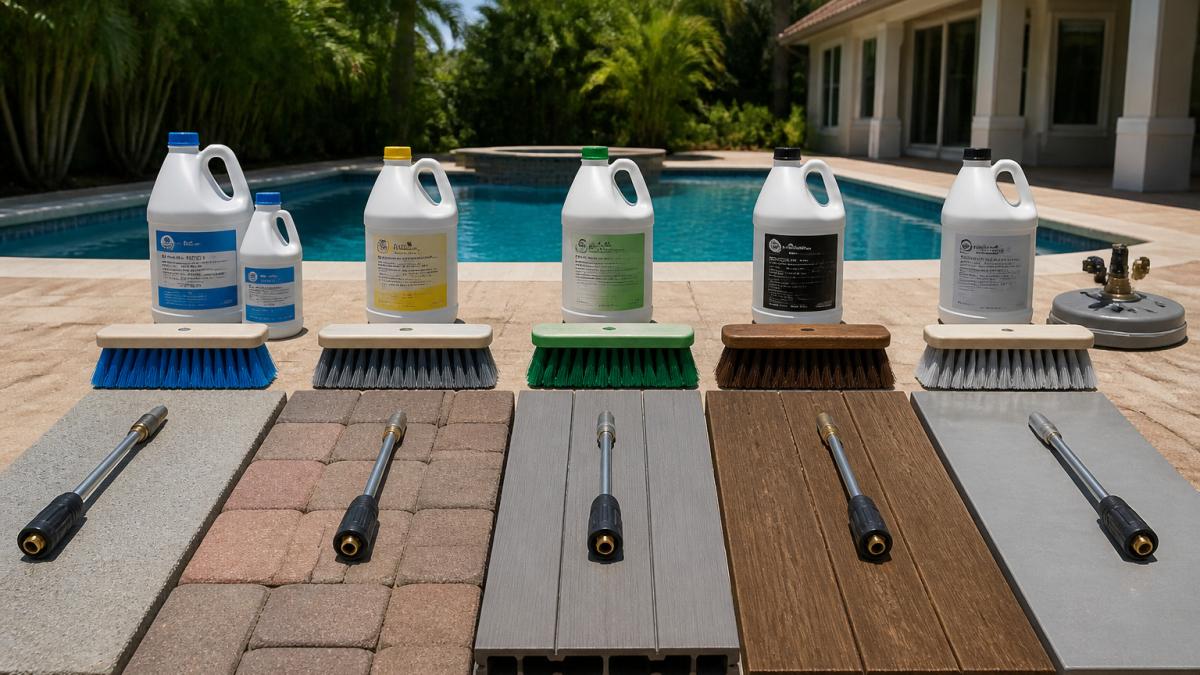
The right approach depends on what your pool deck is made of, so use this quick guide to match the method to the surface.
| Deck material | Recommended approach | Key caution |
|---|---|---|
| Concrete and stone | Mild soap and water; stronger solution only for stubborn stains | Avoid high pressure on cool decking and coping |
| Pavers | Soft brush and mild cleaner | Keep pressure low; check polymeric sand in joints |
| Composite | Mild soap, soft brush, scrub along the grain | Avoid high-setting pressure washing |
| Wood | Mild soap, soft brush, scrub along the grain | Avoid saturation and narrow pressure tips |
| Painted or sealed concrete | Low pressure and mild cleaner | Test cleaner first; avoid solvents |
Pool Deck Cleaning Solutions and Safe Dilution
Most pool decks come clean with mild dish soap and water. For tougher grime, a diluted cleaning solution works well. The key word is diluted. Stronger is not always better, and a too-strong mix can damage the surface, leave residue, or harm nearby plants and pool equipment.
Keep these habits in mind:
- Read the product label for the recommended dilution ratio.
- Test a small area first to check for discoloration.
- Follow dwell time instructions. Letting a solution sit longer than recommended does not clean better.
- Rinse until the water runs clear and no suds or residue remain.
- Store chemicals safely and never mix different cleaning products together.
Handle chemicals with gloves and eye protection. Keep runoff from draining directly into the pool or onto lawns and landscaping.
Cleaning Concrete Pool Deck Without a Pressure Washer
You do not need a pressure washer to get a concrete pool deck clean. Many homeowners get excellent results with basic tools.
Here is a simple process:
- Sweep or blow off all loose debris.
- Pre-wet the section with a hose.
- Apply a mild soap or diluted cleaner.
- Scrub with a stiff-bristled deck brush or a soft-bristled brush, depending on the surface.
- Let the cleaner sit for the recommended time.
- Rinse thoroughly with a hose.
- Check for remaining stains and repeat only the spots that need it.
Work patiently. Hand scrubbing takes longer, but it gives you more control and reduces the risk of surface damage.
Pressure Washing a Pool Deck Safely
Pressure washing can clean quickly, but it needs care around pool decks. The goal is to lift dirt without etching concrete, washing out joint sand, or driving debris into the pool.
Pressure, Nozzle, and Distance
Start with a wide fan tip (25 or 40 degree) and the lowest pressure that lifts the dirt. Keep the nozzle about 12 to 16 inches from the surface and keep it moving. A narrow tip held close is the most common cause of etch marks and gouges.
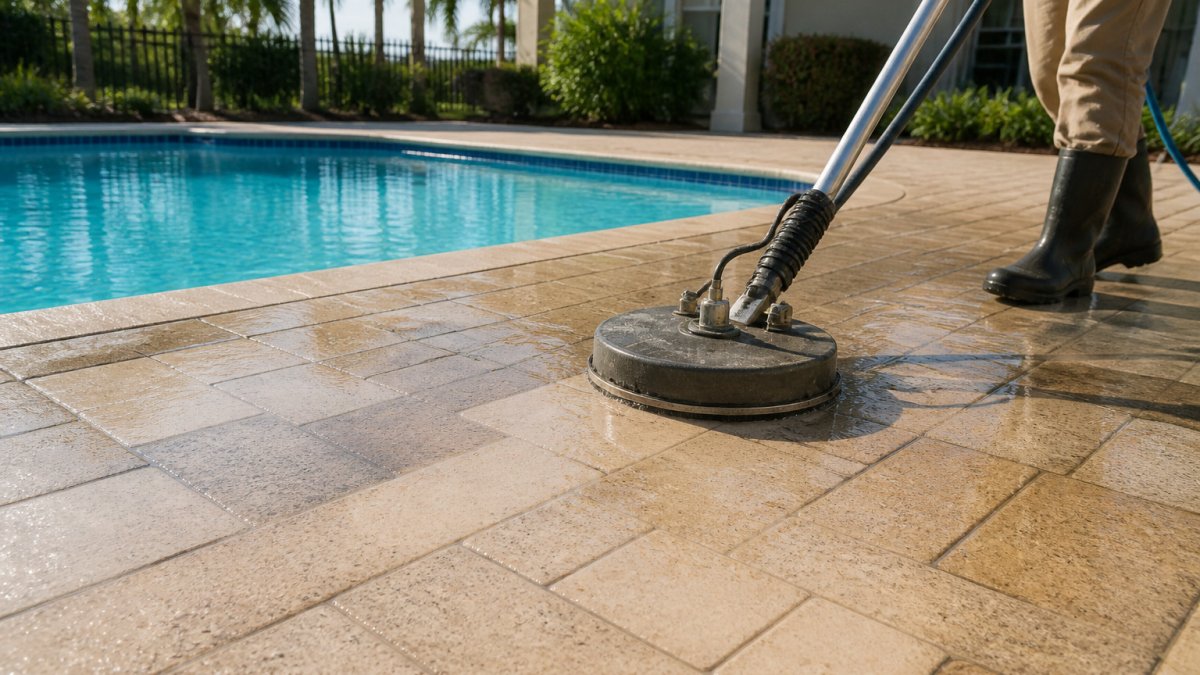
For most residential pool decks, a surface cleaner attachment gives more even results than a wand. It covers ground faster and reduces striping. Match the surface cleaner to the pressure washer’s flow rate, and keep the deck wet ahead of the cleaner.
Never use a zero-degree tip on a pool deck. It concentrates pressure in a pinpoint and can damage concrete, pavers, and sealant in seconds.
Protect the Pool and the Joints
Work away from the pool and keep the pool skimmed before you start. Angle the spray so runoff moves away from the water, and avoid spraying directly into grout joints, which can wash out sand and mortar. If you use a cleaner, apply it at the label dilution, respect the dwell time, and rinse before it dries.
Common Mistakes to Avoid
- Using a narrow tip too close to the surface, which can etch or gouge concrete and pavers.
- Spraying grout joints directly, which can wash out sand and mortar.
- Ignoring the deck’s material. Wood and composite usually need low pressure or none at all.
- Driving debris into the pool. Work away from the water and keep the pool skimmed before you start.
- Letting cleaner dry on the surface, which can leave streaks and residue.
If you are unsure about the right setting for your surface, start at the lowest pressure and increase only as needed.
Pressure washing is a tool, not a default. Match the tip, pressure, and distance to the material, and protect the pool water as carefully as you protect the surface.
Pressure washer safety guidance
Removing Pool Deck Mold and Algae
Mold and algae thrive in shaded, damp areas, and they can make a pool deck slippery. Address them promptly. A slick deck is a safety hazard.
Begin by scrubbing the affected area with a soft brush and a mild cleaning solution designed for mold or algae. Let it dwell according to the label, then rinse well.
Once the deck is clean, improve conditions to slow regrowth. Trim nearby plants that block sunlight, fix drainage problems that leave standing water, and clean the deck regularly so organic buildup never gets a foothold.
How Often to Clean a Pool Deck
For most homes, a light cleaning every few weeks during the pool season keeps the deck safe and attractive. Sweep and rinse weekly if the deck gets heavy use, sand, or tree debris. Schedule a deeper cleaning at least once or twice a year, typically before and after the main swimming season. If you would rather skip the estimate step, you can book driveway cleaning without an estimate.
Adjust the schedule based on your conditions:
- Heavy use or many guests: clean more often.
- Shaded decks or damp climates: watch closely for algae and mold.
- Pavers and sealed surfaces: check the sealant condition during deep cleanings.
Regular light cleaning is easier and gentler on the surface than waiting until a deck is heavily soiled.
Book a Professional Cleaning With Freedom Wash Club
Some pool decks need more than a weekend with a brush. Freedom Wash Club offers licensed and insured pressure cleaning services for residential and commercial properties. Scheduling is available by phone or text, and no in-person estimate is needed. Compare our soft wash, paver sealing, and pool deck options to find the right service.
Our work is backed by a 100% satisfaction guarantee. Get your free quote today.
Frequently Asked Questions
What is the best way to clean a residential pool deck?
Start by removing loose debris with a broom or leaf blower, then pre-wet the deck with a garden hose. Apply a mild, surface-appropriate cleaning solution, scrub gently with a soft-bristled brush, and rinse thoroughly with clean water so no residue is left to become slippery. Work in sections so the solution does not dry on the surface, and keep chemical runoff away from the pool water. Check the manufacturer’s directions for any cleaner you use, and test a small hidden area first if the deck is sealed or painted.
Is it safe to pressure wash a pool deck?
It can be, but pressure is not right for every surface. High pressure can etch cool decking, pavers, and coping, and it can damage sealed or painted finishes. Use a low-pressure setting or a surface cleaner attachment, keep the wand moving, and hold the nozzle at a safe distance from the surface. If you are unsure of your deck material, start with the lowest effective pressure and a gentle test spot.
How often should you clean a pool deck?
Most residential pool decks benefit from a light cleaning every few weeks during the season, plus a more thorough cleaning once or twice a year. Sweep debris and rinse spills as they happen, since sunscreen, oils, and pool chemicals build up over time. Decks in shaded or humid areas may need more frequent cleaning to prevent mold and algae growth, while decks that get heavy sun use may need less frequent deep cleaning.
How do you remove mold and algae from a pool deck?
Remove loose debris first, then pre-wet the area and apply a cleaner formulated for mold and algae on the deck surface. Let it dwell according to the product label, scrub with a soft-bristled brush, and rinse thoroughly. Dilute any bleach-based solution carefully, keep it away from the pool water and plants, and never mix cleaning chemicals. Recurring growth usually signals shade, moisture, or poor drainage that should be addressed.