Table of Contents
- Understanding Pressure Wash Damage: PSI, GPM, and Surface Risks
- Surfaces You Should Never Pressure Wash
- How Soft Wash Roof Cleaning Prevents Shingle and Tile Damage
- Choosing the Right Nozzle, PSI, and Technique for Safe Siding Cleaning
- What a Professional Driveway Cleaning Service Does Differently
- Paver Sealing Benefits: Protecting Your Investment After a Deep Clean
- Exterior Home Cleaning Best Practices for Long-Term Protection
- Frequently Asked Questions
Last Updated: September 13, 2026
Understanding Pressure Wash Damage: PSI, GPM, and Surface Risks
Avoiding pressure wash damage starts with two numbers most homeowners never check: PSI and GPM. PSI measures how hard the water hits a surface, while GPM measures how much water flows per minute. Get either wrong and you can etch concrete, strip paint, or force water behind siding. At Freedom Wash Club, we’ve spent over a decade correcting these mistakes across South Florida homes, and the pattern is always the same: too much pressure, not enough technique. The Pressure Washer Manufacturers’ Association safety guidance treats pressure and flow as separate variables for good reason. High PSI with low GPM cuts; moderate PSI with high GPM rinses. Matching those two to the material in front of you is the entire game.
How Water Pressure and Flow Rate Affect Different Materials
Soft materials fail first. Wood, painted siding, and aged stucco can’t absorb a concentrated stream the way concrete can. A narrow fan tip at close range delivers the same force as a much higher PSI setting at distance, which is why nozzle choice matters more than the dial.
| Surface | Safe Pressure Range | Main Risk |
|---|---|---|
| Concrete driveway | 2,500-3,500 PSI | Etching, joint erosion |
| Vinyl siding | 1,200-1,500 PSI | Water intrusion, panel lift |
| Painted wood | 500-800 PSI | Paint stripping, grain damage |
| Roof shingles | Under 500 PSI (soft wash) | Granule loss, seal break |
| Stucco | 1,000-1,500 PSI | Cracking, water behind wall |
Using a zero-degree nozzle on any surface except bare concrete will cut a permanent groove in seconds. There is no fixing that damage, only replacing the material.
Surfaces You Should Never Pressure Wash
Some surfaces should never see a pressure washer wand. The force that cleans a concrete driveway will destroy asphalt shingles, aged wood decks, window seals, and anything with loose mortar, materials that either lack the compressive strength to resist concentrated water or have seams that channel water where it doesn’t belong.
Asphalt Shingles and Roofing Materials
Asphalt shingles rely on mineral granules embedded in an asphalt substrate. High pressure strips those granules in a single pass, exposing the asphalt to UV degradation and aging the shingle years in one afternoon. Clay and concrete tile are equally vulnerable: brittle tile cracks under a concentrated stream, creating entry points for water. This is why soft wash roof cleaning, low pressure plus cleaning solution, is the only safe method for shingle and tile roofs; the chemistry kills algae and mold at the root without touching the surface structure.
Wood Decks and Fencing
Wood is porous and soft. A pressure washer etches the grain, raises splinters, and strips stain in uneven streaks, and older decks with rot or checking are especially vulnerable because water forced into cracks accelerates decay. A 25-degree tip at 500-800 PSI is the ceiling for sound wood, and even then the wand must stay moving. For aged wood, hand washing with a brush and detergent is safer; if you do pressure wash, follow with a stain or sealer.
Window Seals, Screens, and Glazing
Windows are not watertight under pressure. Seals around glass and frames shed rain, not a directed stream, so high pressure forces water into the frame, tracks, and wall cavity, causing fogged double-pane glass, rot, and mold. Clean windows by hand or with a soft wash technique, keeping the wand at a downward angle and at least 4-6 feet away. Never aim directly at the seal line.
Aged Brick, Mortar, and Historic Masonry
Antique brick and historic masonry are fragile in a way that modern construction is not. The mortar is often softer than the brick itself, so high pressure erodes the joints and undermines the wall’s structural integrity. Once the mortar is washed out, repointing is the only fix, and matching historic mortar is expensive and difficult. Homes built before 1978 may also carry lead-based paint, and blasting it creates airborne dust that’s a genuine health hazard (the EPA). The EPA lead-safe renovation guidelines require certified handling for disturbing painted surfaces in older homes. When assessing a pre-1980 property, the first question is whether the finish can survive any pressure at all, or whether hand washing and chemical treatment are the only safe route.
Stucco and EIFS
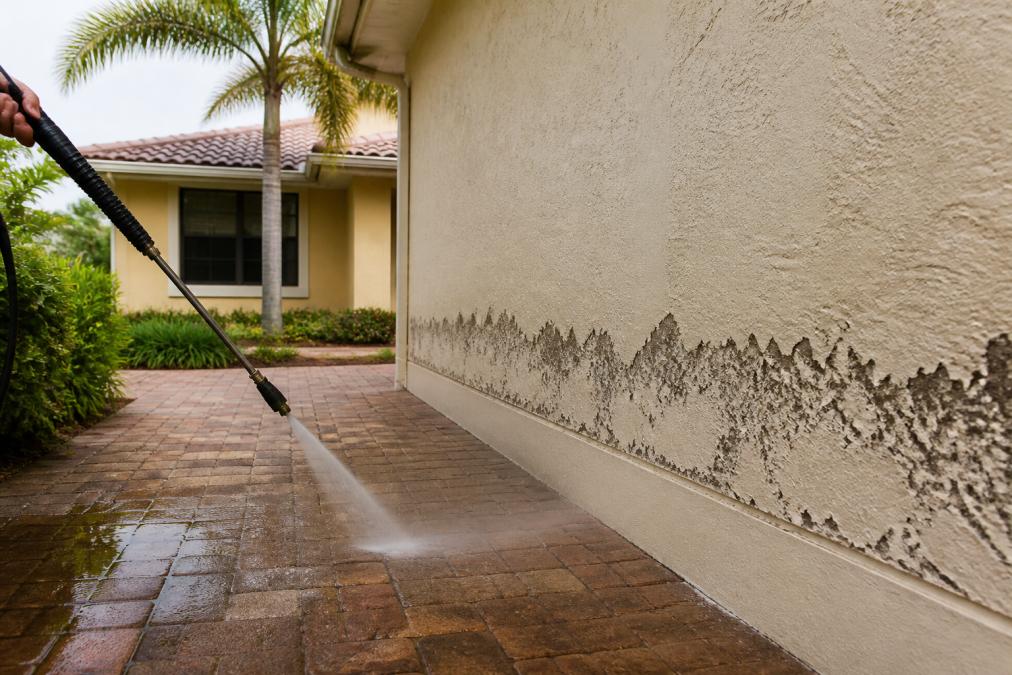
Stucco and EIFS (exterior insulation and finish systems) are designed to shed water, not resist it. High pressure cracks the finish, forces water behind the wall, and can delaminate the system from the substrate; once water is behind EIFS it has no way to drain, and the rot, mold, and structural decay stay hidden until severe. The safe range for stucco is 1,000-1,500 PSI with a wide fan tip, angled downward at a distance. For EIFS, soft washing is the only recommended method.
Using a zero-degree nozzle on any surface except bare concrete will cut a permanent groove in seconds. There is no fixing that damage, only replacing the material.
What to Do Instead
When a surface can’t handle pressure, the alternative is soft washing: low pressure (under 500 PSI, often just garden-hose pressure) plus a cleaning solution that breaks down dirt, mold, and algae. It’s standard for roofs, EIFS, aged wood, and historic masonry. For surfaces that handle some pressure but not much, a wide fan tip, downward angle, and consistent distance are your best controls. The goal is to clean the surface, not blast it.
How Soft Wash Roof Cleaning Prevents Shingle and Tile Damage
Soft wash roof cleaning applies low-pressure cleaning solution and lets chemistry do the work instead of force. It’s the only method we recommend for shingle and tile roofs: mold, algae, and the black streaking homeowners hate are living organisms that die when treated with the right detergent mix and rinsed at garden-hose pressure.
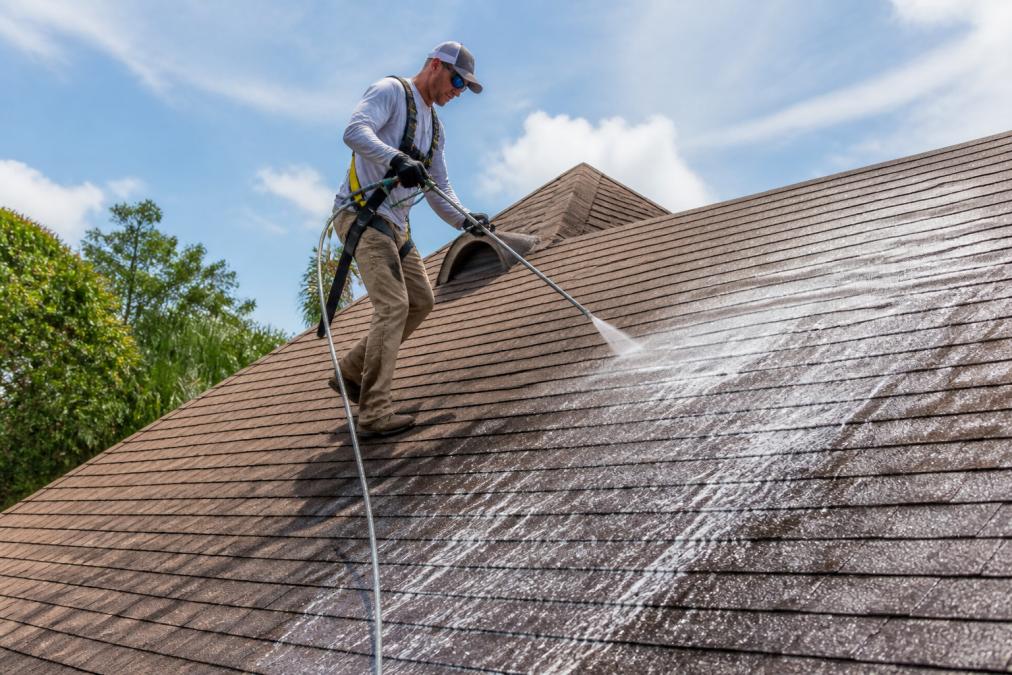
High pressure strips the protective granules off asphalt shingles and cracks brittle tile, aging the shingle years in a single afternoon. Soft washing removes the growth without touching the surface structure, which is why it’s the standard for roof cleaning rather than an upsell.
The black streaks on a roof are algae, not dirt. Pressure alone won’t kill them, so they return within months. A proper soft wash treatment kills the organism at the root.
Choosing the Right Nozzle, PSI, and Technique for Safe Siding Cleaning
Safe siding cleaning comes down to three controls: nozzle, pressure, and angle. Get all three right and you clean siding without forcing a drop of water behind it. But there’s a fourth variable most guides ignore: chemistry. The right detergent reduces the need for high PSI, the safest approach for any siding material.
Nozzle Tips, Spray Patterns, and Pressure Regulation
Nozzle tips are color-coded by spray angle, and the wider the fan, the gentler the hit. A 40-degree white tip is the workhorse for siding; a 25-degree green tip suits concrete; the 15-degree yellow and zero-degree red tips are for stripping and stubborn stains only. Hold the wand at a consistent distance, keep the spray angled downward so water runs off instead of up and under, and watch the siding channels: if water pushes up beneath a panel, you’re too close or too steep.
The Chemical-vs-Pressure Balance
Most guides focus on water pressure. The professional approach uses detergents to reduce the need for high PSI: a good surfactant or mold-killing solution breaks down dirt, algae, and mildew so low pressure, often just garden-hose pressure, can rinse it away. This is the core of soft washing, and it’s safer for every siding material, from vinyl to wood to stucco.
Here’s how to apply it:
- Pre-treat with detergent. Apply a cleaning solution from the bottom up, then let it dwell for 5-10 minutes. Don’t let it dry on the surface.
- Rinse with low pressure. Use a 40-degree tip at the lowest effective PSI. For vinyl, 1,200-1,500 PSI is plenty; for painted wood, stay under 800 PSI.
- Work top to bottom. Rinse in sections, keeping the wand moving and angled downward.
The trade-off is time: chemical cleaning takes longer than blasting, but it eliminates the risk of etching, stripping, and water intrusion. For house wash and exterior home cleaning, this method is the standard for a reason.
Siding-Specific PSI and Technique
Different siding materials tolerate different pressures. The table below gives safe ranges and main risks.
| Siding Material | Safe Pressure Range | Main Risk |
|---|---|---|
| Vinyl | 1,200-1,500 PSI | Water intrusion, panel lift |
| Painted wood | 500-800 PSI | Paint stripping, grain damage |
| Stucco | 1,000-1,500 PSI | Cracking, water behind wall |
| Fiber cement | 1,200-1,500 PSI | Surface erosion, paint damage |
| Aluminum | 1,000-1,200 PSI | Dents, paint chipping |
For any of these, a wide fan tip and a downward angle are non-negotiable. If you’re unsure, start at the lowest pressure and test a small area.
Technique: Distance, Angle, and Movement
Distance and angle protect the surface more than any pressure setting. Keep the wand at least 12-18 inches from siding, never hold it in one spot, and move in smooth, overlapping passes angled downward at about 45 degrees so water runs off. Near windows, doors, or electrical fixtures, reduce pressure further. For pool deck cleaning and driveway cleaning, the same principles apply, but you can use higher pressure because those surfaces are more durable.
For siding, work top to bottom with a wide fan tip, keep the wand moving, and angle the spray downward. Use detergent to reduce the need for high pressure. Distance and angle protect the surface more than any pressure setting.
When to Call a Professional
If your siding is aged, painted with lead-based paint, or showing signs of cracking or rot, a professional house wash is the safer choice. Professionals control pressure precisely, match the method to the material, and handle runoff and landscaping protection. For exterior home cleaning, a professional job is often less than repairing damage from a DIY mistake.
What a Professional Driveway Cleaning Service Does Differently
A professional driveway cleaning service uses a surface cleaner attachment rather than a wand. It spins two nozzles under a hood, delivering even coverage at consistent pressure and distance, uniform cleaning with no zebra striping, the telltale sign of a rushed DIY job.
The real difference is judgment. A pro reads the concrete, spots cracks and settled joints, and adjusts before damage happens. Detergent injection breaks down oil and organic stains that pressure alone leaves behind. We also handle the runoff, since pushing cleaning solution into storm drains violates local stormwater rules. Driveway cleaning done right protects the surface instead of eroding it, and it sets up the next step: sealing.
Paver Sealing Benefits: Protecting Your Investment After a Deep Clean
Paver sealing benefits show up the moment the job is done and every season after. Sealing locks in the clean, blocks weeds from sprouting in the joints, stops sand from washing out between pavers, and creates a barrier that keeps mold and algae from re-establishing, which matters enormously in a humid climate where growth returns fast.
The sequence matters: clean first, seal second, always. Sealing over dirt or active growth traps the problem under the finish. For pool deck cleaning, sealing also resists chlorine splash and sun fading, keeping the surface cooler and safer underfoot. Done correctly, a sealed paver surface holds its appearance far longer than an unsealed one and needs less frequent deep cleaning.
Exterior Home Cleaning Best Practices for Long-Term Protection
Exterior home cleaning best practices come down to timing, method, and inspection. Clean on a mild day, never in direct midday heat that dries detergent before it works. Match the method to the surface, and always inspect after. A house wash removes the buildup that traps moisture against siding and feeds mold, which is why regular exterior cleaning is maintenance, not cosmetic.
Post-Wash Inspection Checklist
- Walk the perimeter and check for water intrusion behind siding channels
- Confirm window seals are intact and no water sits in the tracks
- Inspect foundation drainage: runoff should flow away from the house
- Look for new cracks in stucco, mortar, or concrete joints
- Check that paint or stain shows no lifting or blistering
- Verify no granules collected at the base of roof downspouts
Pressure washing is safe when the pressure, nozzle, and technique match the surface, and destructive when they don’t. Most damage we see comes from homeowners treating every surface the same. Freedom Wash Club brings licensed and insured crews, over ten years of experience, and a 100% satisfaction guarantee to every job, with no in-person estimate required: schedule by phone or text and we’ll handle the rest. From soft wash roof cleaning to driveway cleaning, pool deck cleaning, and paver sealing, we protect your property while restoring its curb appeal. Get started with Freedom Wash Club and receive your free quote.
Frequently Asked Questions
What not to do when pressure washing a house?
Never use a zero-degree nozzle on siding, as it can etch wood and crack stucco. Avoid spraying upward under siding channels, which forces water behind the walls and causes mold. Don’t pressure wash windows directly, as seals can fail. Skip harsh chemicals on roofs without proper runoff control. And never rent a high-PSI machine without testing it on a hidden area first. These mistakes lead to water intrusion, wood grain damage, and expensive repairs.
How does soft washing differ from traditional pressure washing?
Soft washing uses low pressure (under 500 PSI) combined with biodegradable cleaning solutions to kill mold, mildew, and algae at the root. Traditional pressure washing relies on high PSI to blast away dirt, which can damage shingles, paint, and wood. Soft wash roof cleaning is the only safe method for asphalt shingles and tile. For siding and driveways, a hybrid approach works best: soft wash for organic growth, pressure for stubborn stains.
What surfaces are most susceptible to pressure washing damage?
Wood decks, aged brick, stucco, asphalt shingles, and window seals are the most vulnerable. Wood grain damage occurs above 1,200 PSI. Stucco integrity fails when water intrudes behind the finish. Antique brick and lead-painted surfaces require special care. Also avoid pressure washing pool decks with loose tiles or cracked grout, as water can lift them. Always test a small area and use the lowest effective PSI for the substrate.
Why is professional paver sealing important after a deep clean?
Paver sealing benefits include locking out mold, algae, and stains that return quickly after cleaning. Without a sealant, joint sand washes out, pavers shift, and weeds grow. Sealing also enhances color and protects against UV fading. For a professional driveway cleaning service, sealing is the final step that extends the clean look for years. It prevents water intrusion and reduces long-term maintenance costs.