Last Updated: October 29, 2026
Quick Summary
Roof algae raises cooling costs by absorbing more sunlight than clean shingles, which heats the roof, attic, and living space below. The effect is real but depends on the roof color, attic ventilation, insulation, and how much of the surface is stained. Homeowners can test their own roof’s impact by comparing attic temperatures and degree-day-adjusted bills before and after cleaning.
- Dark roof algae streaks absorb more sunlight, so the shingle surface runs hotter than a clean roof.
- The energy effect depends on attic ventilation, insulation depth, and roof pitch and orientation.
- Photograph the roof and record attic temperatures before cleaning to create a usable baseline.
- Compare degree-day-adjusted cooling usage across summers, since weather and rate changes can mislead raw bills.
- Use soft wash roof cleaning rather than high-pressure washing to avoid stripping protective shingle granules.
Table of Contents
- How Roof Algae Forms and Why South Florida Roofs Are Especially Exposed
- Does Roof Algae Make a House Hotter?
- Roof Algae vs. Moss: Different Growth, Different Risks
- How to Assess the Energy Impact on Your Own Home
- How to Remove Algae From Roof Shingles Safely
- Scheduling a Roof Algae Cleaning for Your South Florida Home
- Frequently Asked Questions
Roof algae does more than stain your shingles. The dark green-black streaks you see on many South Florida roofs are colonies of Gloeocapsa magma, a cyanobacterium that thrives in the region’s heat and humidity. Homeowners across the area often ask whether these streaks actually raise their energy bills. Before cleaning, you can also check whether the cleaning method could damage your asphalt shingles.
How Roof Algae Forms and Why South Florida Roofs Are Especially Exposed
Algae colonies start on roof surfaces that stay damp for long stretches, collecting windborne spores and feeding on the limestone filler found in many asphalt shingles. South Florida offers that combination year-round: frequent afternoon rain, high humidity, shade from nearby trees, and warm temperatures that let growth continue through much of the year. Roofs that face north or sit under heavy tree cover tend to show streaking first, because they dry out more slowly.
Does Roof Algae Make a House Hotter?
The short answer is yes, but the size of the effect depends on a chain of variables that most articles skip. Understanding the chain is what separates a real energy impact from a cosmetic complaint.
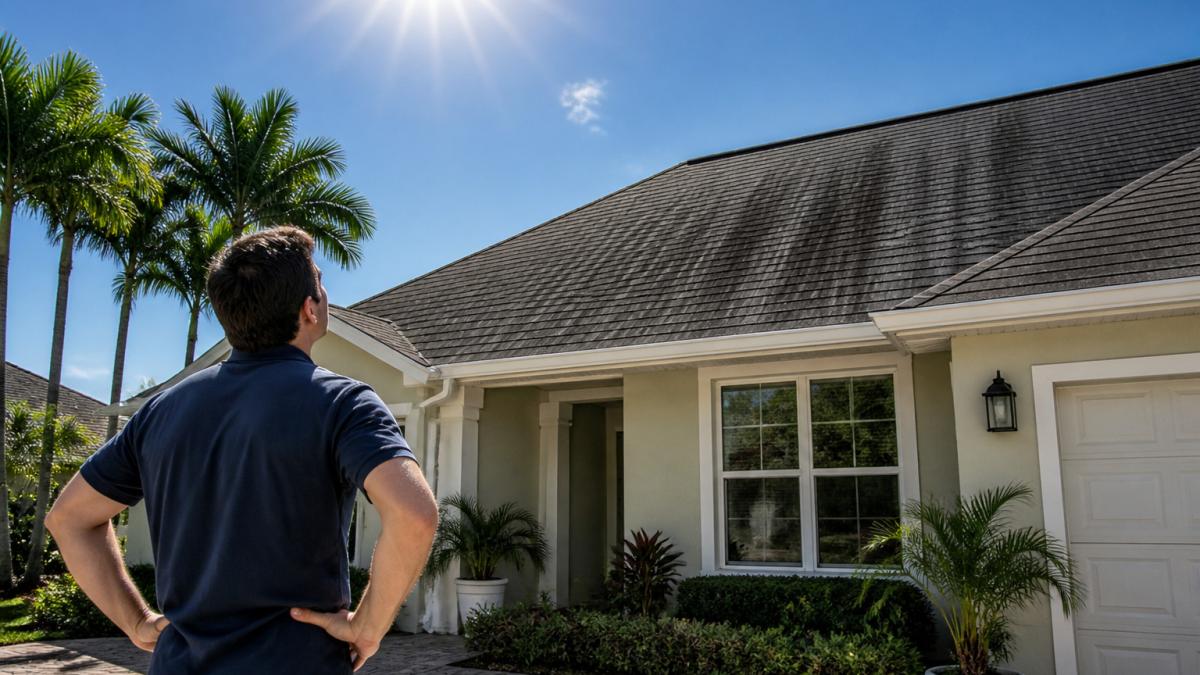
Here is the mechanism in plain terms. Sunlight hits the roof surface. A clean, light-colored asphalt shingle reflects a meaningful share of that energy back into the sky and absorbs the rest, which warms the shingle.
Each link in that chain can weaken or amplify the final result:
- Roof color and material. A light gray or white shingle loses more reflectance when stained than a dark charcoal shingle that was already absorbing most sunlight. Metal and tile roofs behave differently from asphalt.
- Attic ventilation. A well-vented attic with clear soffit and ridge vents flushes heat before it reaches the ceiling. A sealed or blocked attic traps it.
- Insulation depth and air sealing. Adequate insulation slows heat transfer into living space. Thin insulation or unsealed penetrations let it through.
The honest framing is that roof algae is a heat-gain factor, not a guaranteed energy drain. Most homeowners will not see a dramatic jump on their bill from staining alone, but the effect is real and it compounds during peak cooling months.
How Dark Staining Changes Solar Reflectance
Solar reflectance, or albedo, is the fraction of sunlight a surface bounces back. Staining does not change the shingle’s rated reflectance; it changes the effective reflectance of the surface as installed.
Streaks concentrated on south and west slopes, where afternoon sun hits hardest, generally matter more to heat gain than streaks on a shaded north slope. If you are seeing dark streaks, our guide explains how to remove black streaks from roof shingles and what that process involves.
What Happens Inside the Attic and Living Space
Heat that builds under the roof deck travels into the attic, and attic air then transfers heat into the ceiling below. An attic running hotter forces the air handler to run longer to hold the set temperature. Homes with good ventilation and adequate insulation buffer this effect well. Homes with thin insulation, blocked soffit vents, or ductwork running through a hot attic feel it most, especially in upstairs rooms.
The Evidence Limits You Should Know
Most published claims about roof algae and energy savings are qualitative. Measured, peer-reviewed figures tying a specific dollar reduction to algae removal are scarce, and the variables above make a single national number misleading. Treat any article that promises a fixed percentage savings with caution.
If you want to reduce heat gain beyond cleaning, the same visit can address related exterior surfaces.
Roof Algae vs. Moss: Different Growth, Different Risks
Homeowners often lump algae and moss together, but they behave differently. Algae forms a thin, dark film or streaks that mainly affect appearance and surface reflectance.
In South Florida the two often appear together, and both call for prompt removal. The practical takeaway is that a roof with moss needs cleaning sooner, because the moisture it traps accelerates shingle wear.
How to Assess the Energy Impact on Your Own Home
This section offers a practical way to test whether your own roof staining may be costing you money. The goal is not a lab-grade measurement, it is a defensible before-and-after comparison you can run with a phone, a thermometer, and your utility bills.
Step 1: Document the Roof Surface
Photograph the roof from the ground with a phone or binoculars, ideally on a clear day at the same time of day. Capture each slope separately and note which slopes show the heaviest dark streaking. South- and west-facing slopes are the ones that matter most for heat gain. Keep the photos dated, they become your baseline for comparing before and after cleaning.
Step 2: Measure Attic and Ceiling Temperatures
On a hot afternoon, use an infrared thermometer or a simple attic thermometer to record:
- Outdoor air temperature in the shade.
- Attic air temperature near the ridge.
- Attic air temperature near the soffit.
A large gap between outdoor and attic temperature points to heat gain through the roof. A large gap between attic and ceiling temperature points to insulation or air-sealing weakness. Record the same readings at the same time of day before and after cleaning to isolate the roof’s contribution.
Step 3: Compare Utility Bills Fairly
Pull the past two summers of cooling bills. Compare the same months year over year rather than month to month, because weather swings dominate short windows. Note the cooling degree days reported by your utility if available, they let you normalize for how hot the season actually was. Then compare the post-cleaning summer against the pre-cleaning summer using degree-day-adjusted usage, not raw dollars, since rates change.
Confounding factors can swamp the roof signal. Thermostat setpoint changes, a new HVAC unit, added insulation, a new appliance, or an unusually mild or brutal summer will all move the bill more than algae removal will. Write down any changes you made so you do not credit or blame the roof unfairly.
Step 4: Confirm Ventilation and Insulation Are Not the Real Problem
Before concluding that algae is your energy issue, check the cheap fixes first. Confirm soffit and ridge vents are clear of insulation, debris, and paint. Look for gaps around recessed lights, attic hatches, and duct penetrations. A roof with heavy staining but a well-sealed, well-vented attic will show a smaller energy effect than a lightly stained roof over a leaky attic.
Step 5: Get a Professional Inspection When the Stakes Are High
If your bills are climbing and the roof is heavily streaked, a professional roof inspection can separate algae staining from granule loss, flashing problems, or moisture intrusion. A roof cleaning professional can also help you determine whether the roof is a good candidate for cleaning versus replacement, and whether moss is present alongside algae, moss retains moisture and lifts shingles, which is a structural risk rather than an energy one.
Run the assessment before you clean, not after. Once the roof is clean you lose the baseline, and the before-and-after comparison becomes guesswork.
What the Assessment Tells You
If attic temperatures drop noticeably after cleaning and degree-day-adjusted cooling usage falls, the roof was contributing. If nothing moves, the roof was not your main energy driver and the money is better spent on insulation, air sealing, or HVAC service. Either result is useful, it tells you where the next dollar should go. Pair the roof cleaning with house wash and exterior home cleaning to remove the organic film on siding and trim, and consider driveway cleaning, pool deck cleaning, and paver sealing to protect hardscape from the same growth conditions.
How to Remove Algae From Roof Shingles Safely
Cleaning is where many homeowners cause the damage they were trying to prevent. High-pressure washing can strip granules from asphalt shingles, shorten their life, and void some manufacturer warranties.
It is a method often recommended for shingle roofs, and it avoids the granule loss that can come with pressure washing. To compare your options, see the key differences between pressure washing and roof cleaning services.
Why Soft Wash Roof Cleaning Protects Shingles
Soft wash roof cleaning works by applying solution at low pressure and allowing it to dwell long enough to kill the algae colony. Because the method relies on chemistry rather than force, the shingle surface stays intact. Professionals match the solution strength and dwell time to the roof material, and they rinse thoroughly so no residue is left to harm plants or siding below.
Common Mistakes That Damage Shingles
- Using a high-pressure nozzle on asphalt shingles, which strips protective granules.
- Applying bleach at full strength without dilution or protection for landscaping.
- Walking on wet, aged shingles without proper footing, which cracks tabs.
Gentler cleaning methods protect shingles while removing the algae that drives up heat gain, and the right approach depends on the roof and the damage to avoid.
| Method | Best for | Key difference |
|---|---|---|
| Soft wash roof cleaning | Asphalt shingle roofs | Low pressure and chemical dwell time; keeps granules intact |
| High-pressure washing | Not recommended for shingles | Strips protective granules and can shorten roof life |
| Paver sealing | Hardscape like patios and walkways | Protects against the same organic growth conditions |
| House wash and exterior home cleaning | Siding and trim | Removes the grime film that dulls exterior surfaces |
Scheduling a Roof Algae Cleaning for Your South Florida Home
Timing matters. Cleaning before the hottest part of summer gives you the most benefit for cooling costs, and a fall cleaning readies the roof for the rainy season. Snowbirds should schedule a cleaning before leaving and again on return if the roof looked heavily stained in the spring.
Freedom Wash Club is a licensed and insured South Florida company with over ten years of experience, and it offers easy scheduling by phone or text. Learn why professional roof cleaning lasts longer than a DIY job before you book. There is no need for an in-person estimate to get started, and the company offers a 100% satisfaction guarantee. If your roof is streaked, your HOA has sent a notice, or you simply want to see what your cooling costs look like with a clean roof, reach out and request your free quote.
Frequently Asked Questions
Does roof algae make a house hotter?
Dark algae staining can lower a roof’s solar reflectance, meaning more sunlight is absorbed rather than reflected. That can raise roof surface temperatures and heat transfer into the attic, which may increase the load on an air conditioning system. The size of the effect depends on roof color, insulation, ventilation, and how heavily the roof is stained. Published measurements of algae-specific energy savings are limited, so a professional inspection is the most reliable way to judge whether cleaning will make a noticeable difference for your home.
Can roof algae damage shingles?
Algae itself feeds on the shingle surface and holds moisture against it, which can contribute to granule loss and gradual wear over time. Aggressive cleaning methods, such as high-pressure washing, can cause more harm by stripping granules and loosening shingles. A soft wash method using a low-pressure, biodegradable cleaning solution is generally the safer approach for asphalt shingles. If you notice curling, cracking, or missing granules, have a roofer inspect the roof before cleaning.
What is the safest way to clean algae from a roof?
Soft washing is the approach most commonly recommended for asphalt shingle roofs. It applies a diluted cleaning solution at low pressure and lets the solution work on the algae rather than blasting it away. Rinsing should be gentle, and the work should be done by a licensed and insured professional who understands roofing materials. Avoid walking on the roof with stiff brushes or high-pressure equipment, since both can damage shingles and create a fall hazard.
How often should roof algae be removed?
Many South Florida roofs benefit from cleaning every one to three years, depending on shade, humidity, and how quickly dark streaks return. Roofs under heavy tree cover tend to accumulate algae faster than those in full sun. A professional inspection can help you set a schedule that fits your roof’s condition. Contact Freedom Wash Club through its website for a quote and current pricing.