Table of Contents
- What Are Black Streaks on Roof Shingles?
- Professional Roof Soft Washing vs Pressure Washing
- Best Roof Cleaning Solution for Asphalt Shingles
- How to Remove Black Streaks from Roof Shingles Step by Step
- Common Mistakes That Make Black Streaks Worse
- How to Prevent Roof Algae Growth Long-Term
- When to Call a Professional Roof Cleaning Service
- Conclusion
Last Updated: August 27, 2026
What Are Black Streaks on Roof Shingles?
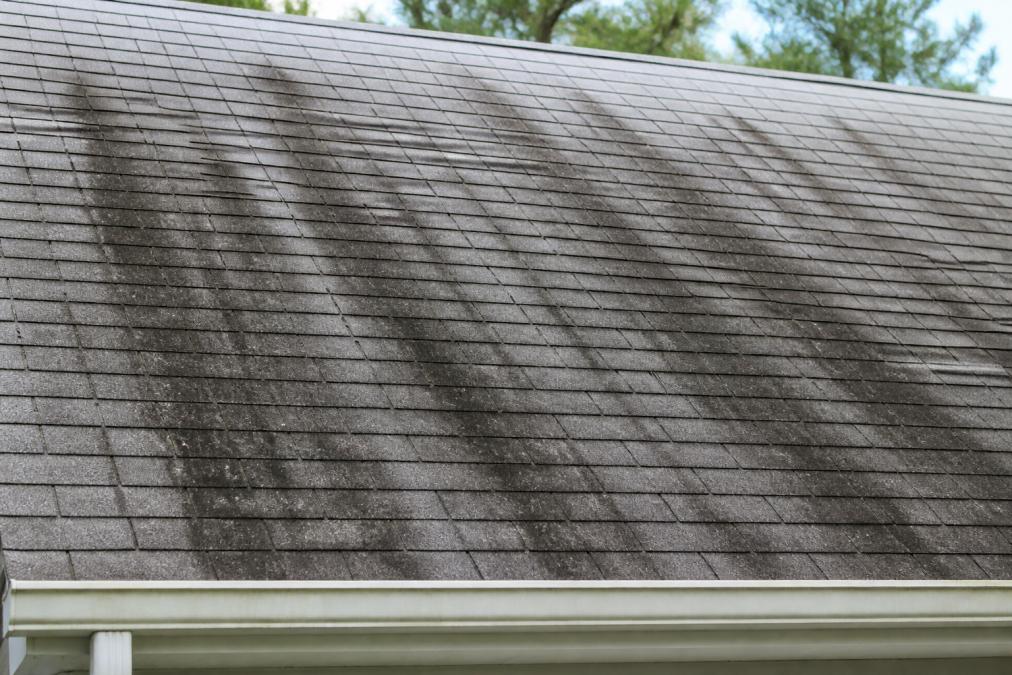
Black streaks on roof shingles are dark, discolored bands caused by airborne algae, not dirt or soot. Most homeowners misdiagnose the problem and apply the wrong fix, making it worse. Understanding what you’re dealing with is the first step to removing it correctly.
The Role of Gloeocapsa Magma
Gloeocapsa magma is the cyanobacteria responsible for virtually all roof discoloration on residential homes. It travels as microscopic spores through the air and forms a dark protective pigment shield once settled. The organism thrives in warm, humid climates, which is why roofs in the Southeast and Gulf Coast show severe staining faster than homes in drier regions. Gloeocapsa magma feeds on moisture and the calcium carbonate in asphalt shingles, making the algae growth self-sustaining once established.
Why Asphalt Shingles Are Especially Vulnerable
Asphalt shingles are ideal habitat for algae. The limestone filler in shingle manufacturing provides direct food for Gloeocapsa magma, and the textured surface traps moisture and organic debris. Older shingles are particularly susceptible, as they age and lose granules, they become more porous and retain moisture longer, accelerating algae growth dramatically.
Professional Roof Soft Washing vs Pressure Washing
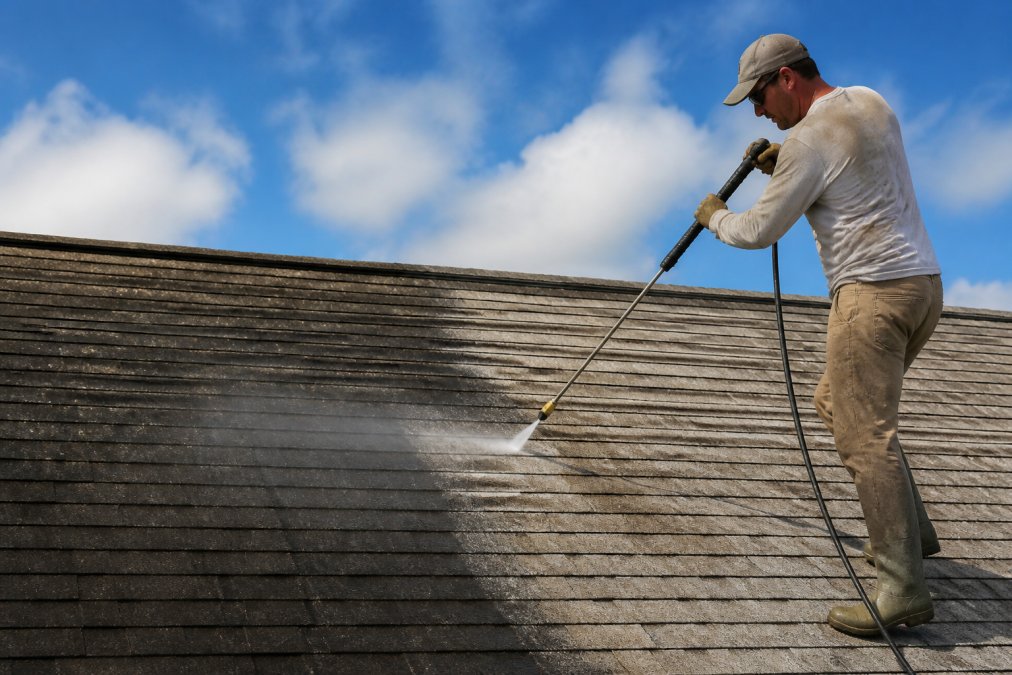
Soft washing is the correct method for cleaning asphalt shingles. Pressure washing causes direct physical damage.
Soft washing uses low-pressure water with diluted cleaning solution to kill algae at the source. Pressure washing uses high-pressure water to blast surfaces clean mechanically, which damages asphalt shingles.
Why Pressure Washing Damages Shingle Granules
Shingle granules protect the underlying asphalt from UV degradation and provide fire resistance. A pressure washer strips these granules off in seconds. The damage is cumulative and irreversible, once granules are removed, the asphalt beneath is exposed to direct sunlight and accelerated weathering. Shingles that have been pressure washed show shortened service life, increased brittleness, and premature failure. Soft washing relies on chemical action rather than mechanical force, preserving shingle integrity while eliminating algae.
Warranty Implications You Need to Know
Many asphalt shingle manufacturers explicitly void the product warranty if the roof is cleaned with high-pressure water. According to guidance published by the Asphalt Roofing Manufacturers Association, low-pressure washing combined with approved cleaning solutions is the recommended method. Before scheduling any roof cleaning, pull your shingle manufacturer’s warranty documentation and confirm the approved cleaning method.
Best Roof Cleaning Solution for Asphalt Shingles
The best roof cleaning solution for asphalt shingles is a diluted sodium hypochlorite mixture, often combined with a surfactant to improve dwell time and coverage. This approach is endorsed by the Asphalt Roofing Manufacturers Association and is the industry standard for soft washing.
Sodium Hypochlorite: Dilution and Dwell Time
Sodium hypochlorite (the active ingredient in household bleach) is effective against algae, mold, and mildew. For roof cleaning, a typical working solution uses a concentration between 3% and 6%, diluted from higher-strength pool-grade or professional-grade sodium hypochlorite. A surfactant added to the mix helps the solution cling to the shingle surface rather than running off immediately.
Dwell time is the period the cleaning solution remains in contact with the surface before rinsing. For effective results, most professionals target 10 to 20 minutes before applying a low-pressure rinse. Rushing this step is one of the most common reasons DIY cleaning attempts fail.
Environmental Impact of Runoff
Sodium hypochlorite runoff can harm grass, landscaping plants, and aquatic life if it reaches stormwater drains or natural water bodies. Responsible roof cleaning requires pre-wetting surrounding vegetation before application, using a surfactant that reduces runoff volume, and thoroughly rinsing plant beds, gutters, and downspout areas after the job is complete. According to the EPA’s guidance on stormwater pollution prevention, chemical runoff from residential cleaning activities can contribute to local waterway contamination.
How to Remove Black Streaks from Roof Shingles Step by Step
To remove black streaks safely and effectively, you need the right chemistry, the right equipment, and a clear safety plan before you start.
What You’ll Need
- Garden hose with adjustable spray nozzle or low-pressure pump sprayer
- Sodium hypochlorite solution (pool-grade or professional concentrate), diluted to 3-6%
- Surfactant or commercial soft wash additive
- Non-slip rubber-soled shoes or roofing boots
- Safety harness and roof anchor rated for your weight
- Safety glasses and chemical-resistant gloves
- Protective clothing (long sleeves, long pants)
- Plastic sheeting or tarps to cover sensitive plants
- Garden hose for pre-wetting vegetation and post-rinse
Safety Precautions Before You Start
Roof work is among the most hazardous home maintenance tasks. Never work on a wet or damp roof surface. Apply cleaning solution only in mild weather, avoiding windy conditions. Always use a safety harness anchored to a ridge anchor point. Inform someone on the ground that you are working at height before you climb.
The Soft Wash Application Process
- Pre-wet surrounding vegetation. Soak all grass, shrubs, and plant beds within the runoff zone with plain water.
- Mix your cleaning solution. Dilute sodium hypochlorite to your target concentration and add surfactant per the product label.
- Apply from the bottom up. Spray the cleaning solution onto the shingles working upward.
- Allow dwell time. Let the solution sit for 10 to 20 minutes.
- Rinse with low pressure. Use a garden hose or low-pressure nozzle to rinse thoroughly, working from the ridge down.
- Rinse vegetation again. Immediately flush all plant beds and downspout areas with fresh water.
- Inspect the result. Some heavy staining may require a second application.
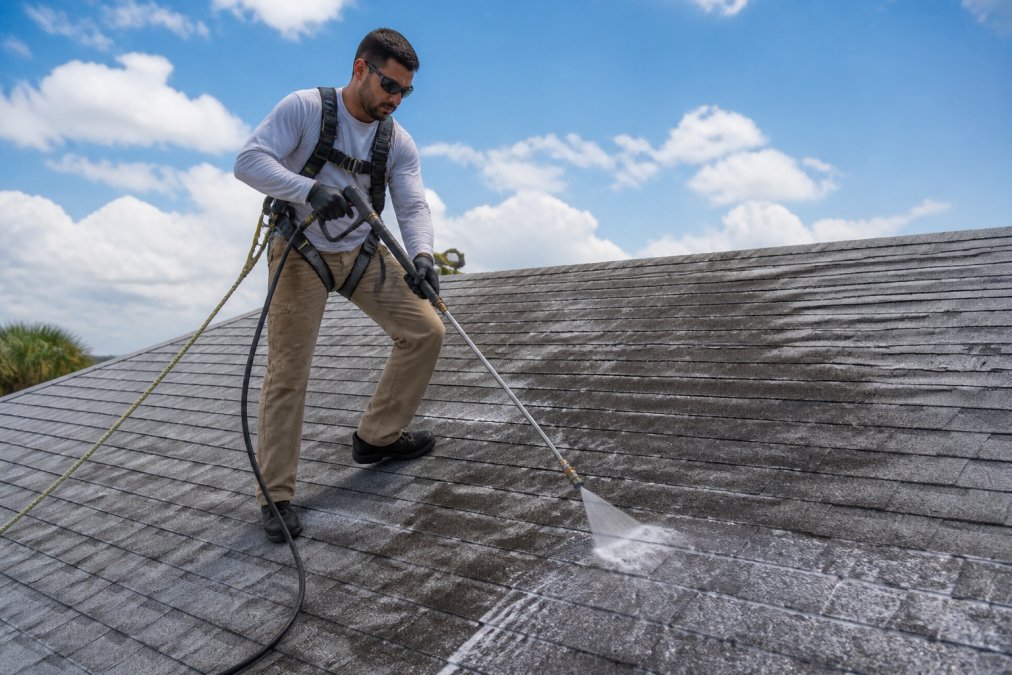
Apply your cleaning solution in the early morning or on an overcast day. Direct midday sun causes the solution to evaporate before adequate dwell time is achieved.
Common Mistakes That Make Black Streaks Worse
Most homeowners who try to remove black streaks without professional guidance make at least one of these errors.
| Mistake | What Goes Wrong | Fix |
|---|---|---|
| Using a pressure washer | Strips shingle granules permanently | Switch to soft wash method |
| Skipping dwell time | Algae survives, stains return quickly | Allow 10-20 min before rinsing |
| Too-weak solution | Insufficient kill rate on established algae | Use 3-6% sodium hypochlorite |
| No surfactant | Solution runs off before working | Add surfactant to the mix |
| Ignoring runoff | Kills landscaping, contaminates drains | Pre-wet and post-rinse vegetation |
| Cleaning in full sun | Solution evaporates too fast | Clean in morning or overcast conditions |
| No preventative follow-up | Algae returns within 1-2 years | Apply zinc or copper treatment after cleaning |
The biggest mistake is using pressure washing because it seems faster. The roof looks clean for a season, then algae returns faster than before because granule loss has created a rougher, more moisture-retentive surface.
Never walk on a wet roof surface treated with sodium hypochlorite solution. The surfactant makes the surface extremely slippery. Wait until the roof is fully rinsed and dry before repositioning yourself.
How to Prevent Roof Algae Growth Long-Term
Removing algae is a one-time fix. Preventing it from returning is an ongoing strategy that is far less expensive than repeated cleaning cycles or premature roof replacement.
Copper Strips, Zinc Flashing, and Preventative Treatments
Copper and zinc are natural biocides. When rainwater runs over copper strips or zinc flashing installed near the roof ridge, it carries trace amounts of these metals down the shingle surface, inhibiting algae spore colonization. Copper strips are installed along the ridge line in 6-inch-wide sections. Post-cleaning preventative sprays are also available and extend the time between cleaning cycles.
According to the Cooperative Extension Service’s guidance on algae-resistant roofing, algae-resistant shingles containing copper granules are now widely available and represent the most effective long-term prevention for new roofs or replacement projects.
Long-Term Cost Analysis: Maintenance vs. Replacement
Regular soft washing every two to three years costs a fraction of what premature shingle failure costs. Asphalt shingle roofs are designed to last 20 to 30 years, but unchecked algae growth combined with moisture retention can reduce that service life substantially. Preventative maintenance protects shingle integrity and preserves the manufacturer’s warranty.
Installing copper or zinc strips at the ridge line after a professional soft wash is the single most cost-effective long-term investment for preventing algae recurrence on asphalt shingles.
When to Call a Professional Roof Cleaning Service
Call a professional when:
- Your roof pitch is steep. Anything above a 6:12 pitch is difficult to work on safely without professional fall protection equipment.
- The algae staining is extensive. Heavy, long-established organic staining often requires multiple applications and professional-grade equipment.
- You have no experience working at height. Roof falls are serious. If you are not comfortable and equipped, the risk is not worth taking.
- Your roof is older or showing signs of wear. A professional can assess shingle condition before cleaning and flag areas where cleaning chemistry could accelerate existing damage.
- You want the job done right the first time. A professional soft wash service will remove black streaks completely, apply preventative treatment, and protect your landscaping.
Freedom Wash Club has spent over a decade providing licensed, insured soft wash roof cleaning for residential and commercial properties. Our team handles the chemistry, the safety equipment, and the runoff management. Scheduling is straightforward by phone or text, with no in-person estimate required. If your HOA has issued a notice or you are preparing your property for sale, getting the roof cleaned professionally is one of the fastest ways to restore curb appeal and protect your property value.
Maintaining asphalt shingles against algae growth is a recurring responsibility, not a one-time project. Freedom Wash Club’s licensed and insured team uses professional soft wash methods to remove black streaks from roof shingles without damaging granules, voiding warranties, or harming surrounding landscaping. With over 10 years of experience and a 100% satisfaction guarantee, we make the process simple. Receive your free quote today and keep your roof, your HOA, and your property value exactly where they should be.
Frequently Asked Questions
What are the black streaks on my roof shingles?
The black streaks on your roof shingles are almost always caused by Gloeocapsa magma, a type of algae that feeds on the limestone filler in asphalt shingles. The dark pigment is a protective coating the algae produces against UV light. Left untreated, the algae retains moisture, accelerates shingle granule loss, and shortens your roof's lifespan. Pressure washing won't kill it, a proper soft wash with a sodium hypochlorite solution is the only method that eliminates the algae at the source.
Will bleach ruin roof shingles?
A properly diluted sodium hypochlorite solution, the active ingredient in household bleach, is safe for asphalt shingles when applied at the correct concentration and rinsed with low pressure. The Asphalt Roofing Manufacturers Association (ARMA) endorses this approach as the industry-standard method for removing black streaks. Problems arise when homeowners use undiluted bleach or combine it with high-pressure washing, which strips shingle granules and voids manufacturer warranties. Always follow recommended dilution ratios and allow adequate dwell time before rinsing.
Can pressure washing damage asphalt shingles?
Yes. High-pressure washing blasts away the protective granules embedded in asphalt shingles. Those granules shield the shingle mat from UV damage and direct weather exposure, once they're gone, shingle degradation accelerates significantly. Many roofing manufacturers explicitly state in their warranty terms that pressure washing voids coverage. Soft washing, which uses low water pressure combined with a cleaning solution, removes black streaks and algae without disturbing shingle integrity or triggering warranty exclusions.
How often should you clean roof shingles to prevent streaks?
Most roofing professionals recommend a full soft wash cleaning every one to three years, depending on your local climate, tree coverage, and shade exposure. Roofs in humid climates or under heavy tree canopy accumulate algae spores faster and may need annual attention. After each cleaning, applying a preventative biocide treatment or installing zinc or copper strips near the ridge line can extend the time between cleanings by inhibiting future algae growth. Regular roof inspections each year help catch early-stage organic staining before it spreads.
This article was written using GrandRanker