Last Updated: October 28, 2026
Quick Summary
Roof cleaning can damage asphalt shingles, but the damage depends mainly on method. High-pressure washing strips the protective mineral granules and can crack shingles and let water in. A low-pressure soft wash with a properly diluted solution is far less risky. Always check manufacturer guidance before cleaning.
- Pressure washing is the most common cause of shingle damage during roof cleaning.
- Asphalt shingles’ protective mineral granules wash away under high-pressure water.
- The Asphalt Roofing Manufacturers Association says algae does not damage shingles scientifically.
- Moss can lift shingle edges over time, so it should be removed carefully.
- Check the shingle manufacturer’s cleaning instructions before any work starts.
Table of Contents
- Does Roof Cleaning Damage Asphalt Shingles or Is the Risk Overstated?
- Why High Pressure Strips Protective Granules
- How to Clean Asphalt Shingles With a Low-Risk Process
- 1. Check the warranty and manufacturer guidance first
- 2. Inspect the roof from the ground before touching it
- 3. Protect the surroundings before applying anything
- 4. Choose a low-pressure approach
- 5. Mix the solution carefully and at the right strength
- 6. Apply and let it dwell, but do not let it dry
- 7. Rinse gently and with the shingle direction
- 8. Watch the runoff and clean up
- Roof access and personal safety
- Soft Wash Roof Cleaning and Chemical Precautions
- Moss Removal From Asphalt Shingles Without Causing Harm
- Algae Staining, Moss, Lichen, or Shingle Deterioration: How to Tell
- Booking a Roof Cleaning Professional Who Works Safely on Your Roof
- Frequently Asked Questions
Does Roof Cleaning Damage Asphalt Shingles or Is the Risk Overstated?
Roof cleaning can damage asphalt shingles, but the damage depends almost entirely on how the cleaning is done. Homeowners worried about coverage can read whether roof cleaning could affect a shingle warranty. Pressure and chemical strength matter far more than the act of cleaning itself.
Here at Freedom Wash Club, we see this question often from homeowners in South Florida.
The short answer: the risk is real but manageable. A few facts help frame it:
- The Asphalt Roofing Manufacturers Association says there is no scientific evidence that algae damages asphalt shingles, although it affects the roof’s appearance.
- The same group warns that moss buildup can lead to roof damage or shingle blow-off if left unchecked (Algae & Moss Prevention and Cleaning for Asphalt Roofing Systems).
- Damage usually comes from the method, not the goal of removing growth.
So the real question is not whether to clean, but how.
Why High Pressure Strips Protective Granules
Asphalt shingles have a surface layer of mineral granules. These granules shield the asphalt from sunlight and weather.
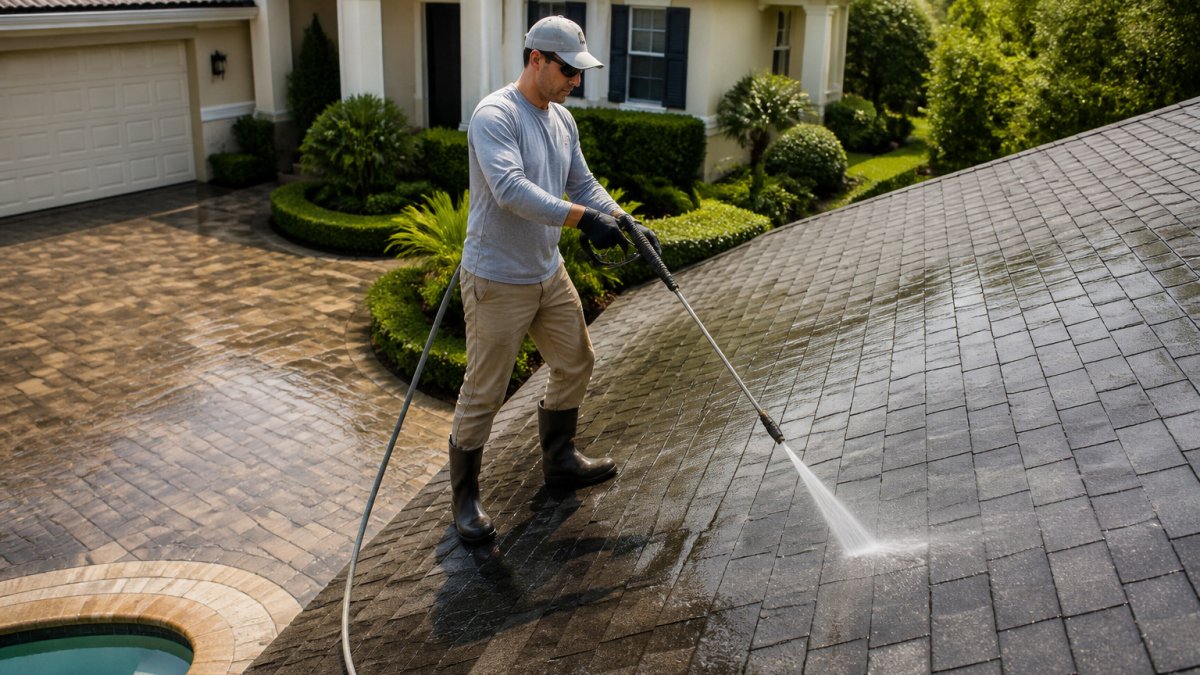
High-pressure washing is the most common cause of this problem. A strong jet can knock granules loose, expose the asphalt beneath, and leave small cracks or gaps.
Watch out: Pressure washing a roof is one of the most common ways homeowners cause damage. Stay with low-pressure methods.
Signs of granule loss include:
- Bare dark patches on the shingle surface
- Granules collecting in gutters or at downspouts
- Thinning areas that look worn compared to the rest of the roof
How to Clean Asphalt Shingles With a Low-Risk Process
A gentle cleaning process protects the roof and still removes most stains. The difference between a safe job and a damaging one usually comes down to preparation, chemical control, and rinse technique, not the cleaning solution alone. Follow these steps in order.
1. Check the warranty and manufacturer guidance first
Before any work starts, read the shingle manufacturer’s published cleaning instructions. Most major shingle makers publish care and maintenance guidance, and some warranties restrict certain methods or chemicals. If you cannot find the guidance, call the manufacturer’s technical line and ask two questions: what cleaning method is approved, and what method could void coverage. Keep a record of the answer.
2. Inspect the roof from the ground before touching it
Use binoculars from the ground to look for loose, cracked, curling, or missing shingles, exposed nails, and sagging areas. Check gutters and downspouts for granule buildup, which signals an aging roof. If you see widespread granule loss, bare patches, or shingles that crumble when touched, stop, cleaning will not fix a worn roof and can make it worse. A roof in that condition needs an inspection, not a wash.
3. Protect the surroundings before applying anything
Pre-wet landscaping, siding, and painted surfaces with plain water before any cleaning solution goes on the roof. Cover or move vehicles, outdoor furniture, and grills. Close windows and doors. Pre-wetting dilutes any overspray that reaches plants and reduces the chance of leaf burn. Plan where runoff will go, direct it away from storm drains if local rules require it, and keep it off driveways and pool decks where it can leave streaks.
4. Choose a low-pressure approach
Soft washing applies a diluted cleaning solution at low pressure, typically no more than a garden-hose level of force, and lets the chemistry do the work. Never use a pressure washer on asphalt shingles. A pressure washer’s stream can strip granules, crack shingles, and force water under the edges. If you do not own low-pressure equipment, a pump sprayer and a garden hose are safer than a pressure washer.
5. Mix the solution carefully and at the right strength
Use a diluted cleaning mix rather than full-strength products. A common approach is a diluted sodium hypochlorite solution, but strength matters: too strong can dull or damage shingles and harm plants, while too weak wastes time and water. Mix in a ventilated area, wear gloves and eye protection, and never mix bleach with ammonia or other cleaners. If you are unsure of the right dilution, start weaker and extend dwell time rather than increasing concentration.
6. Apply and let it dwell, but do not let it dry
Apply the solution from the bottom of the roof upward so you do not push concentrated solution into dry shingle edges. Let it dwell long enough to break down growth, but do not let it dry on the surface. On a hot, sunny day, work in sections and keep the surface wet with solution or plain water. Dried chemical can leave streaks and is harder to rinse clean.
7. Rinse gently and with the shingle direction
Rinse with low water pressure, working from the top of the roof downward and following the direction the shingles lay. Avoid spraying directly up under shingle edges, which can force water beneath the shingle and into the deck. Rinse until the runoff runs clear, then rinse the surrounding plants and surfaces again with plain water.
8. Watch the runoff and clean up
Keep cleaning solution away from plants, gutters you do not want damaged, and painted surfaces. After rinsing, water the landscaping again to dilute any residue. Check gutters for loosened granules and debris, and flush them if needed. Inspect the roof once it is dry for any shingles that lifted or cracked during the work.
Roof access and personal safety
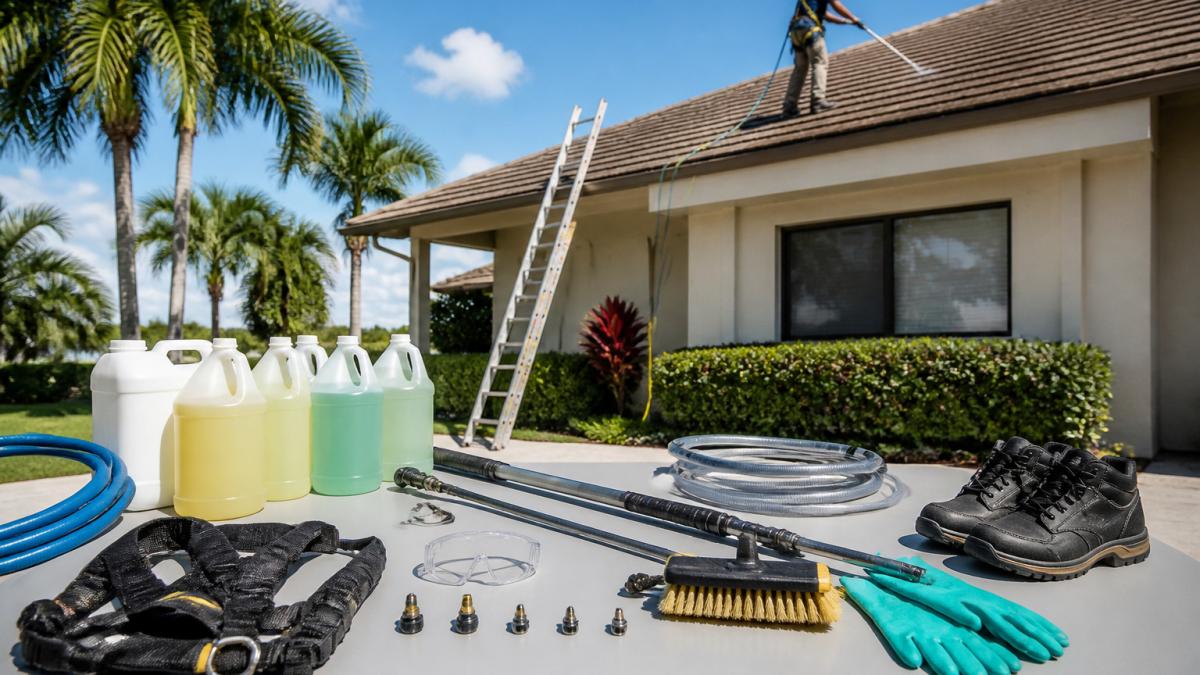
Roof work carries real fall risk, and wet shingles are slippery. If you go on the roof, wear non-slip shoes, use a stable ladder placed on level ground, and keep three points of contact. Stay clear of power lines and never work on a wet or windy roof. If the roof is steep, tall, or you are not comfortable with heights, do not go up, use a low-pressure method from a ladder at the edge or hire a professional.
Never use a pressure washer on asphalt shingles. The stream can strip granules, crack shingles, and force water under the edges, damage that is often invisible until a leak appears.
Photo: A technician in a harness and non-slip shoes works on a sloped asphalt shingle roof in South Florida sunlight, holding a low-pressure wand.
Soft Wash Roof Cleaning and Chemical Precautions
Soft washing is the approach most experienced cleaners use on shingles. It relies on a mild cleaning solution and low water pressure to lift growth off the surface.
The main advantage is lower risk to the granules. The main drawback is that the process takes more care and more time than a quick pressure blast.
Chemical strength matters just as much as pressure. Key precautions include:
- Concentration: Stronger is not better. A diluted solution often works well with enough dwell time.
- Dwell time: Let the solution sit long enough to work, but do not let it dry.
- Runoff management: Chemicals that drain off the roof can harm landscaping, metal trim, and siding.
Pros of soft washing:
- Lower risk to shingle granules
- Effective on most algae staining
- Gentler on surrounding surfaces when done correctly
Cons of soft washing:
- Takes longer than pressure washing
- Requires careful chemical handling
- Quality depends heavily on the operator’s skill
Moss Removal From Asphalt Shingles Without Causing Harm
Moss is a bigger concern than algae. Its roots can work into shingle seams and lift edges over time. Removing it requires more patience than removing staining.
Here is a safer way to handle moss:
- Gently loosen the moss by hand or with a soft brush where accessible.
- Apply a diluted cleaning solution and allow it to work.
- Rinse at low pressure to carry the loosened material away.
- Check for lifted or damaged shingles after the work is done.
Do not scrape or pry at moss with metal tools. That can tear shingles and expose the asphalt beneath.
Algae Staining, Moss, Lichen, or Shingle Deterioration: How to Tell
Dark streaks on a roof are not always the same problem. Knowing what you are looking at helps you choose the right fix.
- Algae staining: Thin, dark streaks running down the slope. The surface is intact and the stain often wipes or washes off with cleaning.
- Moss: Green or grayish clumps with a soft, spongy feel. It sits on the surface and can push into shingle seams.
- Lichen: Flat, crusty patches in gray, green, or orange tones. Lichen is firmly attached and often needs more time to remove.
If the shingle itself looks worn, cleaning is not the answer. A professional inspection can tell you whether the roof needs repair or replacement.
Booking a Roof Cleaning Professional Who Works Safely on Your Roof
Roof work carries real fall risk, and the wrong method can cost you a roof. The best protection is knowing what to ask and what to verify before anyone goes up. Use this as a checklist when evaluating a roof-cleaning contractor.
Verify qualifications, not just claims
- License and insurance: Ask for a valid license number and a certificate of insurance showing both general liability and workers’ compensation. Call the insurer to confirm the policy is active and covers roof work. If a contractor cannot produce a certificate, walk away, if a worker is injured on your roof, the cost can come back to you.
- Method-specific experience: Ask how many asphalt shingle roofs they have cleaned and what method they use. A contractor who mainly cleans flat commercial roofs or pressure-washes driveways may not understand shingle granule loss. Ask them to explain, in their own words, why pressure washing is risky on shingles.
- Written scope: Get a written description of what the service includes, the method, the chemicals, dwell time, rinse procedure, and plant protection. A vague quote is a warning sign.
Ask the questions that separate pros from pretenders
- What cleaning method will you use, and at what pressure?
- What chemical will you apply, at what dilution, and how will you protect my plants and siding?
- How will you manage runoff, and where will it drain?
A qualified contractor answers these without hesitation. Evasiveness on chemicals or insurance is a reason to keep looking.
Warning signs to walk away from
- A quote given without anyone looking at the roof or asking about its condition
- A promise to “pressure wash” the shingles
- No written contract, or a contract that does not name the method
Match the method to the roof
A professional should recommend a low-pressure approach for asphalt shingles and explain why. If your roof has widespread moss, lichen, or granule loss, the right answer may be an inspection or repair rather than a cleaning.
At Freedom Wash Club, we are a licensed and insured, locally owned and operated team with over a decade of experience.
If your roof has growth that is spreading, or you are unsure whether cleaning is safe, request your free quote. For context on what the service involves, see our overview of professional roof cleaning and how a satisfaction guarantee works.
Frequently Asked Questions
Can you wash a shingle roof?
Yes, many asphalt shingle roofs can be cleaned, but the method determines the outcome. Low-pressure soft washing with a diluted, roof-safe cleaning solution is generally considered the lower-risk approach. High-pressure washing can strip protective granules and shorten shingle life. Check the shingle manufacturer’s cleaning guidance before you start, since some warranties address cleaning methods. If you are unsure, have a qualified professional inspect the roof and recommend a method suited to your shingle type and its condition.
Does soft washing damage asphalt shingles?
Soft washing is generally considered safer than pressure washing because it relies on low water pressure and a cleaning solution applied with dwell time rather than force. Damage risk still depends on the solution strength, how long it sits, whether the shingles are already brittle or cracked, and whether runoff is controlled. A poorly executed soft wash can still cause problems, so ask any provider how they manage chemical concentration and rinsing before hiring them.
Can pressure washing remove granules from shingles?
Yes. The protective granules on the shingle surface are held loosely enough that high-pressure water can knock them off, especially on older or already weathered shingles. Lost granules expose the asphalt underneath to sunlight and weather, which can accelerate wear. Because granule loss is cumulative and not always visible right away, avoid pressure washing asphalt shingles unless the manufacturer and a qualified inspector confirm it is appropriate for your roof.
Is it worth removing moss from a roof?
Moss can hold moisture against shingles, and the Asphalt Roofing Manufacturers Association warns that moss buildup can lead to roof damage or shingle blow-off if left unchecked. Algae, by contrast, mainly affects appearance and does not physically damage asphalt shingles, according to the same association. Removing moss with a gentle method and then addressing the conditions that allow it to return, such as shade and debris, is usually worthwhile.