Last Updated: October 25, 2026
Quick Summary
Exterior home cleaning HOA inspections requires a strategic timeline starting 8-12 weeks before inspection day. Focus on high-impact surfaces like roofs, driveways, and siding using appropriate methods such as soft wash roof cleaning and house wash to prevent violations.
- Clean your roof 8-12 weeks before inspection using soft wash methods to remove moss and algae safely
- Schedule driveway cleaning 4-6 weeks before inspection to remove oil stains and algae growth
- Apply paver sealing after cleaning to prevent stains and extend cleanliness between inspections
- Perform final touch-ups on windows, gutters, and pool deck surfaces 2-3 weeks before inspection
- Check your HOA rules and past violation notices to prioritize the surfaces your inspector emphasizes most
Table of Contents
- Why Exterior Home Cleaning Matters Before HOA Inspections
- Create Your HOA Exterior Cleaning Checklist
- How to Prepare for an HOA Inspection: Timeline and Priority
- How to Clean a Driveway Before an HOA Inspection
- Soft Wash Roof Cleaning and Other High-Impact Surfaces
- Common Mistakes That Fail HOA Inspections
- Schedule Your Pre-Inspection Cleaning Today
- Frequently Asked Questions
Why Exterior Home Cleaning Matters Before HOA Inspections
HOA inspections can feel stressful. One violation notice means fines, compliance deadlines, and damage to your property’s reputation. But here’s the good news: most violations are preventable with proper exterior home cleaning HOA inspections planning.
Your HOA inspector looks at specific surfaces. They check for dirt, mold, algae, stains, and general neglect. A clean exterior tells inspectors you maintain your property. A dirty one signals the opposite, even if everything underneath is fine.
At Freedom Wash Club, we’ve helped hundreds of homeowners pass inspections by focusing on the surfaces that matter most. The difference between a violation and a pass often comes down to timing and the right cleaning method for each surface.
Why does this matter? Violations cost money. Beyond the fines themselves, you lose negotiating power if you ever want to modify your property or dispute other HOA decisions. A clean record keeps your HOA relationship smooth.
The good news: exterior home cleaning before HOA inspections doesn’t require guesswork. You just need to know what inspectors look for and when to clean it.
Create Your HOA Exterior Cleaning Checklist
Start by knowing exactly what your HOA checks. Every HOA has different standards, but most focus on the same surfaces. A written checklist keeps you on track and gives contractors clear expectations.
Common Areas Inspectors Check
Inspectors typically evaluate these surfaces:
- Roof: Moss, algae, missing shingles, debris
- Siding/House exterior: Dirt, mold, mildew, peeling paint
- Driveway: Oil stains, cracks, algae, discoloration
- Sidewalks and walkways: Dirt, algae, weeds through cracks
- Deck or patio: Dirt, mold, stains, algae
- Windows and frames: Dirt, grime, hard water stains
- Gutters and downspouts: Debris, sagging, dirt buildup
- Landscaping: Overgrown bushes, dead leaves, weeds
Your HOA may emphasize different areas. Check your HOA rules or past inspection reports to see what violations were cited. That tells you what they prioritize.
Once you know the checklist, create a timeline. Don’t clean everything the week before inspection. Space cleanings throughout the year so your property stays in compliance year-round. This prevents last-minute scrambles and keeps your HOA happy.
How to Prepare for an HOA Inspection: Timeline and Priority
Timing matters more than most homeowners realize. Clean your property too early, and dirt returns before inspection day. Clean too late, and you miss the chance to address problems.
Here’s a practical timeline:
8-12 weeks before inspection: Clean your roof and high surfaces. Roof cleaning takes the longest and makes the biggest visual impact. Soft wash roof cleaning removes moss and algae without damaging shingles. Plan this early so weather doesn’t delay you.
6-8 weeks before inspection: Clean your house exterior, siding, and walls. House wash removes years of dirt and mold. These surfaces stay clean longer than driveways, so mid-timeline works well.
4-6 weeks before inspection: Clean your driveway and sidewalks. Driveway cleaning removes oil stains and algae. These surfaces show dirt quickly, so timing them closer to inspection keeps them fresh.
2-3 weeks before inspection: Final touch-ups. Clean windows, gutters, and deck surfaces. Pressure wash areas that collect debris. This is your last chance to catch anything you missed.
1 week before inspection: Walk your property. Look for fallen branches, weeds, or new stains. Make small repairs or touch-ups. Mow your lawn. Trim bushes. Small details matter.
Priority matters too. If you can only clean a few surfaces, focus on what your HOA emphasizes. Check past violation notices. If your HOA has cited dirty driveways before, make driveway cleaning your top priority. If roof violations were common, prioritize roof cleaning.
Space your cleaning tasks across weeks before inspection to keep surfaces fresh and catch problems early.
| Timeframe | Task | Focus |
|---|---|---|
| 8-12 weeks before | Clean roof and high surfaces | Soft wash roof cleaning removes moss and algae |
| 6-8 weeks before | Clean house exterior and siding | House wash removes years of dirt and mold |
| 4-6 weeks before | Clean driveway and sidewalks | Driveway cleaning removes oil stains and algae |
| 2-3 weeks before | Final touch-ups | Clean windows, gutters, deck, and pool deck |
| 1 week before | Walk property and make repairs | Look for fallen branches, weeds, and new stains |
How to Clean a Driveway Before an HOA Inspection
Your driveway is one of the first things inspectors notice. Oil stains, algae, and discoloration are common violation triggers. Cleaning your driveway properly makes a dramatic difference.
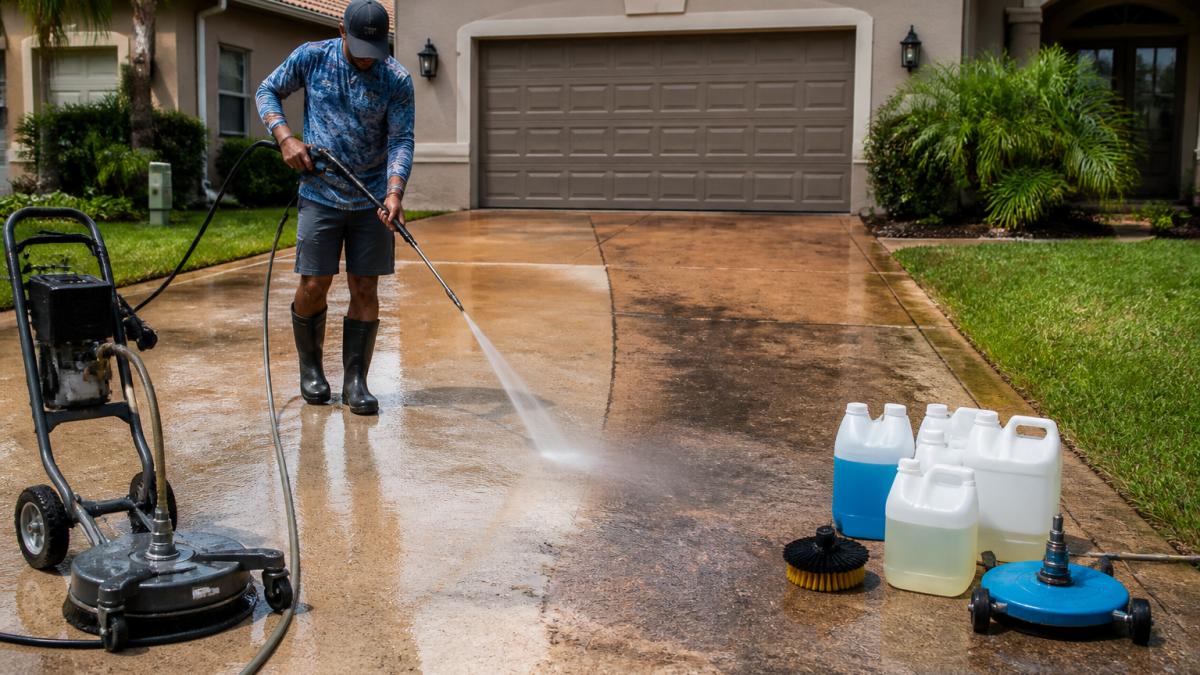
Driveway cleaning starts with identifying the problem. Oil stains need different treatment than algae. Concrete needs different pressure than pavers. Using the wrong method can damage your driveway or leave stains behind.
Removing Oil Stains and Algae Growth
Oil stains sit deep in concrete. Learn detailed steps for removing oil stains from driveways and pavers. Pressure washing alone won’t remove them. You need a degreaser or specialized treatment. Apply the degreaser, let it sit for 15-30 minutes, then pressure wash. This two-step process lifts the oil from the concrete.
Algae and mold grow in shaded, damp areas. They’re green, black, or brown discoloration. Pressure washing removes them, but they return if moisture stays high. A soft wash treatment kills the algae at the root. It’s gentler than pressure washing and prevents regrowth longer.
After cleaning, consider paver sealing if you have a paver driveway. Sealing fills tiny pores in the pavers, preventing oil from soaking in. It also prevents weed growth between pavers and makes future cleaning easier. Sealed pavers stay cleaner longer, which means fewer violations and less frequent cleaning.
Soft Wash Roof Cleaning and Other High-Impact Surfaces
Your roof is the most visible surface from the street. Moss, algae, and discoloration are instant red flags to inspectors. But roof cleaning requires care. Pressure washing can damage asphalt shingles, void warranties, or cause leaks.
Soft wash roof cleaning uses low pressure and specialized solutions. This method is safe for asphalt shingles and other delicate roofing materials. It kills moss and algae at the root without damaging shingles. The cleaning lasts longer because you’re treating the cause, not just the symptom.
Why Soft Washing Protects Your Roof
Pressure washing blasts shingles with thousands of PSI. This strips protective granules, shortens shingle life, and can cause leaks. Soft washing uses 200-400 PSI and biodegradable solutions. The solution kills algae and moss spores. Gravity does most of the work, not force.
Soft wash roof cleaning is safer for your roof and more effective long-term. Your shingles stay protected. The algae doesn’t return as quickly. Your HOA sees a clean roof without worrying about damage.
House Wash, Paver Sealing, and Pool Deck Cleaning
Your house exterior collects dirt and mold over time. House wash removes years of buildup. It restores your home’s appearance and prevents mold from spreading.
Paver sealing protects your patio, driveway, and pool deck. Sealed pavers resist stains, prevent weed growth, and stay cleaner longer. Sealed pavers resist stains, prevent weed growth, and stay cleaner longer. Pool deck cleaning removes algae and mold from wet surfaces. These areas collect moisture, so they need regular attention.
Together, these services keep your entire property inspection-ready. They address the surfaces HOAs care about most.
Common Mistakes That Fail HOA Inspections
Most homeowners make the same mistakes. Knowing them helps you avoid violations.
Waiting until the last week: Dirt returns quickly. If you clean one week before inspection, you might miss new stains or debris. Clean earlier and do touch-ups closer to inspection day.
Using pressure washing on everything: Pressure washing damages some surfaces. Soft washing is better for roofs, siding, and delicate areas. Use pressure washing only on concrete and metal.
Ignoring the roof: Homeowners focus on driveways and decks but forget the roof. Your roof is the most visible surface. Moss and algae are instant violations. Prioritize roof cleaning.
Skipping sealing after cleaning: Cleaned pavers and driveways get dirty again without sealing. Sealing extends cleanliness and prevents regrowth. It’s worth the investment.
Not checking HOA rules first: Every HOA has different standards. Some allow pressure washing, others don’t. Some require sealing, others don’t. Read your rules before you clean.
Hiring the cheapest contractor: Low prices often mean poor results. Cheap contractors use high pressure on delicate surfaces, skip sealing, or do incomplete work. A professional does it right the first time.
Schedule Your Pre-Inspection Cleaning Today
Your HOA inspection doesn’t have to be stressful. With the right preparation and professional help, passing is straightforward.
Freedom Wash Club specializes in exterior home cleaning HOA inspections services. We handle roof cleaning, driveway cleaning, house wash, paver sealing, and pool deck cleaning. Our team is licensed and insured, and we guarantee your satisfaction. We schedule by phone or text, so getting started is easy.
Learn whether pressure washing is worth it for HOA compliance, or understand how to avoid HOA fines for dirty driveways. When you’re ready to clean, we’re here to help.
Contact Freedom Wash Club for a free quote. Let us handle the cleaning so you can focus on your home.
Frequently Asked Questions
What exterior areas do HOA inspectors typically check?
HOA inspectors focus on roofs, driveways, sidewalks, siding, windows, fences, and landscaping. They look for visible mold, algae, mildew, stains, debris, and overgrown vegetation. Pool decks and patios are also common inspection points. Addressing these surfaces before an inspection helps you avoid violations and fines.
How far in advance should I clean before an HOA inspection?
Start your exterior home cleaning 2-3 weeks before the scheduled inspection date. This timeline allows you to address any issues discovered during your initial assessment and ensures surfaces have time to dry properly. If you receive a violation notice with a 30-day compliance deadline, begin immediately to avoid penalties.
Why is soft wash roof cleaning better than pressure washing for HOA inspections?
Soft wash roof cleaning uses low-pressure water and specialized solutions to remove mold, algae, and moss without damaging shingles or causing leaks. Pressure washing can strip protective granules, create streaks, and void warranties. For HOA inspections, soft washing delivers a clean appearance while protecting your roof’s integrity and longevity.
Can I remove driveway stains myself, or should I hire a professional?
DIY stain removal often leaves residue and doesn’t address underlying algae growth, which returns quickly. Professional driveway cleaning removes deep stains, kills organic growth, and can include paver sealing to prevent future staining. For HOA compliance, professional cleaning ensures the job passes inspection and lasts longer than temporary fixes.
Your property reflects your commitment to your community. A clean exterior keeps your HOA happy, protects your property value, and gives you peace of mind. Freedom Wash Club makes that happen with professional cleaning you can trust.