Table of Contents
- How to Clean Oil Stains Off Pavers: Step-by-Step
- Absorbing Excess Oil Before You Clean
- How to Remove Dried Oil Stains From Pavers
- Choosing the Best Degreaser for Pavers
- Applying Cleaner, Scrubbing, and Rinsing Thoroughly
- How to Clean Pavers Without a Pressure Washer
- Paver Sealing After Stain Removal
- Frequently Asked Questions
Last Updated: October 15, 2026
How to Clean Oil Stains Off Pavers: Step-by-Step
Learning how to clean oil stains off pavers comes down to one principle: lift the oil out before you wash it in.
This guide from Freedom Wash Club walks through each step, plus how to handle dried stains, which cleaners work best, and what to do without a pressure washer.
A few things matter more than any product you buy:
- Speed beats strength. A fresh spill is far easier to remove than a set-in stain.
- Absorb first, always. Soaking up excess oil prevents it from spreading.
- Match the cleaner to the paver. Some sealers and surfaces react badly to harsh chemicals.
- Rinse with fresh water. Dirty water just redeposits oil back into the surface.
The single biggest mistake is scrubbing a wet stain with soap and water. That drives oil deeper into the paver. Absorb the oil first, then treat what remains with a degreaser.
Absorbing Excess Oil Before You Clean
Absorbing excess oil is the step most people skip, and it’s the one that decides whether the stain comes out.
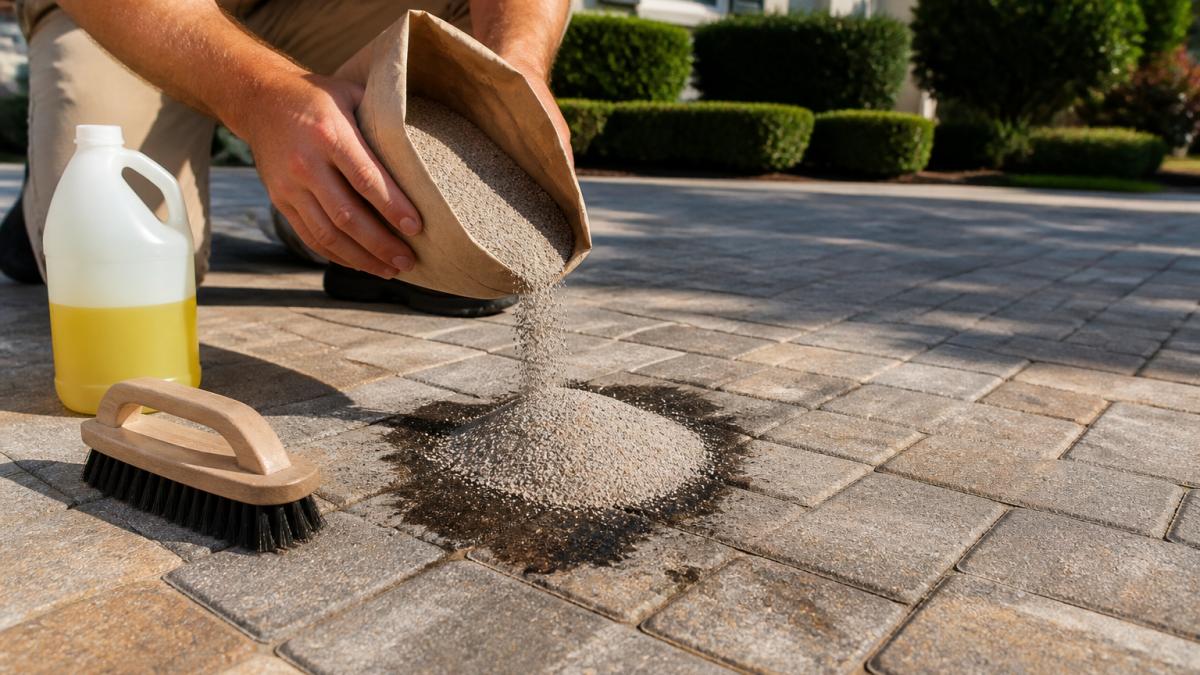
Start the moment you spot the spill. Pour an absorbent material over the stain and let it sit.
- Cat litter works well and most homes already have it.
- Baking soda or cornstarch handle small, light spills.
- Sand or sawdust soak up larger puddles.
- Commercial absorbent pads are handy for big oil leaks.
Spread the material about a quarter-inch thick over the whole stain.
For a heavy stain from a motor oil leak, this can take several rounds. Don’t rush it.
Never hose down a fresh oil spill. Water spreads the oil across the pavers and pushes it into the pores, turning a small stain into a large one. Absorb it dry first.
How to Remove Dried Oil Stains From Pavers
Removing dried oil stains from pavers takes more patience than a fresh spill, because the oil has already cured into the surface. The good news: a set-in stain is still removable, it just needs a longer dwell time, a stronger degreaser, and often more than one pass.
Start with a stain-age decision tree. Match the treatment to how long the oil has been sitting, then adjust for the paver material.
| Stain Age | First Move | Cleaner Strength | Dwell Time | Expected Effort |
|---|---|---|---|---|
| Fresh (same day) | Absorb, then wipe | Mild soap or degreaser | 2-5 minutes | Light scrubbing |
| Recent (a few days) | Absorb, then treat | Standard degreaser | 5-10 minutes | Moderate scrubbing |
| Set-in (weeks or more) | Absorb, then soak | Strong degreaser | 15-30 minutes | Repeat treatments |
| Old and baked in | Absorb, then steam | Degreaser plus heat | 20-30 minutes | Multiple passes |
Match the Method to the Paver Material
Not every paver reacts the same way to degreasers and heat. Test any cleaner on a hidden paver first, a corner near the edge of the driveway or under a planter, and wait a few minutes to see how the surface responds.
- Concrete pavers. The most forgiving surface. Most emulsifying degreasers are safe, and a stiff brush works well. Avoid acid-based cleaners, which can etch the surface.
- Clay pavers. Dense and less porous than concrete, but the color can fade with harsh chemicals. Use a pH-neutral or mild alkaline degreaser and skip acid products.
- Natural stone (travertine, bluestone, slate). Acid-sensitive. Never use acidic cleaners or vinegar. Use a stone-safe degreaser and a soft brush, and blot rather than scrub aggressively.
- Sealed pavers. The sealer is the first line of defense, so treat the stain gently. Strong solvents can strip the sealer and leave a dull patch. Use a sealer-compatible cleaner and reapply sealer after the stain is gone.
When the First Pass Fails: Troubleshooting
A single application rarely lifts a months-old stain. If the surface still shows discoloration after the first pass, work through these steps in order:
- Repeat the degreaser. Apply again, let it dwell longer, and scrub. Two or three passes is normal for set-in oil.
- Try a poultice. For deep stains on concrete or stone, mix an absorbent powder (cat litter, diatomaceous earth, or a commercial poultice) with just enough degreaser to form a paste. Spread it over the stain, cover with plastic wrap, and let it sit for several hours or overnight. The poultice pulls oil out of the pores as it dries. Sweep it up and repeat if needed.
- Add heat. Steam or a warm, sunny day helps break down cured oil. A handheld steam tool works well on small stains.
- Call a professional. If the stain has been there for years, has soaked through a sealer, or covers a large area, a paving or exterior cleaning professional has stronger equipment and can assess whether the paver itself is stained beyond cleaning.
Work from the outside of the stain toward the center when scrubbing. This keeps you from spreading oil onto clean pavers.
Wear gloves and eye protection when handling degreasers, and work in a ventilated area. Never mix cleaning products, combining bleach with an acid or ammonia-based cleaner can create dangerous fumes. Keep runoff out of storm drains and dispose of oily absorbents and wash water according to local guidelines.
Choosing the Best Degreaser for Pavers
The best degreaser for pavers is an emulsifying degreaser made for concrete and stone, because it breaks oil into tiny droplets that rinse away with water instead of sinking back in.
What to look for:
- Emulsifying formula. It lifts oil so fresh water can carry it off.
- Safe for your paver type. Concrete, brick, and clay pavers can react differently.
- Sealer compatibility. Harsh cleaners can strip a sealer and dull the finish.
- Dilution instructions. Most degreasers are concentrated and need mixing.
Check the label for the right dilution ratio and follow it. Too weak, and it won’t cut the oil. Too strong, and it can etch the surface or damage the sealer.
Test any cleaner on a hidden spot first, like a paver near the edge of the driveway. Some sealers and colored pavers react to strong degreasers, and a small test saves you from a bigger problem.
Applying Cleaner, Scrubbing, and Rinsing Thoroughly
Applying, scrubbing, and rinsing is where the stain actually comes out, so the order and the technique both matter.
- Apply the diluted degreaser directly to the stain. Cover it fully.
- Let it dwell. Give it a few minutes to break down the oil. Don’t let it dry out.
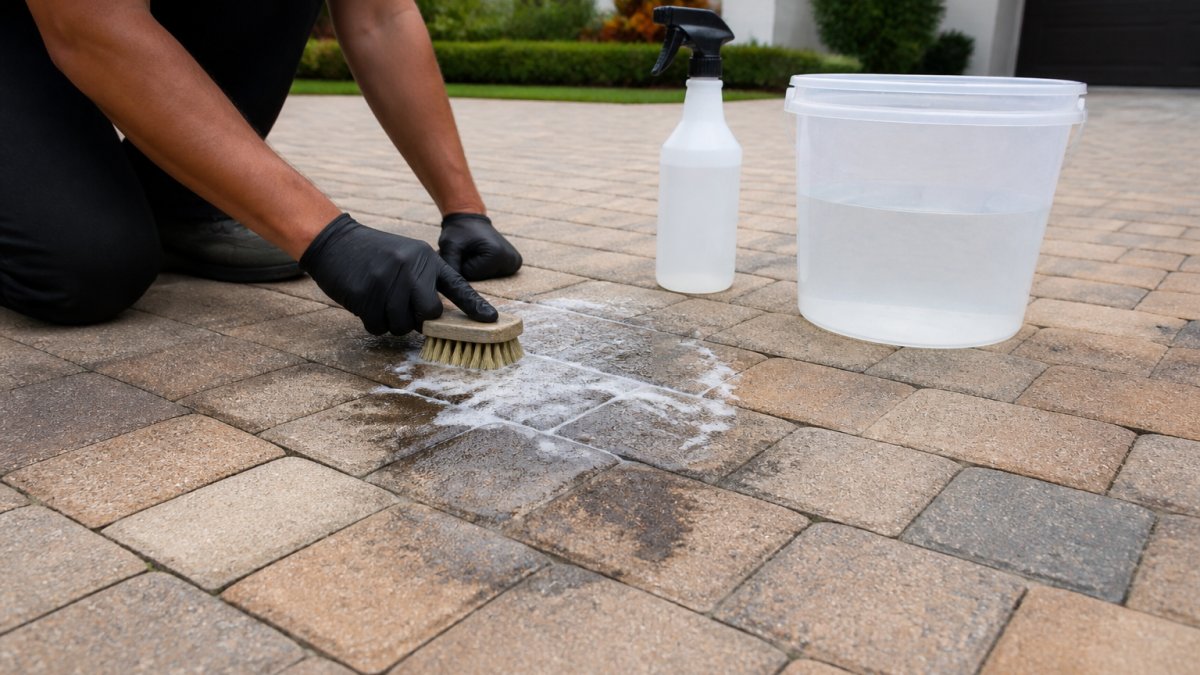
- Scrub with a stiff brush. Work in small circles over the stain.
- Rinse thoroughly with fresh water. Push dirty water away, not back over the stain.
- Repeat if any residual discoloration remains.
A stiff brush reaches into the texture of the pavers where oil hides. For surface cleaning on a large area, work in manageable sections so you’re not scrubbing dried cleaner.
Rinsing is the step people rush. If you leave oily residue behind, the stain creeps back as it dries.
How to Clean Pavers Without a Pressure Washer
You can clean pavers without a pressure washer using a stiff brush, a degreaser, and a garden hose. It takes more elbow grease, but it works, and it’s gentler on the surface.
The routine is the same as above, just with more scrubbing:
- Absorb the oil dry with cat litter or baking soda.
- Apply a diluted degreaser and let it dwell.
- Scrub hard with a stiff brush.
- Rinse with a garden hose, working the water away from the stain.
For stubborn spots, a steam cleaning approach can help. Steam adds heat, which loosens cured oil without harsh chemicals. A handheld steam tool works well on small stains.
If You Do Use a Pressure Washer
A pressure washer can speed things up, but on pavers it comes with real risks. Too much pressure can strip a sealer, etch the surface, and blast sand out of the joints between pavers. If you use one, follow these guardrails:
- Keep pressure low. Stay under roughly 1,500 PSI for pavers. Higher pressure is for concrete slabs, not jointed pavers.
- Use a wide fan tip. A 25- or 40-degree tip spreads the force. Never use a 0-degree pinpoint tip on pavers.
- Keep the nozzle moving. Holding it in one spot etches the surface and leaves permanent streaks.
- Watch the joints. If sand is washing out, stop. Missing joint sand lets pavers shift and weeds take hold.
- Skip it on sealed pavers. A pressure washer can strip the sealer and leave a dull, uneven finish. Scrub by hand or call a professional.
High pressure on pavers can strip sealer, erode joint sand, and leave permanent streaks. If your pavers are sealed or older, skip the pressure washer and scrub by hand, or call a professional.
Prevention: Stop the Next Stain Before It Starts
Cleaning is the fix, but prevention saves you the work. A few habits keep oil off the pavers in the first place:
- Use drip trays. Place them under cars, mowers, and any equipment that leaks oil.
- Clean spills immediately. The sooner you absorb a spill, the less it soaks in.
- Check for leaks. A small drip becomes a set-in stain within weeks.
- Consider sealing. A quality paver sealer fills the pores so oil sits on top longer, giving you time to clean it up. Sealing does not make pavers stain-proof, oil can still soak in if it sits, but it buys you time and makes routine cleaning easier.
- Reapply sealer on schedule. Most sealers need refreshing every few years, depending on traffic and weather.
If sealing, deep cleaning, or a stubborn stain feels like more than a weekend job, a professional exterior cleaning service can handle driveway cleaning, pool deck cleaning, house wash and exterior home cleaning, and soft wash roof cleanings in one visit. That keeps the whole exterior, not just the pavers, looking sharp and protected.
Paver Sealing After Stain Removal
Paver sealing after stain removal protects the surface and makes the next spill easier to clean.
Wait until the pavers are completely dry before sealing. Any leftover moisture traps under the sealer and causes cloudy patches.
Sealing does more than block stains:
- It helps pavers shed water and oil.
- It slows fading from sun and weather.
- It makes routine surface cleaning faster.
- It keeps the color and finish looking sharp.
That last point matters for HOAs. Clean, sealed pavers help you stay on the right side of exterior cleanliness standards and avoid fines.
At Freedom Wash Club, we handle driveway cleaning, pool deck cleaning, house wash and exterior home cleaning, and soft wash roof cleanings across South Florida.
Frequently Asked Questions
Can dried oil stains be removed from pavers?
Yes, dried oil stains can often be removed, but they require more effort than fresh spills. Start by applying a commercial degreaser or a paste made from baking soda and water, letting it sit for 15-30 minutes to break down the oil. Then scrub with a stiff brush and rinse thoroughly. For stubborn set-in stains, you may need to repeat the process or use a poultice. If the stain persists, professional cleaning may be necessary.
What is the best degreaser for removing oil stains from pavers?
The best degreaser for pavers is typically an emulsifying degreaser designed for concrete or masonry. Look for products that are biodegradable and safe for the specific paver material (concrete, brick, or clay). Citrus-based degreasers are effective and less harsh. Always test a small area first. For heavy stains, a commercial-grade degreaser may be needed. Avoid acidic cleaners that can damage pavers.
How long should degreaser sit on pavers?
Degreaser should sit on pavers for the time recommended by the manufacturer, usually 5-15 minutes. For tough stains, you can leave it on longer, but do not let it dry completely. If the product dries, reapply and agitate with a brush. Always follow the label instructions to avoid damaging the pavers or surrounding surfaces.
Should you seal pavers after removing an oil stain?
Yes, sealing pavers after removing an oil stain is highly recommended. A quality sealer penetrates the paver surface and creates a barrier that helps prevent future stains from setting in. It also makes cleaning easier. Wait until the pavers are completely dry and the stain is fully removed before applying sealer. Reapply sealer every 2-3 years for best protection.
Oil stains on pavers are stubborn, and a set-in spill can be tough to fully remove on your own. If a stain won’t budge, or you’d rather skip the scrubbing, Freedom Wash Club can help. We offer professional driveway cleaning, paver sealing, pool deck cleaning, and full exterior home cleaning, backed by licensed and insured crews and a 100% satisfaction guarantee. Get started with Freedom Wash Club and restore your curb appeal without the guesswork.