Last Updated: November 4, 2026
Quick Summary
Soft washing is the standard, safe method to clean tile roofs, using low pressure and a cleaning solution instead of brute force. High-pressure washing can dislodge tiles, force water under the laps, and void manufacturer warranties, so always rely on gentle chemical application and a low-pressure rinse.
- A typical soft wash mix for tile roofs uses 3% to 6% sodium hypochlorite with a surfactant.
- Never mix bleach with ammonia or acids, since toxic gases can form.
- Trim overhanging branches to keep them at least 6 feet from the roof surface.
- Schedule preventative maintenance every 12 to 18 months to remove early-stage growth.
- Check your warranty documents, since many tile manufacturers void coverage for high-pressure washing.
Table of Contents
- Why Tile Roofs Need a Different Cleaning Approach
- Step 1: Inspect and Prepare Your Roof for Cleaning
- Step 2: Remove Organic Debris and Moss Manually
- Step 3: Apply a Soft Wash Roof Cleaning Solution
- Step 4: Rinse Gently and Remove Black Streaks from Roof Shingles
- How to Prevent Algae, Moss, and Lichen from Returning
- When to Call Professional Exterior Home Cleaning Services
- Schedule Your Roof Cleaning with Freedom Wash Club
- Frequently Asked Questions
Why Tile Roofs Need a Different Cleaning Approach
Tile is durable, but it is not indestructible. Clean tile roofs need a gentler touch than asphalt shingles, and the wrong method can cost you thousands.
At Freedom Wash Club, we have over a decade of experience in South Florida exterior cleaning.
Soft washing is the standard, safe method for tile, metal, slate, and cedar shake roofs. It uses low pressure and a cleaning solution instead of brute force. That distinction matters more than most homeowners realize.
The Risks of High-Pressure Washing on Tile
High-pressure washing is discouraged for tile roofs. It can dislodge tiles and force water under the laps, which leads to leaks. That is not a small risk.
Here is what pressure washing actually does to tile:
- Cracks brittle tiles and breaks the seal at the laps
- Pushes water under the roof surface, where it sits and rots the underlayment
- Strips the protective finish and speeds up surface oxidation
- Voids manufacturer warranties on many tile systems
A common mistake is assuming “more pressure equals cleaner.” On tile, the opposite is true.
Step 1: Inspect and Prepare Your Roof for Cleaning
Start with a full inspection before you touch a sprayer. The Asphalt Roofing Manufacturers Association recommends annual roof inspections to catch biological staining before it penetrates the surface, according to National Roof Cleaning Authority guidance on roof cleaning frequency.
Walk the roof only if it is safe and dry. Check for:
- Cracked or lifted tiles
- Clogged gutters and downspouts
- Overhanging branches touching the surface
- Existing leaks or soft spots
If you plan to do this yourself, read up on DIY roof cleaning safety before you climb up. Roof pitch, wet tile, and chemical solutions are a dangerous combination.
Step 2: Remove Organic Debris and Moss Manually
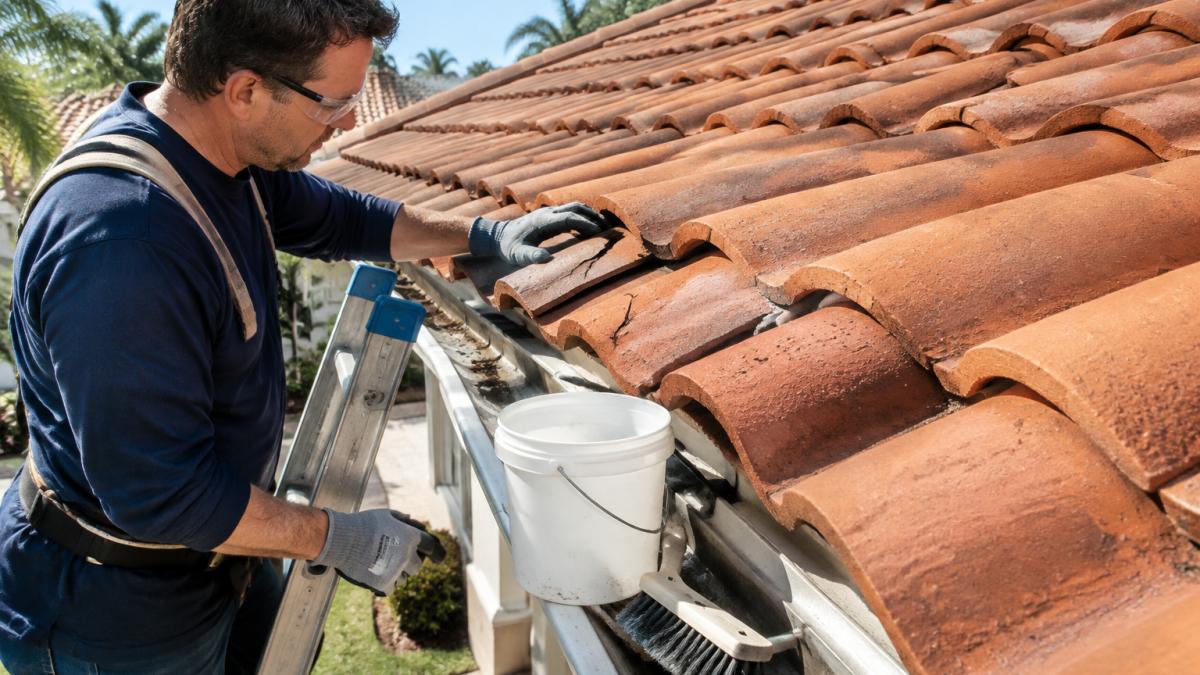
Manual cleaning means physically removing moss, algae, and dirt by hand or with soft-bristle tools. It protects tile integrity in a way no machine can.
Work from the top down. Use a roof rake or soft brush to pull off leaves, twigs, and organic debris. Never scrape hard or use a metal tool.
For moss and lichen, a specialized moss solution helps loosen the growth before you scrape.
Watch out: dry-brushing heavy moss sends spores into the air, and they land right back on the roof. Dampen the growth first.
Step 3: Apply a Soft Wash Roof Cleaning Solution
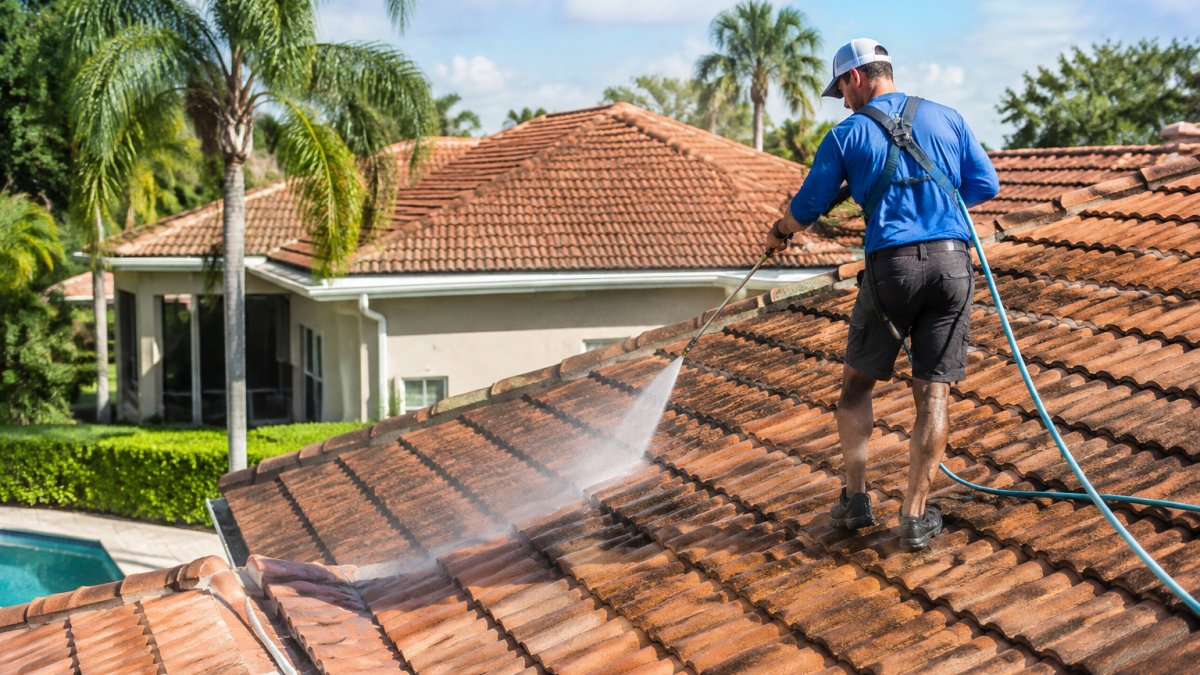
Soft wash roof cleaning relies on a low-pressure chemical application, not force. The goal is to let the cleaning solution do the work, killing and loosening organic growth, so that a gentle rinse can carry it away. This is the safest method for tile, metal, slate, and cedar shake roofs, but the details of the mix and application matter more than most homeowners realize.
A typical soft wash mix for tile roofs uses a 3% to 6% sodium hypochlorite concentration with a surfactant, per Florida Roofing and Gutters on safe tile roof cleaning. The surfactant helps the solution cling to the tiles and penetrate the growth. For lighter staining, a lower concentration may suffice; for heavy moss or lichen, a slightly stronger mix may be needed, but never exceed the manufacturer’s recommendations for your specific tile type.
Allow the solution time to dwell before rinsing, since that is what breaks down organic growth. Apply from the bottom up to avoid streaking, and keep the solution off plants and metal fixtures, cover them with plastic sheeting if necessary. Work in sections so the solution doesn’t dry out before you rinse.
Watch out: mixing bleach with other chemicals, especially ammonia or acids, can create toxic gases. Always use dedicated soft wash equipment and never mix solutions in an unventilated area.
Always check that any cleaning product is approved for your tile roof and won’t void your warranty, since many manufacturers specify acceptable cleaning agents.
For a deeper dive into how soft washing compares to pressure washing, our guide on soft washing versus pressure washing breaks it down. And if you’re also maintaining other exterior surfaces, consider that the same low-pressure approach works well for house wash and exterior home cleaning, driveway cleaning, and pool deck cleaning, keeping your entire property looking its best without damaging delicate materials.
Step 4: Rinse Gently and Remove Black Streaks from Roof Shingles
Rinse with low pressure, working top to bottom, and let the water carry the loosened growth away. Black streaks are a different problem. Those streaks are usually algae, and they need the chemical treatment to die, not just a rinse.
If streaks persist on shingle areas, our guide on how to remove black streaks from roof shingles covers the full process without damaging the surface.
A 2026 comparison guide confirms soft washing is the safest technique for tile, metal, slate, and cedar shake, with chemical strength adjusted to the roofing material (Atlas Exterior Solution roof cleaning methods comparison).
How to Prevent Algae, Moss, and Lichen from Returning
Prevention is an effective way to limit growth on a roof, and regular inspections help catch problems early. But effective prevention goes beyond just trimming trees, it requires a strategy tailored to your climate and roof type.
Focus on moisture. Algae, moss, and lichen all need water and shade to thrive. In humid regions, like the Southeast, roofs stay damp longer, so prevention should emphasize maximizing airflow and sunlight. In arid climates, occasional morning dew can be enough for algae to bloom, so regular cleaning of debris becomes even more critical.
- Trim overhanging branches to let sunlight dry the roof. Aim to keep branches at least 6 feet away from the roof surface.
- Keep gutters clear so water does not pool at the edges. Clogged gutters are a primary cause of moss growth at the roof perimeter.
- Improve roof ventilation to cut moisture retention in the attic and roof deck. Proper intake and exhaust vents can reduce condensation that feeds growth.
- Schedule preventative maintenance every 12 to 18 months. A professional soft wash roof cleaning can remove early-stage growth before it becomes established.
Another often-overlooked factor is the impact of cleaning methods on your roof warranty. Many tile manufacturers specify that certain cleaning agents or high-pressure washing will void coverage. Before you clean or treat your roof, check your warranty documents. Using a soft wash method with approved solutions helps preserve your coverage. If you’re unsure, consult a professional who understands warranty requirements.
For a deeper plan, read our guide on preventing roof mold regrowth. And remember, maintaining your roof is just one part of exterior home care, regular house wash and exterior home cleaning, driveway cleaning, and pool deck cleaning also protect your investment and keep your property looking its best. Paver sealing is one of the exterior services Freedom Wash Club offers.
Here are the prevention steps the article recommends to keep growth from coming back.
| Action | Target | Note |
|---|---|---|
| Trim overhanging branches | Sunlight and airflow | Keep branches at least 6 feet from roof surface |
| Keep gutters clear | Water pooling at edges | Clogged gutters are a primary cause of perimeter moss |
| Improve roof ventilation | Moisture retention | Proper intake and exhaust vents reduce condensation |
| Schedule preventative maintenance | Early-stage growth | Every 12 to 18 months |
| Check warranty documents | Cleaning agents and pressure washing | Soft wash with approved solutions helps preserve coverage |
When to Call Professional Exterior Home Cleaning Services
Professional exterior home cleaning can be a practical choice for steep roofs, heavy growth, HOA deadlines, or seasonal homes that need year-round upkeep.
Licensed and insured matters here. A fall or a cracked tile is expensive, and uninsured crews leave you holding the bill.
If you are comparing options, our list of professional roof cleaning services in Florida gives you a vetted starting point.
Schedule Your Roof Cleaning with Freedom Wash Club
Cleaning a tile roof safely is a job with real stakes. One wrong pass with a pressure washer can crack tiles, force water under the laps, and leave you facing repairs that cost far more than the cleaning itself. That risk is exactly why we do it differently.
Freedom Wash Club is licensed and insured, with over 10 years of experience serving South Florida homes and businesses. We handle soft wash roof cleanings, house wash and exterior home cleaning, driveway cleaning, pool deck cleaning, and paver sealing. No in-person estimate is needed, and you can book by phone or text. We stand behind our work with a 100% satisfaction guarantee.
Get started with Freedom Wash Club and protect your roof the right way. Receive your free quote today.
Frequently Asked Questions
What is the safest way to clean a tile roof?
The safest method for cleaning tile roofs is soft washing, which uses low-pressure water combined with a cleaning solution to kill organic growth. Apply a soft wash solution with a surfactant, let it dwell according to the product and manufacturer’s guidance, then rinse gently. This approach avoids the tile damage and water intrusion that high-pressure washing can cause.
Can you pressure wash a tile roof without damaging it?
No, pressure washing is not safe for tile roofs. High-pressure water can crack tiles, dislodge them, and force water under the laps, leading to leaks and structural damage. Industry experts consistently recommend soft washing or manual cleaning instead to preserve roof integrity.
How do I remove black streaks from roof shingles?
Black streaks are typically caused by algae. To remove them safely, use a soft wash solution containing sodium hypochlorite and a surfactant. Apply at low pressure, allow adequate dwell time, then rinse. For shingles, ensure the solution is safe for asphalt, and avoid pressure washing that can strip granules.
How often should tile roofs be cleaned to prevent buildup?
Annual roof inspections are a sensible way to catch biological staining early. In humid climates like South Florida, regular cleaning helps prevent moss, algae, and lichen from taking hold.
Your roof will not clean itself, and the wrong method will cost you more than the right one. Let Freedom Wash Club handle it with soft wash roof cleaning, house wash and exterior home cleaning, and paver sealing backed by a 100% satisfaction guarantee. Reach out by phone or text and receive your free quote.