Last Updated: November 1, 2026
Quick Summary
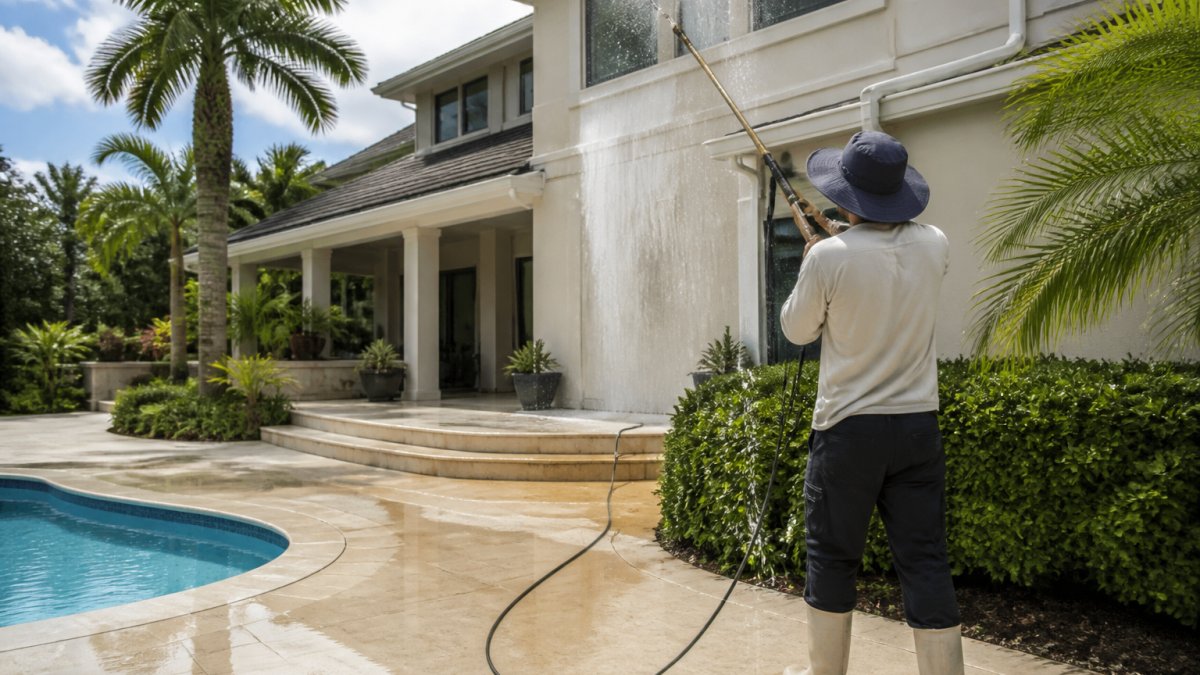
Preventing HOA violations during house washing means reading your recorded restrictions, architectural rules, and fine policy before work begins, then matching the method to each surface. Use soft washing on painted siding, stucco, shingles, and roofs, and confirm water-use limits, working hours, and runoff rules with your board in writing.
- Request the declaration, architectural rules, and fine policy from your board in writing before scheduling.
- Soft wash painted siding, stucco, shingles, and roofs; reserve pressure washing for concrete driveways and pool decks.
- Wash the full exterior once a year and roofs every 12-18 months to stay ahead of inspections.
- Photograph each elevation before and after the wash with dates, and save the paid invoice.
- Block storm drains and cover landscaping so soapy runoff never reaches a neighbor’s property.
Table of Contents
- Why House Washing Triggers HOA Violations
- HOA Pressure Washing Rules: What Governing Documents Actually Say
- How Often to Wash a House Exterior to Stay Ahead of Enforcement
- The HOA-Approved Exterior Cleaning Checklist
- Step 1: Pull the current governing documents
- Step 2: Confirm approved cleaning methods for each surface
- Step 3: Check for seasonal water-use restrictions
- Step 4: Confirm allowed working hours
- Step 5: Note landscaping and runoff protections required
- Step 6: Photograph the exterior before the wash, with dates
- Step 7: Get the contractor’s license and insurance certificate in writing
- Step 8: Confirm the contractor will cover plants and protect drains
- Step 9: Schedule the wash outside any inspection deadline window
- Step 10: Photograph the finished work and save the invoice
- Soft Washing vs. Pressure Washing: Matching the Method to the Surface
- Runoff, Chemicals, and Community Restrictions
- Documenting Compliance and Using an HOA Violation Response Letter Template
- Scheduling Your HOA-Compliant House Wash
- Frequently Asked Questions
Why House Washing Triggers HOA Violations
Most homeowners assume a dirty exterior is a private problem. In an HOA, it is a compliance problem, and preventing HOA violations during house washing starts with understanding that your siding is judged against a written standard you agreed to when you bought the home. A homeowner can wash the house, feel good about it, and then get a letter because the method, the timing, or the runoff broke a rule nobody read.
The Violations Homeowners Miss Most
Four mistakes account for most of the notices we hear about:
- Washing without written approval when the governing documents require it
- Using high pressure on surfaces the rules protect, like painted siding or shingles
- Letting chemical runoff reach a neighbor’s landscaping or a storm drain
Notices can arrive weeks after the work, so documentation is your best defense. If you are weighing whether the wash is worth the hassle, this breakdown of whether pressure washing is worth it for HOA compliance covers the case for doing it right the first time.
HOA Pressure Washing Rules: What Governing Documents Actually Say
HOA pressure washing rules live in three places, and they do not always agree. You need to read all three before anyone touches a hose.
Start with the declaration and recorded restrictions. These are the covenants attached to your deed.
A common mistake is reading only the welcome packet. The recorded restrictions control, and they are usually filed with the county.
Watch out: if your documents require prior written approval for exterior work, washing without it can be treated as an unapproved alteration, even when the result looks better. If you are already facing a repair demand, these alternatives to expensive HOA exterior repairs are worth reading before you spend.
How Often to Wash a House Exterior to Stay Ahead of Enforcement
How often to wash a house exterior depends on your climate, your shade, and how fast your particular siding grows algae.
In humid, shaded conditions, growth returns faster. North-facing walls and tree-covered roofs stay damp longer. Driveways collect tire marks and pollen.
A practical rhythm looks like this:
| Surface | Frequency | Why It Matters |
|---|---|---|
| Full house wash | Once a year | Resets the whole exterior before inspection season |
| Roof soft wash | Every 12-18 months | Removes algae before it stains shingles |
| Driveway | Every 6-12 months | Prevents set-in stains and oil marks |
| Pool deck | Every 6-12 months | Stops slippery film and mildew |
The goal is staying ahead of the inspection cycle, not reacting to a letter.
The HOA-Approved Exterior Cleaning Checklist
Run this before you book anyone. It takes ten minutes and prevents most disputes. But a checklist is only useful if you know how to complete each step and why it matters. Here is the same list with the practical detail that turns it into a real compliance tool.
Step 1: Pull the current governing documents
Request the declaration, architectural rules, and fine/enforcement policy from your board in writing. Note any clause that requires prior written approval for exterior work. If the documents are silent on washing, ask the board for a written interpretation, an email is enough. Keep that email.
Step 2: Confirm approved cleaning methods for each surface
Most architectural rules name approved methods or restrict pressure levels. Match the method to the material:
- Painted siding, stucco, and shingles: soft washing only. High pressure can drive water behind cladding, strip paint, or loosen shingles.
- Concrete driveways and pool decks: pressure washing is generally acceptable, but check for restrictions on runoff and detergents.
- Paver sealing: if you plan to seal pavers, confirm whether the sealant requires approval and whether the community restricts volatile compounds or application timing.
Step 3: Check for seasonal water-use restrictions
Many communities impose watering limits or bans during drought conditions. Washing a house with a hose can fall under those rules. Confirm current restrictions with your water utility or the board before scheduling.
Step 4: Confirm allowed working hours
Noise ordinances and HOA rules often restrict start and end times. Note them and share them with your contractor. A wash that starts too early can generate a complaint even if the work is flawless.
Step 5: Note landscaping and runoff protections required
Ask the board or review the rules for any requirement to cover plants, block storm drains, or direct water to a safe area. If the rules are silent, follow the practices in the runoff section below, they prevent complaints regardless.
Step 6: Photograph the exterior before the wash, with dates
Take wide shots of each elevation and close-ups of any pre-existing damage. Date-stamped photos establish a baseline and protect you if a neighbor claims the wash caused a problem.
Step 7: Get the contractor’s license and insurance certificate in writing
Ask for a certificate of insurance showing general liability coverage. Confirm the policy is current. If your HOA requires contractors to be registered with the board, complete that step before work begins.
Step 8: Confirm the contractor will cover plants and protect drains
Put this in the scope of work. A reputable contractor will bag plants, pre-wet landscaping, and use containment for runoff. If they hesitate, find another provider.
Step 9: Schedule the wash outside any inspection deadline window
If you have received a notice with a cure period, schedule the wash early enough to complete it and document the result before the deadline. Do not wait until the last week.
Step 10: Photograph the finished work and save the invoice
Take after photos from the same angles as your before photos. Save the paid invoice and any approval emails in one folder. This file is your proof of compliance if a dispute arises later.
A dated photo set and a paid invoice are the strongest proof of compliance you can hold. Store them digitally and keep a backup.
This checklist covers the exterior surfaces an HOA may inspect, including house wash, roof, driveway, pool deck, and pavers.
Soft Washing vs. Pressure Washing: Matching the Method to the Surface
(https://www.asphaltroofing.org/resources/technical-bulletins/) and most roofing guidance warn against high-pressure cleaning on shingles for exactly this reason. If you want the deeper comparison, this explanation of [whether soft washing is better than pressure washing](/2026/09/17/is-soft-washing-better-than-pressure-washing/) walks through each surface.
Runoff, Chemicals, and Community Restrictions
Runoff is the violation homeowners never see coming. The wash water carries soap, algae, and dirt, and it has to go somewhere.
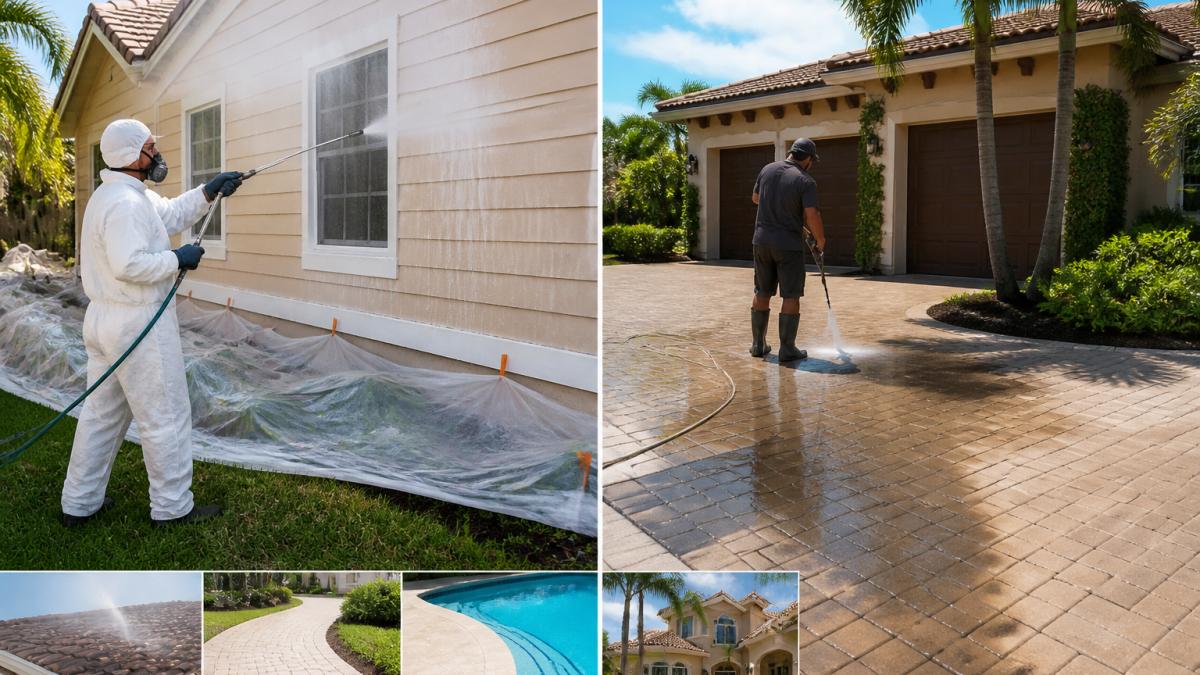
Many communities restrict what can reach storm drains, and the U.S. Environmental Protection Agency notes that storm drains typically flow untreated to local waterways.
Protect yourself with three habits:
- Cover landscaping and rinse plants after the wash
- Block drains or direct water to a safe area
- Use cleaning solutions approved for exterior use
Watch out: washing a driveway near a storm drain without containment can turn a routine job into a complaint from a neighbor or the board.
Documenting Compliance and Using an HOA Violation Response Letter Template
If a notice arrives, respond in writing and respond fast. Most enforcement policies include a cure period, and ignoring the letter is the fastest way to turn a warning into a fine. This guide on what happens if you ignore HOA warnings explains the escalation path.
Your violation-response timeline
Treat the notice as a deadline-driven process. A typical sequence looks like this:
- Day 0 – Notice received. Log the date and the specific rule cited. If the notice is vague, request clarification in writing immediately.
- Within 3-5 days – Request evidence. Ask the board for the inspection report, photos, or any documentation supporting the violation. You are entitled to know what condition is alleged.
- Before the cure period ends – Complete the cure. Schedule the wash or repair with enough buffer to finish and document before the deadline. Most cure periods run 10-30 days, but confirm your policy.
- After the cure – Submit proof. Send dated before-and-after photos, the invoice, and a short letter confirming completion.
- If a fine is proposed – Request a hearing. Most policies allow a hearing before fines are assessed. Attend and bring your documentation.
- If the fine stands – Appeal. Follow the appeal process in your governing documents. Deadlines are often short.
What to keep in your compliance file
- Dated before-and-after photos of every surface washed
- The contractor’s invoice and proof of payment
- The contractor’s license and insurance certificate
Sample questions to ask the board
If the notice is unclear, ask in writing:
- Which specific covenant or rule is alleged to be violated?
- What condition was observed, and when?
- What is the cure period and the deadline to respond?
Response letter template
Here is a response letter you can adapt:
[Date]
[HOA Name] Board of Directors
Re: Violation Notice dated [date], Property [address]
Dear Board Members,
I received your notice regarding [describe the cited condition]. I take community standards seriously and want to resolve this promptly.
The exterior was cleaned on [date] by [contractor name]. Photos of the completed work and the invoice are attached. [If applicable: Written approval was granted on [date] and is also attached.]
If any condition remains, please let me know the specific standard cited so I can address it within the cure period. I request a hearing if the board intends to assess a fine.
Thank you for your time.
Sincerely,
[Your name]
Short, factual, and documented. That letter does more than an angry phone call ever will.
Do not ignore a violation notice, even if you believe it is wrong. Most policies treat silence as an admission and escalate to fines.
Scheduling Your HOA-Compliant House Wash
Booking the wash is the easy part once you know the rules. The trick is scheduling around your inspection cycle and confirming the contractor handles compliance details for you.
At Freedom Wash Club, we have cleaned South Florida exteriors for over a decade, and we are licensed and insured. If you want pricing context before you book, this residential pressure washing pricing guide covers what drives cost.
One customer in Boca Raton put it simply: “Our home was completely transformed.”
Frequently Asked Questions
Can an HOA require homeowners to wash their house?
Yes, in most cases. HOA governing documents typically include exterior maintenance clauses that require homeowners to keep siding, roofs, and driveways free of mildew, algae, and visible dirt. These recorded restrictions are enforceable, and failure to comply can lead to a violation notice, a cure period, and eventually fines. Check your community’s specific covenants to see the exact language and any deadlines that apply.
Do I need HOA approval before pressure washing my home?
It depends on your governing documents. Many HOAs require written approval before exterior cleaning, especially if you plan to use a contractor or chemicals. Others only regulate the method, such as banning high-pressure washing on certain surfaces. Submit a request in writing and keep the approval on file. If your HOA pressure washing rules are unclear, ask the board for clarification before scheduling the work.
What should I do if my HOA sends a vague house-washing violation notice?
Respond in writing and ask for specifics: which surface, what standard was violated, and what the cure period is. Photograph the area in question. If you have already cleaned it, send dated before-and-after photos. Use a clear HOA violation response letter template that states your compliance actions and requests a written confirmation. Keep copies of everything in case the issue escalates to a hearing.
How do I document exterior cleaning to respond to an HOA notice?
Take dated photos before and after the wash, keep your contractor’s invoice and license information, and save any written approval you received. If you used a professional service, ask for a brief summary of the methods and products used. Send this package to your HOA with a cover letter. A complete record of compliance often resolves a violation notice without further enforcement.
Your HOA has a standard, and your exterior has to meet it before the next inspection. Freedom Wash Club makes that simple with licensed and insured crews, easy phone or text scheduling, and a 100% satisfaction guarantee on every house wash, roof soft wash, driveway cleaning, pool deck cleaning, and paver sealing job. Get started with Freedom Wash Club and keep your home looking its best without the violation letters.