Last Updated: October 31, 2026
Quick Summary
Exterior house washing maintenance matters because it is preventative maintenance, not a cosmetic chore. Cleaning on a set schedule protects siding, roofs, and concrete from mold, algae, and grime that can fade, soften, or crack surfaces. A full exterior wash every 12 to 24 months is a common starting point, with the shorter end for humid, shaded properties.
- Walls that stay damp past mid-morning grow algae faster, so shorten the interval.
- Soft wash roof cleaning uses low pressure because pressure washing can damage shingles.
- Sweep driveway debris weekly so water drains instead of pooling on the surface.
- Photograph each side of the house after every wash to compare angles year over year.
- Hire a pro for two-story homes, steep pitches, or surfaces like stucco and painted wood.
Table of Contents
- Why Exterior House Washing Maintenance Protects More Than Curb Appeal
- The Benefits of Regular House Washing for Siding, Roofs, and Value
- How Often to Wash a House Exterior in a Humid Climate
- Soft Wash Roof Cleaning: Why Pressure Is the Wrong Tool Up Top
- Driveway Cleaning and Maintenance That Survives Heavy Rain
- A Surface-by-Surface Cleaning Plan for Your Whole Property
- DIY or Professional Exterior Cleaning? How to Decide
- Book Your Exterior House Washing Maintenance Visit
- Frequently Asked Questions
Why Exterior House Washing Maintenance Protects More Than Curb Appeal
Exterior house washing maintenance is the practice of cleaning your home’s outside surfaces on a set schedule, not just when they look bad.
Many homeowners treat washing as a cosmetic chore. In reality, it is preventative maintenance, the same as changing your AC filter.
A common mistake is waiting for green streaks before booking a wash. By then, growth has already rooted into the surface.
The Benefits of Regular House Washing for Siding, Roofs, and Value
Regular house washing delivers three things: longer surface life, better looks, and fewer repair bills. Those benefits stack up over years. A home that gets washed on schedule simply lasts longer than one that doesn’t.
How Built-Up Contaminants Damage Exterior Surfaces
Mold, mildew, and algae don’t just sit on top of your siding. They feed on organic material in dirt and moisture. Over time, that growth can hold moisture against the surface, and surfaces may fade, soften, or crack.
Curb Appeal, Property Value, and HOA Compliance
A clean exterior is one of the cheapest ways to lift a home’s perceived value. Buyers judge a house in seconds, and grime reads as neglect. For HOA homeowners, it is not optional. Dirty driveways and streaked roofs draw violation letters and fines.
If an inspection is coming, our guide to 7 exterior home cleaning steps before HOA inspections walks you through the order that satisfies most boards.
How Often to Wash a House Exterior in a Humid Climate
A full exterior wash every 12 to 24 months is a common starting point. In a humid climate with heavy shade, plan on the shorter end, since moisture and heat can feed biological growth year-round.
But a single annual number is where most advice stops, and it is also where homeowners get into trouble. Frequency should track the conditions your specific house actually faces.
| Surface | Typical cadence in a humid climate | What drives the schedule |
|---|---|---|
| Painted siding and trim | Every 12-18 months | Shade, tree cover, north-facing walls, pollen load |
| Stucco | Every 12-24 months | Pitting risk, irrigation overspray, salt air near the coast |
| Roof (asphalt shingle) | Every 18-24 months, soft wash only | Tree canopy, roof pitch, gutters that stay wet |
| Driveway and walkways | Every 12-24 months, plus spot cleaning | Tire marks, oil drips, shade, drainage |
| Pool deck and pavers | Every 12-18 months, with sealing on a separate cycle | Splash-out, shade, humidity, foot traffic |
| Windows and screens | Every 6-12 months | Pollen, salt film, hard-water spotting |
Climate and Site Factors That Move the Date
Rather than guessing, read your property for the signals that accelerate growth:
- Shade and tree cover: walls that stay damp past mid-morning grow algae faster.
- Humidity and airflow: tight side yards and screened lanais trap moisture. If a surface stays damp for hours after rain, shorten the interval.
- Proximity to water: homes near canals, lakes, or the coast see more airborne growth and salt film. Salt also holds moisture against metal and painted surfaces.
A practical pattern many homeowners settle into: a full house wash and driveway cleaning in spring, a soft wash roof cleaning when streaks first appear, and pool deck cleaning before the heavy-use season. Paver sealing can be scheduled separately, after a deep clean and on a dry surface.
Signs Your Home Needs Washing Before the Schedule Says So
Your house will tell you when it’s due. Watch for these signals:
- Green or black streaks on the roof or north-facing walls
- Chalky, faded paint on siding
- Dark patches on the driveway that won’t sweep away
Any one of these means it’s time. Two or more means don’t wait. And if you are away for part of the year, do not stretch the timeline just because the house is empty, growth doesn’t pause when you do. Schedule the wash before you leave or shortly after you return, and have the gutters cleared so water isn’t sitting against the fascia.
Photograph each side of the house after every wash. Comparing the same angle year over year is the fastest way to spot a surface that is degrading faster than its neighbors, and to justify adjusting the schedule before damage sets in.
Soft Wash Roof Cleaning: Why Pressure Is the Wrong Tool Up Top
Soft wash roof cleaning is a low-pressure method that treats mold and algae instead of blasting them off. It uses a cleaning solution applied gently, then rinsed away.
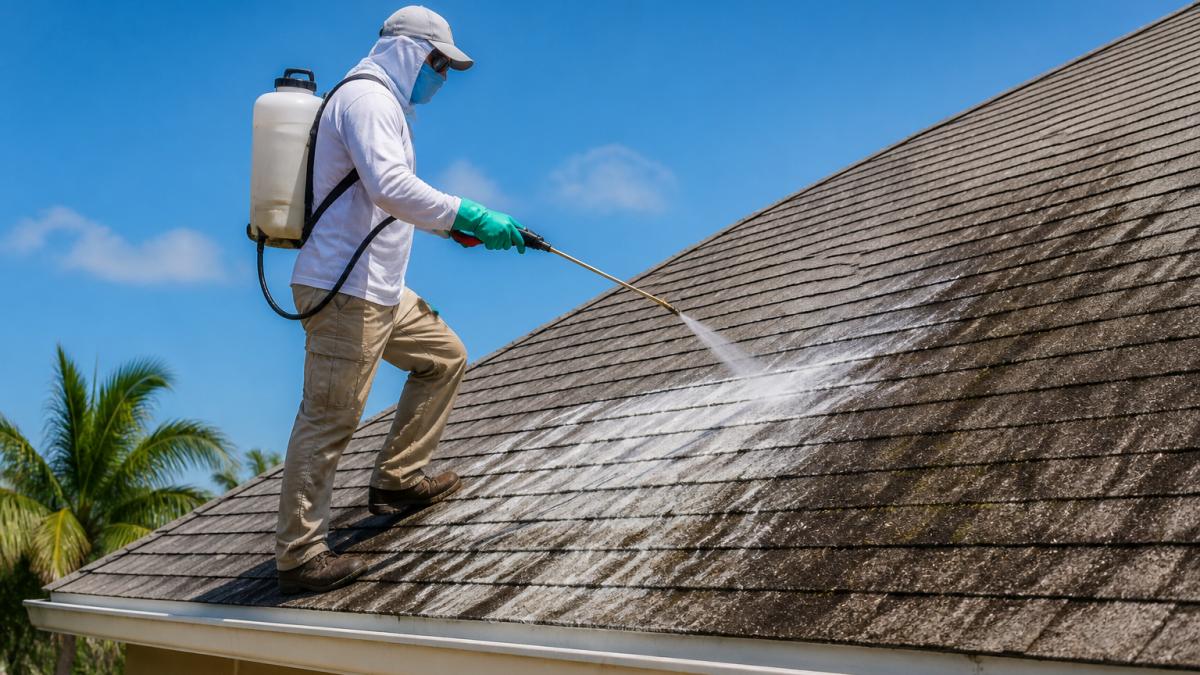
Pressure washing a roof can damage shingles and is generally not recommended for roofing materials (asphaltroofing.org).
If you want to know how often your roof should be cleaned, our 2026 roof cleaning frequency guide breaks it down by material and shade.
Driveway Cleaning and Maintenance That Survives Heavy Rain
Driveway cleaning and maintenance in a wet climate is about more than looks. Concrete and pavers are porous. When rain keeps them damp, mold and algae settle into the pores and stain deep. Oil, tire marks, and rust make it worse.
A smart routine looks like this:
- Sweep debris off weekly so water drains instead of pooling
- Rinse spills before they set
- Schedule a professional deep clean once or twice a year
- Seal pavers to block moisture and stains
Sealing is a step many people skip, and it can help pavers resist staining and clean up more easily after rain.
A Surface-by-Surface Cleaning Plan for Your Whole Property
Different surfaces call for different approaches. Here is how we think about each one:
| Surface | Method | What to Watch |
|---|---|---|
| Roof | Soft wash, low pressure | Never high pressure on shingles |
| Siding | Soft wash or gentle rinse | Protect window seals and outlets |
| Driveway | Pressure wash, then seal | Test pressure on a small spot first |
| Pool deck | Soft wash plus rinse | Keep runoff out of the pool |
| Windows | Spot-free rinse | Avoid hard water spots |
House Wash, Pool Deck, and Paver Sealing in One Visit
Some homeowners choose to combine services for convenience, with one scheduled visit covering several surfaces. It also keeps your whole property on the same maintenance clock.
Our pool deck cleaning best practices guide covers how to protect that surface between visits.
DIY or Professional Exterior Cleaning? How to Decide
Some jobs are fine for a homeowner with a rented pressure washer. Others are not. The line comes down to height, surface type, access, and what happens if something goes wrong. Most advice skips that last part, so here is a decision framework you can actually apply.
The Five Questions That Settle It
- Can you reach it safely from the ground? If the answer requires a ladder above the first story, a steep roof, or leaning out a window, treat it as a professional job. Falls are the most common serious injury in exterior cleaning.
- What is the surface? Concrete, paver driveways, and sturdy walkways tolerate pressure washing. Painted siding, stucco, wood, roofing shingles, and window seals do not, those call for soft washing or gentle rinsing.
- How bad is the growth? Light surface dust is a homeowner job. Rooted algae, black streaking on a roof, or mildew that returns within weeks means the growth is established and needs a treatment approach, not just scrubbing.
- What equipment do you actually have? A rented pressure washer with one nozzle is not the same as a soft-wash system with adjustable pressure, the right detergent, and extension wands. Mismatched equipment is how gouges and water intrusion happen.
- What is the cost of a mistake? Replacing a section of siding, repainting a wall, or repairing water damage behind flashing usually costs far more than hiring the job out. If the surface is expensive or hard to replace, the risk math favors a pro.
Go DIY If…
- You are rinsing a single-story concrete patio, walkway, or paver driveway with light staining
- The surface is sturdy and you can test pressure on an inconspicuous spot first
- You can reach everything safely from the ground
Hire a Pro If…
- Your roof needs cleaning, soft washing is the only safe method for shingles
- You have two stories, steep pitches, or difficult access
- Mold and algae keep returning after you clean
A common mistake is renting a pressure washer and using it on siding or a roof, which can cause streaks, gouges, or water damage. Licensed and insured professionals can be a safer option for these surfaces.
Before any wash, DIY or professional, walk the exterior and note failing paint, loose siding, cracked stucco, damaged window seals, and any sign of moisture intrusion. Washing can push water into existing openings. Fix those issues first, or flag them to your contractor so the wash plan accounts for them.
What to Ask Before You Hire
A short screening script saves a lot of grief:
- Which surfaces will you soft wash, and which will you pressure wash?
- Are you licensed and insured, and can you provide proof?
- Do you protect plants, outdoor fixtures, and electrical outlets before washing?
If a contractor cannot answer those plainly, keep looking. The right crew will welcome the questions, and will tell you when a surface should not be washed at all.
Book Your Exterior House Washing Maintenance Visit
Keeping up with exterior house washing maintenance is a habit, not a one-time job. Set a schedule, watch for early signs, and treat each surface the way it needs to be treated.
Freedom Wash Club makes it easy. Find the right driveway cleaning service near you and get your free quote today.
You can also explore maintaining exterior home value with a seasonal checklist built for snowbird properties.
Frequently Asked Questions
How often should your house be power washed?
For most homes, a full exterior house washing once every 12 to 24 months keeps siding, trim, and eaves clear of dirt and biological growth. In humid, shaded, or heavily landscaped yards, growth returns faster, so an annual wash is more realistic. Roofs, driveways, and pool decks often need their own schedule. Watch for green or black streaking, chalky film on siding, or slick walkways, and book a wash when those appear rather than waiting for a fixed date.
Can regular house washing help prevent mold and mildew buildup?
Yes. Mold, mildew, and algae feed on dirt, pollen, and moisture that collect on exterior surfaces. Washing removes both the growth and the organic film it lives on, which slows its return. It does not make surfaces permanently resistant, so pair washing with trimmed back foliage, clear gutters, and good drainage. In a humid climate, plan on repeat visits rather than a one-time clean, and treat shaded north-facing walls as the first place growth will reappear.
Is soft washing better than pressure washing for house siding?
For most siding, soft washing is the safer choice. It uses low pressure and a cleaning solution to lift mold, mildew, and grime instead of blasting them off. High pressure can force water behind siding panels, etch paint, and scar wood or stucco. Pressure washing still has a place on concrete driveways and hard flatwork. The right method depends on the surface, which is why a surface-by-surface plan beats one setting for the whole house.
How should you maintain a driveway and pool deck between cleanings?
Sweep or blow off leaves and debris weekly so tannin stains and moisture do not sit on the surface. Rinse away fertilizer, mulch, and soil spills before they set. Keep gutters and downspouts clear so runoff does not dump onto the driveway. Check for cracks and have them sealed before water gets in. On pavers, a fresh coat of sealer after cleaning helps block stains and slows regrowth, and it can make later cleaning easier.
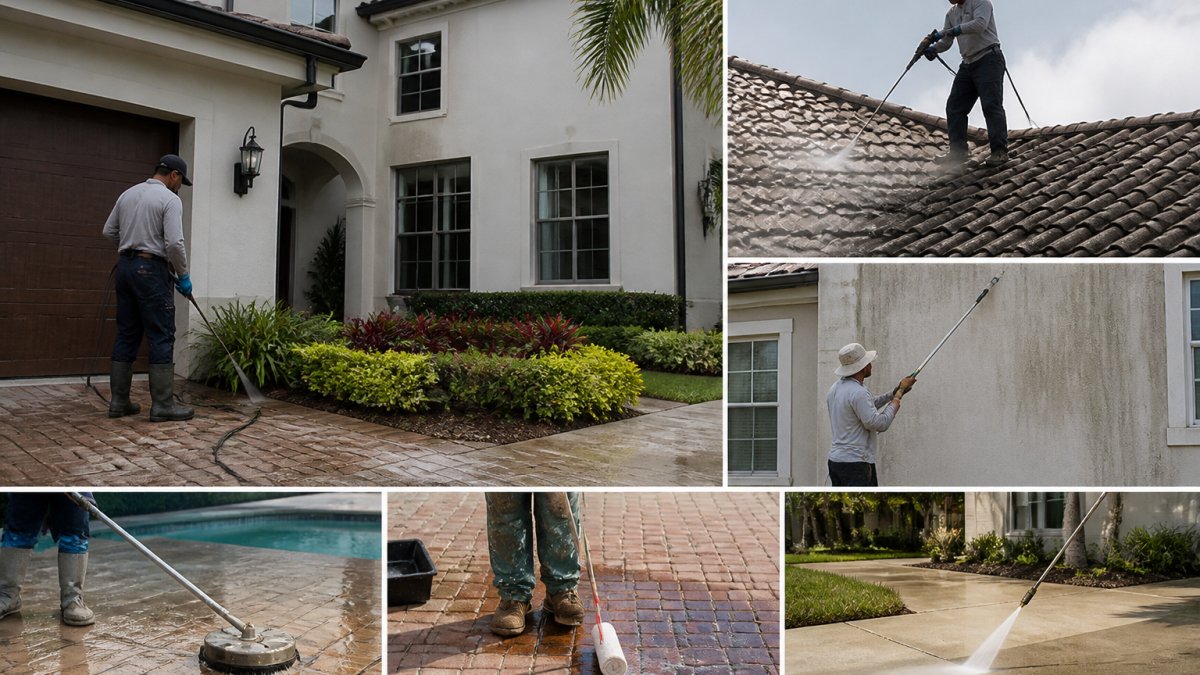
Your home’s exterior takes a beating in this climate, and the damage doesn’t wait. Freedom Wash Club handles house wash, soft wash roof cleaning, driveway cleaning, pool deck cleaning, and paver sealing in one reliable visit. We bring licensed and insured crews, easy text scheduling, and a 100% satisfaction guarantee. Get started with Freedom Wash Club and keep your property clean, protected, and HOA-ready all year.