Last Updated: November 2, 2026
Quick Summary
A soft wash cleans with low pressure and a cleaning solution that kills mold, mildew, and algae at the root, making it the safe choice for shingles, vinyl siding, stucco, and painted wood. High pressure washing uses force alone and belongs on concrete driveways, brick, and stone.
- Pressure alone knocks mold off the surface but leaves the root behind, so it returns within months.
- Never pressure wash asphalt shingles, because the stream strips protective granules and lifts tabs.
- High pressure can force water behind vinyl siding and trap moisture against the sheathing.
- Driveways collect oil stains and tire marks that a soft wash rinse will not cut.
- Pressure cleaning can wash out joint sand, so paver sealing is often applied afterward.
Table of Contents
- Soft Wash vs High Pressure: Key Differences at a Glance
- How Soft Washing Works and What It Cleans
- How High Pressure Washing Works and Where It Belongs
- Soft Wash vs Pressure Wash Vinyl Siding: Which Protects Your Home
- Soft Wash Roof Cleaning: Why Low Pressure Wins on Shingles
- Driveway Pressure Cleaning: Where High Pressure Earns Its Place
- Pool Deck Cleaning: Balancing Pressure and Delicate Surfaces
- Get a Free Quote for Soft Washing and Pressure Cleaning
- Frequently Asked Questions
Soft Wash vs High Pressure: Key Differences at a Glance
The choice between soft wash vs high pressure for home exteriors comes down to one question: what will the surface take? Soft washing cleans with low pressure and a cleaning solution that kills mold, mildew, and algae at the root. High pressure washing strips away dirt and grime with force alone.
The surfaces that fail fastest under a pressure wand are the ones homeowners most want cleaned: shingles, painted wood, stucco, and vinyl.
Below, we break down exactly which method belongs on which surface, where each one earns its place, and how to tell when a job is a DIY weekend project versus a call to a professional.
Comparison Table: Pressure, Solution, and Best Surfaces
| Factor | Soft Wash | High Pressure Wash |
|---|---|---|
| Pressure level | Low, gentle spray | High, forceful stream |
| Cleaning agent | Cleaning solution and detergent | Water pressure, sometimes detergent |
| How it kills growth | Chemical treatment kills mold and algae at the root | Force blasts buildup off the surface |
| Best surfaces | Roof shingles, vinyl siding, stucco, painted wood, screens | Concrete driveways, brick, stone, pool deck frames |
| Risk to surface | Minimal when diluted correctly | Can crack, etch, or force water behind siding |
| Typical use | House wash, roof cleaning, delicate exteriors | Driveway cleaning, hard flatwork, oil stains |
How Soft Washing Works and What It Cleans
Soft washing is a low-pressure exterior cleaning method that applies a diluted cleaning solution to kill mold, mildew, algae, and bacteria, then rinses the dead growth away with gentle water pressure. The cleaning is done by the chemical treatment, not the force.
That distinction matters in South Florida, where heat and humidity feed organic growth year-round. Pressure alone knocks mold off the surface but leaves the root behind, and it returns within months.
Surfaces that belong on a soft wash schedule:
- Roof shingles, where black streaks are algae, not dirt
- Vinyl siding, which can take water behind the panels under high pressure
- Stucco and painted surfaces, where force chips paint and opens micro-cracks
- Wood siding and trim, which pits and splinters under a narrow high-pressure tip
- Screens, gutters, and soffits, which bend or detach under force
Dilution and dwell time do the heavy lifting. Mix too weak and the growth survives; mix too hot or let it dry on a surface and you risk streaking.
How High Pressure Washing Works and Where It Belongs
High pressure washing uses a concentrated stream of water to blast dirt, mud, dust, and loose paint off hard surfaces.
Concrete is the classic case. Driveways, sidewalks, and garage aprons collect tire marks, oil stains, and embedded grime that a gentle rinse will not touch.
A common mistake is homeowners pointing a pressure washer at the whole house. Pressure washing a home exterior is a surface-by-surface decision, not a blanket treatment.
Two settings change everything: nozzle size and distance. A wider fan tip at a safe distance cleans concrete well. A narrow pencil tip held close will carve lines into the same slab in seconds.
Soft Wash vs Pressure Wash Vinyl Siding: Which Protects Your Home
For vinyl siding, soft washing is the safer default. High pressure can force water behind the panels, where it traps moisture against the sheathing and feeds mold inside the wall cavity. It can also loosen caulk lines and lift panels that were never designed to take a direct blast.
That does not mean pressure never touches vinyl. A controlled, low-pressure rinse with a wide fan tip is fine for knocking dust off a garage door or a fence line. The line is simple: chemistry does the cleaning on the siding field, and any pressure used is only for rinsing at a distance.
Material-by-Material Decision Guide
Use this as a quick reference when you are deciding method by surface. Pressure figures are cautious guidance, not a guarantee, technique, tip size, and distance matter as much as the number.
| Surface | Preferred method | Cautious pressure guidance | Why |
|---|---|---|---|
| Vinyl siding | Soft wash | Rinse only, wide fan tip, keep the tip moving | Water can pass seams and caulk under force |
| Painted wood siding and trim | Soft wash | Avoid direct pressure on joints and bare spots | Force pits wood and chips paint |
| Stucco | Soft wash | Low rinse only | Force opens micro-cracks and drives water in |
| Fiber cement siding | Soft wash | Low rinse, avoid seams | Paint and joint integrity are vulnerable |
| Asphalt shingles | Soft wash only | No pressure | Granules strip and tabs lift |
| Concrete driveways and sidewalks | Pressure wash | Surface cleaner at a steady pace | Durable, nonporous, handles force |
| Brick and stone patios | Pressure wash with care | Moderate, avoid mortar joints | Mortar erodes faster than brick |
| Paver decks and walkways | Pressure wash, then seal | Moderate, re-sand joints | Force washes out joint sand |
| Pool cage frames and screens | Soft wash or low rinse | Low only | Aluminum and screens bend or detach |
| Wood decks | Soft wash or low pressure | Low, with the grain | Force splinters and furs the wood |
Preparation and Aftercare for a Vinyl House Wash
A good vinyl house wash starts before the wand comes out. Close windows and doors, move patio furniture and grills away from the walls, and cover or rinse nearby plants.
Watch out: the most common siding mistake is using pressure on the seams and corners, where water intrusion starts. Once moisture sits behind vinyl, the damage is invisible until it is expensive.
Homeowners in HOAs have a second reason to get this right. This guide to preventing HOA violations during house washing explains how to stay compliant. Many associations require periodic exterior cleaning and will fine a property that looks neglected.
Soft Wash Roof Cleaning: Why Low Pressure Wins on Shingles
Roofs should never be pressure washed. Asphalt shingles are covered in protective granules that a high-pressure stream strips away, and once they are gone the shingle ages years in minutes.
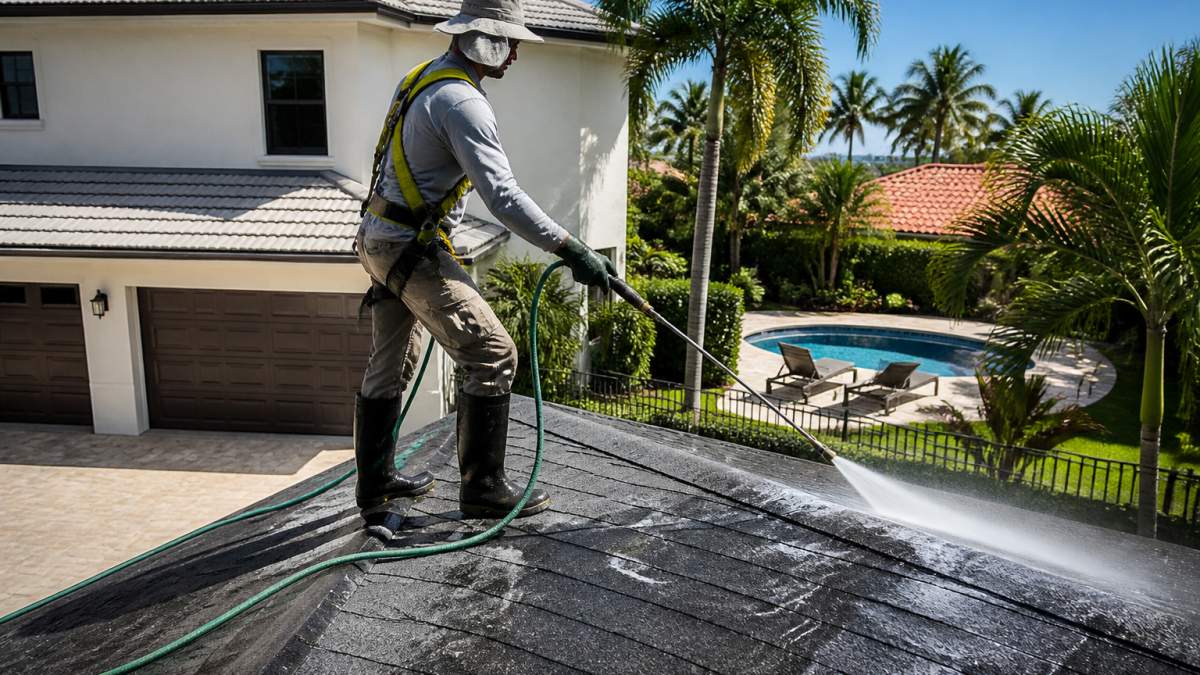
Soft wash roof cleaning solves the actual problem.
If you want the full technical case, our team wrote a detailed review of whether soft washing is safe for asphalt shingles, including what a proper dilution looks like and what to ask a contractor before they start.
Driveway Pressure Cleaning: Where High Pressure Earns Its Place
Driveways are where high pressure washing belongs. Concrete and paver surfaces collect mud, dust, tire marks, and oil stains that need real force and often a pretreatment to lift. A soft wash rinse will not cut an oil stain on concrete.
Driveway pressure cleaning typically involves pretreating oil and rust spots, applying a detergent, and then running a surface cleaner at a steady pace. If you are weighing methods, this pressure washing vs chemical cleaning comparison breaks down the tradeoffs. Rust stains and irrigation marks often need a dedicated chemical treatment before pressure is applied.
Pool Deck Cleaning: Balancing Pressure and Delicate Surfaces
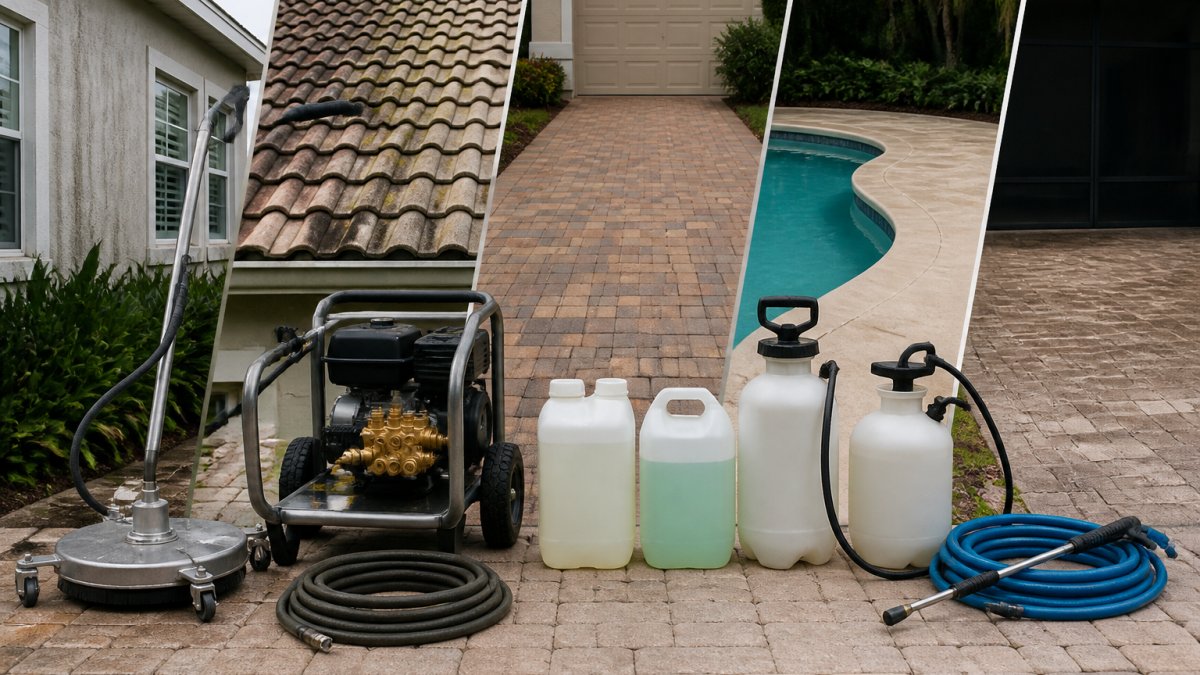
Pool decks sit between the two methods. The concrete or paver field takes pressure well, but the surrounding surfaces do not: screen enclosures, painted aluminum frames, and decorative coatings can be damaged by a careless tip. Pool deck cleaning works best when pressure is reduced for the cage and increased for the slab, and when cleaning solution is kept out of the pool water. For a deeper walkthrough, see these pool deck cleaning best practices that protect delicate surfaces.
Chemical Selection, Dilution, and Runoff Management
Most pool deck jobs need two different chemistries. A detergent or degreaser lifts dirt and sunscreen residue from the slab, while a dedicated treatment handles rust, irrigation stains, or organic growth. Mix according to the label, apply at the recommended dilution, and let dwell time do the work instead of increasing strength.
The bigger risk on a pool deck is runoff. Cleaning solution that reaches the pool raises demand on the sanitizer and can throw off water chemistry, and runoff that reaches storm drains carries chemicals and debris into waterways.
Preparation and Aftercare
Paver decks need one more step. Pressure cleaning can wash out joint sand, so paver sealing is often applied afterward to help the pavers resist staining and organic growth.
Get a Free Quote for Soft Washing and Pressure Cleaning
The right method depends on your surfaces, not a one-size package. That is why we match the approach to each part of the property: soft wash roof cleaning and house wash on the delicate exteriors, driveway and pool deck cleaning on the hardscapes, and paver sealing afterward where it protects the investment.
Freedom Wash Club is licensed and insured, locally owned, and has more than 10 years of experience across South Florida. We schedule by phone or text, so you can skip the in-person estimate and get on the calendar fast, which matters when an HOA deadline is looming. We also back our work with a 100% satisfaction guarantee.
Ready to see what your home should look like? You can also get an instant quote for roof cleaning step by step. Contact us by phone or text for a free quote, and we will walk you through the right method for each surface.
Frequently Asked Questions
Should I pressure wash or soft wash my house?
For most home exteriors, soft washing is the safer choice. Low pressure with a cleaning solution removes mold, mildew, and algae without forcing water behind siding or stripping paint. Pressure washing is best reserved for hard, durable surfaces like concrete driveways and pool decks. A professional can assess your home’s materials and recommend the right method per surface, which protects your investment and keeps results lasting longer.
Is 3400 PSI too much for pressure washing siding?
Yes, 3400 PSI is generally too much for siding. High pressure at that level can crack vinyl, strip paint, and force water behind panels, leading to moisture damage and wood rot. For vinyl siding, soft washing with low pressure and a cleaning solution is the safer approach. If pressure is used at all on siding, it should be kept low and directed carefully, but most exterior cleaning pros recommend soft washing for all siding types.
How much is it to soft wash a 2500 sqft roof?
Pricing for soft washing a 2500 sqft roof depends on roof pitch, accessibility, and the amount of organic growth. Freedom Wash Club does not publish fixed prices because every roof is different. Contact us by phone or text for a free quote. We are licensed and insured and have over a decade of experience with South Florida roofs, so you get an accurate estimate without an in-person visit.
Do you rinse the roof after soft washing?
Yes, a light rinse is typically part of the soft washing process. After a cleaning solution is applied and allowed to dwell, the roof is generally rinsed with low pressure to remove dead growth and residual solution. This step helps ensure a clean finish without damaging shingles. Proper rinsing also prevents the cleaning agent from drying on surfaces and leaving streaks.
Which is safer for vinyl siding: soft washing or pressure washing?
Soft washing is safer for vinyl siding. Low pressure combined with a cleaning solution lifts dirt, mold, and algae without the risk of cracking panels or forcing water behind the siding. Pressure washing at high PSI can damage vinyl, especially older or loosely attached panels. For long-lasting results and to protect your home’s exterior, choose soft washing for vinyl siding and reserve high pressure for concrete and other hard surfaces.
Your exterior takes a beating from sun, rain, and organic growth every season, and guessing at the right cleaning method is how small problems become repairs. Freedom Wash Club offers licensed and insured soft washing and pressure cleaning, no in-person estimate required, easy scheduling by phone or text, and a 100% satisfaction guarantee. Get started with Freedom Wash Club and restore your curb appeal without risking the surfaces you are trying to protect.