Table of Contents
- Soft Washing vs Pressure Washing: Key Differences
- When to Use Soft Washing (And When Pressure Washing Wins)
- How to Remove Black Streaks from Roof Shingles
- Professional Paver Sealing Services: Protecting Your Investment
- Exterior Home Cleaning Frequency: How Often Is Enough?
- Safety, Chemicals, and Environmental Considerations
- Conclusion: Which Method Is Right for You?
- Frequently Asked Questions
Last Updated: September 17, 2026
Soft Washing vs Pressure Washing: Key Differences
Is soft washing better than pressure washing? For most exterior surfaces, yes. Soft washing is a low-pressure method that relies on specialized cleaning solutions to kill mold, algae, and organic growth at the root, while pressure washing uses high-pressure water to blast away grime mechanically. At Freedom Wash Club, we’ve spent over a decade matching the method to the material across South Florida homes.
EPA guidance on safe cleaning product use
How Soft Washing Works
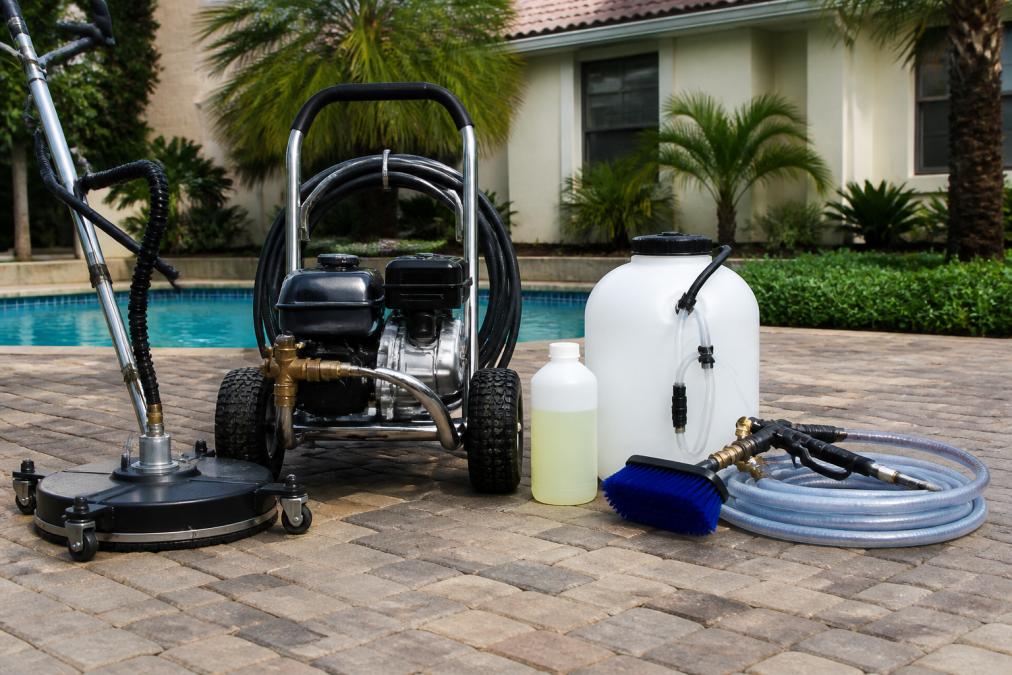
Soft washing applies cleaning solutions at low pressure, then lets chemistry do the work. A pump sprays a diluted sodium hypochlorite mix onto the surface, where it kills algae, mold, and mildew at the source; after a short dwell time, a gentle rinse washes everything away. Surfactants help the mix cling to vertical surfaces like siding and shingles.
Dwell time is where soft washing earns its reputation. Rushing the rinse before the solution has 10 to 15 minutes to work leaves roots behind, and the growth returns within weeks. Patience here is the difference between a one-year fix and a lasting result.
How Pressure Washing Works
Pressure washing removes dirt, grime, and loose debris through high-pressure water alone. Machines push 1,300 to 4,000 PSI through a nozzle, and the concentrated stream scours surfaces clean without chemicals. It’s fast and effective on hard, non-porous materials like concrete driveways, brick patios, and stone walkways. The catch is surface damage: too much PSI etches concrete, gouges wood, and strips paint.
| Feature | Soft Washing | Pressure Washing |
|---|---|---|
| Water pressure | Under 500 PSI | 1,300-4,000+ PSI |
| Primary method | Chemical cleaning | Mechanical force |
| Best surfaces | Roofs, siding, wood, stucco | Concrete, brick, stone |
| Kills organic growth | Yes, at the root | No, surface only |
| Damage risk | Low on delicate surfaces | High if misused |
| Typical use | Roof and house wash | Driveways, pool decks |
When to Use Soft Washing (And When Pressure Washing Wins)
Soft washing wins on any surface that can’t survive high pressure, which covers most of a home’s exterior. Pressure washing takes over on hard, non-porous materials where force does no harm.
Surfaces That Need Soft Washing
Roof shingles top the list. Asphalt shingles lose their protective granules under high pressure, and once those granules are gone, the roof ages fast. Soft washing removes black streaks and moss without touching the shingle surface.
Other surfaces that need the gentle approach:
- Wood decks and fences, which splinter and gouge under pressure
- Painted siding, where high PSI strips paint and forces water behind the panels
- Stucco, which cracks and crumbles when hit directly
- Vinyl siding, which can warp or loosen at the seams
- Screens, gutters, and window frames
Surfaces That Need Pressure Washing
Concrete driveways, pool decks, and brick patios are built for pressure. These non-porous surfaces shrug off high PSI and come clean fast.
- Driveways with oil stains, tire marks, and embedded dirt
- Pool decks with slippery algae film
- Concrete walkways and steps
- Brick and stone patios
- Garage floors
How to Remove Black Streaks from Roof Shingles
Black streaks on roof shingles are colonies of algae, not dirt. The gloeocapsa magma bacterium feeds on the limestone filler in asphalt shingles and spreads in humid climates. Pressure washing makes it worse by blasting away protective granules and exposing fresh surface for the algae to feed on. Soft washing is the correct method:
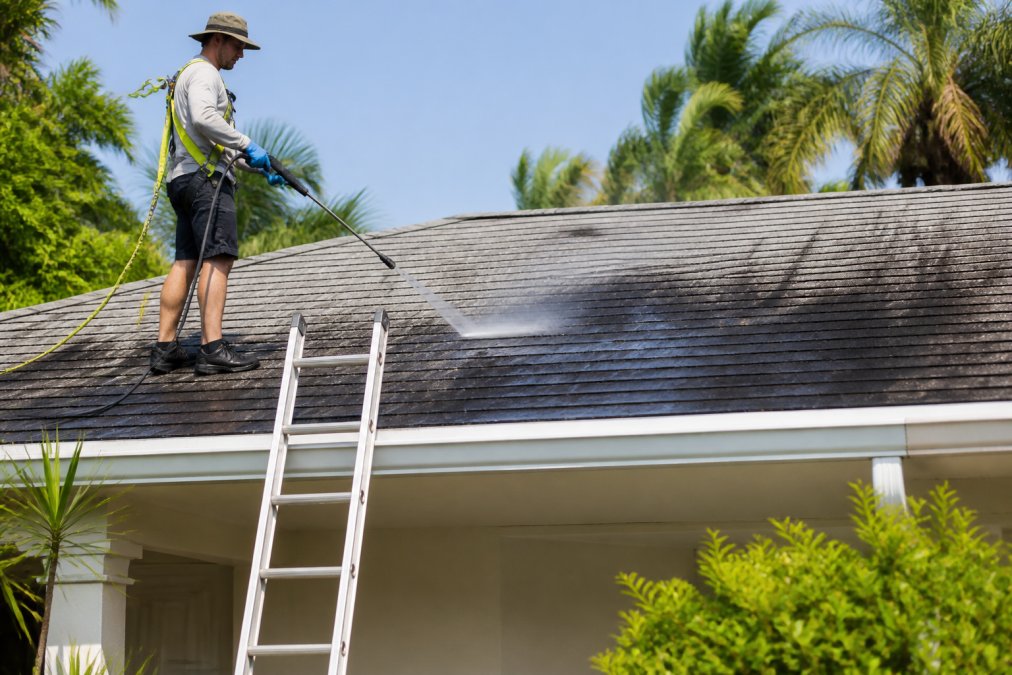
- Apply a diluted sodium hypochlorite solution at low pressure across the affected shingles
- Let the solution dwell for 10 to 15 minutes to kill the algae at the root
- Rinse gently from the bottom up to avoid streaking
- Repeat on heavily affected sections if needed
Never let a contractor pressure wash your shingles, even at a “reduced” PSI. The damage isn’t always visible immediately, but lost granules shorten roof life and can void manufacturer warranties. If a quote includes high-pressure roof cleaning, walk away.
Professional Paver Sealing Services: Protecting Your Investment
Paver sealing is the step most homeowners skip, and it’s the reason the same driveway looks dull again 12 months after a cleaning. Sealers fill the microscopic pores in concrete and clay pavers so water, algae spores, and weed seeds can’t take hold. Pavers are porous by design, set with sand joints that wick moisture upward, capillary action that feeds algae, moss, and weeds from below.
Penetrating vs. Film-Forming Sealers
There are two families of paver sealer, and choosing wrong is the most common reason a sealing job fails:
- Penetrating sealers soak into the paver and chemically bond with the substrate. They leave a natural, matte finish, don’t peel, and typically last 3 to 5 years. Best for clay brick and textured pavers where a wet-look finish would look artificial.
- Film-forming sealers sit on top of the paver and create a visible protective layer. They deepen color and add a slight sheen, but they can peel, yellow, or haze if applied over a damp or dirty surface. Best for smooth concrete pavers in shaded areas where appearance matters more than breathability.
The Correct Sequence
Sealing only works when it follows a proper cleaning:
- Clean the pavers with the method the material calls for, soft washing for clay brick and older pavers, pressure washing with a wide nozzle for dense concrete pavers
- Kill any remaining organic growth with a diluted sodium hypochlorite solution and let it dwell
- Rinse thoroughly and let the surface dry completely, 24 to 48 hours in most conditions, longer in shade or high humidity
- Re-sand the joints if the cleaning washed any out, since sealer needs a stable joint to lock into
- Apply the sealer in thin, even coats with a sprayer or roller, back-rolling to avoid puddles
- Allow full cure, typically 24 to 72 hours, before foot or vehicle traffic
Sealing over a damp or dirty surface traps moisture and produces hazy, peeling results, so a professional paver sealing service should always bundle cleaning and sealing as one job.
How Sealing Changes the Maintenance Cycle
This is where sealing pays for itself. An unsealed paver driveway in a humid climate typically needs cleaning every 12 months, sometimes twice a year under heavy tree cover. A properly sealed driveway stretches that to 24 to 36 months between deep cleanings, with only light rinsing in between. Sealing also protects against the two failure modes that ruin pavers fastest: efflorescence (the white mineral bloom that pushes up through unsealed joints) and joint erosion from repeated high-pressure passes.
If a paver surface is more than 10 years old and has never been sealed, expect the first sealing to require extra prep, joint re-sanding, efflorescence removal, and possibly a second coat. Older pavers absorb sealer unevenly, and a single thin coat will look patchy.
When Not to Seal
Sealing isn’t always the right call. Skip it if the pavers are still curing (new installations need 30 to 90 days to release moisture), if the surface has active efflorescence that hasn’t been treated, or if the pavers are already coated with a failing sealer that needs stripping first. Sealing over any of these traps the problem underneath and makes the eventual fix harder.
Exterior Home Cleaning Frequency: How Often Is Enough?
Frequency depends less on the calendar and more on which method was used last time. Does soft washing actually keep surfaces clean longer than pressure washing? In practice, yes, and the reason comes down to what each method leaves behind.
A Realistic Schedule by Surface
Here’s a practical baseline for a humid climate with moderate tree cover:
- Roofs (asphalt shingle): every 24 to 36 months with soft washing, or when black streaks reappear. Pressure washing should never be used here regardless of frequency.
- House wash (siding, gutters, soffits, windows): every 12 to 18 months with soft washing. Vinyl and painted siding in shade may need annual attention.
- Driveways and pool decks: every 12 to 18 months. Concrete and pavers tolerate pressure washing, but soft washing extends the interval and avoids joint erosion on pavers.
- Decks and fences (wood): every 12 months with soft washing, plus resealing or restaining as the finish wears.
- Paver surfaces (sealed): every 24 to 36 months, with light rinsing in between. Unsealed pavers revert to a 12-month cycle.
The Three Factors That Move the Schedule
Climate, vegetation, and surface orientation drive most of the variation:
- Humidity and rainfall. Algae and mold thrive above roughly 60% relative humidity. In consistently humid regions, growth can return in half the time it would in a dry climate.
- Tree cover. Shade slows drying and drops organic debris that feeds mold. A roof under oak or pine canopy often needs cleaning on the short end of every range above.
- Sun exposure. South- and west-facing surfaces dry faster and stay cleaner longer. North-facing surfaces in shade are the first to show regrowth.
Why Annual Maintenance Beats Reactive Cleaning
The cheapest exterior maintenance plan is a consistent one built around soft washing on a 12- to 24-month cycle. Surfaces cleaned before growth establishes last longer, look better between visits, and cost less over the life of the home than surfaces cleaned only when the damage is already visible.
For homeowners who leave for extended periods, an annual maintenance plan solves a specific problem: a property sitting empty through humid months grows algae faster with no one watching, and the first sign is often a roof that’s gone from light streaking to full black coverage in a single season.
Safety, Chemicals, and Environmental Considerations
Soft washing relies on sodium hypochlorite, the same active ingredient in household bleach, so handling rules matter: concentrated solutions burn skin and eyes, and runoff carries chemicals into storm drains and landscaping. Proper practice covers four areas:
- Personal protection: chemical-resistant gloves, eye protection, and respiratory coverage when mixing
- Plant protection: pre-wetting and rinsing nearby landscaping before and after application
- Runoff control: directing wastewater away from storm drains and waterways
- Ratio discipline: mixing to the correct strength for the surface, not the strongest possible batch
CDC information on chemical safety and bleach handling
Conclusion: Which Method Is Right for You?
Most homes need both methods, applied to the right surfaces. Soft washing handles the roof, siding, and anything painted or porous. Pressure washing takes the driveway, pool deck, and concrete walkways. Getting that match wrong is where damage and repeat cleanings come from.
Frequently Asked Questions
How often should a house be soft washed?
Most homes need soft washing every 12 to 24 months, depending on local climate and tree coverage. In humid regions where algae and mold grow quickly, annual soft washing for roofs and siding is common. Driveways and pool decks often need cleaning every 6 to 12 months. If you notice black streaks, green algae, or mildew spots, schedule a soft wash before growth spreads and causes permanent staining.
How many PSI is considered soft wash?
Soft washing uses water pressure below 500 PSI, often as low as 100 to 200 PSI. The cleaning power comes from specialized cleaning solutions that kill mold, algae, and lichen, not from force. Standard pressure washing uses 1,500 to 4,000 PSI, which can damage shingles, wood, and painted surfaces. For delicate surfaces like roofs and stucco, low PSI combined with the right chemicals is safer and more effective.
Can I use my pressure washer as a soft wash system?
You can convert many pressure washers for soft washing by adding a downstream injector and a soft wash nozzle. This setup pulls cleaning solution into the water stream at low pressure. However, most residential pressure washers are not designed for the corrosive chemicals used in soft washing, which can damage pumps over time. For roofs and delicate surfaces, hiring a professional with dedicated soft wash equipment is safer and delivers better results.
Is soft washing safe for asphalt roof shingles?
Yes, soft washing is the recommended method for asphalt shingles. The low pressure and specialized cleaning solutions remove black streaks, algae, and moss without stripping granules or voiding roof warranties. Pressure washing shingles can force water under them, cause granule loss, and lead to leaks. Always verify that your cleaning provider uses soft washing for roofs, not high-pressure methods.
Does soft washing remove mold and algae more effectively than pressure washing?
Soft washing kills mold, algae, and lichen at the root using cleaning solutions, so growth does not return as quickly. Pressure washing blasts away surface growth but often leaves roots behind, allowing rapid regrowth. For organic growth on roofs, siding, and fences, soft washing delivers longer-lasting results. Pressure washing is better for hard, non-porous surfaces like concrete driveways where no organic growth is present.