Table of Contents
- Wet Look vs Matte Paver Sealer: Key Differences
- Does Paver Sealer Make Pavers Slippery?
- Film-Forming vs Penetrating Paver Sealer
- Water-Based vs Solvent-Based Paver Sealer
- Paver Sealer Drying Time and Application
- Choosing the Right Finish for Your Driveway or Pool Deck
- Protecting Your Investment with Professional Paver Sealing
- Frequently Asked Questions
Last Updated: October 12, 2026
Wet Look vs Matte Paver Sealer: Key Differences
Choosing between a wet look and matte paver sealer is one of the most important decisions you’ll make when protecting your driveway or pool deck. Freedom Wash Club offers professional paver sealing services for South Florida homeowners.
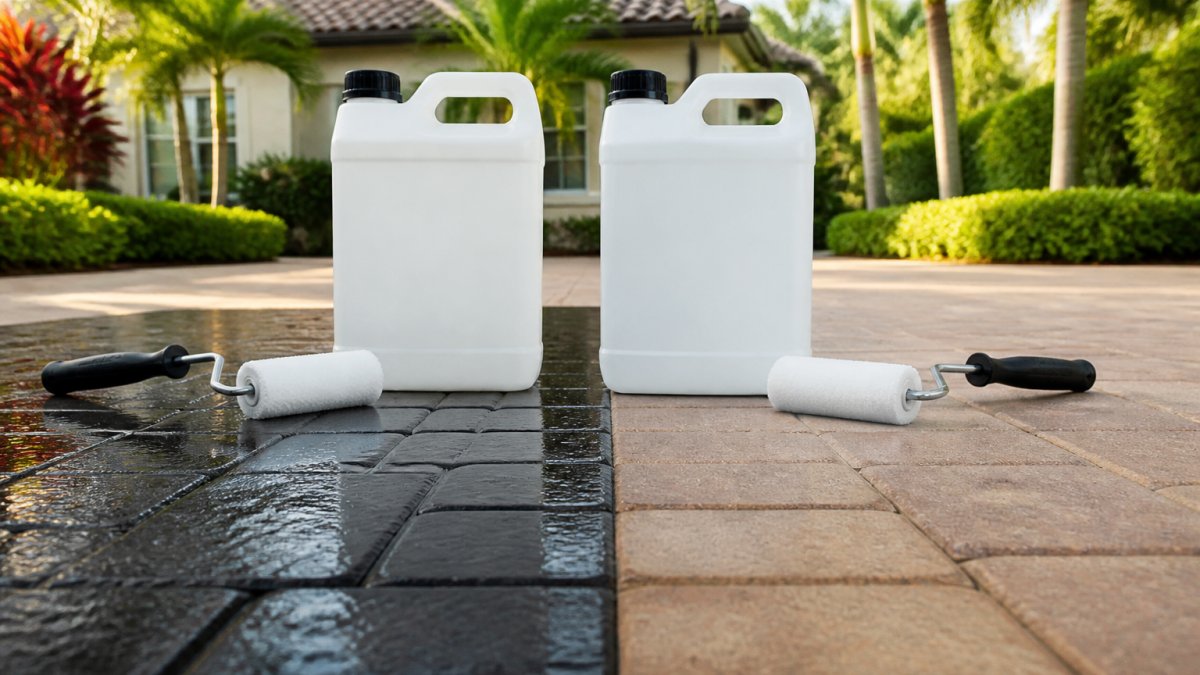
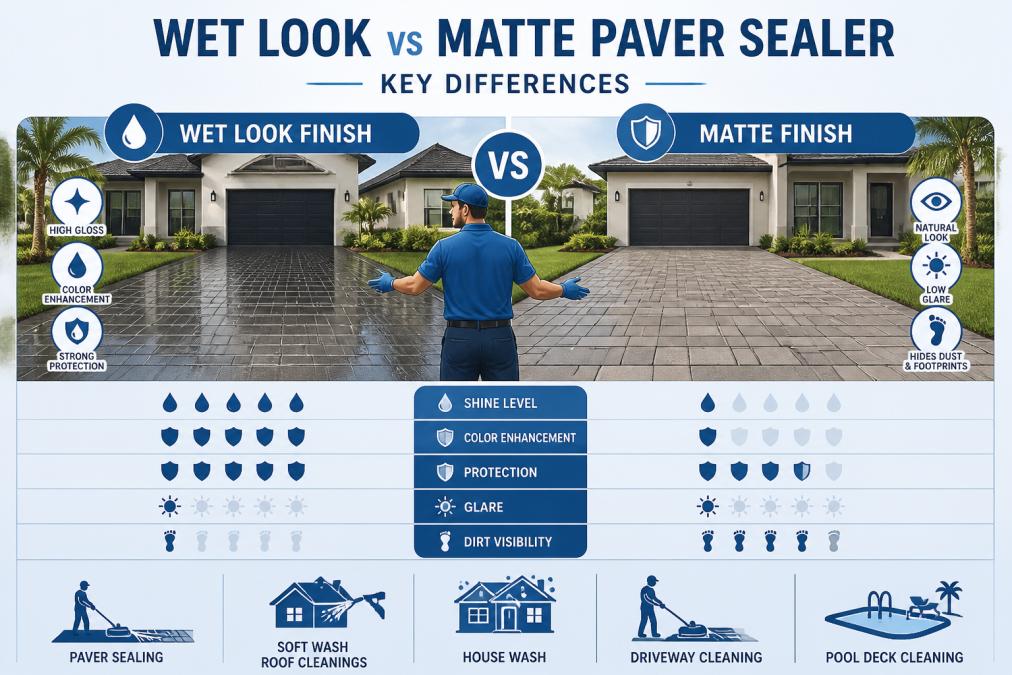
Wet-look sealer creates a glossy, reflective surface that makes colors pop and gives pavers a freshly wet appearance. Matte sealer leaves a natural, understated finish that looks like the pavers were just cleaned. Both protect against water, stains, and UV damage, but they do it differently, and each has real trade-offs.
The key difference is how each sealer works. Wet-look finishes are typically film-forming sealers that sit on top of the paver surface. Matte finishes are often penetrating sealers that soak into the paver material itself. That difference changes appearance, durability, maintenance needs, and safety underfoot.
Does Paver Sealer Make Pavers Slippery?
Yes, any paver sealer can raise slip risk, but the finish is only one variable. Traction comes down to three things working together: the sealer’s surface profile, the paver’s own texture, and what’s on the surface when it’s wet.
Why gloss reads as slippery. A wet-look, film-forming sealer builds a smooth coating on top of the paver, filling in the microscopic peaks and valleys your shoe tread grips.
Why matte usually feels safer. A penetrating, matte sealer soaks into the paver and leaves the original surface profile largely intact, so the texture your shoe grips is still there and water beads and runs off.
Texture and format matter as much as finish. A tumbled or textured paver holds traction better under any sealer than a smooth, sawn-face paver. Wider joints with properly compacted polymeric sand give water somewhere to drain and add grip.
When anti-slip additives make sense. Some manufacturers offer grit or aggregate additives you mix into the sealer before application.
Slip risk is highest in the first days after sealing, while the film is still curing, and again whenever the surface is wet. Keep foot traffic off until the sealer is fully cured, and treat any sealed slope or pool deck as slick when it’s raining or just after splash-out.
Practical safety checklist by area:
- Pool decks: Favor matte or penetrating finishes, or a wet-look product with an anti-slip additive. This is the highest-risk surface because it stays wet.
- Sloped driveways: Weigh traction heavily. A glossy film on a slope is the worst combination for a wet climate.
- Steps and thresholds: Treat these like pool decks regardless of the surrounding finish. Grip matters more than shine here.
- Flat, sun-exposed patios: A wet-look finish is more forgiving because the surface dries faster and stays dry more often.
- Shaded or low-drainage areas: These stay damp longer, so matte or textured surfaces reduce risk.
If slip resistance is a priority, the finish choice is only half the decision. Surface texture, joint condition, drainage, and grit all change how the finished surface performs underfoot.
Film-Forming vs Penetrating Paver Sealer
Understanding film-forming versus penetrating sealers explains why wet-look and matte finishes behave so differently.
Film-forming sealers sit on top of the paver surface and create a protective barrier, giving you that wet-look shine. The coating builds up visibly, feels smooth, and typically lasts 1-3 years before reapplication. They’re easier to see wearing away, so you know when to reseal.
Pros of film-forming sealers:
- High gloss appearance that enhances color
- Easy to inspect for wear
- Strong initial protection
- Visible when failing (clear resealing signal)
Cons of film-forming sealers:
- Creates slippery surface when wet
- Can peel or flake if not applied correctly
- Requires more frequent resealing
- May trap moisture if applied over damp pavers
Penetrating sealers soak into the paver material itself, leaving no visible coating on top. The paver still looks natural, just protected, because the sealer blocks water and stains from entering the pores.
Pros of penetrating sealers:
- Natural appearance maintained
- Non-slip surface
- Longer lasting (typically 3-5 years)
- Won’t peel or flake
- Better for older pavers with existing sealers
Cons of penetrating sealers:
- Less color enhancement
- Harder to see when protection is wearing
- Requires careful surface prep
- May need multiple coats for full protection
For driveways and pool decks, the choice comes down to appearance versus safety. Wet-look appeal pulls toward film-forming; durability and slip resistance favor penetrating.
Water-Based vs Solvent-Based Paver Sealer
The chemical composition of your sealer affects how it applies, smells, and lasts.
Water-based sealers use water as the carrier liquid. They’re easier to apply, have minimal odor, clean up with water, and work for both wet-look and matte finishes.
Advantages of water-based sealers:
- Low odor (better for occupied homes)
- Easy cleanup
- Fast drying (typically 2-4 hours)
- Environmentally friendlier
- Safe around kids and pets
Disadvantages of water-based sealers:
- Slightly shorter lifespan than solvent-based
- Can be affected by humidity during application
- May require more frequent resealing
- Less color enhancement in some products
Solvent-based sealers use chemical solvents as the carrier. They penetrate deeper, last longer, and enhance color more dramatically, especially in wet-look formulas.
Advantages of solvent-based sealers:
- Longer lasting protection (often 3-5 years)
- Better color enhancement
- Works in humid conditions
- Deeper penetration for older pavers
Disadvantages of solvent-based sealers:
- Strong chemical odor during application
- Longer drying time (6-24 hours)
- Requires ventilation and safety precautions
- Harder cleanup
- Environmental considerations
For most South Florida homeowners, water-based sealers make sense. The humidity works against solvent-based products, and low odor matters when you’re home during application. If maximum durability is your goal and you can manage the smell, solvent-based options last longer between reseals.
Paver Sealer Drying Time and Application
Drying time affects when you can use your driveway or pool deck again.
Water-based sealers dry fastest. Most water-based products are ready for light foot traffic in 2-4 hours. Full curing (where the sealer reaches maximum hardness) takes 24-48 hours. You can typically drive on the driveway by the next morning.
Solvent-based sealers dry slower. Expect 6-24 hours before the surface is dry to the touch. Full curing can take 3-7 days. If you need your driveway back quickly, solvent-based isn’t ideal.
Application conditions matter as much as sealer type. Both need:
- Dry pavers (at least 24-48 hours since last rain)
- Temperatures between 50-85°F
- Low humidity for best results
- No rain forecast for 24-48 hours after application
In South Florida’s climate, timing is critical. Summer afternoon thunderstorms can ruin a fresh seal job, so early morning application gives you the best window before heat and humidity peak. Experienced crews know the weather patterns and apply at optimal times.
Choosing the Right Finish for Your Driveway or Pool Deck
A direct side-by-side makes the trade-offs between wet-look and matte sealers clearer.
Wet Look vs. Matte: Direct Pros and Cons
| Factor | Wet-Look (Film-Forming) | Matte (Penetrating) |
|---|---|---|
| Appearance | Glossy, reflective, colors deepen | Natural, close to clean bare paver |
| Color enhancement | High contrast, darker tone | Subtle, minimal shift |
| Slip resistance | Lower when wet; smooth film | Higher; texture preserved |
| Typical reseal interval | Shorter, often every 1-2 years | Longer, often 3-5 years |
| Failure mode | Peels, flakes, whitens, uneven sheen | Fades quietly; hard to see wear |
| Moisture behavior | Film can trap vapor if applied damp | Breathes; vapor escapes |
| Maintenance visibility | Easy to see when it’s wearing | Hard to tell when protection fades |
| Best for | Feature driveways, sun-exposed patios | Pool decks, slopes, rainy or humid climates |
Lifecycle Cost, Not Just Upfront Appearance
The finish you pick changes how often you repeat the whole process: cleaning, drying, applying, and curing. A wet-look film needs resealing sooner, meaning more frequent prep and more chances for a weather delay. A matte penetrating sealer stretches the interval between reseals, so long-run effort and disruption are lower, and it rarely requires stripping a failing film.
Match the Finish to the Paver Material
Not every paver accepts every sealer the same way.
- Concrete pavers: The most forgiving. Both film-forming and penetrating sealers work, and color enhancement is predictable.
- Clay pavers: Dense and less porous, so penetrating sealers absorb slowly and may need extra coats. Film-forming sealers bond well but can highlight surface irregularities.
- Natural stone (travertine, bluestone, flagstone): Often best left matte or with a penetrating sealer. A glossy film can look artificial and can trap moisture in porous stone, raising efflorescence and freeze-thaw risk.
- Previously sealed pavers: You generally can’t put a penetrating sealer over an existing film, and you can’t reliably put a new film over a failing one. Test a small area first, and strip if the old coating is peeling or whitening.
Climate, Drainage, and Efflorescence
Finish choice interacts with how your site handles water. Where pavers stay damp, a film-forming sealer can slow vapor escape and contribute to efflorescence, peeling, and a cloudy haze. Good drainage, proper slope, and healthy joint sand reduce the problem regardless of finish. In humid, rainy, or freeze-thaw climates, a breathable penetrating sealer is the lower-risk choice; in dry, sun-exposed settings, a wet-look film is more forgiving because the surface dries quickly.
A Simple Decision Path
- Is the surface a pool deck, slope, or step? Lean matte, or wet-look with an anti-slip additive.
- Do you want maximum color pop and the surface dries fast? Wet-look is reasonable.
- Is the paver natural stone or previously sealed? Favor penetrating, and test first.
- Does the area stay damp or drain poorly? Favor matte and address drainage.
- Do you want the longest interval between reseals? Matte penetrating sealers usually win.
There’s no universally better finish. Wet-look buys appearance at the cost of traction, reseal frequency, and moisture risk. Matte buys durability, safety, and lower long-term effort at the cost of color drama. Match the finish to the surface, the material, and the climate, and the decision usually makes itself.
Whichever finish you choose, the result depends on preparation and timing as much as the product. Cleaning the pavers thoroughly, letting them dry completely, and sealing under the right conditions prevent the peeling, whitening, and uneven sheen that make either finish look like a mistake. Professional paver sealing, combined with routine driveway cleaning and pool deck cleaning, keeps the surface ready for its next reseal.
Protecting Your Investment with Professional Paver Sealing
Your pavers are a significant investment in your property’s curb appeal, so application matters as much as product choice.
Professional paver sealing ensures proper surface preparation. Pavers must be thoroughly cleaned and completely dry. Dirt, algae, or moisture trapped under sealer causes failure. Freedom Wash Club handles the complete process: we soft wash your pavers to remove buildup, ensure proper drying, and apply sealer.
Improper application causes peeling, uneven coverage, and premature failure. Professional crews have the equipment and experience to get it right the first time.
Beyond initial sealing, regular cleaning prevents algae and mold from building up on sealed pavers. Soft wash roof cleanings, house wash, exterior home cleaning, driveway cleaning, and pool deck cleaning all keep your property looking fresh while protecting your sealer investment.
When it’s time to reseal, professional resealing ensures consistent protection. Waiting too long leaves your pavers vulnerable to staining and water damage.
Choosing between wet look and matte paver sealer means balancing appearance, safety, and maintenance. Both protect your pavers, but they serve different needs.
Frequently Asked Questions
Does wet-look paver sealer make pavers slippery?
Wet-look sealers can increase slip risk, especially when wet or in shaded areas where moisture lingers. The glossy film-forming finish reduces surface texture. Anti-slip additives are available but add cost. Matte finishes preserve more of the paver’s natural grip. For driveways and pool decks where safety matters, discuss slip resistance with your sealer supplier before application.
How long does paver sealer drying time take?
Water-based sealers typically dry in 4-8 hours; solvent-based sealers need 24-48 hours. Full cure takes longer, usually 3-7 days before heavy use. Drying time depends on temperature, humidity, and surface porosity. In humid climates, drying takes longer. Plan your driveway or pool deck project accordingly and avoid foot traffic during the cure window.
What’s the difference between film-forming and penetrating paver sealers?
Film-forming sealers sit on the surface, creating a visible protective layer that enhances color and gloss, this is what produces wet-look finishes. Penetrating sealers soak into the paver, offering protection without changing appearance much, ideal for matte finishes. Film-forming provides stronger stain protection but may affect slip resistance. Penetrating sealers breathe better and won’t peel but offer less dramatic color enhancement.
Should I choose water-based or solvent-based paver sealer?
Water-based sealers dry faster, have lower odor, and are easier to clean up, good for residential properties. Solvent-based sealers offer stronger durability and deeper color enhancement but require longer drying time and have stronger fumes. Solvent-based works better in humid climates where water-based may struggle. Your choice depends on climate, drying time tolerance, and desired finish intensity.