Last Updated: November 3, 2026
Quick Summary
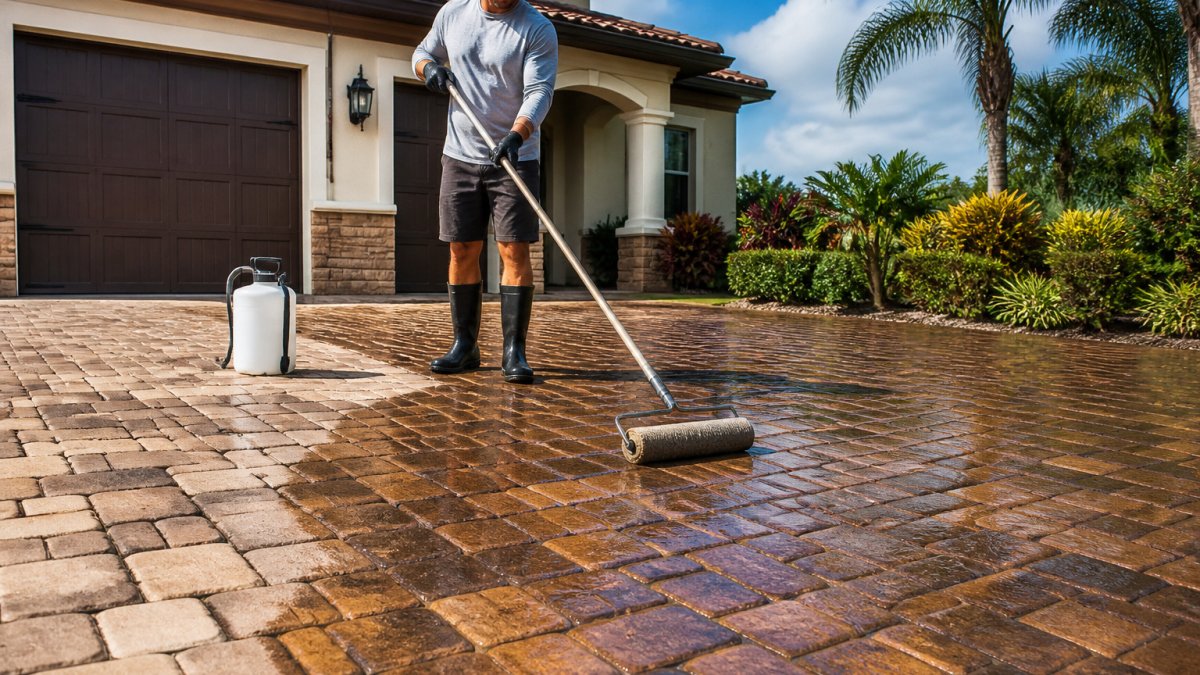
Paver sealing protects Florida pavers from intense UV sun, heavy rain and humidity that cause fading, mildew and loose joint sand. A quality sealer shields the surface so color holds, water runs off and weeds stay out. Most sealed pavers need resealing every 2 to 3 years.
- Well-maintained sealed pavers can last 25 years or more, while neglected unsealed pavers may need replacement in under 10 years.
- A sealer acts like sunscreen, helping pigments hold their tone through hot Florida summers.
- Sealing closes pores so water beads and runs off instead of feeding mildew and algae.
- Sealing locks in joint sand, which keeps weeds and ants out of the joints for longer.
- Most sealed pavers need resealing every 2 to 3 years, with coastal properties often needing it sooner.
Table of Contents
- Why Florida Homes Put Extra Strain on Pavers
- UV Protection and Color Retention for Florida Sun
- Moisture, Mildew and Algae Resistance in a Humid Climate
- Weed, Ant and Joint Sand Stabilization
- Paver Sealer Pros and Cons: What Florida Owners Should Weigh
- How Long Does Paver Sealing Last and How Often to Reseal
- Booking Your Paver Cleaning, Sealing and Pool Deck Service
- Frequently Asked Questions
Why Florida Homes Put Extra Strain on Pavers
Paver sealing for Florida homes matters more than most homeowners realize. The state’s combination of heavy rain, intense sun and constant humidity wears down bare pavers faster than many people expect. Freedom Wash Club has worked on South Florida properties for over a decade.
Well-maintained sealed pavers can last 25 years or more. Neglected, unsealed pavers may need replacement in under 10 years, according to Sebastian Home Pool’s comparison of maintained and neglected paver surfaces. That gap is the real case for sealing: it protects an investment that is expensive to replace.
Florida adds several stresses at once. Daily rain soaks into joints, sun fades pigments, and warm humidity feeds mildew and algae. Each one works on the paver surface, and a sealer acts as the barrier against all three.
UV Protection and Color Retention for Florida Sun
Strong UV exposure is one of the fastest ways pavers lose their color. Over time, faded pavers look dull and tired, even when they are structurally sound. A quality sealer works like sunscreen for the surface, helping pigments hold their tone.
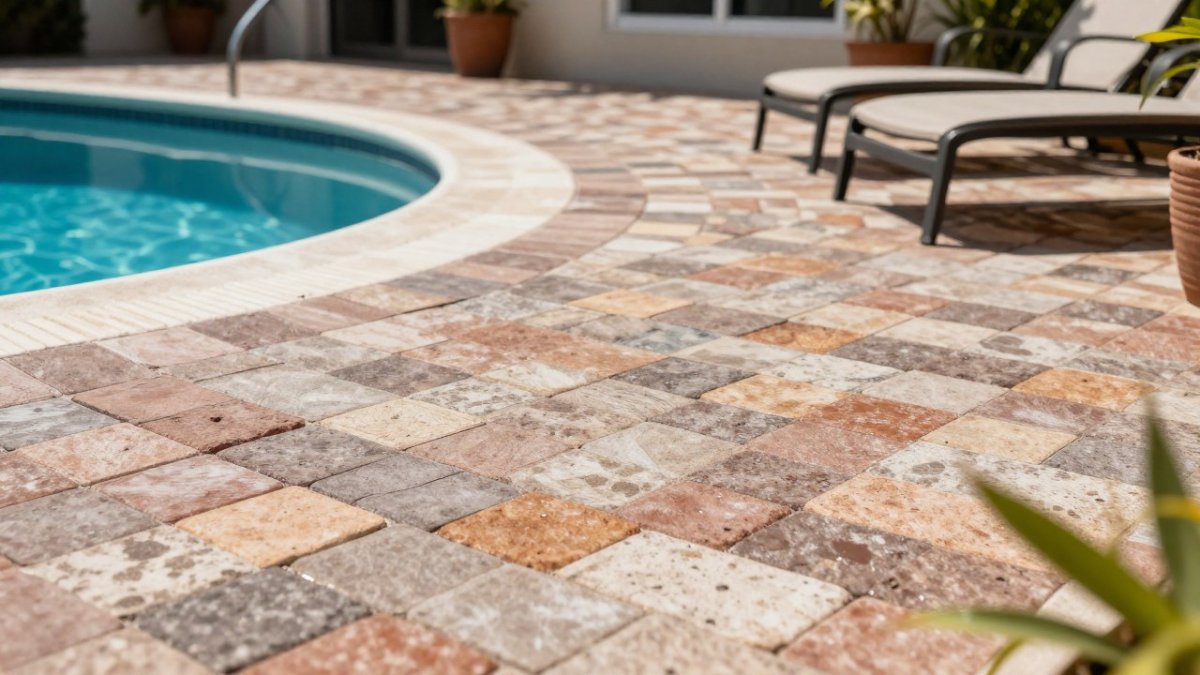
BIC Cleaning & Construction’s 2026 guidance on regional sun exposure notes that homeowners increasingly choose sealers for this exact reason. Sealing is no longer just about shine. It is about keeping the original color intact through hot Florida summers.
Color retention depends on the product and the application. Our guide on preventing paver color fading explains how to seal and protect pavers against sun damage.
Moisture, Mildew and Algae Resistance in a Humid Climate
South Florida’s humidity creates ideal conditions for mildew and algae. Porous pavers absorb moisture and hold it, and that moisture feeds dark staining and slippery growth. A sealer closes off those pores so water beads and runs off rather than soaking in.
Paver sealing also helps the surface shed the organic buildup that collects in shaded patios and pool decks. Surfaces that stay cleaner are safer underfoot and easier to maintain.
Not every sealer performs the same way in humid conditions. Our comparison of sealers that suit South Florida humidity shows which options hold up best.
Weed, Ant and Joint Sand Stabilization
Joints are where many paver problems begin. Loose joint sand washes out during heavy rain, which lets weeds take root and invites ants to nest. A sealer that stabilizes joint sand locks it in place, so the surface stays tight and weed-free for longer.
This is one of the most practical benefits of sealing. Fewer weeds means less hand-pulling and less pest activity around the patio and pool area. The joints stay firm, and the pavers stay level.
Paver Sealer Pros and Cons: What Florida Owners Should Weigh
Sealing is not automatically the right call for every paver surface. The honest answer depends on the sealer type, the finish, and who applies it. Here is what actually separates a good outcome from a failed one.
The pros, in concrete terms:
- UV protection slows pigment fade, so the original color holds through summer sun instead of washing out to a chalky tone.
- A properly sealed surface sheds water rather than absorbing it, which limits the moisture that feeds mildew and algae in shaded patios and pool decks.
- Joint sand stays locked in place, so weeds have less room to root and ants have fewer gaps to nest in.
- Cleaning gets faster because dirt and organic debris sit on the surface instead of working into the pores.
- Curb appeal improves, which matters when the driveway, walkway, and pool deck are the first things a visitor or buyer sees.
The cons, and why they happen:
- Slipperiness is real on wet surfaces, and it depends heavily on the finish. High-gloss sealers can be slicker underfoot than matte or satin finishes, especially around a pool deck.
- Over-application produces a film or plastic-like sheen that looks worse than bare pavers and is expensive to strip.
- Sealing is not permanent. It needs periodic reapplication, and skipping that interval is the most common reason a sealed surface starts to fail.
- Poor prep traps moisture under the sealer, which leads to hazing, cloudiness, and flaking. This is the single biggest cause of sealer failure, and it is almost always a prep problem rather than a product problem.
Matte, satin, or high-gloss: pick the finish for the space.
Most confusion around sealing comes down to finish choice. A matte sealer leaves the surface looking natural and is the safest pick for pool decks and walkways where slip resistance matters. A satin finish adds a subtle sheen and a slightly richer color without a mirror effect. A high-gloss finish delivers the wet-look shine some homeowners want on decorative front walkways, but it shows scratches and water spots more readily and can be the slickest option when wet. Matching the finish to how the space is used matters more than chasing the shiniest result.
DIY versus professional: where the risk sits.
The appeal of DIY sealing is obvious, but the failure modes are predictable. Homeowners commonly apply too much product, seal over a damp surface, or skip the cleaning step that removes embedded dirt and organic growth. Each of those mistakes leads to trapped moisture, hazing, or uneven color, and fixing them usually means stripping the sealer and starting over, which costs more than hiring a crew the first time. A professional application starts with a proper cleaning, lets the surface dry fully, and applies the product in even coats. That sequence is what makes the sealer last.
Watch out: sealing a surface that is still damp from rain or cleaning traps moisture under the film, and no amount of product on top will fix it once it happens.
A pool deck that gets heavy foot traffic needs a different product than a decorative front walkway. For a closer look at slip concerns, read our guide on whether paver sealer makes surfaces slippery.
How Long Does Paver Sealing Last and How Often to Reseal
Most sealed pavers need resealing every 2 to 3 years, according to BIC Cleaning & Construction’s maintenance guidance for local climates. The exact interval depends on sun exposure, foot traffic, and the product used, but the climate your property sits in changes the schedule more than most homeowners expect.
Coastal versus inland: two different maintenance rhythms.
Properties near the coast deal with salt air on top of sun and rain. Salt residue collects on the surface, and the combination of salt, humidity, and blowing sand breaks down a sealer faster than inland conditions do. Coastal patios and pool decks tend to need closer inspection and often reseal on the shorter end of the range. Inland properties face intense sun and heavy seasonal rain but less salt load, so the sealer usually holds closer to the standard interval. The practical takeaway is that a coastal home should not assume the same resealing schedule as an inland one, even if the pavers look similar.
Signs it is time to reseal:
- Water no longer beads on the surface and starts soaking in instead.
- Color looks dull or chalky compared with how it looked after the last seal.
- New weed growth appears in the joints, which signals the joint sand is loosening.
- The surface feels rougher or shows patchy sheen where the sealer has worn through.
- Mildew or algae returns faster than it did right after sealing.
Why the prep step decides how long the seal lasts.
A sealer bonds to a clean, dry surface. If dirt, mildew, or old sealer remains, the new coat adheres to that layer instead of the paver, and it fails early. That is why professional cleaning before sealing is not a formality. Skipping or rushing that step is the most common reason a reseal does not last its full interval.
What a realistic maintenance routine looks like.
Between reseals, routine cleaning keeps the surface from loading up with dirt and organic debris, which extends the life of the sealer. Driveway cleaning and pool deck cleaning on a regular schedule remove the buildup that would otherwise work into the surface. Pairing paver care with house wash and exterior home cleaning keeps the whole exterior consistent, and soft wash roof cleanings protect the roof without the pressure that damages shingles. Homeowners who treat these as one maintenance routine rather than separate one-off jobs tend to get more life out of every surface.
Sealing is not a one-time job. Consistent reapplication keeps the protection working. If you want a deeper answer on timing for brick pavers, see our guide on how often to reseal brick pavers.
Resealing timing depends on where your property sits and what it faces, so the schedule is easier to scan side by side.
| Factor | Typical reseal timing | Why it matters |
|---|---|---|
| Standard sealed pavers | Every 2 to 3 years | Interval set by sun, foot traffic and product |
| Coastal properties | Shorter end of the range | Salt air, humidity and blowing sand break down sealer faster |
| Inland properties | Closer to the standard interval | Intense sun and seasonal rain, but less salt load |
| Water beads no longer | Reseal now | Sealer has worn and water soaks in |
| Chalky or dull color | Reseal now | Protection has faded from the surface |
| Weeds appear in joints | Reseal now | Joint sand is loosening |
| Mildew returns quickly | Reseal now | Surface is no longer shedding moisture |
Booking Your Paver Cleaning, Sealing and Pool Deck Service
Paver sealing works best as part of a full maintenance routine. Freedom Wash Club handles paver sealing, soft wash roof cleanings, house wash and exterior home cleaning, driveway cleaning, and pool deck cleaning across South Florida. Our crews are licensed and insured, and we offer easy scheduling by phone or text, with no need for an in-person estimate.
Pricing depends on the size of the area, its condition, and the scope of work, so the most accurate way to get a number is to contact us directly. Our 100% satisfaction guarantee applies to the work.
If you are weighing other exterior options alongside sealing, our overview of eco-friendly roof cleaning methods for Florida homes compares the approaches available. Ready to protect your pavers? Request your free quote today and keep your property looking its best through every Florida season.
Frequently Asked Questions
Is it good to seal pavers in Florida?
Yes, sealing is widely recommended for Florida pavers. The state’s intense sun can fade pigments, while heavy rain and humidity encourage mildew, algae and weed growth in the joints. A quality penetrating or film-forming sealer adds a protective layer against these conditions. Results depend on proper cleaning before application and on resealing at regular intervals, so most homeowners treat sealing as ongoing maintenance rather than a one-time job.
How often should pavers be sealed?
Most sealing guidance points to resealing every two to three years, depending on exposure, traffic and the sealer used. Pavers under heavy sun, frequent pool use or regular foot traffic may need attention sooner. Signs that resealing is due include dulling color, water no longer beading on the surface, and renewed weed or mildew growth. A professional assessment can confirm the right timing for a specific property.
Does sealing pavers help prevent weeds and stains?
Sealing helps in both areas. Sealers and polymeric sand that lock joint sand in place make it harder for weeds to establish, and a sealed surface resists oil, organic matter and other stains that would otherwise soak into the paver. Sealing does not eliminate all weeds or stains, and it works best when the pavers are cleaned thoroughly first and the sealer is reapplied on schedule.
Should pavers be cleaned before they are sealed?
Yes. Cleaning removes dirt, mildew, algae and stains so the sealer bonds to the paver rather than trapping contaminants underneath. Skipping this step is one of the most common reasons sealing fails early. Pressure washing or a professional cleaning followed by adequate drying time is standard practice before any sealer is applied.