Table of Contents
- Does Paver Sealer Make Surfaces Slippery? The Straight Answer
- Why Some Sealers Reduce Traction (and Others Don’t)
- Choosing a Non-Slip Paver Sealer for Your Patio, Driveway, or Pool Deck
- When to Use a Nonslip Additive for Paver Sealer
- How to Fix Slippery Sealed Pavers: Step-by-Step
- Application and Curing Mistakes That Make Pavers Slick
- Material and Location: Pool Pavers, Bluestone, and Concrete Pavers
- Frequently Asked Questions
Last Updated: October 18, 2026
Does Paver Sealer Make Surfaces Slippery? The Straight Answer
Yes, paver sealer can make surfaces slippery, but it depends entirely on the type of sealer you use and how you apply it.
At Freedom Wash Club, we hear this question constantly. Homeowners want protection without a slip hazard. That is a fair ask, and it is achievable.
Here is the good news: most slippery-paver complaints trace back to a fixable mistake.
Below, we break down why some sealers get slick, how to pick a non-slip paver sealer, and how to fix a surface that already feels dangerous.
Why Some Sealers Reduce Traction (and Others Don’t)
Traction comes down to surface texture. Your shoes grip pavers because the stone has tiny peaks and valleys that channel water away. Sealers that fill those valleys smooth the surface and let water sit on top like a sheet of glass.
Film-Forming vs. Penetrating Sealers
Film-forming sealers dry into a visible coating on top of the pavers. Acrylic and polyurethane products fall in this group. They deliver a glossy finish and strong stain protection, but a heavy film is the number one cause of slippery sealed pavers.
Penetrating sealers soak into the pores of the stone and cure below the surface. Siloxane and silane products work this way. They repel water without building a layer, so the surface texture stays close to original.
| Sealer Type | How It Works | Slip Risk | Best For |
|---|---|---|---|
| Penetrating (siloxane/silane) | Soaks into pores, repels water | Low | Patios, pool decks, driveways |
| Acrylic film-forming | Builds a glossy top coat | High when wet | Low-traffic decorative areas |
| Polyurethane film | Hard, thick protective layer | High when wet | Sealed indoor-look patios |
| Non-slip sealer | Penetrating base plus grip additive | Lowest | Pools, walkways, slopes |
How Wet-Look and Solvent-Based Sealers Change Surface Feel
Wet-look sealers darken the stone and add shine, which many homeowners love. That shine comes from a film, and film is where slipperiness starts. Solvent-based sealers can also leave a tacky residue if applied in humid conditions or before the surface is fully dry.
A common mistake is judging a sealer by how it looks on day one. The slickness shows up after the first rain, not at application.
Applying a film-forming sealer in the heat of the day causes it to dry too fast. The result is a patchy, tacky film that grips your shoes in dry weather and slides in wet weather. Always seal in mild conditions and out of direct sun.
Choosing a Non-Slip Paver Sealer for Your Patio, Driveway, or Pool Deck
Start with the location, not the product label. A driveway sees car tires and foot traffic. A pool deck sees bare feet and constant water. Those two surfaces need different answers.
For a non-slip paver sealer, look for these traits:
- Penetrating formula that leaves texture intact
- Breathable so moisture escapes instead of trapping under a film
- Matte or natural finish rather than high gloss
- Grip additive compatibility if the area stays wet
- Material match for concrete pavers, bluestone, or travertine
Here is how we would choose by location:
- Pool surround: penetrating sealer with an anti-slip additive, always
- Driveway: penetrating sealer, matte finish, no film
- Covered patio: penetrating sealer or a light film if gloss is wanted
- Walkway or slope: non-slip sealer with aggregate grip
If a product promises a mirror finish, assume it will be slick when wet. That is the trade-off, and no label can undo physics.
When to Use a Nonslip Additive for Paver Sealer
A nonslip additive for paver sealer is a fine grit mixed into the sealer before application. It leaves microscopic particles on the surface that give shoes and bare feet something to grip.
Use an additive when:
- The area stays wet, like around a pool or spa
- The pavers sit on a slope
- Children or older adults use the space
- You must use a film-forming sealer for stain protection
- The stone is naturally smooth, like bluestone or polished travertine
Skip the additive on rough, textured pavers where grip is already good. Extra grit can dull the finish and trap dirt over time.
Stir the additive constantly while you apply. The grit settles to the bottom of the bucket fast, and the last few passes will get all the grip while the first passes get none.
How to Fix Slippery Sealed Pavers: Step-by-Step
You can often fix a slick surface without stripping everything off. Work through these steps from least to most aggressive.
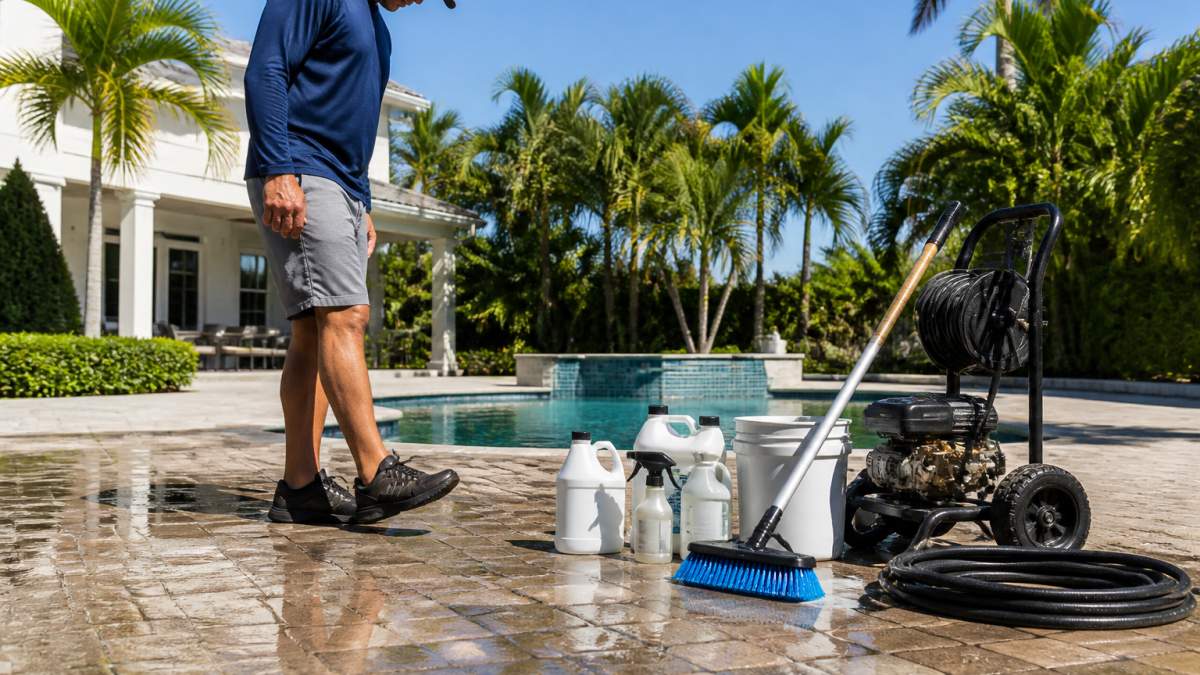
- Clean the surface first. Dirt, algae, and mold film add slip on their own. A proper wash removes the grime layer.
- Test the traction. Wet a small area and walk on it in the shoes you normally wear. Compare it to an unsealed paver.
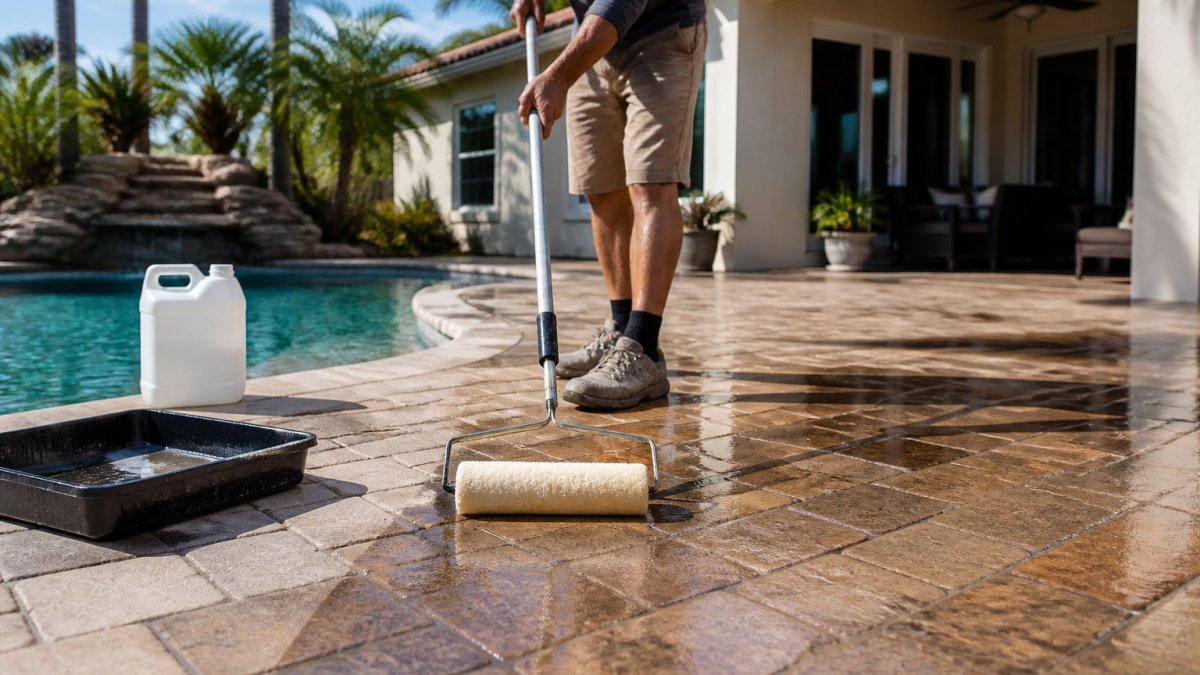
- Apply a traction product. A penetrating sealer with an anti-slip additive can go over many existing films.
- Lightly abrade the film. A fine-grit screen pass can rough up a glossy top coat without removing it.
- Strip and reseal. If the film is thick, tacky, or peeling, remove it and start over with a penetrating product.
Assessing Slip Risk Before and After Sealing
Test before you seal, not after. Wet a spare paver or a hidden corner, then walk across it. That baseline tells you how much grip you stand to lose.
After sealing, repeat the test in the same spot. If the wet traction feels noticeably worse, add a grip product before the sealer fully cures. Catching it early saves a full strip-and-redo job.
Application and Curing Mistakes That Make Pavers Slick
Overapplication is the biggest culprit. A thick coat dries into a heavy film, and heavy film equals slick pavers. Two thin coats always beat one thick one. But the reasons behind a slick or tacky surface go deeper than coat thickness, and understanding the mechanism helps you diagnose the problem instead of guessing.
Surface Preparation
Dust, pollen, and residue stop the sealer from bonding evenly. A surface that was not cleaned properly can leave the sealer sitting on a layer of grime rather than the stone, which creates patchy film and inconsistent traction. For driveway cleaning and pool deck cleaning, we clean and rinse thoroughly, then let the surface dry completely before any sealer goes down.
Application Thickness
A film-forming sealer applied too thick dries into a smooth, glassy layer that fills the stone’s texture. That is the number one cause of slippery sealed pavers. Penetrating sealers are more forgiving, but puddling still leaves a residue that can feel tacky. The fix is simple: apply thin, even coats and back-roll or spread any puddles before they dry.
Temperature and Humidity
Applying a film-forming sealer in the heat of the day causes it to dry too fast. The result is a patchy, tacky film that grips your shoes in dry weather and slides in wet weather. High humidity slows drying and can leave a sticky film that never fully hardens. Always seal in mild conditions and out of direct sun.
Drying and Cure Time
Walking on fresh sealer before it cures spreads it unevenly and can leave permanent marks. Most products need a full cure window before foot traffic, and longer before vehicles. If the surface feels sticky days after application, the product did not cure right. Strip it and redo the job with better conditions.
Diagnosing a Slick or Tacky Surface
Residue and tackiness are warning signs. Work through this checklist before you strip and reseal:
- Sticky, not slick? Likely a curing problem, humidity, low temperature, or overapplication. Give it more cure time in dry conditions before assuming the worst.
- Slick only when wet? Likely a film-forming product or a heavy coat. A light abrade or a compatible anti-slip additive may solve it without a full strip.
- Patchy shine or haze? Likely uneven application or moisture trapped under the film. This usually needs stripping and resealing.
- Slick in shaded spots only? Likely organic growth or trapped moisture. Clean first, then reassess.
The single most important rule: thin coats, dry surface, mild weather. Most slippery-paver problems start with one of those three being ignored.
If a sealed surface still feels dangerous after cleaning and curing, the next step is a test patch with an anti-slip additive or a switch to a penetrating product. When in doubt, consult the product manufacturer’s guidance for your specific stone and conditions. And if the surface is part of a pool deck or a high-traffic walkway, a professional assessment is worth the peace of mind, house wash and exterior home cleaning visits are a good time to flag early signs of slickness before they become a fall risk.
Material and Location: Pool Pavers, Bluestone, and Concrete Pavers
| Paver Material | Typical Porosity | Best Sealer Type | Slip Risk If Film-Forming | Key Caution |
|---|---|---|---|---|
| Concrete pavers | Moderate to high | Penetrating siloxane/silane | High when wet | Avoid heavy acrylic films on driveways and pool decks |
| Bluestone | Low (dense, smooth) | Penetrating, matte | Very high when wet | Naturally slick; test a sample before any film |
| Travertine | Variable (filled or unfilled) | Penetrating, breathable | Moderate to high | Unfilled travertine can trap moisture under film |
| Limestone | Moderate | Penetrating, breathable | Moderate | Some sealers haze; test patch first |
| Clay brick pavers | High | Penetrating | Moderate | Film can peel and flake in freeze-thaw cycles |
Concrete pavers are porous and take penetrating sealers well. For driveway cleaning and paver sealing, a matte penetrating product that leaves the texture intact is often recommended.
Bluestone is dense and smooth, so it gets slick fast with any film.
Natural stone like travertine varies widely. Filled travertine behaves differently from unfilled, and some sealers react poorly and leave a cloudy haze.
Pool pavers deserve the most caution. Bare feet plus wet stone plus a glossy film is a bad combination.
Shaded areas and high-traffic paths stay damp longer and collect organic growth.
Surface compatibility matters too. Some sealers react poorly with certain stones and leave a cloudy haze. Always test a small patch first.
That is also why we recommend a maintenance plan.
Frequently Asked Questions
Does paver sealer make surfaces slippery when wet?
It can, but it depends on the sealer. Film-forming sealers, especially wet-look and solvent-based products, build a smooth layer on top of the pavers that reduces surface texture and holds water, which lowers traction. Penetrating sealers soak into the paver and leave the surface feel closer to the original. A non-slip paver sealer or a sealer with a nonslip additive cut the risk further, and proper application thickness matters as much as the product itself.
Can you add a nonslip additive to paver sealer?
Yes. A nonslip additive for paver sealer is mixed into the sealer before application, and it leaves a fine grit on the surface that improves grip when wet. Follow the additive’s ratio on the label, stir it in thoroughly, and keep the sealer agitated while you work so the grit stays suspended. Over-thick coats can bury the aggregate and cancel the benefit, so apply thin, even layers and let each one cure before adding the next.
Which paver sealer is least slippery around a pool?
Around a pool, look for a penetrating sealer or a specifically labeled non-slip paver sealer with a matte finish. Avoid heavy wet-look film-forming products on pool surrounds and pool decks, since standing water plus a glossy film is the combination most likely to cause a slip. Bluestone and other natural stone pool pavers also benefit from a breathable penetrating product that preserves the stone’s natural texture and surface feel.
How can you fix pavers that became slippery after sealing?
Start by giving the surface a thorough cleaning to remove residue and any tackiness left from curing. If the slickness comes from an over-thick film, a light abrasion or a sealer remover may be needed, followed by resealing with a thinner coat or a non-slip product. For mild cases, applying a topcoat with a nonslip additive restores traction. Test a small area first, and let the surface fully cure before judging the result.
A slippery patio or pool deck is a safety risk you do not have to live with. Freedom Wash Club handles driveway cleaning, pool deck cleaning, house wash, soft wash roof cleaning, and professional paver sealing across South Florida. We are licensed and insured with over 10 years of experience, offer easy scheduling by phone or text, and back every job with our 100% satisfaction guarantee. Get started with Freedom Wash Club and enjoy a surface that looks great and stays safe underfoot.