Table of Contents
- Why Florida’s Climate Demands a Different Maintenance Approach
- What a Complete Commercial Exterior Maintenance Plan Includes
- How Often Should You Schedule Commercial Exterior Cleaning?
- Best Pressure Washing for Commercial Buildings: Soft Wash vs. High Pressure
- Commercial Paver Sealing Services for Walkways and Pool Decks
- The Cost-Benefit Case for Proactive Exterior Maintenance Contracts
- How to Choose an Exterior Maintenance Provider in Florida
- Conclusion: Protect Your Property’s Value and Curb Appeal
- Frequently Asked Questions
Last Updated: September 6, 2026
Florida’s climate is brutal on building exteriors. Intense UV exposure, high humidity, and frequent storms create a constant cycle of biological growth and surface degradation. Commercial exterior maintenance here isn’t seasonal; it’s a year-round discipline that protects asset value and keeps tenants, HOAs, and inspectors satisfied. At Freedom Wash Club, we’ve spent over a decade restoring commercial exteriors. Exterior maintenance is the most cost-effective way to extend the life of your building envelope and pavement, and this guide explains how to build a program that works in this climate.
Why Florida’s Climate Demands a Different Maintenance Approach
Most maintenance guides assume a temperate climate where cleaning is about aesthetics. That fails in Florida, where moisture and heat turn minor neglect into structural damage within months. Mold, mildew, and algae don’t just discolor surfaces; they break down sealants, compromise roof membranes, and create slippery walkways (the CDC).
UV rays fade paint and degrade caulking. Afternoon thunderstorms deposit mineral-laden water that etches glass and stains concrete. Hurricanes drive debris against facades and clog drainage. A proactive maintenance approach addresses these forces before they cause expensive failures.
What a Complete Commercial Exterior Maintenance Plan Includes
A comprehensive plan covers every surface from the roof membrane down to the parking lot asphalt. It’s preventative maintenance that stops small issues from becoming capital expenses. Property managers who treat cleaning as a line item rather than a strategy face larger repair bills down the road.
Building Washing and Surface Degreasing
Building washing removes the biological film and grime that dulls facades and accelerates material breakdown. This includes storefronts, stucco walls, concrete tilt-ups, and metal cladding. Surface degreasing targets loading docks, dumpster pads, and drive-through lanes where oil and grease accumulate, degrading concrete over time.
Parking Lot Maintenance, Sealcoating, and Striping
Asphalt is one of the largest capital investments on a commercial site. Regular cleaning removes debris and oil, but the core of maintenance is sealcoating and crack filling. Sealcoating protects the binder from UV and water intrusion, while striping keeps traffic organized and compliant. Address pothole repair immediately; small failures expand rapidly under Florida’s heat and traffic.
Dumpster Enclosure Sanitation and Walkway Cleaning
Dumpster enclosures attract pests, odors, and biological contamination. Regular sanitation protects tenants and keeps the area presentable. Walkway cleaning prevents slip-and-fall hazards from algae growth, a genuine liability concern in a humid climate. Schedule concrete cleaning for these high-traffic areas more frequently than other surfaces.
How Often Should You Schedule Commercial Exterior Cleaning?
A typical commercial property benefits from a quarterly baseline, but frequency depends on exposure, vegetation, and surface type. Properties shaded by oak trees or near canals need more frequent attention than open, sunny sites. Stay ahead of biological growth before it stains or damages the substrate.
Rather than a one-size-fits-all calendar, build a schedule around Florida’s two distinct stress periods: the wet season (May through October) and the dry, cooler months (November through April).
Wet Season (May-October)
Biological growth accelerates now. Afternoon thunderstorms deposit mineral-laden water, and humidity stays above 70% for weeks. Mold, mildew, and algae establish a foothold within days on porous surfaces. Increase the cadence for high-risk areas:
- Walkways, pool decks, and entry zones: Monthly inspection and cleaning. Algae on concrete or pavers creates a slip-and-fall hazard that is a leading liability claim for commercial property owners in humid climates (osha.gov). A quick monthly soft wash or spot treatment prevents the biofilm from building to a visible, dangerous level.
- Building facades and stucco: Every 60 to 90 days. South-facing walls and areas near irrigation systems will show biological streaking fastest.
- Dumpster enclosures: Weekly sanitation is the norm for food-service tenants. If your property has a restaurant or grocery anchor, increase this to twice weekly during the hottest months to control pests and odor.
Dry Season (November-April)
Growth slows, but this is the window for preventive work requiring dry conditions:
- Soft wash roof cleaning: Schedule annually during a stretch of dry days. Roof cleaning solutions need time to dwell and then be rinsed without an imminent storm washing them away prematurely. This is also the time to clear debris from scuppers and roof drains before the next wet season begins.
- Sealcoating and striping: Plan for every 2 to 3 years, but perform it between November and March. Asphalt needs dry weather and moderate temperatures to cure properly; summer heat and afternoon rain will compromise the application.
- Paver sealing: Reapply every 2 to 3 years for walkways and pool decks. Sealing locks in joint sand and prevents weed growth, but the protective layer wears down with foot traffic. The dry season is the right time to refresh it.
The Regulatory Angle Most Schedules Miss
Frequency is about compliance, not just appearance. Florida’s water runoff regulations under the Clean Water Act prohibit allowing wash water, chemicals, or debris to enter storm drains (the EPA). A schedule that ignores weather forecasts is a compliance risk. If rinse water flows into a storm drain, you, the property owner, are liable. Reputable companies use containment and reclaim systems; confirm this is standard in your service agreement.
Hurricane-Season Preparation
Align your schedule with hurricane season. The week before a named storm is not the time to discover clogged roof drains or loose pavers. A pre-storm inspection in late May or early June should include:
- Clearing roof drains, scuppers, and gutters of debris and biological growth.
- Securing or removing loose items from the property perimeter.
- Confirming that dumpster lids close properly and enclosures are anchored.
| Maintenance Task | Recommended Frequency | Primary Benefit |
|---|---|---|
| Building washing | Quarterly to semi-annual | Prevents biological staining and material degradation |
| Soft wash roof cleaning | Annual or after major storms | Extends roof membrane life, prevents algae streaks |
| Parking lot cleaning | Monthly to quarterly | Removes oil, debris, and prevents asphalt breakdown |
| Sealcoating and striping | Every 2-3 years | Protects asphalt, maintains safety compliance |
| Dumpster enclosure sanitation | Weekly to monthly | Controls pests, odors, and contamination |
| Walkway and pool deck cleaning | Monthly during wet season | Prevents slip hazards, maintains appearance |
Frequency is not one-size-fits-all. A property management professional adjusts the schedule based on seasonal needs, tenant turnover, and inspection findings. Consistency is key; irregular cleaning lets biological growth establish a foothold and increases liability exposure.
Before any exterior cleaning job, confirm your provider uses water containment or reclaim systems. Florida stormwater regulations hold the property owner responsible for wash water that enters drains, regardless of who performed the work.
Best Pressure Washing for Commercial Buildings: Soft Wash vs. High Pressure
The best pressure washing for commercial buildings is almost never high pressure. High pressure can etch concrete, force water behind siding, and damage roof materials. The better approach for most surfaces is soft washing, which uses low pressure with specialized solutions to kill mold, mildew, and algae at the root.
Soft Wash Roof Cleaning Benefits for Long-Term Protection
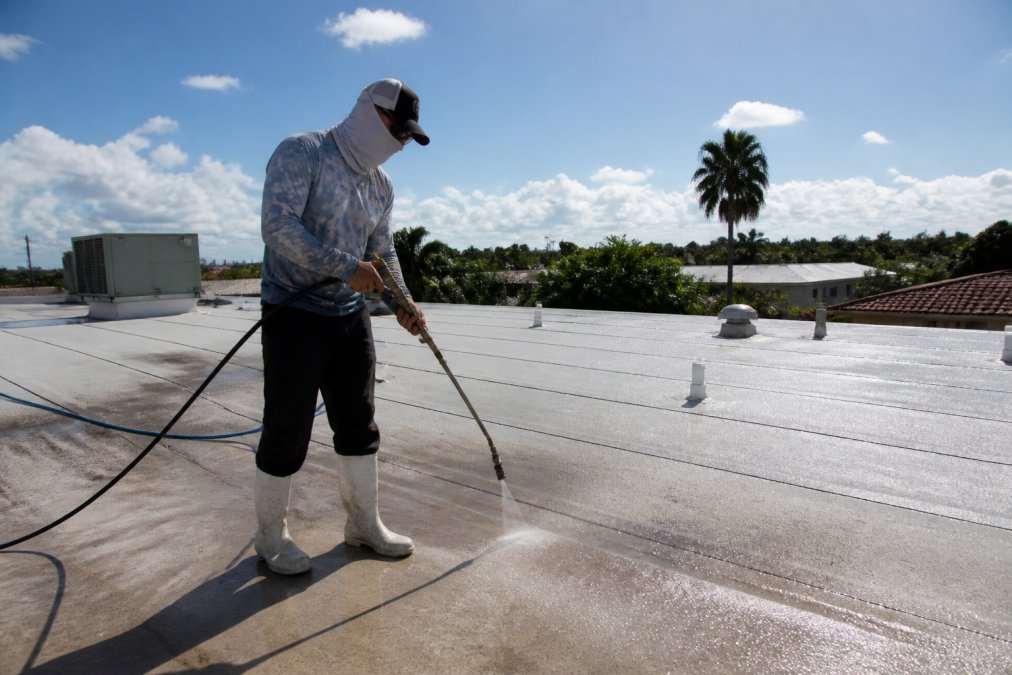
Soft wash roof cleaning uses low-pressure spray equipment to apply a biodegradable solution that eliminates biological growth without damaging shingles, tile, or membrane roofs. It protects the granular surface, extends membrane life, and prevents black streaks from gloeocapsa magma algae. It also protects flashings and seals, which high pressure can compromise.
Commercial Paver Sealing Services for Walkways and Pool Decks
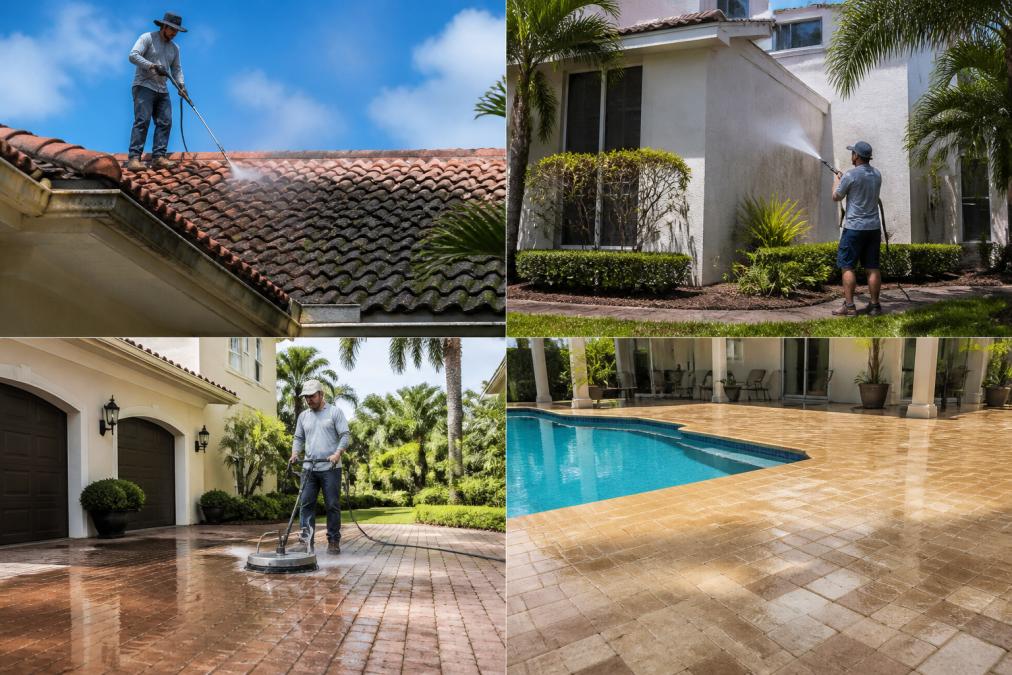
Paver sealing protects interlocking concrete pavers from staining, weed growth, and joint sand erosion. Commercial paver sealing services apply a protective coating that locks in joint sand and repels oil, dirt, and biological growth. For pool decks, sealing creates a more slip-resistant surface and prevents algae growth in wet, shaded areas.
Sealing is not one-time. The protective layer wears down with traffic and weather, so reseal pavers every few years. This is distinct from basic concrete cleaning and requires experience. Verify your provider offers this specialized service rather than assuming a general wash provides the same protection.
The Cost-Benefit Case for Proactive Exterior Maintenance Contracts
Routine cleaning costs a fraction of the repairs required when neglect leads to damage. A stained concrete surface can often be restored, but a cracked, spalled slab may require replacement. A roof with heavy biological growth may have compromised membranes that leak, leading to interior water damage and mold remediation.
Service contracts guarantee regular inspection and cleaning, supporting warranty requirements and asset protection. They provide predictable budgeting, eliminating surprise emergency costs. Contract work builds institutional knowledge; the same crew returns each quarter, notices changes, and catches small problems early.
How to Choose an Exterior Maintenance Provider in Florida
Selecting the right provider is as important as the plan itself. A common mistake is choosing based solely on price, only to discover they lack the equipment or training. Verify the company is licensed and insured and that technicians are trained in soft washing. Ask about the specific solutions they use, particularly for roof cleaning, where caustic chemicals can damage landscaping and violate regulations.
Beyond licensing and insurance, the most valuable differentiator is documentation capability. In Florida, where humidity accelerates deterioration and hurricane season creates liability events, maintenance records are your first line of defense in an insurance claim or tenant dispute.
What Documentation Should You Demand?
A professional provider should deliver a written report after every visit, including:
- Date, time, and duration of service, This creates a clear timeline for your records.
- Weather conditions at time of service, This matters if a cleaning is performed and then a storm hits; you need to know whether the service was effective before the weather event.
- Before-and-after photos, Photographic evidence is the single most useful tool for demonstrating that maintenance was performed. It also helps you track the rate of biological regrowth and adjust your schedule accordingly.
- Products and solutions used, Including dilution ratios and dwell times. This is critical for roof cleaning, where the wrong chemical concentration can damage landscaping or violate local runoff rules.
- Findings and recommendations, A good technician will note developing issues: a cracked sealant joint, a failing caulk line, an area where pavers have settled. These observations turn a cleaning visit into an early-warning system.
The Audit Trail for Insurance and Liability
Florida property owners face a litigious environment. Slip-and-fall claims on walkways and pool decks are among the most common liability cases. If someone is injured, your first question will be: “When was this surface last cleaned, and what did the cleaning involve?”
Without documentation, you have only verbal assurance. With a photo-dated log of regular cleaning, you can demonstrate reasonable care. Insurance carriers and defense attorneys consistently advise maintaining these records. A provider that won’t provide written reports is a liability risk, regardless of how well they clean.
Ask About Their Reporting Workflow
Before signing, ask the provider to walk you through their reporting process. Do they send a report after every visit, or only when asked? Is it delivered digitally? Can they provide a year-end summary?
The best providers use digital reporting tools that deliver a timestamped summary with photos to your email or phone within 24 hours. This is a practical necessity for managers overseeing multiple sites or working remotely. A provider that requires you to chase them for documentation will leave you exposed when you need records most.
Red Flags to Avoid
- No written contract with a detailed scope of work, Vague agreements lead to disputes over what was included.
- Inability to name the specific chemicals they use, This is a safety and regulatory concern.
- No water containment or reclaim process, This is a stormwater compliance issue in Florida.
- No documentation or photo evidence of completed work, This is the most common gap in the industry and the one that hurts property owners most in claims.
Look for clear communication and easy scheduling. A company requiring in-person estimates for every job may be slow when a tenant complains or an HOA issues a violation. Phone or text scheduling is a practical advantage. But the ability to document work is what separates a true maintenance partner from a casual cleaner.
Your exterior maintenance provider should be as good at paperwork as they are at pressure washing. A photo-dated service log is your evidence of reasonable care in a liability claim and your roadmap for adjusting your maintenance schedule over time.
Conclusion: Protect Your Property’s Value and Curb Appeal
Deferred maintenance is a false economy. In Florida’s climate, every month of neglect compounds restoration costs, eroding curb appeal and property value while creating safety and compliance risks. A structured maintenance program, delivered by an experienced partner, is the most reliable way to protect your investment. Freedom Wash Club brings over a decade of expertise, offering licensed and insured services including soft wash roof cleaning, building washing, driveway and pool deck cleaning, and commercial paver sealing. Our easy phone or text scheduling means you can get a free quote without an in-person visit, and our 100% satisfaction guarantee backs every job. Get started with Freedom Wash Club and keep your commercial property looking its best year-round.
Frequently Asked Questions
What is included in a commercial property exterior maintenance plan?
A complete plan covers pressure washing of building exteriors and walkways, soft wash roof cleaning, paver sealing, parking lot maintenance, and dumpster enclosure sanitation. It also includes inspections for mold, mildew, and humidity damage common in Florida. Regular scheduling prevents costly repairs and keeps your property compliant with HOA standards and safety regulations.
How often should commercial buildings undergo professional pressure washing?
Most commercial properties in Florida benefit from exterior cleaning every 6 to 12 months, depending on location and surface type. Buildings near saltwater or heavy vegetation may need quarterly attention. High-traffic walkways and pool decks often require more frequent cleaning and paver sealing to prevent slip hazards and maintain appearance.
What are the benefits of soft wash roof cleaning for commercial buildings?
Soft wash roof cleaning uses low pressure and specialized solutions to remove mold, algae, and moss without damaging roofing materials. This method extends roof life, prevents streaking, and maintains the manufacturer’s warranty. High-pressure washing can strip granules and void coverage, making soft wash the safer choice for most commercial roofs.