Table of Contents
- What a Professional Driveway Cleaning Service Actually Does
- How the Driveway Cleaning Process Works, Step by Step
- Cost of Driveway Pressure Washing: What Affects Your Quote
- How Often to Pressure Wash a Driveway
- Benefits of Paver Sealing After a Deep Clean
- DIY vs. Hiring a Professional Driveway Cleaning Service
- How to Choose a Licensed and Insured Local Provider
- Frequently Asked Questions
Last Updated: August 28, 2026
A dirty driveway does more than look bad. Grime buildup, oil stains, and algae growth can degrade your pavement surface over time, create slip hazards, and signal to neighbors and HOA inspectors that your property isn’t being maintained. At Freedom Wash Club, we’ve spent over a decade restoring driveways across South Florida, and we can tell you: the difference between a neglected surface and a properly cleaned one is often just one professional service visit. This guide covers everything you need to know before booking a driveway cleaning service, from how the process works to what drives the cost and when DIY simply isn’t worth it.
Below, we’ll walk through the exact steps a professional uses, the surfaces and stains that respond best to treatment, and the honest trade-offs between doing it yourself and hiring a licensed crew.
What a Professional Driveway Cleaning Service Actually Does
A professional driveway cleaning service is more than pointing a pressure washer at concrete and hoping for the best. It’s a structured process that combines the right equipment, the right pressure settings, and the right cleaning chemistry for each specific surface.
Most homeowners don’t realize that a single driveway can contain multiple surface types, each requiring a different approach. Concrete tolerates high-pressure water well. Brick pavers need a gentler touch to avoid dislodging joint sand. Asphalt is soft enough to be damaged by excessive pressure. A trained technician reads the surface first, then selects the method.
Surfaces Cleaned: Concrete, Asphalt, Brick, and Pavers
Concrete driveways are the most common and the most forgiving. High-pressure water combined with a surface cleaner attachment removes years of grime, tire marks, and organic growth evenly without streaking.
Asphalt requires lower pressure to avoid surface erosion. The goal is to lift oil and grease without disturbing the binder that holds the pavement together. Soft washing, which uses lower water pressure combined with cleaning solutions, is often preferred here.
Brick and paver driveways need the most care. Pavers are typically cleaned at medium pressure with a surface cleaner, followed by re-sanding of joints and, ideally, a sealing coat to protect against future staining. Skipping the seal after a paver clean is one of the most common mistakes homeowners make.
Common Stains Removed: Oil, Grease, Moss, Algae, and Tire Marks
Oil and grease stains are the most stubborn. They require a degreasing pre-treatment to break down the petroleum compounds before pressure washing. Without this step, high-pressure water alone will spread the stain rather than remove it.
Moss and algae are particularly aggressive in humid climates. Algae treatment typically involves applying a biocidal cleaning solution, allowing it to dwell on the surface, then rinsing. Moss removal may require light agitation with a surface cleaner before rinsing.
Tire marks respond well to hot water pressure washing combined with a degreaser. Rust stains from metal objects are a different challenge entirely and often require a dedicated spot treatment with an oxalic-based cleaner.
How the Driveway Cleaning Process Works, Step by Step
The professional driveway cleaning process follows a consistent sequence designed to protect your surface while delivering a deep clean. Skipping any step compromises the result.
Step 1: Assessment and Pre-Treatment
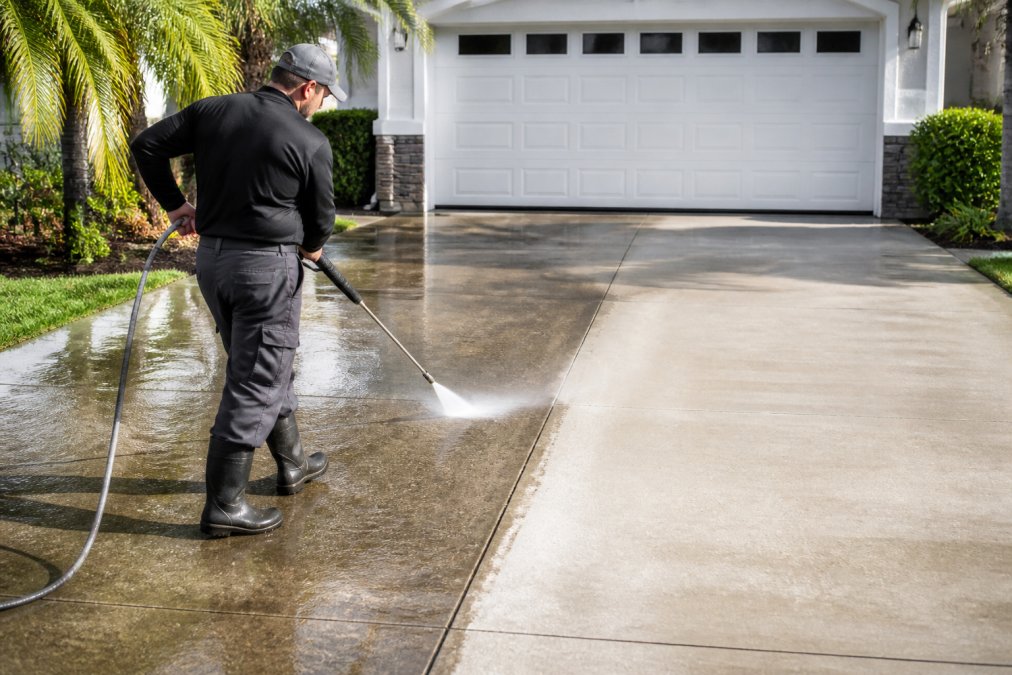
The technician starts by walking the driveway to identify surface type, stain types, and any cracked or damaged areas that need to be noted before water is applied. Pressure washing a severely cracked driveway without flagging the damage can push water into the substrate and worsen the problem.
Pre-treatment follows the assessment. Oil and grease spots get a degreaser applied and left to dwell for several minutes. Areas with heavy moss or algae growth receive an eco-friendly detergent or biocidal solution. This dwell time is what separates a thorough clean from a surface rinse.
Ask your provider which pre-treatment chemicals they use and whether they’re biodegradable. Eco-friendly detergents are better for your landscaping, nearby storm drains, and the broader environment. Reputable local providers will answer this question without hesitation.
Step 2: Pressure Washing or Soft Washing
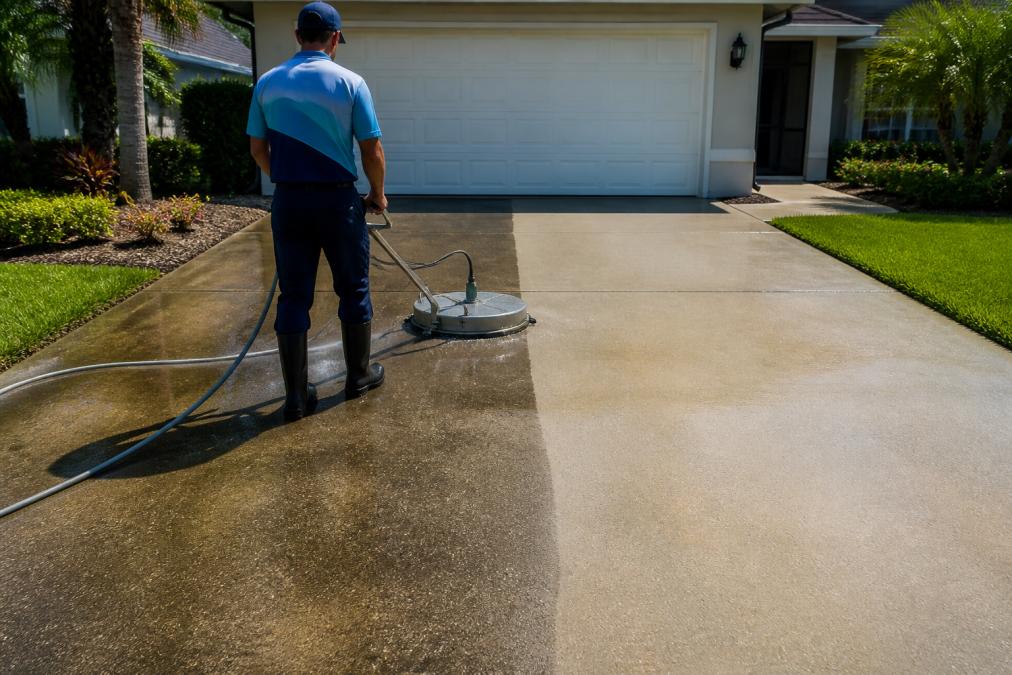
For concrete driveways, most professionals use a commercial surface cleaner attachment rather than a bare wand. Surface cleaners spin two nozzles in a circular pattern, delivering even coverage without the streaking that a single wand produces. The result is a consistent clean across the full surface.
Soft washing uses lower water pressure, typically around 100-500 PSI, combined with a higher concentration of cleaning solution. It’s the preferred method for asphalt and for any surface where high-pressure water would cause damage. The cleaning chemistry does the heavy lifting; the water rinses it away.
According to guidance from the Environmental Protection Agency on stormwater management, runoff from pressure washing can carry pollutants into storm drains and local waterways. Professional crews who practice responsible water reclamation or use containment berms reduce this environmental impact significantly.
Step 3: Spot Treatment and Final Rinse
After the main wash, a technician walks the surface again to identify any remaining stains. Stubborn oil spots, rust marks, and heavy algae patches get a second pass with a targeted spot treatment.
The final rinse flushes all loosened debris and cleaning solution from the surface and away from the property perimeter. A clean-looking driveway that still has chemical residue on it can damage nearby plants or create a slippery film when dry.
Cost of Driveway Pressure Washing: What Affects Your Quote
The cost of driveway pressure washing varies based on several factors, and any provider who gives you a firm price without knowing your driveway’s size, surface type, and condition is guessing.
The main variables that drive your quote:
| Factor | Why It Matters |
|---|---|
| Driveway size | Larger surfaces take longer and use more materials |
| Surface type | Pavers require more care than plain concrete |
| Stain severity | Heavy oil or rust stains need extra pre-treatment |
| Access and obstacles | Vehicles, landscaping, or tight gates slow the job |
| Add-on services | Sealing, re-sanding pavers, or spot treatment add cost |
| Service frequency | Membership or recurring plans typically reduce per-visit cost |
Many providers, including Freedom Wash Club, offer free estimates over the phone or by text without requiring an in-person visit. This makes it easy to get a ballpark figure before committing to anything.
Be cautious of quotes that seem unusually low. Underpriced services often cut corners on pre-treatment, use residential-grade equipment, or skip eco-friendly detergents. A poor clean can leave streaks, spread stains, or damage soft surfaces like pavers.
How Often to Pressure Wash a Driveway
How often you should pressure wash a driveway depends on your climate, the surface material, and how much traffic it sees. In humid climates where organic growth like mold, algae, and moss thrive year-round, an annual clean is generally the minimum. Many homeowners in high-humidity regions benefit from cleaning every six months.
Concrete driveways in high-traffic areas accumulate oil and tire marks quickly and may need attention more frequently than a lightly used side driveway. Pavers with open joints tend to collect debris faster and benefit from at least one deep clean per year followed by sealing to slow future buildup.
A practical rule: if you can see visible discoloration, organic growth, or staining from the street, it’s time. Waiting until the surface looks significantly degraded means the stains have had more time to penetrate, making removal harder and sometimes more expensive.
According to the International Concrete Repair Institute’s guidance on pavement maintenance, regular cleaning and sealing are among the most cost-effective forms of preventative maintenance for concrete and paver surfaces, extending service life significantly compared to surfaces left untreated.
For most homeowners in humid climates, scheduling a professional driveway cleaning service once or twice a year is the most practical approach to pavement maintenance. Pair it with [sealing after](/paver-restoration/) each clean for maximum protection.
Benefits of Paver Sealing After a Deep Clean
Paver sealing is the step most homeowners skip, and it’s the one that makes the biggest difference in how long a clean lasts. Sealing locks out moisture, oil, and organic growth by creating a protective barrier over the paver surface and stabilizing the joint sand between pavers.
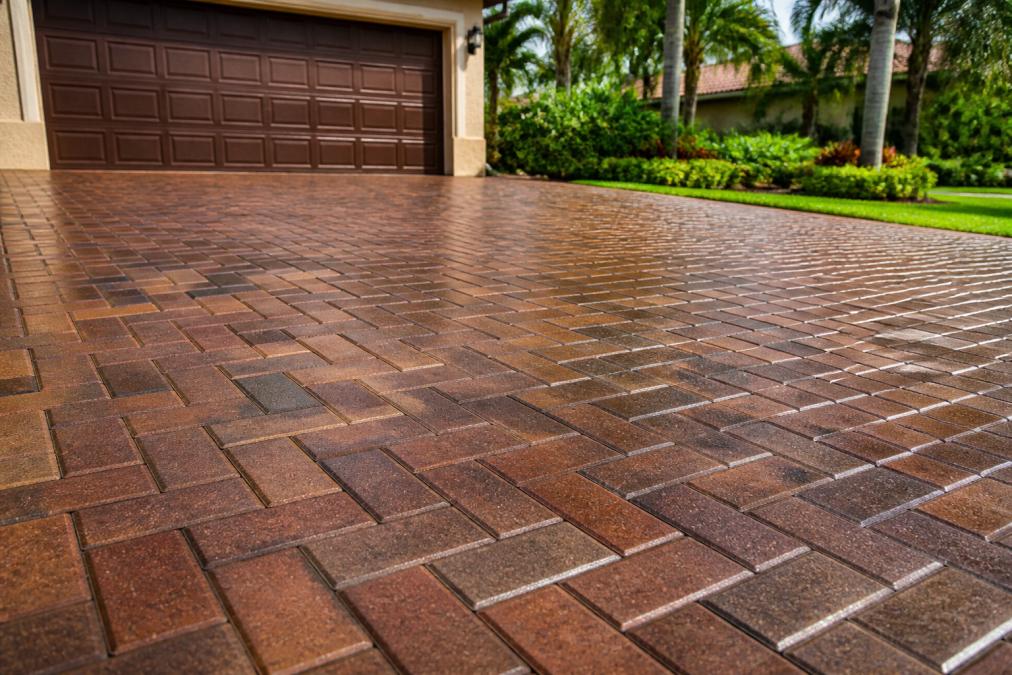
The benefits of sealing after a deep clean include:
- Stain resistance: Sealed pavers repel oil, grease, and organic material rather than absorbing it, making future cleaning far easier.
- Joint stabilization: Sealer hardens the sand between pavers, reducing weed growth and preventing ants from excavating the joints.
- Color enhancement: A quality sealer brings out the natural color of the paver material, giving the surface a refreshed, rich appearance.
- Surface protection: Sealed surfaces are more resistant to freeze-thaw cycles, UV fading, and moisture penetration.
- Longer intervals between cleans: A sealed surface resists grime buildup, meaning you can go longer between professional cleanings.
The timing matters. Sealing should happen after a thorough clean, never before. Sealing over dirt or organic material traps it in place and accelerates deterioration. Allow the surface to dry completely, typically 24-48 hours after washing, before the sealer is applied.
DIY vs. Hiring a Professional Driveway Cleaning Service
The DIY vs. professional debate comes down to one honest question: what is your time and equipment access actually worth?
Renting a consumer-grade pressure washer gives you a machine that typically operates at lower PSI than professional equipment and lacks the surface cleaner attachment that prevents streaking. You’ll also need to source pre-treatment chemicals, understand the correct dwell times, and know how to adjust pressure for different surfaces. Getting it wrong on pavers or asphalt can cause real damage.
The common advice that “pressure washing is easy” is outdated. That may have been true for rinsing a patio. It’s not true for removing embedded oil stains, treating algae on a paver driveway, or cleaning without sending contaminated runoff into a storm drain.
Here’s a straightforward comparison:
| Consideration | DIY | Professional Service |
|---|---|---|
| Equipment quality | Consumer-grade rental | Commercial-grade surface cleaner |
| Pre-treatment knowledge | Self-researched | Trained, surface-specific |
| Stain removal effectiveness | Variable | Consistent |
| Risk of surface damage | Higher on pavers/asphalt | Lower with experienced crew |
| Time investment | 3-5 hours | 1-2 hours on-site |
| Environmental compliance | Typically unmanaged | Eco-friendly detergents, water reclamation |
| Result consistency | Streaking common | Even, streak-free finish |
For straightforward concrete with light dirt, a confident homeowner with a good rental machine can get reasonable results. For anything involving oil stains, pavers, asphalt, or organic growth, a licensed professional service is the more reliable choice.
Environmental Impact: Runoff and Eco-Friendly Detergents
Pressure washing runoff is a genuine environmental concern that most DIY guides ignore entirely. Water that carries oil, cleaning chemicals, algae, and debris off your driveway flows toward storm drains, which in most municipalities discharge directly to local waterways without treatment.
The Clean Water Act regulations on stormwater discharge restrict the discharge of pollutants into waterways, and in some municipalities, pressure washing runoff containing detergents or petroleum products is subject to local ordinances.
Professional crews who use biodegradable, eco-friendly detergents reduce the chemical load in runoff significantly. Some providers also use containment berms or water reclamation systems to capture and properly dispose of wash water, particularly on commercial properties or sites near sensitive waterways.
This is one of the clearest practical advantages of hiring a professional over renting equipment and doing it yourself.
How to Choose a Licensed and Insured Local Provider
Choosing a driveway cleaning service provider isn’t just about price. A crew operating without proper licensing and insurance leaves you exposed if equipment damages your property or a worker is injured on-site.
Here’s what to verify before booking:
- Licensing: Confirm the provider holds any required state or local business licenses. In Florida, pressure washing businesses are subject to specific licensing requirements depending on the services offered.
- Insurance: Ask for proof of general liability insurance and workers’ compensation coverage. A legitimate provider will supply this without pushback.
- Experience: Ask how long they’ve been operating and whether they have experience with your specific surface type.
- Scheduling transparency: Providers who offer free estimates by phone or text, without requiring an in-person visit, are generally more efficient and customer-focused.
- Satisfaction guarantee: A provider confident in their work will back it up. Ask specifically what the guarantee covers and what happens if you’re not satisfied.
The Florida Department of Business and Professional Regulation’s contractor licensing database allows homeowners to verify contractor licenses directly. Use it.
Customer Nicole B. from Boca Raton put it well after her service: “Our home was completely transformed. You don’t realize how dirty a house gets until it looks like new again. The guys were professional, on time, and did an excellent job.”
That kind of result is repeatable. The key is choosing a provider with the experience, equipment, and accountability to back it up.
Frequently Asked Questions
How much does professional driveway cleaning cost?
Pricing for professional driveway cleaning depends on several factors: the size of the driveway, the surface type (concrete, asphalt, pavers, or brick), the severity of staining, and whether additional treatments like degreasing or sealing are included. Because no two driveways are identical, most licensed providers offer free estimates. Contact Freedom Wash Club directly for a no-obligation quote tailored to your property.
Is power washing a driveway worth it?
For most homeowners, yes. A professional driveway cleaning service removes oil stains, algae, moss, and grime buildup that ordinary rinsing cannot touch. Beyond curb appeal, routine pressure washing prevents surface deterioration that leads to expensive repairs. HOA compliance is another practical reason: a clean driveway keeps you off the violation list. The cost of one professional cleaning is typically far less than patching or replacing a neglected surface.
Can pressure washing damage a driveway?
High-pressure water applied incorrectly can etch concrete, loosen paver sand, or strip asphalt sealant. That risk drops sharply when a licensed professional selects the right pressure setting and nozzle for each surface type. Reputable providers also offer soft washing for more delicate or older surfaces, using lower pressure combined with eco-friendly detergents to achieve deep cleaning without surface damage. Always verify that your provider is licensed and insured before work begins.
What are the benefits of hiring a licensed and insured pressure washing company?
A licensed and insured provider carries liability coverage, meaning any accidental property damage is their responsibility, not yours. Licensing also signals that the company meets state contractor requirements. Beyond legal protection, experienced professionals bring commercial-grade equipment, surface-specific techniques, and eco-friendly detergents that produce better results than rental equipment. Freedom Wash Club is fully licensed and insured, with over 10 years of experience serving residential and commercial properties.
Keeping a driveway clean is one of the most cost-effective forms of property maintenance available, but only when it’s done correctly. Freedom Wash Club brings over 10 years of experience, licensed and insured crews, and a 100% satisfaction guarantee to every residential and commercial job. Easy scheduling by phone or text means you don’t need to wait for an in-person estimate. Reach out today and receive your free quote.
This article was written using GrandRanker