Table of Contents
- What You’ll Need to Clean a Driveway Without a Pressure Washer
- Safety Precautions Before You Start
- Step-by-Step Manual Scrubbing Process
- How to Remove Oil Stains from a Driveway by Hand
- Best Concrete Driveway Cleaner for Manual Cleaning
- Post-Cleaning Steps: Sealing and Runoff Management
- When to Call Professional Driveway Cleaners
- Frequently Asked Questions
Last Updated: August 29, 2026
What You’ll Need to Clean a Driveway Without a Pressure Washer
Knowing how to clean a driveway without a pressure washer is more useful than most homeowners expect. The right combination of manual tools and cleaning agents can restore a driveway surface to near-professional results. At Freedom Wash Club, we’ve seen firsthand how a neglected driveway transforms with nothing more than elbow grease and the correct materials.
Gather everything on this list before starting. Missing an item mid-job means stopping and losing your soak time.
Cleaning agents:
- Dish soap or heavy-duty detergent (alkaline cleaner, effective on general grime and mildew)
- Baking soda (mild abrasive, excellent for lifting surface stains)
- White vinegar (acidic cleaner, useful for mildew and light rust deposits)
- Commercial degreaser for oil stains on concrete
Tools:
- Stiff-bristled brush (bristle stiffness determines how much stain you actually lift)
- Garden hose with a spray nozzle
- Pump sprayer for applying cleaning solutions evenly
- Bucket
- Safety goggles and protective gloves
Optional but useful:
- Stiff push broom for large surface areas
- Surface cleaner attachment for a garden hose
- Knee pads for extended manual scrubbing sessions
The stiff-bristled brush deserves special mention. A soft brush will move dirty water around without breaking up stains. For concrete, look for a brush rated for masonry use with polypropylene bristles. For pavers or asphalt, use a slightly softer option to avoid surface abrasion.
| Material | Best Cleaner | Tool Needed | Time to Soak |
|---|---|---|---|
| Concrete driveway | Alkaline degreaser or dish soap | Stiff-bristled brush | 5-10 minutes |
| Asphalt | Mild dish soap only | Medium-stiff brush | 3-5 minutes |
| Pavers | White vinegar or baking soda | Stiff brush or push broom | 5-15 minutes |
| Oil stains (concrete) | Commercial degreaser or baking soda | Stiff-bristled brush | 15-30 minutes |
Safety Precautions Before You Start
Chemical cleaners do the heavy lifting in manual driveway cleaning, but they come with real risks that most guides gloss over.
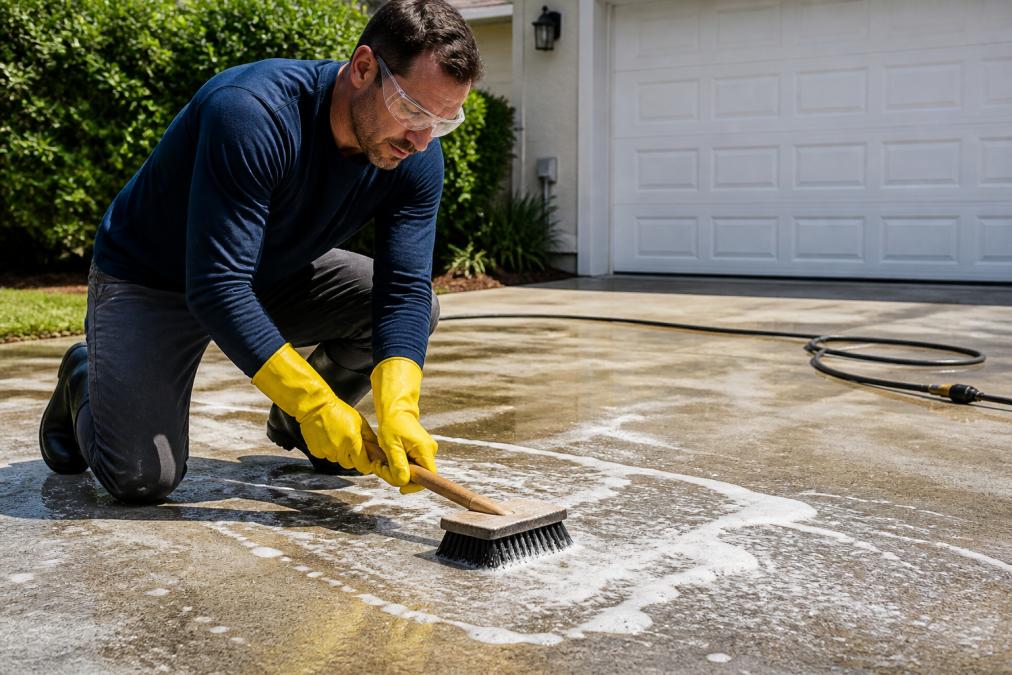
Protective gloves and safety goggles are non-negotiable when working with any commercial degreaser or acidic cleaner. Concentrated degreasers can cause skin irritation on contact, and splashback during scrubbing is common.
A few precautions worth taking seriously:
- Ventilation: Work with the breeze at your back when using concentrated chemical cleaners.
- Runoff management: Cleaning agents, especially degreasers and alkaline cleaners, should not flow directly into storm drains. Per EPA guidelines on stormwater runoff management, many household and commercial cleaning chemicals can harm local waterways when they enter the stormwater system untreated. Direct runoff onto grass or gravel to allow natural filtration where possible.
- Surface testing: Before applying any acidic cleaner like white vinegar to pavers or natural stone, test a small hidden area first. Acidic cleaners can etch certain stone surfaces permanently.
- Children and pets: Clear the area completely before applying any chemical cleaner.
Check the weather forecast before starting. Cleaning right before rain washes away your cleaning agent before it has time to work. Aim for a dry window of at least four hours.
Step-by-Step Manual Scrubbing Process
Manual scrubbing is the core of how to clean a driveway without a pressure washer, and the sequence matters more than most people realize. Rushing the soak time is the single most common mistake.
Step 1: Clear Debris and Pre-Rinse the Surface
Start by removing all loose debris: leaves, dirt, gravel, and any organic material sitting on the surface. A stiff push broom works faster than a regular broom. Once the surface is swept, use a garden hose to pre-rinse the entire driveway. This softens dried-on grime and helps the cleaning solution spread evenly.
Time estimate: 10-15 minutes for a standard two-car driveway.
Step 2: Apply Your Cleaner and Let It Soak
Apply your chosen cleaner generously using a pump sprayer or by pouring directly from a bucket. Work in sections if the driveway is large, so the first section doesn’t dry out before you reach it.
For general grime and mildew: a solution of dish soap or heavy-duty detergent mixed with warm water works well. For oil stains, apply a commercial degreaser directly to the stain and let it soak for at least 15-30 minutes. Baking soda can be sprinkled dry onto wet stains before scrubbing for additional abrasive action.
Soak times by cleaner type:
- Dish soap solution: 5-10 minutes
- White vinegar: 5-15 minutes (longer for mildew)
- Commercial degreaser: 15-30 minutes
- Baking soda paste: 20-30 minutes
Time estimate: 5-30 minutes depending on stain type.
Step 3: Scrub and Rinse
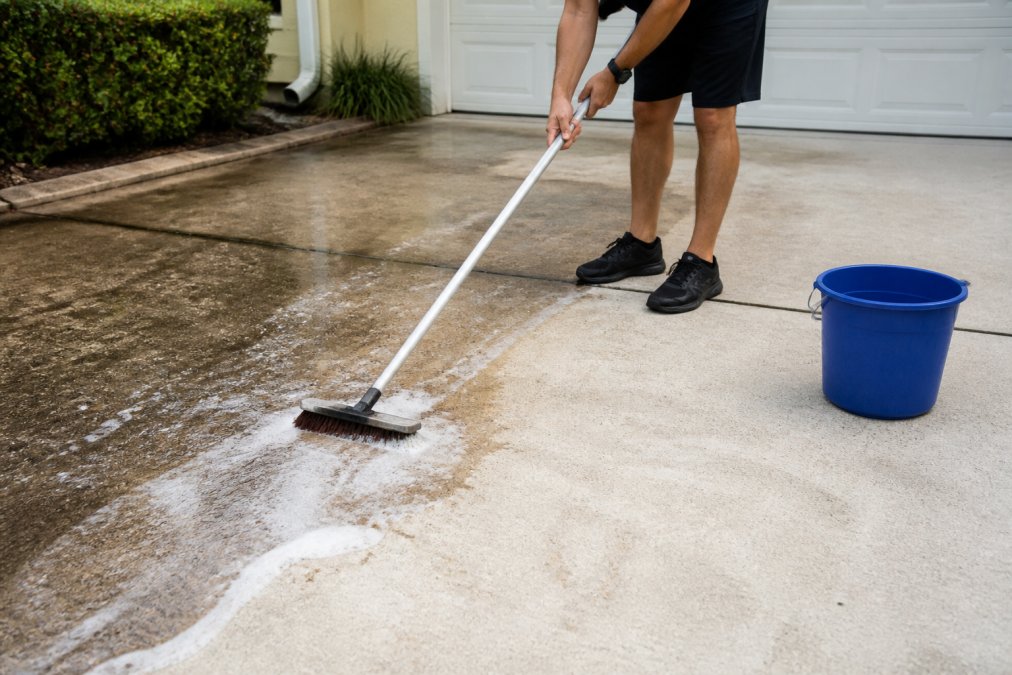
Scrub using firm, overlapping circular motions. Work from the back of the driveway toward the street so you’re pushing dirty water away from cleaned sections. Apply steady downward pressure to extract stains, not just agitate the surface.
After scrubbing each section, rinse thoroughly with a garden hose before the cleaner dries. Dried cleaning solution leaves residue that attracts new dirt faster than a clean surface would.
Time estimate: 20-40 minutes for scrubbing, 10-15 minutes for rinsing. Total time for a full clean driveway: 45 minutes to 1.5 hours depending on size and stain severity.
Work in 4-6 foot sections rather than trying to scrub the whole driveway at once. This keeps the cleaner active and prevents it from drying into a film that’s harder to rinse off than the original dirt.
How to Remove Oil Stains from a Driveway by Hand
Oil stain removal is where manual cleaning gets genuinely challenging. Fresh oil lifts with far less effort than a stain that’s been baking into a porous concrete surface for months.
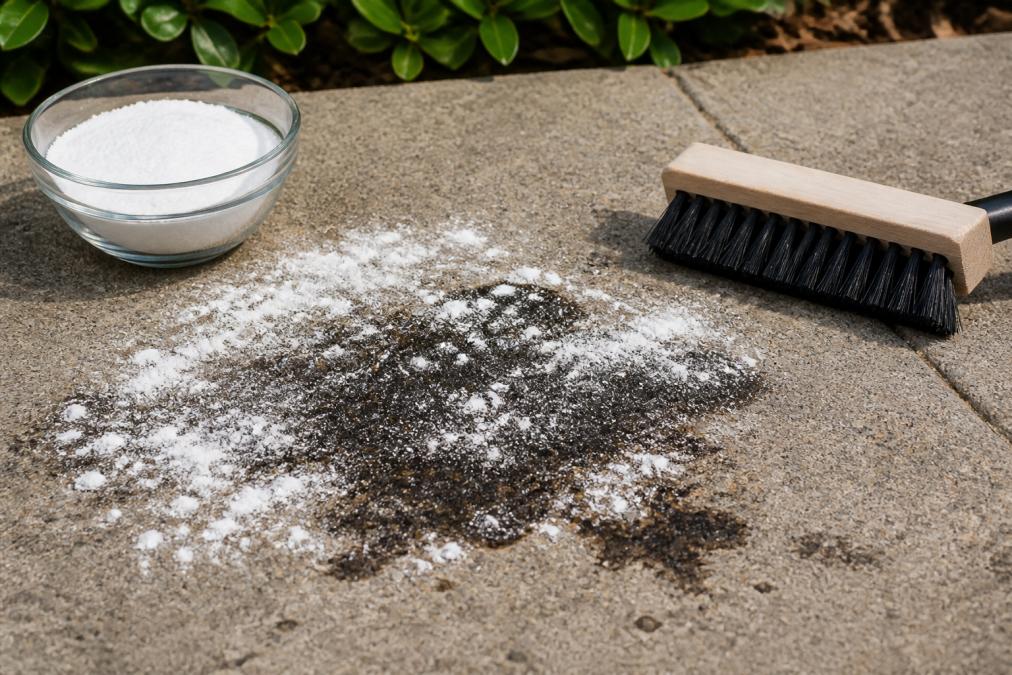
For fresh oil stains (less than 24 hours old):
- Absorb as much oil as possible with cat litter, cornstarch, or sawdust. Leave it for 30-60 minutes, then sweep up.
- Apply dish soap directly to the stain and scrub with a stiff-bristled brush using firm circular pressure.
- Rinse with hot water from a kettle or garden hose.
- Repeat if needed; fresh stains usually lift in two passes.
For set oil stains (days to weeks old):
- Apply a commercial degreaser designed for concrete. Read the label for dilution instructions.
- Let it soak for 15-30 minutes. Mist with water if needed to prevent drying.
- Scrub aggressively with a stiff-bristled brush.
- Rinse thoroughly and assess. Repeat if the stain is still visible.
For old, deeply set stains:
Baking soda paste (baking soda mixed with a small amount of water) applied over a degreaser can help. The alkaline degreaser breaks down the oil, and the baking soda provides abrasive action to pull it out of the porous surface. According to guidance on concrete surface cleaning from the Portland Cement Association, highly porous concrete may require multiple treatment cycles for deep stain extraction.
A common mistake is rinsing too soon. The cleaner needs time to break down the oil at a molecular level before you rinse.
Never use gasoline or paint thinner to remove oil stains from a concrete driveway. These solvents spread the contamination deeper into the porous surface and create a hazardous runoff situation.
Best Concrete Driveway Cleaner for Manual Cleaning
The best concrete driveway cleaner for manual cleaning depends on what you’re dealing with. There’s no single product that handles every stain type equally well.
For general dirt, mildew, and organic buildup, an alkaline cleaner or heavy-duty detergent is the right starting point. Many homeowners find that a concentrated dish soap solution handles most routine cleaning jobs effectively.
For oil and grease stains specifically, a commercial degreaser formulated for concrete is the most reliable option. Look for bio-degradable formulas, which are safer for runoff management and generally perform as well as harsher counterparts on most residential stains.
For rust removal, an acidic cleaner is required. White vinegar handles light rust deposits on concrete and pavers, but heavy rust staining typically needs a purpose-made rust remover.
Cleaning Concrete vs. Asphalt vs. Pavers
The surface type changes everything about how you approach a clean driveway.
Concrete is the most forgiving surface for aggressive cleaning. It tolerates alkaline degreasers, stiff-bristled brushes, and acidic rust removers. The porous surface absorbs stains deeply, which is why soak time matters so much.
Asphalt is more vulnerable than most homeowners realize. Harsh chemical degreasers and acidic cleaners can soften the bitumen binder in asphalt, causing surface degradation over time. Stick to mild dish soap and warm water for asphalt, and use a medium-stiff brush rather than the stiffest option. Avoid any cleaner with petroleum-based solvents.
Pavers vary by material. Concrete pavers behave similarly to poured concrete, while natural stone pavers require more care. White vinegar and baking soda are safe choices for most paver types. Avoid high-alkaline cleaners on natural stone, and always test in an inconspicuous area first. According to guidance on cleaning and maintaining interlocking concrete pavers, using the wrong cleaner on pavers can void manufacturer warranties and cause irreversible surface damage.
Post-Cleaning Steps: Sealing and Runoff Management
Most guides stop at the rinse. Here’s where the real long-term value is.
Sealing after cleaning is one of the most overlooked steps in driveway maintenance. A clean, dry concrete or paver surface is the ideal time to apply a penetrating sealer. Sealing closes the porous surface, making future stains easier to remove and significantly extending the life of the surface. Many homeowners who seal after a deep clean find that their next cleaning session takes half the time.
For concrete, a penetrating silane or siloxane sealer works well for general protection. For pavers, a polymeric sand stabilizer combined with a surface sealer helps lock in the joint material and resist weed growth. Asphalt driveways benefit from a dedicated asphalt sealcoat applied every few years.
Allow the surface to dry completely before sealing, at least 24-48 hours in dry conditions.
Runoff management deserves more attention than it typically gets. Cleaning chemicals, dislodged oil residue, and biological material all end up somewhere when you rinse. Directing runoff onto a lawn or landscaped area allows natural filtration through soil. Avoid letting heavily contaminated rinse water flow directly into street gutters or storm drains, which in most municipalities connect directly to local waterways without treatment.
Sealing a concrete or paver driveway after a deep clean is the single most effective way to reduce how often you need to clean it. A sealed surface resists staining at the surface level rather than absorbing it into the porous material.
When to Call Professional Driveway Cleaners
Manual cleaning handles a lot, but there are situations where it doesn’t make practical sense.
If you’ve done two full treatment cycles on an oil stain and it’s still clearly visible, you’re past what manual scrubbing can realistically achieve. The stain has penetrated too deeply into the porous surface for surface-level degreasers to extract.
Other situations that warrant professional help:
- Widespread mold or algae growth across the driveway surface. Manual scrubbing removes visible growth but rarely addresses the spores embedded in porous concrete.
- HOA compliance deadlines. A professional service with the right equipment is more reliable than hoping manual scrubbing meets the requirement.
- Large surface areas. Manual scrubbing a single-car driveway is manageable. A large commercial property or long two-car driveway is a full day of physical labor.
- Pre-sale preparation. A deep clean that restores the driveway to near-original condition is worth the investment.
Freedom Wash Club has provided professional driveway cleaning and paver sealing services across South Florida for over a decade, working with homeowners, HOA members, and commercial property managers. The team is licensed and insured, scheduling is handled by phone or text with no in-person estimate required, and every job comes with a 100% satisfaction guarantee.
As one customer, Nicole B. from Boca Raton, put it: “Our home was completely transformed. You don’t realize how dirty a house gets until it looks like new again.”
For situations where manual cleaning has reached its limit, getting a professional assessment costs nothing. Reach out to Freedom Wash Club for a free quote.
Frequently Asked Questions
Can you use Dawn dish soap to clean a driveway?
Yes. Dawn dish soap is an effective cleaner for driveways because its degreasing formula cuts through light oil and grime on concrete and pavers. Mix a few tablespoons into a bucket of warm water, apply it to the surface, let it soak for five minutes, then scrub with a stiff-bristled brush. It works best on fresh stains and general dirt buildup. For heavy oil stains or mildew, pair it with baking soda or a dedicated alkaline degreaser for better results.
Will Dawn and vinegar clean concrete?
Dawn and white vinegar together can clean concrete, but use them carefully. Dish soap handles grease and surface grime, while white vinegar’s mild acidity helps break down mildew and mineral deposits. Mix them separately rather than combining into one solution, since they partially neutralize each other. Apply the dish soap scrub first, rinse, then apply diluted white vinegar for mildew or rust spots. Avoid using straight vinegar repeatedly on concrete, as prolonged acid exposure can gradually etch the surface.
What is the best alternative to a pressure washer for driveways?
A stiff-bristled brush combined with a heavy-duty degreaser or alkaline cleaner is the most effective alternative to a pressure washer for cleaning a driveway. Apply the cleaner using a pump sprayer for even coverage, allow adequate soak time (5-15 minutes depending on stain severity), then scrub vigorously and rinse with a garden hose set to its highest pressure setting. For oil stains, baking soda or a commercial degreaser absorbs and lifts the residue before scrubbing.
Is it safe to use bleach on a concrete driveway?
Diluted bleach can remove mildew and algae from a concrete driveway, but it carries risks. It can lighten colored concrete, kill surrounding grass and plants if runoff isn’t managed, and should never be mixed with ammonia-based cleaners. Always wear safety goggles and protective gloves, and rinse the surface thoroughly afterward. For most homeowners, a biodegradable alkaline cleaner or oxygen bleach is a safer option that delivers comparable results without the environmental and surface risks of chlorine bleach.
Cleaning a driveway without a pressure washer is entirely achievable for most routine maintenance, but set stains, mold, and large surface areas eventually outpace what manual tools can handle. Freedom Wash Club offers professional driveway cleaning and paver sealing with over 10 years of experience, full licensing and insurance, and easy phone or text scheduling. Receive your free quote from Freedom Wash Club and restore your driveway’s curb appeal without the guesswork.
This article was written using GrandRanker