Table of Contents
- Why Homeowners Consider Pressure Cleaning Alternatives
- Pressure Washing vs Soft Washing: Pros and Cons
- Soft Chemical Washing for Delicate Surfaces
- Professional Paver Sealing Companies and Driveway Restoration
- Roof Cleaning and Maintenance Without High Pressure
- DIY vs Professional Cost-Benefit Analysis
- Finding Licensed and Insured Cleaning Services
- Frequently Asked Questions
Last Updated: September 1, 2026
Why Homeowners Consider Pressure Cleaning Alternatives
When your roof shows signs of mold growth or your driveway is stained beyond recognition, the instinct is often to call someone with a pressure washer. But high-pressure equipment isn’t always the answer. Many homeowners discover this the hard way, after water damage, surface erosion, or stripped finishes force expensive repairs.
At Freedom Wash Club, we’ve spent over a decade helping South Florida homeowners understand when pressure cleaning alternatives make sense. The reality is straightforward: the most powerful tool isn’t always the best tool. Different surfaces demand different approaches, and choosing the wrong one can cost you thousands in repairs.
This matters because your property’s exterior is under constant assault. Mold colonizes roof shingles. Algae blooms on driveways. Oxidation dulls siding. The question isn’t whether you need cleaning, it’s which method protects your investment while delivering results. That’s where pressure cleaning alternatives come in.
High-pressure washing can damage delicate surfaces, void warranties, and create water infiltration problems. Understanding when to use alternatives protects your property value and prevents costly repairs.
Pressure Washing vs Soft Washing: Pros and Cons
Pressure washing and soft washing represent two fundamentally different philosophies. One uses force; the other uses chemistry and time. Understanding the trade-offs helps you choose correctly for your specific surface.
Pressure washing relies on high-velocity water, typically 3,000 to 4,000 PSI (pounds per square inch), to blast away dirt, grime, and stains. It works fast. Hard surfaces like concrete, brick pavers, and metal respond well to this approach. The stains disappear quickly, and results are immediate and visible.
The downside is real. Pressure washing can strip paint, damage wood fibers, etch stone, and crack grout. On roofs with asphalt shingles, the force can dislodge granules that protect the shingles from UV damage (nrca.net). If water finds its way into gaps or seams, it can cause wood rot, mold growth inside walls, or foundation damage. Many roofing warranties explicitly void coverage if high-pressure equipment is used.
Soft washing takes a different route. It uses low-pressure water (typically under 500 PSI) combined with biodegradable chemical cleaning agents to kill the organisms causing discoloration. Mold, algae, and moss don’t just sit on surfaces, they’re living organisms with root systems. Soft washing eliminates them at the source, which means they’re less likely to return quickly.
The trade-off is time. Soft washing takes longer than pressure washing. The chemicals need time to work, and the cleaning process is gentler by design. Results aren’t instantaneous, but they’re thorough. For homeowners with delicate surfaces, cedar siding, slate roofing, natural stone, composite decking, soft washing is often the only safe option.
| Method | Best For | Surface Risk | Speed | Cost |
|---|---|---|---|---|
| Pressure Washing | Concrete, brick, metal | High on delicate surfaces | Fast (1-2 hours) | Lower per-service |
| Soft Washing | Roofs, siding, stone | Minimal | Slower (several hours) | Higher per-service |
Using pressure washing on asphalt shingles or cedar siding can void manufacturer warranties and cause permanent damage. Always verify the surface type before selecting a cleaning method.
Soft Chemical Washing for Delicate Surfaces
Soft chemical washing is the pressure cleaning alternative that transforms how homeowners approach exterior maintenance. It’s not just about using lower pressure, it’s about using the right chemistry to address the root cause of discoloration.
Most roof stains, algae growth, and mold problems aren’t surface dirt. They’re biological growth. Pressure alone won’t kill the organisms; it just removes what you can see. Within months, the problem returns because the root structure remains. Soft washing kills the organism itself, which is why results last significantly longer.
The process works like this: a trained technician applies biodegradable cleaning agents formulated for the specific problem, algaecide for algae blooms, fungicide for mold, herbicide for moss. The chemical sits on the surface for a set period (typically 15-30 minutes), allowing it to penetrate and kill the organism at its source. Then low-pressure water rinses away the dead growth and the chemical residue. The entire surface is cleaned without any risk of damage.
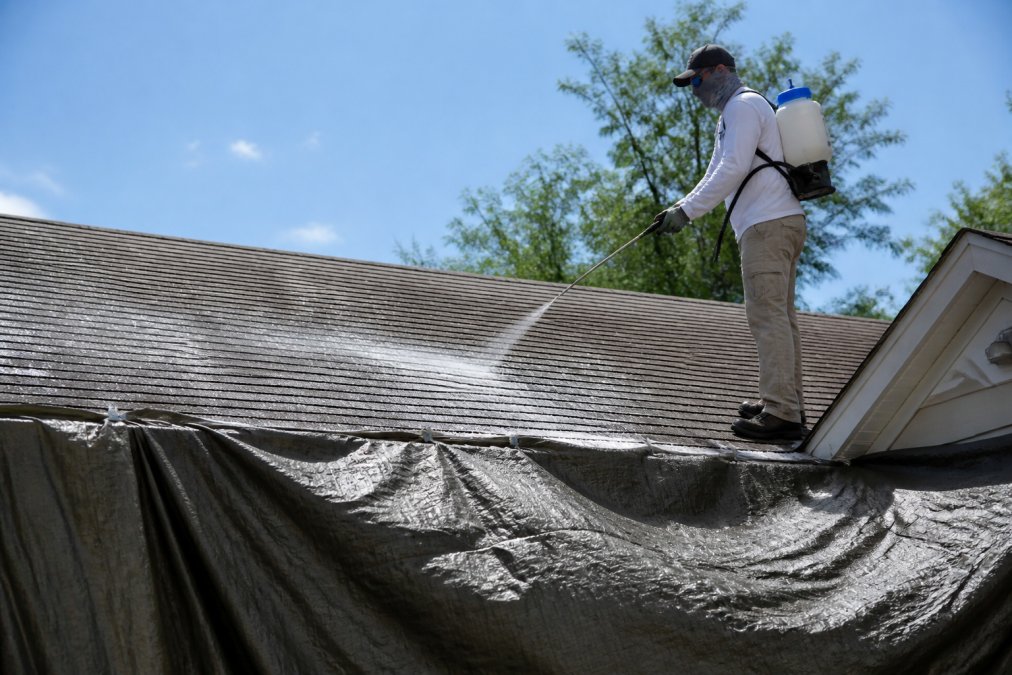
Soft chemical washing works on roofs, siding, fencing, composite decking, and natural stone, surfaces where pressure washing would cause visible damage. Cedar shake roofing, slate tiles, limestone, and engineered wood siding all respond well to this approach. The chemicals are designed to be effective against biological growth while remaining safe for the substrate.
One critical detail: the chemicals used matter enormously. Eco-friendly, biodegradable solutions break down without harming soil, plants, or groundwater. They’re safer for your family, pets, and landscaping. Many professional cleaning companies, including Freedom Wash Club, use these formulations specifically because they deliver results without environmental trade-offs.
The timeline for soft washing is longer than pressure washing, but the durability is worth it. Most homeowners see results that last 12-24 months before growth begins to return, depending on climate and sun exposure (peer-reviewed research). In humid, shaded areas, regrowth may happen sooner. In dry, sunny locations, results can last even longer.
Schedule soft washing in early spring or fall when temperatures are moderate. This allows the cleaning agents to work optimally and gives biological growth less time to re-establish before winter or summer heat arrives.
Professional Paver Sealing Companies and Driveway Restoration
Driveway restoration is where pressure cleaning alternatives shine, and where homeowners often make expensive mistakes. Pavers, natural stone, and even some concrete finishes require specialized care that goes beyond pressure washing.
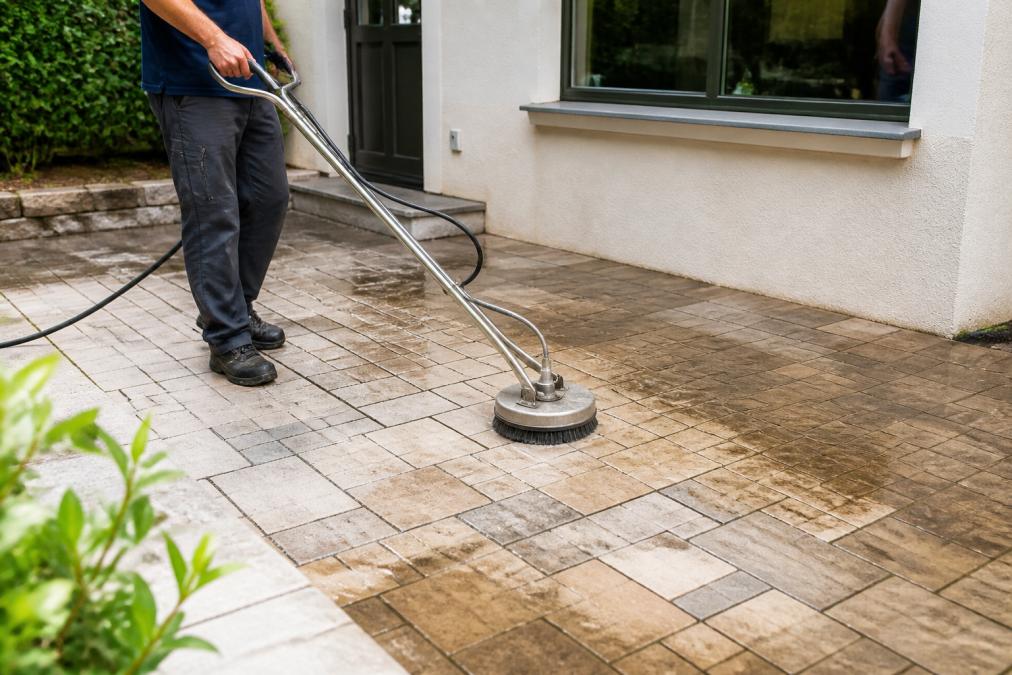
Paver driveways are beautiful but vulnerable. The joints between pavers collect dirt, sand, and debris. Weeds grow through the gaps. Water infiltrates the base, causing settling and cracking. Pressure washing can dislodge the sand that holds pavers in place and force water deeper into the base layer, accelerating damage.
Professional paver sealing companies take a different approach. After cleaning (often using soft washing for delicate surfaces), they apply a protective sealant that binds the sand in the joints, repels water, and prevents weed growth. This single step extends the life of your driveway by years and maintains its appearance.
The restoration process typically involves three stages: cleaning, joint stabilization, and sealing. First, the pavers are cleaned, either with soft washing or low-pressure equipment, depending on the paver material and condition. Next, polymeric sand or joint stabilizer is worked into the gaps between pavers. This sand locks in place when exposed to moisture, holding pavers stable and preventing weed growth. Finally, a protective sealant is applied to the entire surface, creating a water-resistant barrier.
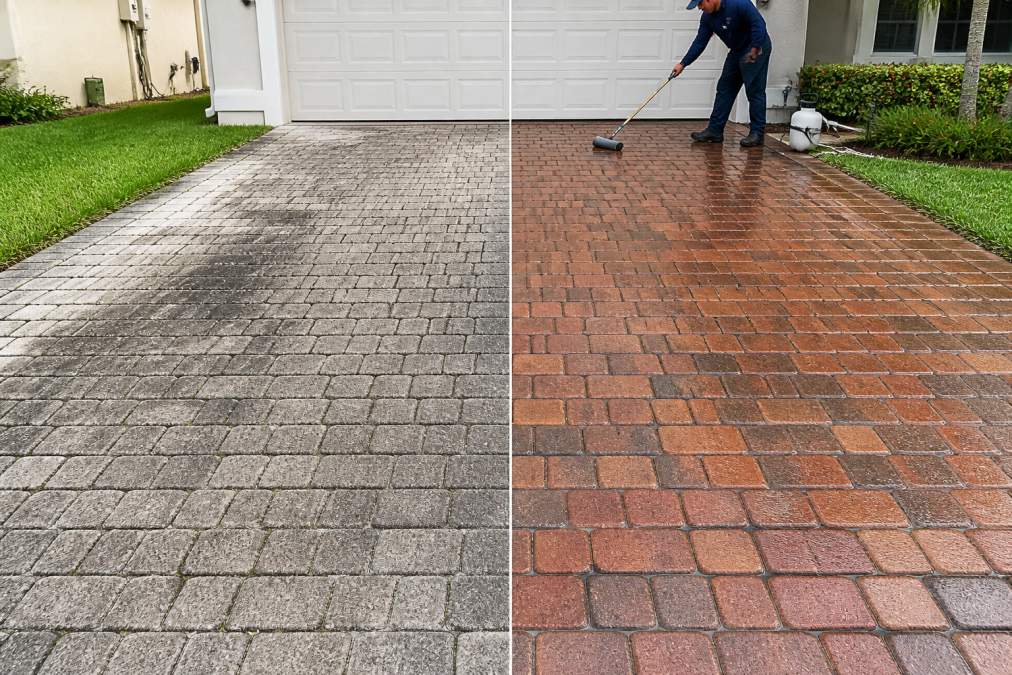
This approach prevents the most common driveway problems: settling, weed growth, sand loss, and water damage. A properly sealed driveway requires minimal maintenance and lasts significantly longer than one that’s only pressure washed. The sealant typically needs reapplication every 2-3 years, but that’s a small investment compared to replacing a failing driveway.
For concrete driveways, the principles are similar but the execution differs. Some concrete surfaces have a finish coating that pressure washing can damage. Soft washing followed by a concrete sealer provides better protection. For unsealed concrete, pressure washing is acceptable, but following it with a sealer extends the life and makes future cleaning easier.
Roof Cleaning and Maintenance Without High Pressure
Your roof is the most vulnerable surface on your property, and it’s where pressure cleaning alternatives are absolutely essential. High-pressure water on asphalt shingles causes permanent damage that no homeowner should risk.
Asphalt shingles are engineered to shed water, not resist high-velocity jets. The granules embedded in the shingle surface protect the asphalt underneath from UV damage. When pressure washing strips these granules, the underlying asphalt begins to degrade immediately. You won’t see the damage for a few years, but by then, the warranty is void and expensive replacement is your only option.
Roof cleaning and maintenance without high pressure relies on soft washing. A technician applies a specialized algaecide or fungicide formulated for roofing materials, allows it to work, then gently rinses with low-pressure water. The result is a clean roof free of mold, algae, and moss, without any risk of damage.
The frequency of roof cleaning depends on your climate and roof exposure. Shaded areas with moisture tend to develop growth faster. Direct sunlight and good drainage slow regrowth. Most homeowners benefit from roof cleaning every 12-18 months in humid climates, or every 2-3 years in drier conditions.
Beyond cleaning, roof maintenance includes gutter cleaning, flashing inspection, and moss removal from valleys and ridges. These tasks are best handled by professionals with proper safety equipment and knowledge of roofing systems. Attempting roof work without training creates serious fall risks and can void your roof warranty if damage occurs.
Never use a pressure washer on a roof. The force can damage shingles, void warranties, and create water infiltration that causes interior damage. Soft washing is the only safe pressure cleaning alternative for roof maintenance.
DIY vs Professional Cost-Benefit Analysis
The temptation to handle exterior cleaning yourself is understandable, equipment rental is affordable, and the labor is free. But the cost-benefit equation often tips toward professional services once you factor in risk, results durability, and your time.
DIY pressure washing costs roughly $50-150 to rent equipment for a day, plus the time investment of 4-8 hours depending on your property size. If you make a mistake, stripping paint, damaging siding, or forcing water into seams, the repair costs quickly exceed what you would have paid a professional. One instance of water damage inside a wall can cost $5,000-15,000 to remediate.
Professional soft washing and pressure cleaning alternatives cost more upfront but deliver several advantages. Licensed technicians understand surface-specific risks and choose the appropriate method. They carry insurance, so if something goes wrong, you’re protected. The work is guaranteed, meaning if results don’t meet expectations, they’ll return and correct it. Most importantly, professionals have the right equipment and expertise to achieve results that last.
For homeowners with time constraints, particularly snowbirds who aren’t present year-round, professional services are the practical choice. Scheduling a cleaning takes 10 minutes. DIY requires planning, equipment rental, physical labor, and cleanup. For busy professionals and seasonal residents, that’s a significant time investment.
The durability question matters too. DIY pressure washing often produces visible results that fade quickly because the underlying organism isn’t killed. Professional soft washing addresses the root cause, so results last longer and require less frequent maintenance. Over a 3-year period, the total cost of multiple DIY attempts may exceed the cost of one or two professional treatments.
Freedom Wash Club offers flexible scheduling via phone or text, no in-person estimates required, and a 100% satisfaction guarantee. For homeowners weighing DIY versus professional, that guarantee removes the risk from choosing professional services.
Finding Licensed and Insured Cleaning Services
Choosing a cleaning service is a decision that affects your property’s safety and appearance. The difference between a licensed, insured professional and an unlicensed operator can be substantial.
Licensed and insured cleaning companies carry general liability insurance, which protects you if damage occurs during the work. If a technician accidentally breaks a window or causes water damage, the company’s insurance covers it. An unlicensed operator with no insurance leaves you liable for all damages. That’s a significant financial risk.
Licensing varies by state and locality, but reputable companies meet or exceed local requirements. They maintain current certifications, follow safety protocols, and stay informed about industry best practices. This matters because cleaning techniques evolve, what worked five years ago may not be optimal today.
When evaluating cleaning services, ask for proof of licensing and insurance. Request references from recent customers, particularly those with similar properties. Read online reviews, but look for specific details rather than generic praise. “They did great work” tells you less than “They cleaned my roof without damaging any shingles and the algae hasn’t returned in 18 months.”
Transparency in communication is another indicator of professionalism. A company that explains why they’re recommending soft washing instead of pressure washing demonstrates expertise. One that offers a free estimate and answers your questions thoroughly builds confidence. Freedom Wash Club’s approach, no in-person estimates required, easy phone or text scheduling, reflects confidence in their service and respect for your time.
The 100% satisfaction guarantee is worth examining. What does it actually cover? Does it mean they’ll return and re-do the work if you’re unhappy? Will they address specific concerns like mold returning within a certain timeframe? Understanding the guarantee details helps you assess the company’s confidence in their work and your recourse if results don’t meet expectations.
Choosing a pressure cleaning alternative isn’t about settling for less, it’s about selecting the right tool for your specific surface and problem. Soft washing, paver sealing, and professional roof maintenance deliver superior results that last longer and protect your property value. When you’re ready to restore your home’s exterior without risking damage, Freedom Wash Club combines licensed expertise, flexible scheduling, and a satisfaction guarantee that gives you peace of mind. Contact us for a free quote and discover why homeowners throughout the region trust us to maintain their properties. Learn more about professional exterior cleaning best practices
Frequently Asked Questions
What is the difference between soft washing and pressure washing?
Soft washing uses low-pressure water combined with biodegradable cleaning solutions to safely remove mold, algae, and mildew from delicate surfaces like roofs and siding. Pressure washing uses high-pressure water jets to blast away dirt and grime from concrete and durable surfaces. Soft washing is gentler and better for shingles and tile; pressure washing is more aggressive and effective for heavy-duty stains on concrete and pavers.
How often should I have my home exterior professionally cleaned?
Most homeowners benefit from professional exterior cleaning once or twice per year, depending on climate and surface type. Roofs in humid climates may need cleaning annually to prevent mold and algae growth. Driveways and patios typically need cleaning every 12-18 months. High-traffic areas or properties near trees may require more frequent maintenance. A licensed professional can recommend a schedule based on your specific property conditions.
What should I look for when choosing a licensed and insured pressure cleaning company?
Verify that the company holds valid business licenses and liability insurance before hiring. Ask for proof of insurance and check online reviews on Google and industry sites. Confirm they offer a satisfaction guarantee and have experience with your specific cleaning needs, whether that’s roof restoration, paver sealing, or driveway cleaning. Easy communication via phone or text scheduling is a bonus for convenience.
Are there eco-friendly alternatives to standard pressure cleaning chemicals?
Yes. Many professional cleaning companies now use biodegradable, eco-friendly solutions that effectively remove mold, algae, and stains without harming landscaping or local waterways. These solutions work with soft washing techniques and are especially popular for residential properties. Ask potential service providers about their chemical options and environmental practices before booking.
This article was written using GrandRanker