Last Updated: October 22, 2026
Quick Summary
Your roof needs professional cleaning when you notice dark streaks, algae, moss, or lichen growth on shingles, especially in shaded or damp areas where organic growth thrives and accelerates deterioration without intervention.
- Dark streaks usually indicate algae, mold, and mineral deposits that spread as spores and are hard to remove without proper equipment.
- Black algae feeds on limestone filler in asphalt shingles and can cut your roof’s lifespan by several years if left untreated.
- Moss indicates extended moisture exposure and has root systems that lift shingle edges, creating gaps where water seeps underneath.
- Clogged gutters cause standing water that lets algae and moss thrive, so drainage assessment should accompany any roof cleaning.
- Soft wash roof cleaning uses low-pressure water with specialized solutions to safely remove organic growth without damaging shingles or voiding warranties.
Table of Contents
- Dark Streaks and Discoloration on Your Roof
- Black Algae on Roof Shingles
- Moss on Roof Shingles and What It Means
- Lichen and Other Organic Growth
- Clogged Gutters and Poor Roof Drainage
- Soft Wash Roof Cleaning vs. Roof Repair: Knowing the Difference
- Roof Cleaning vs. Roof Repair: Making the Right Call
- Why Regular Roof Maintenance Protects Your Home
- Frequently Asked Questions
Dark Streaks and Discoloration on Your Roof
Dark streaks across your roof shingles are often the first visible sign your roof needs professional cleaning. They start in shaded areas where moisture lingers and worsen without intervention.
These marks are usually algae, mold, and mineral deposits that spread as spores travel across the roof, especially in humid climates, and are hard to remove without proper equipment.
Homeowners often wait too long: by the time streaks are obvious, the organisms have already begun degrading the shingles. At Freedom Wash Club, we recommend a professional inspection as soon as you notice them.
Dark discoloration also signals that the protective granule layer may be compromised, letting organic growth age your roof faster than it should.
Black Algae on Roof Shingles
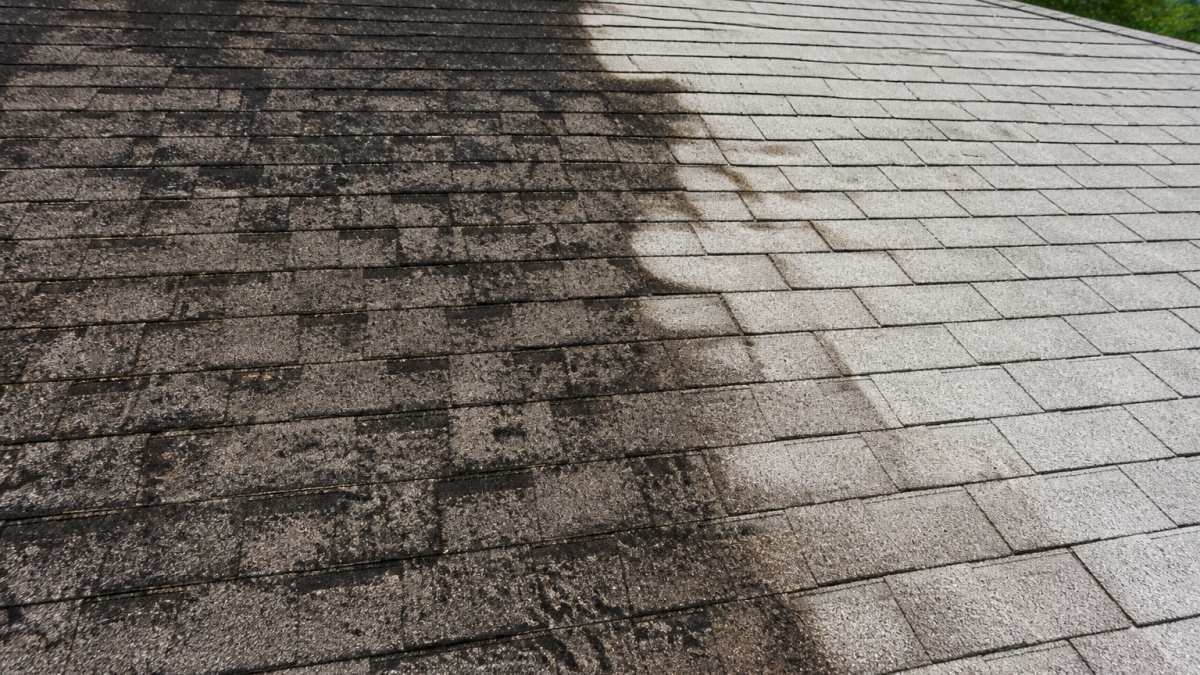
Black algae is one of the most common culprits behind roof discoloration and thrives in warm, humid conditions. Dark patches that look almost black usually mean algae, not dirt, but misreading the sign can lead to the wrong treatment.
How to Tell Black Algae from Dirt, Moss, and Lichen
Black algae (often Gloeocapsa magma) appears as dark, streaky stains that typically run vertically down the roof slope, following the path of water runoff. The streaks are usually uniform in width and may have a slightly fuzzy or powdery texture when dry. In contrast:
- Dirt and debris are loose, uneven, and wash away easily with a garden hose. They don’t cling to shingles.
- Moss grows in thick, raised clumps, often bright green, and has a distinct root-like structure that lifts shingle edges.
- Lichen forms crusty, circular patches in gray, green, or reddish tones and bonds tightly to the surface, often on older roofs.
A simple field test: spray a small area with water. If the stain lightens immediately, it’s likely dirt. If it stays dark and the water beads off, it’s probably algae or lichen. Black algae won’t fade with plain water because it’s rooted into the shingle’s limestone filler.
Why Black Algae Is More Than a Cosmetic Issue
Black algae feeds on the limestone filler in asphalt shingles, actively consuming roofing material. This accelerates deterioration, can cut your roof’s lifespan by several years, and traps moisture that invites mold and rot.
Safe Cleaning Methods and What to Avoid
Pressure washing is the wrong tool for black algae. High-pressure water can blast away the protective granule layer, void manufacturer warranties, and force water under shingles, leading to leaks and rot. Soft wash roof cleaning instead uses low-pressure water (typically under 100 PSI) with specialized solutions (often sodium hypochlorite-based) applied, allowed to dwell, then gently rinsed, killing algae at the source without water damage risk.
Never walk on a roof to inspect or clean it yourself. Roof surfaces, especially those covered in algae, can be extremely slippery, and falls are a leading cause of home maintenance injuries. Leave roof access to professionals with proper safety equipment.
Address black algae as soon as you notice it, the longer it grows, the more damage it inflicts. A professional soft wash roof cleaning removes it and restores appearance without risking your safety or your shingles.
Moss on Roof Shingles and What It Means
Moss indicates a different problem than algae: your roof stays damp for extended periods. It appears in thick patches, often on north-facing slopes where sunlight is limited.
Unlike algae, moss has root systems that penetrate deeper into shingles, lifting edges and creating gaps where water seeps underneath, a pathway to water damage inside your home.
Moss also adds weight; heavy growth can strain your roof structure over time, especially in areas with frequent rain or high humidity.
Moss usually indicates your drainage system isn’t working as it should.
Lichen and Other Organic Growth
Lichen is a composite of algae and fungus, often mistaken for moss or mold. It appears as crusty gray, green, or reddish patches, grows more slowly than algae or moss but is equally problematic, and can grow on any roofing material, asphalt, tile, metal, or wood, especially on older roofs.
Visual Identification Guide: Algae vs. Moss vs. Lichen vs. Damage
Use this quick reference to distinguish common roof conditions:
| Feature | Algae | Moss | Lichen | Roof Damage |
|---|---|---|---|---|
| Appearance | Dark streaks, often black or brownish-green | Thick, raised green clumps | Crusty, circular patches in gray, green, or red | Cracked, curling, or missing shingles; bare spots |
| Texture | Powdery or fuzzy when dry | Soft and spongy | Hard and crusty | Brittle or granule-depleted |
| Location | Shaded areas, following water runoff | North-facing slopes, damp areas | Any material, often older roofs | Widespread or localized |
| Effect of water | Does not wash away | May absorb water and stay damp | Does not wash away | May leak through |
| Root structure | Surface-level | Root-like structures that lift shingles | Bonds tightly to surface | N/A |
If you’re unsure, a professional inspection can confirm what you’re dealing with. Misidentification can lead to ineffective cleaning or unnecessary repairs.
Why Lichen Signals a Long-Term Moisture Problem
Lichen signals a roof exposed to moisture and minimal sunlight for an extended period, damp and shaded long enough for this slower-growing organism to establish itself. Professional cleaning and possibly a maintenance or repair evaluation should be a priority.
Lichen also holds water against your shingles more aggressively than other growth, accelerating deterioration and risking serious structural issues if unaddressed.
Material-Specific Cleaning Considerations
Different roofing materials require different cleaning approaches:
- Asphalt shingles: Soft wash is safe and effective. Avoid pressure washing, which can strip granules.
- Tile roofs: Soft wash with appropriate solutions; avoid walking on tiles, which can crack.
- Metal roofs: Soft wash or gentle pressure washing with manufacturer-approved cleaners; avoid abrasive methods.
- Wood shakes: Requires careful cleaning with wood-safe solutions; pressure washing can damage fibers.
Always consult a professional to determine the right method for your roof type.
When to Call a Professional
If you see lichen, schedule a professional roof inspection. A qualified technician can assess the growth, identify underlying damage, and recommend a plan. DIY removal can damage shingles or cause injury; professional soft wash roof cleaning safely eliminates lichen and addresses the drainage or moisture issues behind it.
Clogged Gutters and Poor Roof Drainage
Clogged gutters are one of the most overlooked signs your roof needs attention, not because the gutters themselves need cleaning, but because they signal a larger drainage problem.
Standing water lets algae, moss, lichen, and mold thrive, accelerates shingle deterioration, and can leak into your attic and walls.
Signs of poor roof drainage include:
- Water pooling in certain areas of your roof
- Gutters overflowing during rain
- Water stains on your exterior walls below the roofline
- Debris accumulation in gutters and downspouts
- Sagging gutters or sections pulling away from the roof
Poor drainage compounds every other roof problem: clean away algae or moss and it returns quickly if the drainage issue persists.
At Freedom Wash Club, we evaluate gutter function and roof drainage as part of our roof cleaning assessment.
Soft Wash Roof Cleaning vs. Roof Repair: Knowing the Difference
Knowing when your roof needs cleaning versus repair is critical. Cleaning addresses surface contamination and organic growth; repair addresses structural damage and material failure. Confusing the two wastes money or ignores a serious problem.
When Your Roof Needs Professional Cleaning
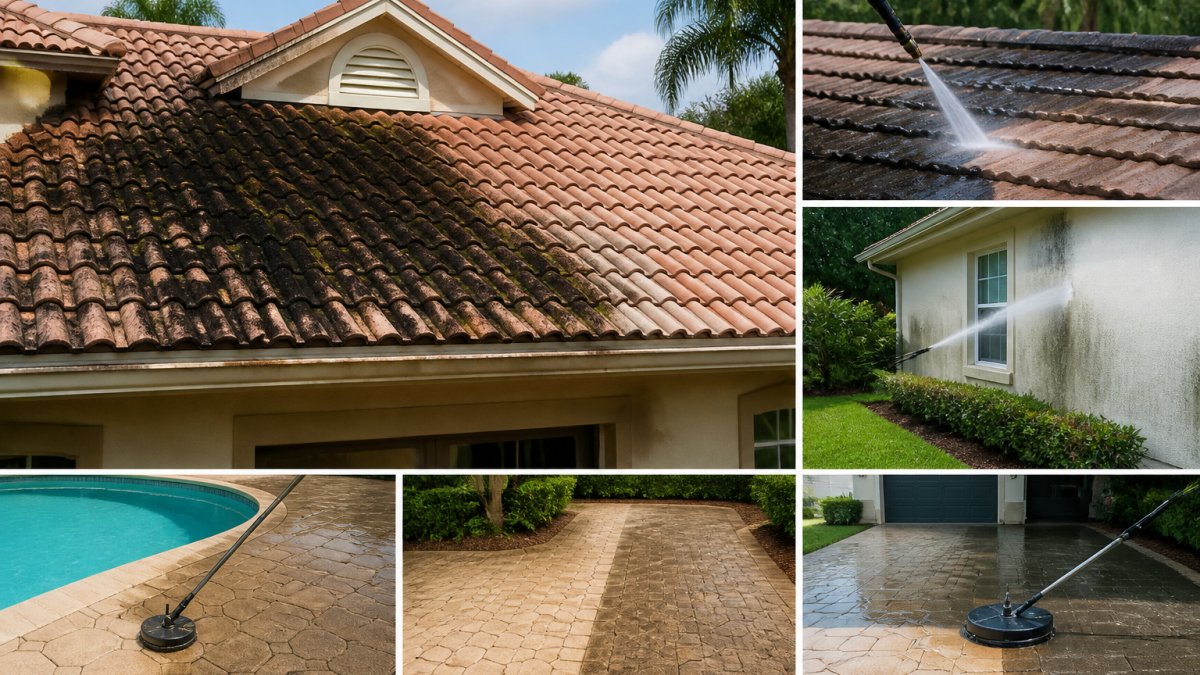
Professional roof cleaning suits surface-level issues: dark streaks, algae, moss, lichen, dirt buildup, or discoloration. These affect appearance and can accelerate deterioration but don’t indicate structural failure.
Soft wash roof cleaning uses low-pressure water with specialized solutions to remove organic growth without damaging shingles, killing algae and moss at their source to prevent rapid regrowth, gentler than pressure washing and more effective than surface cleaning alone.
Signs that cleaning is sufficient:
- Discoloration without visible shingle damage
- Organic growth that hasn’t lifted shingle edges
- Gutters that need clearing but aren’t leaking
- Roof that’s dirty but structurally sound
When Your Roof Needs Repair Instead
Repair is necessary for structural damage: cracked or curling shingles, missing shingles, exposed flashing, granule loss, or ceiling water stains, signs the protective layer has failed and water intrusion is likely.
You also need repair if you notice:
- Sagging roof sections
- Visible holes or punctures
- Shingles that are lifting or peeling
- Significant granule loss (bare spots showing the mat underneath)
- Water leaks inside your home
Cleaning won’t fix these problems. A professional inspection can determine whether you’re looking at a cleaning job, a repair job, or both.
Roof Cleaning vs. Roof Repair: Making the Right Call
The decision comes down to one question: is the damage structural or cosmetic? If your roof holds water out and damage is surface-level, clean it.
Many homeowners assume a dirty roof needs replacing, but professional cleaning can restore appearance and extend the life of a structurally sound roof.
The safest approach is a professional roof inspection before deciding. At Freedom Wash Club, we provide thorough assessments that identify cosmetic issues versus structural failure.
If you’re preparing your home for sale, professional cleaning improves curb appeal and property value without roof replacement.
Why Regular Roof Maintenance Protects Your Home
Regular roof maintenance, professional cleaning, gutter clearing, and periodic inspections, is far less expensive than water damage, mold, or premature replacement.
Maintenance is minimal compared to water damage repairs, mold remediation, or replacing a roof decades early.
When you notice signs your roof needs professional cleaning, act now. Organic growth spreads quickly, drainage issues compound, and water damage accelerates once it begins.
If you’re seeing dark streaks, algae, moss, or other signs your roof needs professional cleaning, Freedom Wash Club is ready to help.
| Sign | What It Indicates | Cleaning or Repair? |
|---|---|---|
| Dark streaks and discoloration | Algae, mold, mineral deposits | Cleaning |
| Black algae patches | Active organic growth | Cleaning |
| Moss growth | Extended moisture exposure | Cleaning |
| Lichen crusts | Long-term moisture and shade | Cleaning |
| Clogged gutters | Poor drainage | Cleaning + maintenance |
| Cracked or curling shingles | Structural damage | Repair |
| Missing shingles | Material failure | Repair |
| Water stains on ceiling | Water intrusion | Repair |
| Sagging roof sections | Structural compromise | Repair |
Frequently Asked Questions
What are the most common signs your roof needs professional cleaning?
The most obvious signs are dark streaks or black discoloration across your shingles, visible algae or moss growth, accumulated debris in gutters, and a general dull or dirty appearance. If your roof looks noticeably darker than it did a few years ago, or if you spot green patches or organic growth, professional cleaning is worth considering. These signs typically appear before structural damage occurs, making cleaning a preventive step.
Can black algae on roof shingles cause permanent damage?
Black algae itself doesn’t immediately destroy shingles, but it can trap moisture against the surface and contribute to granule loss over time, which weakens your roof’s ability to shed water. The organic growth can also make shingles more slippery and unsafe. Professional soft wash roof cleaning removes the algae and organic material without the high pressure that can damage shingles, protecting your roof’s lifespan and maintaining your home’s weather resistance.
How do I know if I need roof cleaning vs. roof repair?
If your roof has surface stains, algae, moss, or debris buildup but the shingles feel intact and lie flat, cleaning is the solution. If you notice curled, cracked, or missing shingles, granule loss in gutters, sagging areas, or water stains on your ceiling, your roof likely needs repair first. A professional roof inspection can distinguish between cosmetic issues that respond to cleaning and structural problems requiring repair before cleaning.
How often should a roof be professionally cleaned?
Roof cleaning frequency depends on your climate, tree coverage, and how quickly organic growth returns. Most homeowners benefit from professional cleaning every 2-3 years, though areas with heavy shade, high humidity, or frequent rain may need it more often. Regular maintenance through soft wash roof cleaning, combined with paver sealing, driveway cleaning, and house wash services, helps preserve your entire property’s appearance and prevents costly repairs.