Table of Contents
- Two Different Guarantees, Two Different Protections
- What a Service Guarantee Covers: Workmanship and Results
- Pressure Washing Property Damage Liability: The Insurance Question
- Soft Wash Roof Cleaning Safety Standards and Your Roof Warranty
- How to Void Your Manufacturer Warranty
- What to Look For in a Professional Exterior Cleaning Service Agreement
- Conclusion: Ask These Questions Before You Book
- Frequently Asked Questions
Last Updated: September 9, 2026
When you hire a professional to clean your home’s exterior, the word “guarantee” gets thrown around a lot. But a pressure washing guarantee isn’t a single, simple promise. It’s actually two very different protections that homeowners frequently confuse: one covers the quality of the workmanship on your surfaces, and the other covers damage to your property. At Freedom Wash Club, we’ve spent over a decade helping South Florida homeowners understand exactly what their service agreement does and doesn’t cover, and this distinction is where most misunderstandings begin.
The confusion is understandable. Most guides lump these together, but they are separate concepts with separate legal and practical implications. Before you book any exterior cleaning service, you need to know whether you’re protected against a streaky house wash, and whether you’re covered if a contractor’s high-pressure wand etches your concrete. Below, we’ll break down what each type of guarantee actually covers, how to avoid voiding your manufacturer warranties, and the specific questions you should ask before signing a service agreement.
Two Different Guarantees, Two Different Protections
A pressure washing guarantee falls into two distinct categories: a service guarantee for workmanship and a liability protection for property damage. Understanding the difference is the foundation of every decision you’ll make about hiring an exterior cleaning company.
A service guarantee is a promise about the quality of the cleaning work itself. It answers the question: “Will my driveway actually look clean when you’re done?” A property damage liability protection, on the other hand, is an insurance-backed promise that answers: “If your equipment damages my roof or my neighbor’s car, who pays for it?” These are not interchangeable, and a company that offers one does not automatically offer the other.
Many homeowners assume that a “satisfaction guarantee” also covers accidental damage. It does not. A satisfaction guarantee typically means the company will re-clean a surface if you’re unhappy with the result. It rarely means the company carries insurance for the risks of high-pressure washing, which is a separate matter entirely.
What a Service Guarantee Covers: Workmanship and Results
The most common type of pressure washing guarantee is the workmanship promise, which covers the quality and completeness of the cleaning itself. When a company says their work is guaranteed, they are typically promising that the visible result will meet an agreed-upon standard, free from streaks, missed spots, or residue.
Surface Damage and Workmanship Defects
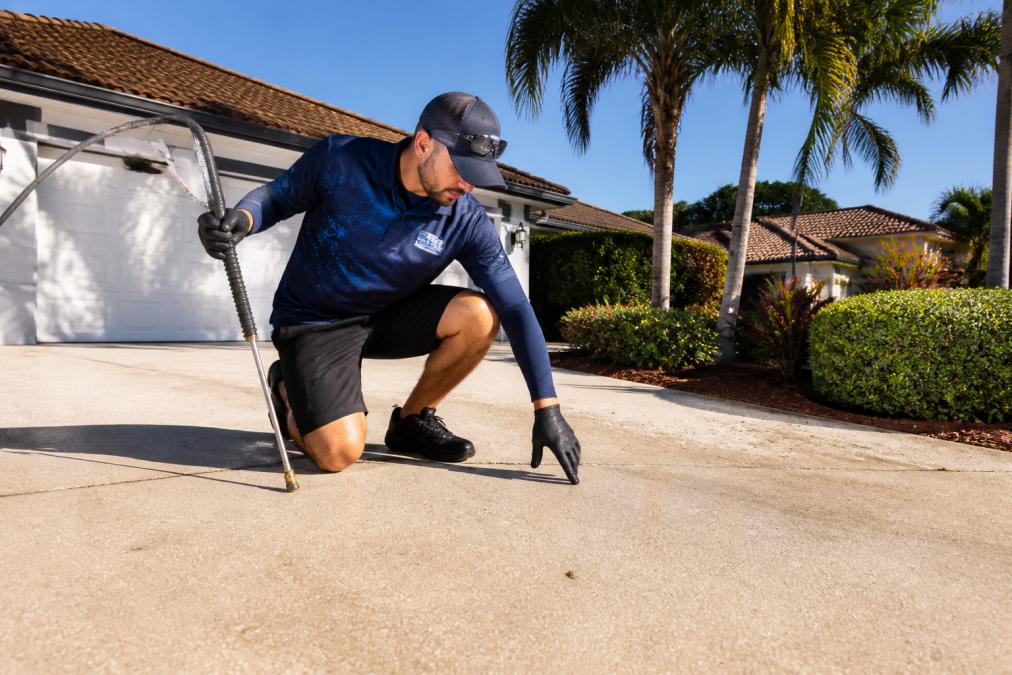
A workmanship guarantee protects you against defects in how the cleaning was performed. This includes issues like streaking on windows, chalky residue left on siding, or a patio that was etched because the psi setting was too high for the surface.
The key distinction here is between a workmanship defect and accidental damage. A workmanship defect means the service provider failed to do the job correctly, such as missing a section of algae on your pool deck or leaving soap scum behind. The remedy is typically a re-clean at no charge. Accidental damage, such as a cracked paver from a wand that was held too close, falls under the liability discussion in the next section, not under a workmanship guarantee.
Satisfaction Guarantee vs. Service Guarantee
There is a meaningful difference between a satisfaction guarantee and a service guarantee, though many companies use the terms interchangeably.
A satisfaction guarantee is subjective. It means the company will keep working until you, the customer, are happy with the visual result. A service guarantee is more objective, promising that the work meets a defined standard of quality, such as the complete removal of organic staining from a roof or the elimination of tire marks from a driveway. When you book a soft wash roof cleaning, for example, a strong service guarantee should confirm that the mold and algae are gone, not just lightened.
Ask any contractor whether their guarantee covers re-treatment if organic growth returns within a specific window. Mold and algae in South Florida can reappear quickly, and a guarantee that only covers the day of service is far less valuable than one that backs the cleaning for several months.
Pressure Washing Property Damage Liability: The Insurance Question
The second type of protection is not a guarantee at all, but rather insurance coverage for property damage. This is the protection that matters most when something goes wrong, and it is frequently misunderstood by homeowners.
Pressure washing property damage liability covers damage caused by the cleaning process itself. This includes cracked or chipped concrete from excessive pressure, water intrusion into your home’s interior, damage to landscaping from chemical runoff, or harm to a neighbor’s vehicle parked nearby. A reputable company carries commercial liability insurance to cover these third-party claims, and they should be able to provide proof of coverage before they start work.
The distinction between this and a service guarantee is critical. If a contractor’s equipment fails and causes a pump surge that damages your siding, a satisfaction guarantee does nothing for you. You need the contractor’s liability insurance to cover the repair. This is why verifying a company’s insurance credentials is just as important as reading their reviews. For a deeper look at how these protections apply to your specific cleaning project, the Insurance Information Institute’s guide to contractor liability coverage provides a helpful overview of what commercial general liability policies typically include.
Never hire an uninsured pressure washing company to save money. If their equipment damages your roof, your pool deck, or your neighbor’s fence, you will be the one filing a claim on your own homeowners insurance, which means paying your deductible and potentially facing a rate increase.
Soft Wash Roof Cleaning Safety Standards and Your Roof Warranty
Roof cleaning introduces a third type of protection that many homeowners overlook: your roof’s manufacturer warranty. The method used to clean your roof can directly affect whether your shingle or tile warranty remains valid.
Soft wash roof cleaning safety standards matter because they protect both your roof and its warranty. Soft washing uses low pressure combined with specialized cleaning solutions to remove mold, algae, and moss without damaging the roofing material. This is distinct from high-pressure washing, which can strip protective granules from shingles and void the manufacturer’s warranty.
Many roof manufacturers specify that high-pressure washing or the use of certain chemicals will void their warranty. Before allowing any company to clean your roof, you should confirm that their method complies with your roofing material’s care requirements. A professional exterior cleaning company should know which techniques are safe for which roof types, and they should be willing to discuss their process before you commit.
The Asphalt Roofing Manufacturers Association guidelines on roof cleaning explicitly warn against pressure washing asphalt shingles because it can cause granule loss and accelerate aging. This is a clear example of why the cleaning method matters as much as the final appearance.
How to Void Your Manufacturer Warranty
Voiding your manufacturer warranty is easier than most homeowners realize, and it often happens without any malicious intent. Understanding what voids a warranty is the best way to protect your investment.
The most common warranty voiding mistakes involve using the wrong cleaning method or the wrong chemicals. High-pressure washing on asphalt shingles is a frequent culprit, as is the use of bleach or other harsh chemicals that degrade roofing materials over time. Even cleaning a surface at the wrong time of day, when the sun can cause cleaning agents to dry too quickly and leave residue, can create issues.
Your equipment warranty can also be affected by how you maintain your own pressure washer. If you own a machine and plan to do your own cleaning, failing to perform routine maintenance like replacing spark plugs, changing air filters, and checking nozzle maintenance can void your equipment warranty. These maintenance requirements are spelled out in your owner’s manual, and they are exactly the kind of detail that separates a well-cared-for machine from one that fails prematurely.
The broader point is that a pressure washing guarantee from a service provider does not extend to your equipment or your roof’s manufacturer warranty. These are separate agreements with separate terms, and you are responsible for understanding each one.
What to Look For in a Professional Exterior Cleaning Service Agreement
A professional exterior cleaning service agreement should clearly spell out what is guaranteed, what is insured, and what is excluded. If a contract is vague on any of these points, that is a red flag.
A solid service agreement should address the scope of work, the cleaning method to be used, the specific surfaces to be cleaned, and the expected outcome. It should also clarify the company’s guarantee terms, including how they handle re-cleaning if you are unsatisfied, and it should confirm that the company carries liability insurance for property damage. The agreement should also address preventative maintenance recommendations, such as scheduling regular house washes to prevent organic buildup from causing long-term staining.
Claim Documentation Requirements
The part of the process most homeowners never think about is documentation, until they need to file a claim. Whether you are making a claim under a service guarantee or a liability policy, documentation is everything.
Before work begins, take dated photos of the surfaces to be cleaned, noting any existing damage like cracked pavers or worn shingles. After the work is complete, take another set of photos showing the final result. If you need to file a claim, whether for a workmanship issue or property damage, this photographic record provides the evidence you need. You should also keep a copy of the signed service agreement, any warranty registration documents, and the contractor’s proof of insurance.
The Federal Trade Commission guidance on warranty documentation emphasizes that keeping thorough records is essential for enforcing any warranty or guarantee. This applies equally to a service guarantee from a cleaning company and to a manufacturer’s warranty on your roofing materials.
The single most important thing you can do to protect yourself is to get everything in writing: the scope of work, the guarantee terms, proof of insurance, and dated before-and-after photos. A verbal promise is only as good as the paper it’s written on, which is to say, not very good at all.
The table below summarizes the key differences between the protections we’ve discussed:
| Protection Type | What It Covers | How It’s Backed | What to Ask |
|---|---|---|---|
| Service Guarantee | Workmanship quality, streaks, missed spots | Company re-cleans at no charge | Does it cover re-treatment for regrowth? |
| Satisfaction Guarantee | Subjective visual result | Company works until you’re happy | What happens if I’m still unhappy? |
| Property Damage Liability | Accidental damage to your property | Contractor’s commercial insurance | Can I see proof of insurance? |
| Manufacturer Warranty | Roof or equipment defects | Roof/equipment maker’s terms | Does your method void my warranty? |
Conclusion: Ask These Questions Before You Book
A pressure washing guarantee is only as valuable as the company backing it and the documentation supporting it. The next time you receive a quote for driveway cleaning, a house wash, or a soft wash roof cleaning, ask the contractor directly: What does your workmanship guarantee cover, can I see proof of your liability insurance, and will your cleaning method void my roof’s manufacturer warranty? Also ask about their experience with pool deck cleaning and paver sealing, since these surfaces require specific care to avoid damage.
These questions separate a professional, insured operation from a weekend operator with a rented machine. At Freedom Wash Club, we’re licensed and insured, we back every job with our 100% satisfaction guarantee, and we have the decade of experience to know which methods protect your surfaces and your warranties. Our easy phone or text scheduling means you can get a free quote without an in-person visit.
Frequently Asked Questions
What is the difference between a pressure washing warranty and a satisfaction guarantee?
A manufacturer warranty covers defects in the pressure washing equipment itself, like pump failure or faulty parts. A satisfaction guarantee from a cleaning company covers the quality of their work, such as removing mold or staining. When you hire a service, ask if they offer a workmanship guarantee that covers surface damage or streaking caused by their crew.
Will professional cleaning void my roof manufacturer’s warranty?
It can if the cleaning method violates the roof manufacturer’s guidelines. Many shingle warranties require low-pressure soft washing and forbid high-pressure washing, which can damage granules. Before booking, ask the company if they follow soft wash roof cleaning safety standards and confirm their process aligns with your roof’s warranty requirements. Get their process in writing.
Does a pressure washing guarantee cover property damage?
No. A service guarantee covers the quality of the cleaning workmanship. Property damage, like a cracked window or broken paver, is covered by the company’s liability insurance, not their workmanship guarantee. Always verify a company’s pressure washing property damage liability coverage and ask for proof of insurance before they start work on your property.
What should I look for in a professional pressure washing service agreement?
A clear service agreement should list the exact surfaces to be cleaned, the cleaning method (soft wash vs. high-pressure), the scope of the work, and the total price. It should also outline the service guarantee terms, including what happens if you are unsatisfied. For paver sealing or roof cleaning, get the specific process and any prep work in writing.
Getting a clear answer to what a pressure washing guarantee covers is the difference between peace of mind and a costly surprise. When you’re ready to protect your South Florida home with a team that stands behind its work, contact Freedom Wash Club for your free quote and see why homeowners trust us to keep their properties clean, their HOAs happy, and their warranties intact.