Last Updated: November 21, 2026
Quick Summary
Professional exterior house washing costs most homeowners $213 to $449, averaging $312, while DIY runs $100 to $260 plus your time. DIY only pays off on simple single-story surfaces; homes with shingle roofs, painted wood, stucco, or pool decks should hire it out because damage risk outweighs the savings.
- A pressure-washer rental runs roughly $40 to $100 per day before detergent, gear, and gas.
- Keep the nozzle at least two feet from siding and work top to bottom when washing.
- Shingle roofs need soft washing only, since pressure strips granules and voids warranties.
- Skipping the dwell step is the most common shortcut and why cheap roof cleanings return within months.
- Pavers need pressure plus post-clean sealing or weeds and stains return within a season.
Table of Contents
- DIY vs Professional Exterior House Washing: The Real Trade-Offs
- DIY vs Professional Exterior House Washing Cost: A Line-by-Line Comparison
- Soft Washing vs Pressure Washing a House: Which Method Fits Your Siding
- How to Wash House Siding Safely If You Go the DIY Route
- The Professional House Washing Process, Step by Step
- Surface-by-Surface Guide: Roofs, Driveways, Pool Decks, and Pavers
- Get Your Free Freedom Wash Club Quote
- Frequently Asked Questions
DIY vs Professional Exterior House Washing: The Real Trade-Offs
Professional exterior house washing costs most homeowners $213 to $449, with a national average of $312 according to Angi’s 2026 pressure washing cost data. That number frames the entire DIY debate, and it is the one most homeowners get wrong. At Freedom Wash Club, we have spent over a decade cleaning South Florida homes, and the honest answer is that DIY saves money on paper and costs more in practice more often than people expect.
Exterior house washing is the process of removing dirt, algae, mildew, and mold from a home’s siding, roof, and hardscape using water, cleaning solution, and controlled pressure. The method matters more than the muscle behind it.
Below, we break down the real costs, the surface risks, and the decision rule we would use on our own homes.
DIY vs Professional Exterior House Washing Cost: A Line-by-Line Comparison
The upfront cost gap looks huge until you itemize it, and most comparisons stop at the sticker price. A pressure-washer rental runs roughly $40 to $100 per day at most equipment yards, then you add detergent, gas, protective gear, and your weekend. Professional pricing runs $0.10 to $0.50 per square foot depending on the surface and condition, per Angi’s house washing cost guide.
| Cost Line | DIY | Professional |
|---|---|---|
| Equipment | $40-$100 rental per day | Included |
| Cleaning solution | $20-$50 | Included |
| Protective gear | $30-$80 | Included |
| Water and gas | $10-$30 | Included |
| Labor | Your weekend | Crew handles it |
| Damage risk | Yours to absorb | Covered by insurance |
| Typical total | $100-$260 plus time | $213-$449 average |
That last row is the trade-off in one line, but the table alone does not tell you when DIY actually wins. The break-even point is narrower than most homeowners assume. If you rent a machine for one day, buy solution and gear, and wash a single-story home with vinyl siding and a concrete driveway, your cash outlay lands near the low end of the DIY range and you keep the difference. The math changes when you need a second rental day, you own painted wood or stucco that demands a gentler method than a rental unit delivers, or you damage a window seal or strip paint from a section of siding.
Professional quotes depend on factors such as the size of the property, height, siding material, how much algae and mildew has built up, landscaping density, and which services are included, such as soft wash roof cleaning or paver sealing. Freedom Wash Club offers house wash, driveway cleaning, and pool deck cleaning, and contacting us through our website is the best way to get a quote for your property.
For a full pricing breakdown by surface and home size, see our residential pressure washing pricing guide.
Soft Washing vs Pressure Washing a House: Which Method Fits Your Siding
Soft washing is generally the better fit for most modern siding, while pressure washing suits bare concrete. That is the short version. Soft washing is a low-pressure cleaning method that relies on cleaning solution to kill algae and mildew at the root, while pressure washing uses high water pressure to blast debris off hard surfaces.
Vinyl siding, painted wood, stucco, and shingle roofs belong in the soft wash column. Concrete driveways, pool decks, and brick handle higher pressure fine. A homeowner discussion on Reddit’s home maintenance forum made the same point: pressure washing suits vinyl, but painted wood is a risk most people should not take.
For a deeper comparison before you decide, read our guide on soft wash vs high pressure for home exteriors.
How to Wash House Siding Safely If You Go the DIY Route
Safety comes down to three things: pressure, distance, and protection. Keep the nozzle at least two feet from siding, work top to bottom, and never point the wand upward under lap boards where water can get behind the wall.
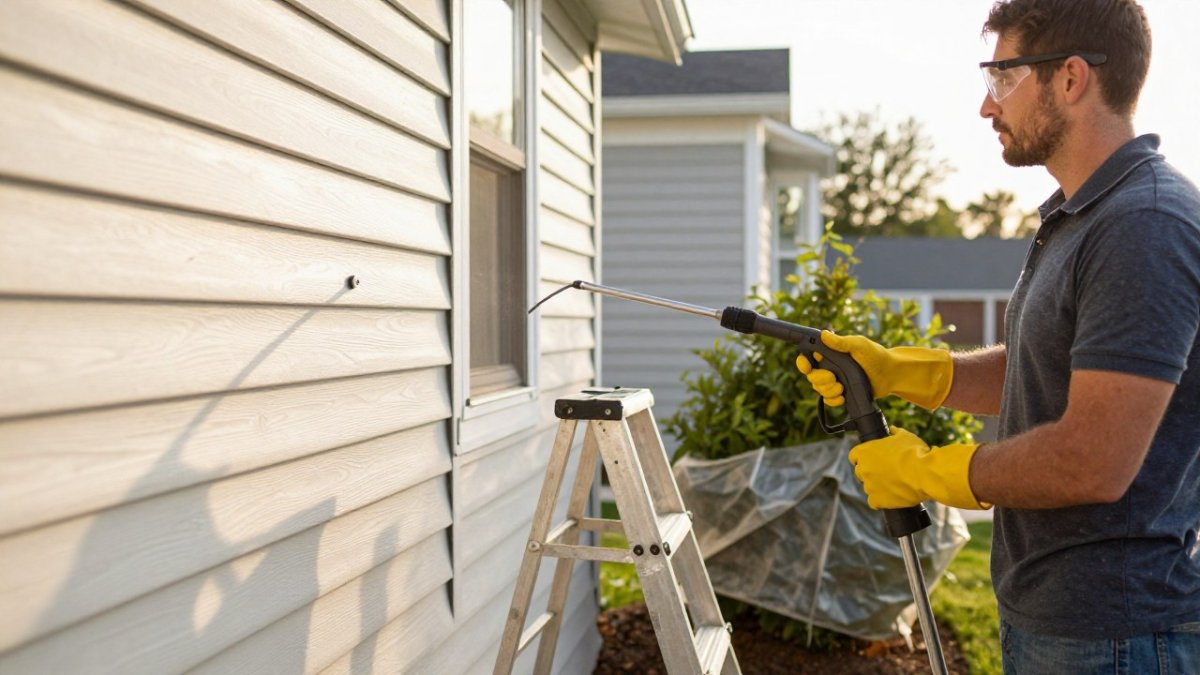
A short checklist before you start:
- Close all windows and cover outlets
- Pre-wet landscaping and cover plants
- Test the nozzle on an inconspicuous patch
- Wear eye protection and non-slip shoes
- Never use a ladder while holding the wand
Watch out: too much pressure on painted wood strips paint in seconds, and the repair bill usually exceeds what a professional wash would have cost.
The Professional House Washing Process, Step by Step
A professional house washing process follows a fixed sequence, and the sequence is why results last. Here is how a proper job runs:
- Walk the property and identify surface types and problem areas
- Pre-treat landscaping and cover sensitive fixtures
- Apply cleaning solution from the bottom up
- Let the solution dwell so it kills algae and mildew
- Rinse from the top down at controlled pressure
- Spot-treat stubborn stains on concrete and pavers
- Final walkthrough with the homeowner
Skipping the dwell step is the most common shortcut, and it is why cheap roof cleanings come back within months.
Surface-by-Surface Guide: Roofs, Driveways, Pool Decks, and Pavers
Each surface needs its own method, and treating them the same is how damage happens. The table below is the decision guide most comparisons skip: match your material to the method before you rent anything.
| Surface | Safe Method | What Goes Wrong |
|---|---|---|
| Vinyl siding | Soft wash, low pressure | Water forced behind lap boards causes hidden rot |
| Painted wood | Soft wash only | Pressure strips paint in seconds |
| Stucco | Soft wash, low pressure | High pressure etches and cracks the finish |
| Fiber cement | Soft wash, low pressure | Aggressive pressure dulls the factory finish |
| Brick | Moderate pressure | Too much pressure erodes mortar joints |
| Shingle roof | Soft wash only | Pressure strips granules and voids warranties |
| Concrete driveway | Higher pressure | Lingering nozzle pits the surface |
| Pool deck | Higher pressure plus targeted treatment | Organic staining returns without dwell time |
| Pavers | Pressure plus post-clean sealing | Weeds and stains return without sealer |
Shingle roofs need soft washing only, because pressure strips granules and voids shingle warranties. Our guide on why soft washing is safer for roof shingles explains the reasoning. Soft wash roof cleanings rely on solution dwell time to kill algae at the root, which is why a proper roof cleaning lasts far longer than a quick blast.
Driveways and pool decks take higher pressure, but concrete can pit if the nozzle lingers. Pool decks often carry stubborn organic staining that needs targeted treatment, covered in our guide to cleaning stubborn pool deck stains. Pavers need pressure plus a post-clean sealing step to lock out weeds and stains, and skipping paver sealing is the most common reason a paver driveway looks dirty again within a season.
Watch out: the same wand setting that cleans a concrete driveway can etch stucco and strip paint, so change nozzles and pressure between surfaces rather than carrying one setting around the house.
Get Your Free Freedom Wash Club Quote
The decision rule is simple: if your home has a shingle roof, painted wood, stucco, or a pool deck, hire it out. The damage risk from DIY outweighs the savings every time. Freedom Wash Club is licensed and insured, locally owned, and has over a decade of experience across house wash, soft wash roof cleaning, driveway cleaning, pool deck cleaning, and paver sealing.
You can schedule by phone or text with no in-person estimate required, and every job is backed by our 100% satisfaction guarantee. Not sure which method your home needs? Read is soft washing better than pressure washing before you call.
Your exterior takes a beating from humidity, algae, and storm runoff all year, and the difference between a home that holds its value and one that doesn’t often comes down to maintenance. Freedom Wash Club handles house wash, soft wash roof cleaning, driveway cleaning, pool deck cleaning, and paver sealing with licensed, insured crews and easy phone or text scheduling. Get started with Freedom Wash Club and restore your curb appeal without lifting a wand.
Frequently Asked Questions
Is it safe to pressure wash a house yourself?
It can be, but the margin for error is narrow. Incorrect technique can damage siding, windows, or gutters. Homeowners should avoid directing high pressure at seams, window seals, and painted wood, and should never use a ladder without a spotter. Soft washing with low pressure and a cleaning solution is safer for most exterior surfaces. If you are unsure about your siding type or roof pitch, a professional exterior house washing service removes the risk entirely.
How much does professional exterior house washing cost compared with DIY?
Professional exterior house washing pricing depends on the property and the work involved. For current pricing, request a quote from Freedom Wash Club through our website. DIY costs include pressure-washer rental, detergent, and supplies, plus your time.
Should you soft wash or pressure wash house siding?
The right method depends on the material. Vinyl siding and painted wood generally respond better to soft washing, which uses low pressure and a cleaning solution to kill mold and algae without forcing water behind the panels. Brick and concrete driveways can handle higher pressure. When in doubt, ask a professional to assess your siding before you start.
How often should you wash the exterior of your house?
The right cleaning schedule depends on your property’s surfaces and how much mold and algae they collect, and HOA rules may apply. A recurring maintenance schedule can help keep stains from setting in. Freedom Wash Club offers scheduling by phone or text for recurring exterior home cleaning.
When should you hire a professional for exterior house washing?
Hire a professional when your home has tall or steep rooflines, delicate siding, heavy mold or algae, or HOA deadlines you cannot miss. Professionals bring their own equipment and cleaning solutions. They also know which surfaces need soft washing versus pressure washing. If you are a snowbird or commercial property manager who is not on site year-round, a licensed and insured service with a satisfaction guarantee is the lower-risk choice.