Last Updated: November 5, 2026
Quick Summary
To prevent mold growth on a Florida commercial building, control moisture before mold can take hold, since spores are almost always present. Run regular inspections of roofs, windows, plumbing and HVAC areas, keep indoor humidity below 60 percent, and dry any water intrusion within 24 to 48 hours. Keep exterior surfaces clean so algae and staining do not hold moisture against the building.
- Keep indoor relative humidity below 60 percent, and check cooler areas first.
- Dry wet materials within 24 to 48 hours after any leak or water event.
- Log every inspection, repair and sensor alert to support insurance and compliance claims.
- Verify makeup air and exhaust balance so humid outdoor air is not pulled into the building.
- Schedule seasonal exterior cleaning, including soft wash roof cleanings, house wash, driveway and pool deck cleaning, and paver sealing.
Table of Contents
- Why Moisture Control Is the Starting Point for Mold Prevention
- Step 1: Run a Commercial Building Mold Inspection Checklist
- Step 2: Keep Indoor Humidity Below 60 Percent
- Step 3: Set Up Commercial Building Ventilation and Humidity Control
- Step 4: Build a Commercial Building Moisture Control Program
- Step 5: Respond Within 24 to 48 Hours After a Leak
- Step 6: Handle Mold Prevention After Water Damage
- Scheduling Your Next Exterior and Moisture Review
- Frequently Asked Questions
Mold on a commercial building rarely starts with a dramatic leak. It starts with a little moisture that nobody notices for weeks. For Florida commercial buildings, where humidity stays high for most of the year, that slow start can turn into a serious problem fast. Freedom Wash Club works with South Florida property owners on exterior cleaning and maintenance. This guide walks through how to prevent mold growth on Florida commercial buildings, one practical step at a time.
Mold needs moisture to grow, so the goal is to control water and humidity before mold gets a foothold.
Why Moisture Control Is the Starting Point for Mold Prevention
Moisture is the real driver of mold. Mold spores exist almost everywhere, so removing them completely is not realistic. The practical goal is to deny mold the wet conditions it needs to grow.
Every step in this guide targets moisture, the condition that allows mold to grow, from a different angle.
Here is how to think about it:
- Spores are present: You cannot control this fully, so do not chase perfect air.
- Moisture is present: Leaks, condensation, and humidity are controllable.
- Organic material is present: Damp drywall, carpet, ceiling tiles, and debris feed growth.
Focus your effort on the second and third items.
Step 1: Run a Commercial Building Mold Inspection Checklist
Start with a walk-through. A regular inspection catches small moisture problems before they become mold problems.
Check these areas first:
- Roof edges, flashing, and penetrations
- Window seals and frames
- Exterior walls and paint for peeling or staining, and see how exterior maintenance on a commercial property is scheduled and handled in Florida for planning ongoing upkeep.
- Plumbing lines, sinks, and exposed pipes
- Ceiling tiles and drywall for discoloration or soft spots
- Mechanical rooms and HVAC drip pans
- Exterior surfaces where algae or dark staining collects
Record each finding with a date and location. Repeat findings are a warning sign that a moisture source has not been fixed.
Step 2: Keep Indoor Humidity Below 60 Percent
Humidity control is one of the most effective prevention tools you have. Keeping indoor humidity low helps prevent mold growth.
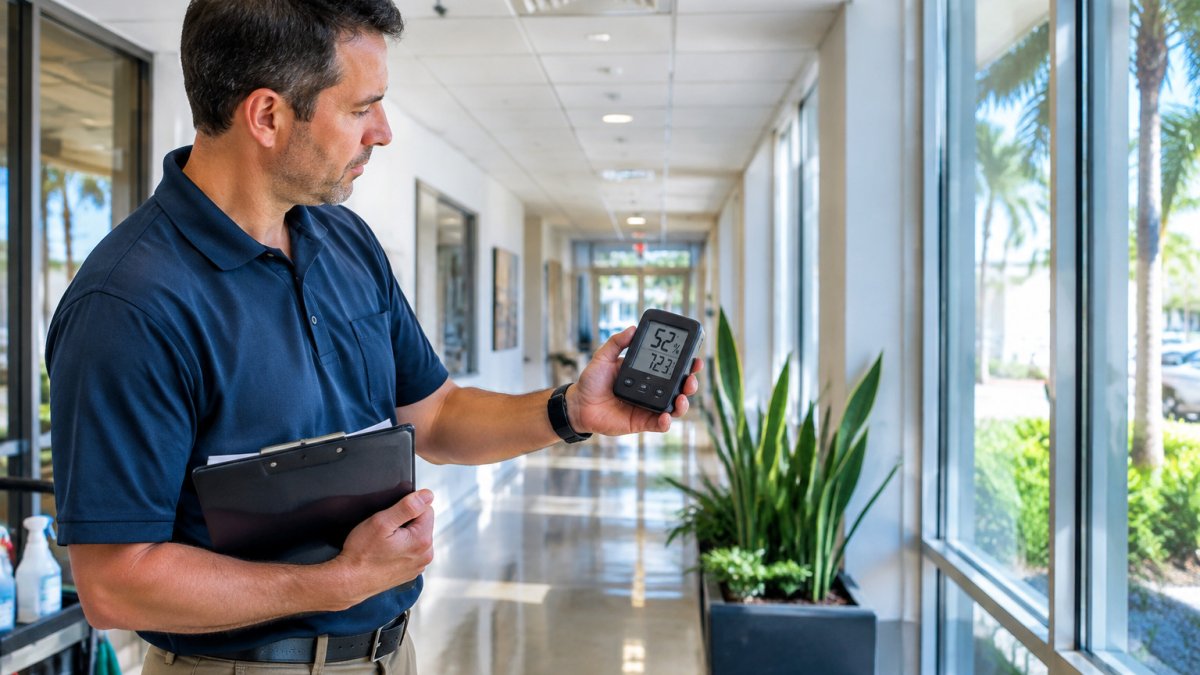
Check areas that run cooler than the rest of the building, since condensation forms on cool surfaces first. Adjust your HVAC settings if readings climb above the target.
A commercial property manager checking a digital hygrometer reading inside a bright Florida office corridor with ceiling vents visible. The man is American.
Step 3: Set Up Commercial Building Ventilation and Humidity Control
Good airflow keeps moisture from settling where it can cause trouble. Ventilation and dehumidification work together, and both need regular attention. In a commercial setting, the HVAC system is your primary defense against mold, so treat it as a moisture-control tool, not just a comfort system.
Start with the basics:
- Confirm that air handlers and exhaust fans run as designed and are not short-cycling.
- Keep supply and return vents unblocked by furniture, stored materials, or ceiling tiles.
- Use dedicated dehumidification in spaces that stay damp, such as storage rooms, basements, and mechanical rooms.
- Replace air filters on schedule to maintain design airflow and prevent coil icing.
Florida’s climate makes this check especially useful because high dew points mean condensation can form on any surface cooled below the dew point temperature. When a building is not pressurized correctly, humid outdoor air is drawn into wall cavities and ceiling plenums, where it condenses on cool surfaces and feeds mold.
A common pattern in commercial buildings is negative pressure caused by unbalanced exhaust. Kitchens, restrooms, and process exhaust can pull more air out than the makeup air system supplies, which draws humid outdoor air through envelope gaps. Ask your contractor to verify building pressure and makeup air volumes during the next service visit.
Smart Building Technology for Mold Prevention
Manual checks are important, but modern building management systems (BMS) and IoT humidity sensors can catch moisture problems before they become visible. These systems monitor temperature, relative humidity, and dew point across zones and can alert you when conditions drift outside set points.
A practical approach is to install wireless humidity sensors in high-risk areas: mechanical rooms, basement storage, near roof penetrations, and inside ceiling plenums. Set alerts for relative humidity above 60 percent or for dew point readings that approach surface temperatures. Some systems can automatically adjust ventilation or dehumidification when thresholds are crossed.
Watch out: sensors placed in direct sunlight or near supply vents will read false highs or lows, so mount them in representative occupied or interstitial spaces.
When specifying a BMS, ask for trend logging so you can review moisture events over time. That data is also useful for insurance documentation and for proving that you responded promptly to a water intrusion event.
The article points to a few concrete targets and steps for keeping humidity under control, summarised below.
| Target or step | Value | Note |
|---|---|---|
| Indoor relative humidity | Below 60 percent | Alert threshold for wireless sensors |
| Air filter replacement | On schedule | Maintains design airflow and prevents coil icing |
| Supply and return vents | Kept unblocked | Furniture, stored materials or ceiling tiles can block them |
| Makeup air check | Verify during next service visit | Unbalanced exhaust can pull humid outdoor air in |
| Sensor placement | Representative occupied or interstitial spaces | Direct sunlight or supply vents give false readings |
Step 4: Build a Commercial Building Moisture Control Program
A written program keeps prevention from depending on memory. It also gives you a record that helps with insurance and compliance questions. For commercial properties, documentation is not just good practice; it is evidence that you took reasonable steps to prevent mold growth and responded promptly to water intrusion.
A basic program should include:
- A named person responsible for moisture checks and for maintaining the log.
- A monthly inspection schedule for high-risk areas, with a checklist that matches your building.
- A log of leaks, repairs, humidity readings, and sensor alerts.
- A seasonal review of roofs, gutters, and exterior surfaces.
- Quick-response steps for water events, including who to call and how to document.
Insurance and Liability Documentation
Most commercial property insurance policies and liability claims turn on whether the owner documented preventative maintenance and responded promptly to water intrusion. A common pattern is that claims are denied or reduced when there is no record of routine inspections or no evidence that a leak was addressed within the 24-to-48-hour window.
Build a documentation file that includes:
- Dated inspection checklists with photos of any staining, peeling, or moisture readings.
- Humidity and dew point logs from your sensors or manual readings.
- Work orders and invoices for repairs, filter changes, and HVAC service.
- Photos and notes from any water event, including the time the water was discovered and the time drying began.
- A copy of your written moisture control program and the name of the responsible person.
Keep these records for at least the length of your policy’s claims period, and make sure your insurance broker has a current copy of the program. If a claim arises, the first thing an adjuster will ask for is proof of maintenance and a timeline of your response.
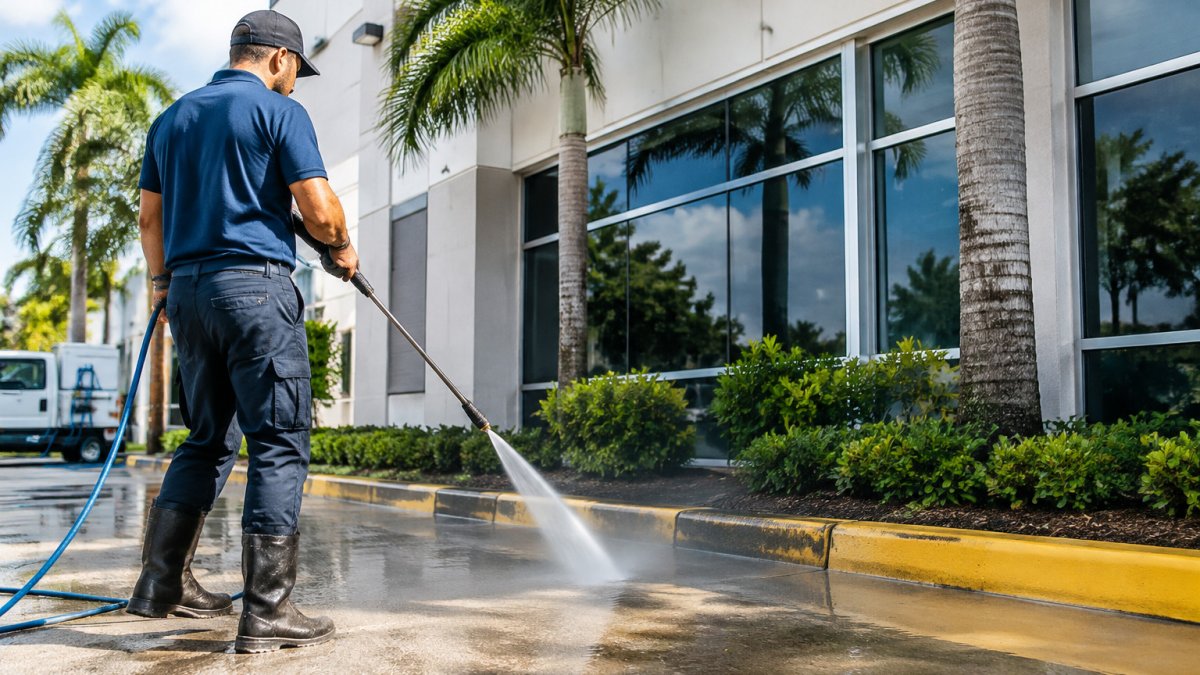
Exterior maintenance matters here too. Algae and dark staining on roofs, walls, and walkways can hold moisture against building surfaces. Learn how mold prevention applies to outside building surfaces before your next inspection. Freedom Wash Club provides exterior cleaning that removes these growths. Our services include soft wash roof cleanings, house wash and exterior home cleaning, driveway cleaning, pool deck cleaning, and paver sealing.
Step 5: Respond Within 24 to 48 Hours After a Leak
Speed matters most after water enters a building. The University of Florida guidance is clear that wet materials need to be dried within 24 to 48 hours.
Use this response sequence:
- Stop the water source if you can do so safely.
- Remove standing water with pumps, wet vacuums, or towels.
- Dry materials with fans and dehumidifiers.
- Remove soaked materials that cannot dry in time, such as carpet pads and ceiling tiles.
- Document the event with photos and notes.
If the area stays damp after two days, bring in a professional. Waiting usually makes the problem bigger. Our guide on preventing water damage during building cleaning covers how to avoid water exposure while work is underway.
Step 6: Handle Mold Prevention After Water Damage
Even after a leak is fixed, the area needs follow-up. Drying the surface is not always enough if moisture stays trapped inside walls or under flooring.
Check the affected area over the next several weeks for:
- Musty odors
- New staining or bubbling paint
- Soft drywall or baseboards
- Visible growth around edges and corners calls for a plan to keep it from coming back, and this guide explains how to prevent roof mold from recurring after cleaning.
Mold prevention after water damage means checking the space long after the cleanup feels finished.
Scheduling Your Next Exterior and Moisture Review
Interior moisture control and exterior maintenance work together. Roofs, walls, and paved surfaces that stay dirty or stained can trap water and feed growth over time. Schedule a review each season so small problems do not turn into costly repairs.
Freedom Wash Club is a locally owned and operated South Florida company with over a decade of experience in pressure cleaning and paver sealing for residential and commercial properties. We are licensed and insured, and we offer easy scheduling by phone or text. Our team can help keep exterior surfaces clean. Call or text us to schedule your review, or request your free quote on our website.
Frequently Asked Questions
How can you prevent mold growth in a commercial building?
Mold needs moisture to grow, so prevention centers on controlling water and humidity. Fix leaks in plumbing, roofing and window seals promptly, keep indoor relative humidity below 60 percent according to Florida Department of Health guidance, and dry any wet materials within 24 to 48 hours. Routine HVAC inspection and cleaning, along with a documented preventative maintenance schedule, keeps these conditions under control year-round.
What humidity level helps prevent mold in commercial buildings?
Keeping indoor humidity low helps prevent mold growth. In South Florida’s humid climate, this usually requires properly sized dehumidification, HVAC systems that run long enough to pull moisture from the air, and monitoring with inexpensive hygrometers placed in problem areas such as mechanical rooms, corners and near exterior walls.
How often should commercial buildings be inspected for moisture?
Commercial buildings in South Florida benefit from moisture inspections on a recurring schedule, with more frequent checks after heavy rain, hurricanes or any reported leak. A practical approach pairs a quarterly walk-through using a commercial building mold inspection checklist with HVAC service at least twice a year. Document each inspection so you can show due diligence to tenants, insurers and HOAs.
What should property managers do after a leak or flood?
Act within 24 to 48 hours. Stop the water source, remove standing water, and dry or remove wet ceiling tiles, carpet, drywall and insulation. Run dehumidifiers and air movers, check hidden cavities with a moisture meter, and document everything with photos and dates. If mold is already visible or the affected area is large, bring in a qualified professional before closing walls.