Last Updated: November 4, 2026
Quick Summary
Prevent exterior mold by finding and fixing the moisture source, then keeping outdoor surfaces clear of organic debris and able to dry. Clear gutters, redirect downspouts, adjust sprinklers, improve drainage, and trim vegetation that blocks airflow; choose a cleaning method suited to each surface.
- Check suspicious areas after rain or irrigation to identify recurring moisture.
- Test a small hidden area before cleaning painted surfaces.
- Let pavers dry completely before sealing.
- Recheck hard surfaces after rain for standing water and fresh growth.
Table of Contents
- How Can You Prevent Mold Growth on Exterior Home Surfaces?
- Step 1: Find the Moisture Source Behind Exterior Mold
- Step 2: Choose Soft Wash Roof Cleaning Benefits for Roof Care
- Step 3: Match House Washing to Each Exterior Material
- Step 4: Use Paver Sealing to Prevent Mold on Hardscapes
- Step 5: Follow Driveway and Pool Deck Cleaning Tips
- Schedule Exterior Cleaning and Maintenance With Freedom Wash Club
- Frequently Asked Questions
How Can You Prevent Mold Growth on Exterior Home Surfaces?
Preventing mold growth on exterior home surfaces starts with controlling moisture, not just washing away stains. Exterior mold is growth that forms on outdoor surfaces where moisture and organic material collect. Find the water source, choose a cleaning method that suits the surface, then keep the area clear and dry.
A quick wash can improve curb appeal, but it won’t stop recurring growth if a leak, blocked gutter, or dense shade remains. Below, we’ll show you how to check the cause and care for roofs, siding, pavers, driveways, and pool decks. The EPA guide to mold, moisture, and your home explains why moisture control matters indoors; the same basic principle is useful outdoors.
Step 1: Find the Moisture Source Behind Exterior Mold
Trace the water before treating the stain. Mold-like growth often returns when a surface stays damp because of a leak, runoff, irrigation, or persistent shade. A useful inspection records where the mark appears, what gets wet, and how long the area takes to dry; that helps separate a one-time splash from a repeat moisture problem.
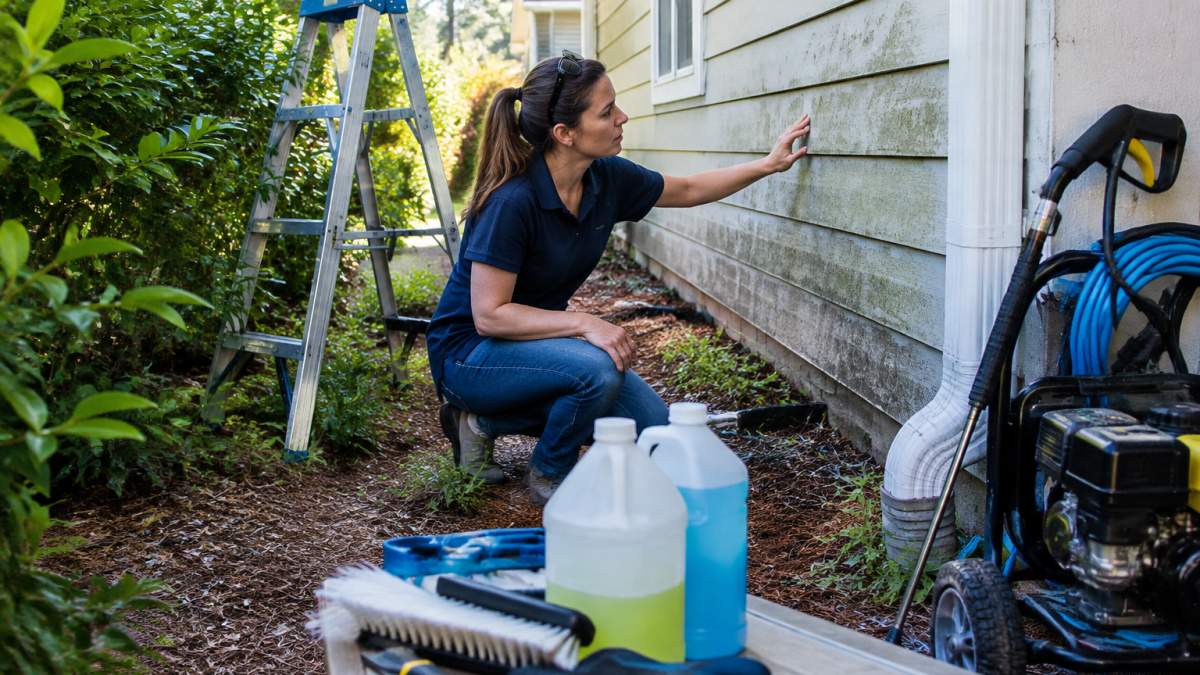
Walk the exterior during dry weather, then revisit suspicious areas after rain or irrigation. Look for patterns rather than relying on color alone:
- Below roof edges or at corners: Check for overflowing gutters, loose joints, short or disconnected downspouts, and roof runoff that repeatedly wets the wall.
- Around windows, doors, and trim: Look for failed caulk, damaged flashing, gaps, peeling paint, or staining that starts at a joint. These can indicate water is getting behind the finish, not just onto it.
- Near the ground: Check whether soil, mulch, or hardscape slopes toward the house, whether water pools beside the foundation, and whether sprinklers spray siding.
- In shaded side yards: Note dense shrubs, vines, stored items, or fences that block airflow and slow drying. Trim vegetation back enough to allow air to move around the surface.
- On roofs and beneath roof edges: Look for debris and drainage problems that can carry moisture and organic material onto siding, walkways, or pavers.
Use a simple log: record the location, whether the surface is wet, recent rain or sprinkler activity, and whether the mark changes after the area dries. Compare the same spot after the next rain. A stain that repeatedly appears below a gutter joint suggests a different fix from a mark that stays only in a shaded splash zone.
Watch out: Dark staining alone does not confirm mold; algae, mildew, dirt, and weathering can look similar, and aggressive cleaning can damage paint or finishes. If growth is extensive, keeps returning, or appears alongside soft, swollen, or deteriorating material, address the moisture source and consider a qualified inspection before washing.
Correct the cause before scheduling a house wash or exterior home cleaning. Clear gutters and redirect downspouts, adjust sprinkler heads, remove debris, and repair damaged flashing or exterior joints as appropriate. If water is entering a wall or roof assembly, cleaning the visible surface will not resolve the underlying problem; have the leak assessed and repaired. After the fix, check the area following rain to confirm it no longer stays wet or develops fresh staining.
Step 2: Choose Soft Wash Roof Cleaning Benefits for Roof Care
Pressure alone is not a prevention strategy. If roof runoff carries debris onto siding or a patio, check the gutter and drainage path too. For more on roof growth and care, read how to prevent roof moss and algae.
- Keep gutters clear so water can flow away.
- Check for roof runoff that leaves walls damp.
- Ask a qualified cleaner how the method suits your roof.
- Inspect for new stains after cleaning.
Watch out:
Step 3: Match House Washing to Each Exterior Material
House washing works best when the method fits the material. Vinyl, wood, fiber cement, stucco, and painted surfaces do not all respond the same way to water pressure or cleaning products. Match the approach to the surface, then rinse as needed and let it dry.
- Vinyl: Check seams and joints; avoid forcing water behind the siding.
- Wood: Use care around worn paint and exposed grain.
- Fiber cement: Follow the surface maker’s cleaning guidance.
- Stucco: Avoid strong pressure that can damage the finish.
- Painted surfaces: Test a small hidden area first.
A common mistake is using one pressure setting on the whole home. What most guides miss is that water infiltration can matter more than the visible stain. Compare cleaning methods in soft wash versus high pressure for home exteriors. For guidance on cleaning products and safe handling, check the CDC’s information on bleach; never mix cleaning products (the CDC).
Step 4: Use Paver Sealing to Prevent Mold on Hardscapes
Paver sealing to prevent mold works best after the hardscape is clean and dry. Sealing can support surface maintenance, but it won’t fix poor drainage or stop water from collecting between pavers. Clear organic debris first and address the source of standing water.
- Remove leaves and other organic material.
- Clean the pavers with a method suited to the surface.
- Let the area dry completely before sealing.
- Check drainage and low spots before the work.
The real difference between cleaning and prevention is what happens after the wash. A sealer is not a substitute for moisture control. See pressure cleaning and paver sealing for the service details.
Step 5: Follow Driveway and Pool Deck Cleaning Tips
Keep hard surfaces clean, draining, and able to dry. Driveways, pavers, and pool decks can collect leaves, soil, and other organic debris; shaded joints and low spots may stay damp longer than exposed areas. Cleaning removes buildup, but prevention also depends on correcting the conditions that keep the surface wet (the EPA).
Start with a walk-through after rain or routine pool use. Note where water remains, whether it drains toward the house, and whether growth is concentrated in joints, along edges, or beneath nearby plants. Check that downspouts do not discharge onto the hardscape and that irrigation does not repeatedly wet the same area. Sweep or remove leaves and soil before they settle into joints, and trim vegetation that blocks airflow or sunlight.
- Driveways: Check for low spots, runoff from downspouts, and leaf buildup along edges.
- Pool decks: Clear leaves and debris promptly, and check shaded edges and joints for standing water.
- Pavers: Clean out organic debris and assess drainage before considering paver sealing. Sealing is a maintenance choice, not a cure for pooling water or a substitute for fixing the underlying drainage problem.
Watch out:
After cleaning, check that water drains away and that the surface dries rather than remaining wet in shaded pockets. Recheck problem areas after the next rain or cleaning cycle; fresh growth in the same location is a cue to revisit drainage, shade, or recurring water exposure.
Schedule Exterior Cleaning and Maintenance With Freedom Wash Club
A simple inspection routine helps catch moisture problems before stains spread. Check gutters, downspouts, siding, roofs, pavers, and outdoor hard surfaces after heavy rain and during routine seasonal upkeep. The right professional house wash frequency depends on shade, debris, drainage, and how quickly surfaces get dirty.
| Area | What to check | Prevention step |
|---|---|---|
| Roof and gutters | Debris, runoff, stains | Clear drainage paths |
| House siding | Damp spots, leaks | Fix water sources |
| Pavers | Debris, low spots | Clean, then assess sealing |
| Driveway and pool deck | Shade, standing water | Clear debris and improve drainage |
At Freedom Wash Club, we provide roof, house, driveway, and paver cleaning services, with easy scheduling by phone or text. Snowbirds can explore pressure washing maintenance plans for recurring exterior care.
Exterior mold keeps returning when moisture remains. If roof runoff, shade, or recurring stains are hard to manage, request a free quote for exterior cleaning and paver sealing.
Frequently Asked Questions
What is the best way to prevent mold on exterior siding?
Start by finding and correcting the moisture source, such as a leak, poor drainage, clogged gutters, or vegetation that blocks airflow and sunlight. Remove organic debris, then clean the siding with a method suited to its material. Vinyl, wood, fiber cement, stucco, and painted surfaces do not all tolerate the same pressure or cleaning products. Let the surface dry completely and inspect shaded, damp areas regularly for recurring growth.
Can soft wash roof cleaning prevent mold from returning?
Soft washing can remove organic buildup from a roof with a lower-pressure approach than direct pressure washing, but cleaning alone does not correct the conditions that allow growth to return. Check for persistent shade, roof runoff issues, nearby trees, and moisture problems, then address those sources. Ask the cleaning provider how its method suits your roof material and what precautions it takes to avoid damage or streaking.
How often should I schedule a professional house wash?
There is no single schedule in the supplied research that applies to every home. The need depends on visible buildup and conditions such as shade, damp surfaces, nearby vegetation, and drainage. Inspect the exterior regularly, especially areas that stay wet or receive little sunlight, and arrange a house wash when dirt, algae, or mold returns. Pair cleaning with prompt repairs and airflow improvements to reduce recurring growth.
Does pressure washing help prevent mold growth on driveways and pool decks?
Cleaning can remove mold, mildew, and organic debris from hard surfaces, but pressure alone does not prevent regrowth if moisture and shade remain. Use a cleaning method appropriate to the surface, avoid damaging joints or finishes, and allow the area to dry completely. Improve drainage and clear nearby vegetation where practical. For pavers, sealing may be part of surface maintenance, but it does not replace cleaning or moisture control.