Last Updated: November 4, 2026
Quick Summary
To prevent roof moss, trim overhanging branches so sunlight reaches the roof, keep gutters and debris cleared, and install zinc or copper strips along the ridge. Professional soft wash roof cleaning every 2-3 years keeps the surface moss-free. Avoid pressure washing, which can strip the protective granules from shingles.
- Trim overhanging branches to let sunlight reach the roof and dry it faster.
- Clean gutters at least twice a year to prevent debris that encourages moss.
- Install zinc or copper strips under the ridge cap so rainwater flows across them.
- Use soft washing instead of pressure washing to protect shingles and warranty coverage.
- Schedule professional soft wash roof cleaning every 2-3 years for a moss-free surface.
Table of Contents
- Why Roof Moss and Algae Take Hold in South Florida
- Step 1: Install Zinc or Copper Strips Along the Ridge
- Step 2: Trim Overhanging Branches to Let Sunlight Reach the Roof
- Step 3: Keep Gutters and Debris Cleared on a Schedule
- How to Remove Black Streaks from Roof Shingles Without Damaging Them
- Why Soft Wash Roof Cleaning Beats Pressure Washing
- Setting Up a Professional Roof Maintenance Schedule
- Booking Your Roof Inspection and Cleaning With Freedom Wash Club
- Frequently Asked Questions
Roof moss and algae are a real problem in South Florida, where heat, humidity and frequent rain give them everything they need. Freedom Wash Club has spent over a decade helping homeowners and property managers keep roofs clean, and the good news is that prevention is far easier than removal. Most of the work comes down to three habits: reducing shade and moisture, adding metal to the roof surface, and keeping debris off it.
This guide walks through each step, explains which cleaning methods protect your roof, and shows how a regular maintenance plan keeps streaks and growth from coming back.
Why Roof Moss and Algae Take Hold in South Florida
Moss and algae grow where moisture stays on a surface and sunlight is limited. Shady roofs, damp shingles and debris-filled gutters create exactly those conditions. Fungal spores and organic matter settle on the shingles, and the growth then spreads from there.
Trimming nearby trees to increase sunlight exposure is the most effective long-term solution for keeping moss at bay, according to the Oregon State University Extension guidance on controlling roof moss. The same principles apply in South Florida, where humidity keeps shingles damp for long stretches.
Black streaks on shingles are usually a type of algae that feeds on the limestone filler in asphalt. Once it starts, it tends to spread unless the roof is treated and kept dry.
Step 1: Install Zinc or Copper Strips Along the Ridge
Metal strips are one of the simplest ways to slow growth, but they only work when they are installed with the water path in mind. When rain runs over zinc or copper, it carries tiny amounts of metal ions down the roof surface. Those ions make it harder for moss and algae to establish on the shingles below.
The mechanism matters because it explains the failure mode. A strip that sits beside the water path, or that is mounted below the ridge cap where rain never touches it, releases almost no ions and does nothing. The strip has to be the first thing the rain hits at the top of the roof so the runoff carries the ions across every course of shingles beneath it.
Copper or zinc strips can provide moss and algae prevention for 20+ years, according to Acme Pressure Washing’s guide to metal ion prevention methods. Install them along the ridge cap so rainwater flows across them and down the shingles.
- Choose zinc or copper strips made for roofing, not generic sheet metal
- Mount them along the ridge, under the ridge cap, so the cap overlaps the top edge
- Overlap strip sections by a few inches so water cannot slip between them
- Check that water runs over the strip, not just beside it
- On long ridge lines, run the strip the full length rather than in short segments
Roof material changes the calculus. Zinc and copper strips are common on asphalt shingle roofs, but on metal roofs the strips can react with the panel coating and cause staining or premature corrosion. On tile and cedar, the strips work but the runoff pattern is different, so placement needs to follow the actual water channels rather than the ridge line alone.
Watch out: copper runoff can stain light-colored shingles, stucco, and concrete below the roof edge, and that staining is difficult to remove once it sets. Place strips so runoff does not pour onto visible walls, walkways, or a pool deck, and route downspouts away from surfaces you plan to seal or clean.
Strips work best as a preventive measure. They slow growth on a clean roof, but they will not remove existing streaks. If growth is already established, the roof needs a soft wash roof cleaning first, then the strips go on to keep it from returning.
Step 2: Trim Overhanging Branches to Let Sunlight Reach the Roof
Shade is one of the biggest drivers of growth. Overhanging palms, oaks and other trees keep the roof damp and drop leaves and debris that hold moisture.
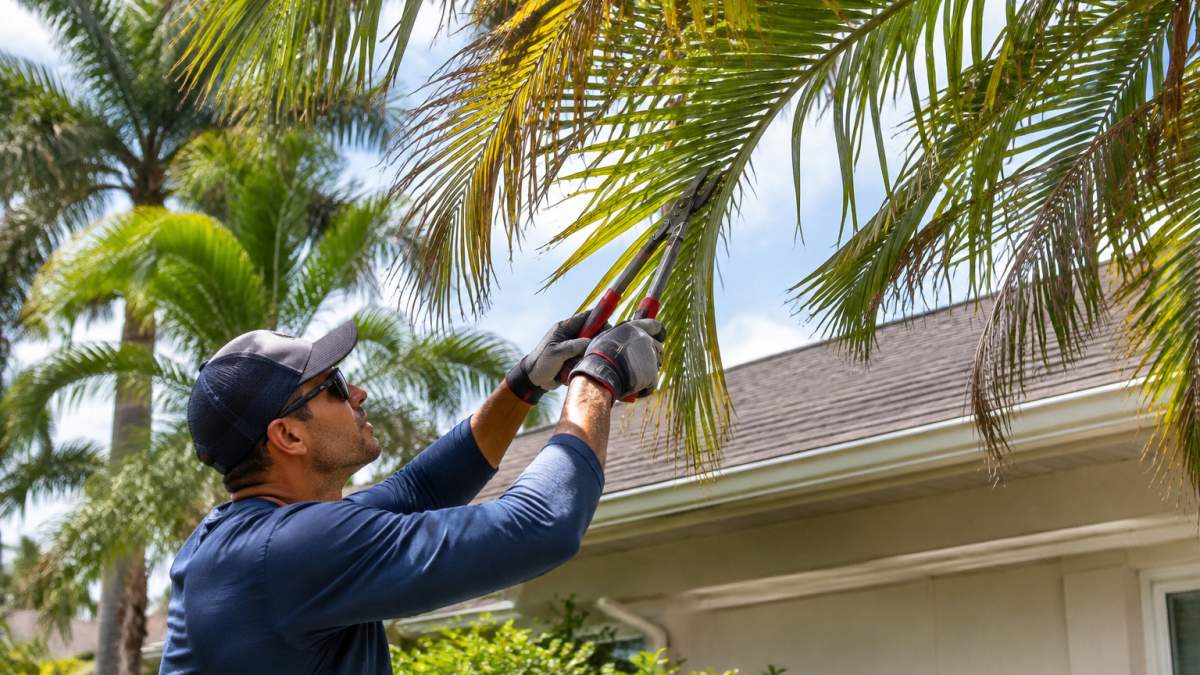
- Trim branches that hang over the roof
- Keep at least several feet of clearance between branches and the shingles
- Remove fallen palm fronds and leaves from the roof surface
Better airflow and sunlight dry the roof faster after rain, which makes it much harder for algae to take hold. Tree trimming is often the single change that makes the biggest difference over time.
Step 3: Keep Gutters and Debris Cleared on a Schedule
Gutters that hold leaves and sand create wet pockets that feed moss. Gutter cleaning is one of the most overlooked parts of roof care.
Gutters should be cleaned at least twice a year to prevent debris buildup that encourages moss, according to Tri-County Roofing’s preventative maintenance guidance. In South Florida, many homeowners benefit from cleaning more often during storm season.
Also check for:
- Leaves and needles in valleys and along the roof edge
- Standing water on flat or low-slope sections
- Damp spots that stay wet long after rain
How to Remove Black Streaks from Roof Shingles Without Damaging Them
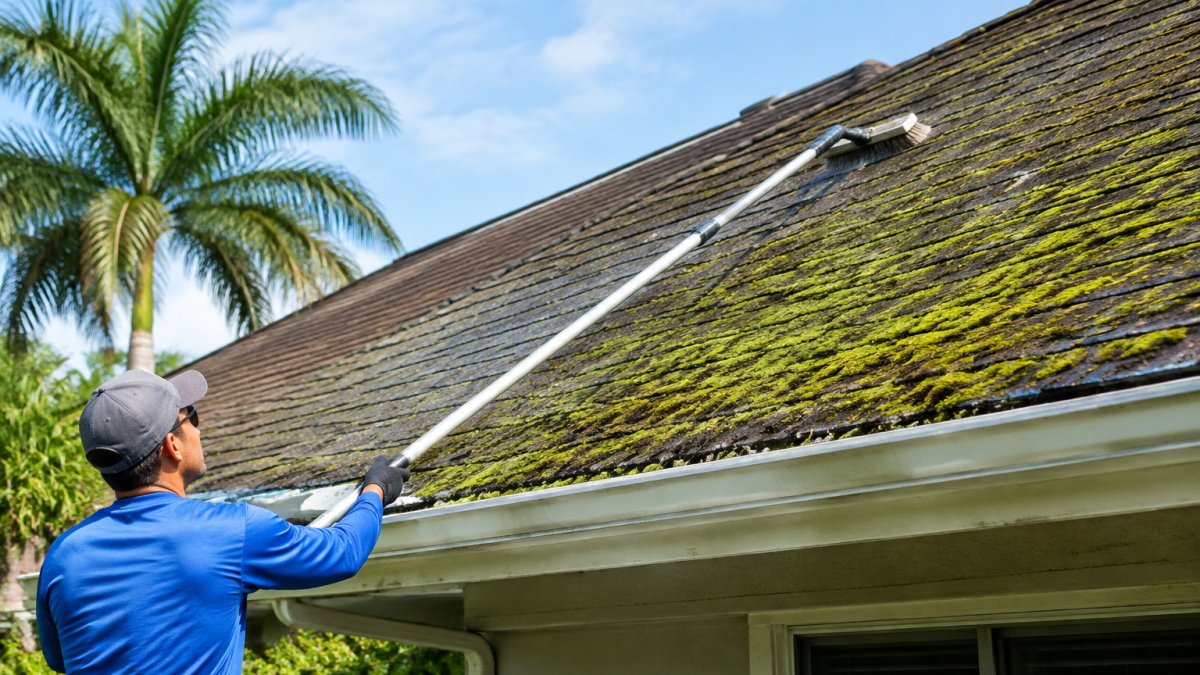
If streaks have already formed, removal must be gentle. Pressure washing is a common mistake. It can strip the protective granules off shingles and shorten the roof’s life.
Industry guidance warns against pressure washing for this reason. Liberty Mutual’s roof care advice notes that high pressure can weaken the roof structure, so soft washing is the safer choice.
Bleach and water mixtures are often recommended for visible algae, according to the Asphalt Roofing Manufacturers Association. The key is the dilution and the dwell time, not the strength of the mix.
A safe removal sequence looks like this:
- Protect plants, siding, and any pool deck or driveway below the roof edge with plastic sheeting or a pre-wet and post-rinse of the surfaces
- Apply the solution at low pressure, working top to bottom in manageable sections
- Let it dwell, then rinse with low pressure and direct runoff away from gutters and soil beds
- Repeat on stubborn streaks rather than increasing the concentration
- Never mix bleach with other cleaners, and never apply it on a windy day when drift can reach windows or cars
Watch out: bleach runoff can kill grass, shrubs, and pool water chemistry, and it can etch concrete driveways and pool decks if it pools. Pre-wetting and rinsing those surfaces before and after is not optional.
Safety gear is part of the method, not an afterthought. Roof work means fall risk, so anyone on the roof needs stable footing, a harness on steep pitches, and a spotter. Chemical safety means eye protection, gloves, and breathing protection when mixing.
There is also a warranty angle most guides skip. Many asphalt shingle manufacturers specify cleaning methods in their warranty terms, and pressure washing or harsh chemical mixes can void coverage. Before any DIY treatment, check the shingle manufacturer’s published care guidance and keep records of what was applied.
For homeowners who want to avoid bleach altogether, eco-friendly alternatives exist. Oxygen-based cleaners and dedicated roof-cleaning products formulated for asphalt shingles are gentler on landscaping and runoff, though they typically need longer dwell times and may require a second application.
Once the streaks are gone, the same exterior care routine keeps the rest of the property consistent: a house wash and exterior home cleaning pass on the walls, driveway cleaning to remove the runoff film, and pool deck cleaning so the surfaces below the roof stay free of staining.
Why Soft Wash Roof Cleaning Beats Pressure Washing
Soft washing uses low pressure and a cleaning solution that kills growth at the root. Pressure washing blasts the surface and can leave shingles damaged, streaked or stripped of protective granules.
Professional soft wash roof cleaning is recommended every 2-3 years to maintain a moss-free surface, according to Alaska Moss Doctor’s maintenance guidance. Soft washing also helps protect your warranty, since damage from pressure washing can be hard to defend. Before booking, you can check whether soft washing is safe for asphalt shingles.
Soft washing is the better choice for:
- Asphalt shingle roofs
- Older roofs with worn granules
- Homes with landscaping close to the walls
Soft washing and pressure washing differ in how they treat the shingles and the growth on them, as shown below. For a direct comparison of soft wash and high pressure cleaning on home exteriors, read our full breakdown.
| Method | Pressure | Effect on shingles |
|---|---|---|
| Soft wash | Low pressure with cleaning solution | Kills growth at the root, protects granules |
| Pressure wash | High pressure, direct blast | Can strip granules and leave streaks |
| Soft wash (older or worn roofs) | Low pressure | Preferred for worn granules |
| Soft wash (landscaped homes) | Low pressure | Preferred near walls and plants |
Setting Up a Professional Roof Maintenance Schedule
Prevention works best on a set calendar. A simple plan keeps small problems from turning into full-roof projects.
- Every 6 months: Clean gutters and clear debris from the roof
- Every 6 months: Check and trim overhanging branches
- Every 2-3 years: Professional soft wash roof cleaning
- After storms: Inspect for debris, loose strips and standing water
Freedom Wash Club can help you build a schedule for your property. You can also compare professional roof cleaning services in Florida before choosing a provider. For more on paver sealing services to keep your driveway and patio protected alongside your roof, contact Freedom Wash Club directly.
Booking Your Roof Inspection and Cleaning With Freedom Wash Club
Freedom Wash Club is a locally owned and operated South Florida company with over 10 years of experience. Our team is licensed and insured, and we handle residential and commercial properties.
You do not need an in-person estimate to get started. Schedule by phone or text, and we will explain the service before any work begins. You can also compare South Florida pressure cleaning companies that offer roof soft washing, paver sealing and driveway cleaning. We stand behind our work with a 100% satisfaction guarantee.
Ready to stop the streaks and keep your roof protected? Get started with Freedom Wash Club today and enjoy a cleaner roof and better curb appeal. Request your free quote now.
Frequently Asked Questions
What kills moss and algae on roofs?
A soft wash with a diluted sodium hypochlorite (bleach) solution is the most common way to kill moss and algae on a roof. Soft washing uses low pressure and a cleaning solution that reaches the growth without stripping shingle granules. Zinc and copper strips do not kill existing growth, but they release metal ions that inhibit new growth. Professional crews can apply the right solution for your roofing material and rinse it safely off landscaping and gutters.
Do zinc or copper strips actually prevent moss growth?
Yes, zinc and copper strips help prevent moss and algae by releasing metal ions when rain runs across them onto the shingles. Those ions discourage the growth of spores and biofilm. Strips are most effective when installed along the ridge cap, where runoff reaches the most roof area. They prevent new growth rather than removing what is already there, so an existing buildup should be cleaned first.
How often should I have my roof professionally cleaned to prevent buildup?
Most roofs in humid South Florida conditions benefit from a professional soft wash every two to three years, with gutter cleaning at least twice a year. Shaded roofs and roofs under heavy tree cover may need attention more often. Freedom Wash Club can assess your roof and recommend a schedule that fits your property. Visit the website or call for current scheduling and a quote.
Does roof algae cause permanent damage to asphalt shingles?
Algae and moss do not usually cause permanent damage on their own, but they hold moisture against shingles and can speed up wear over time. The bigger risk comes from aggressive cleaning, such as high-pressure washing, which can strip protective granules and shorten a roof’s life. Keeping growth under control with gentle cleaning and preventive measures protects both the shingles and their warranty.