Table of Contents
- How Often Should Your Roof Be Cleaned?
- Signs Your Roof Needs Cleaning Now
- How to Remove Black Streaks from Roof Shingles
- Soft Wash Roof Cleaning Benefits: Why It’s Safer Than Pressure Washing
- Exterior Home Cleaning Services: More Than Just Your Roof
- Paver Sealing and Roof Maintenance: Protecting Your Whole Property
- DIY vs. Professional Roof Cleaning: What You Need to Know
- Frequently Asked Questions
Last Updated: September 23, 2026
How Often Should Your Roof Be Cleaned?
Most roofs need to be roof cleaned every 12 to 24 months, but homes under heavy tree cover or near the coast often need it once a year. That answer surprises people who assume a roof takes care of itself. It doesn’t, especially in humid, storm-prone regions where algae and mold grow year-round.
- Asphalt shingles: every 12-18 months. The granular surface holds moisture and organic debris, which feeds gloeocapsa magma (the black-streak algae). Once granules erode, the shingle can’t shed water the same way.
- Metal roofing: every 18-24 months. Metal sheds water faster, so growth takes longer to establish, but factory finishes can still be stained by algae and tree tannins if debris sits in the panel valleys.
- Clay tiles: every 18-24 months. Tile is porous and holds moisture in the overlaps, which is where moss and lichen root. Cleaning restores the drainage path between tiles.
- Cedar shake: every 12 months. Wood is organic and absorbs moisture, making it the most growth-prone roof surface. Annual soft washing is the difference between a 30-year shake roof and a 15-year one.
- Concrete tile: every 18-24 months. Similar to clay, but the lighter color shows black streaks faster, so many homeowners clean on the shorter end of that window.
What actually shortens the clock
Three factors push you toward the 12-month end of every range:
- Shade. A roof that stays damp into mid-morning grows algae faster than a sun-exposed roof on the same street. This is the single biggest variable we see.
- Tree cover. Oaks, pines, and palms drop tannins, sap, and needles that stain shingles and trap moisture. A roof under a canopy can need cleaning twice as often as an open-sky roof.
- Humidity and rainfall. Warm, damp air feeds growth year-round. Homes in high-humidity zones rarely make it past 12 months without visible streaking.
A simple zone check
You don’t need a calculator to estimate your interval. Match your conditions to the closest row:
| Your conditions | Realistic cleaning interval |
|---|---|
| Full sun, no overhanging trees, low humidity | 24 months |
| Partial shade, some tree cover, moderate humidity | 18 months |
| Heavy shade, dense tree cover, high humidity | 12 months |
| Coastal or lakefront exposure, salt and moisture | 12 months |
Why the interval matters beyond looks
The single biggest factor in how often your roof needs cleaning is shade, not age. A shaded roof can grow algae twice as fast as a sunny one on the same street.
Signs Your Roof Needs Cleaning Now
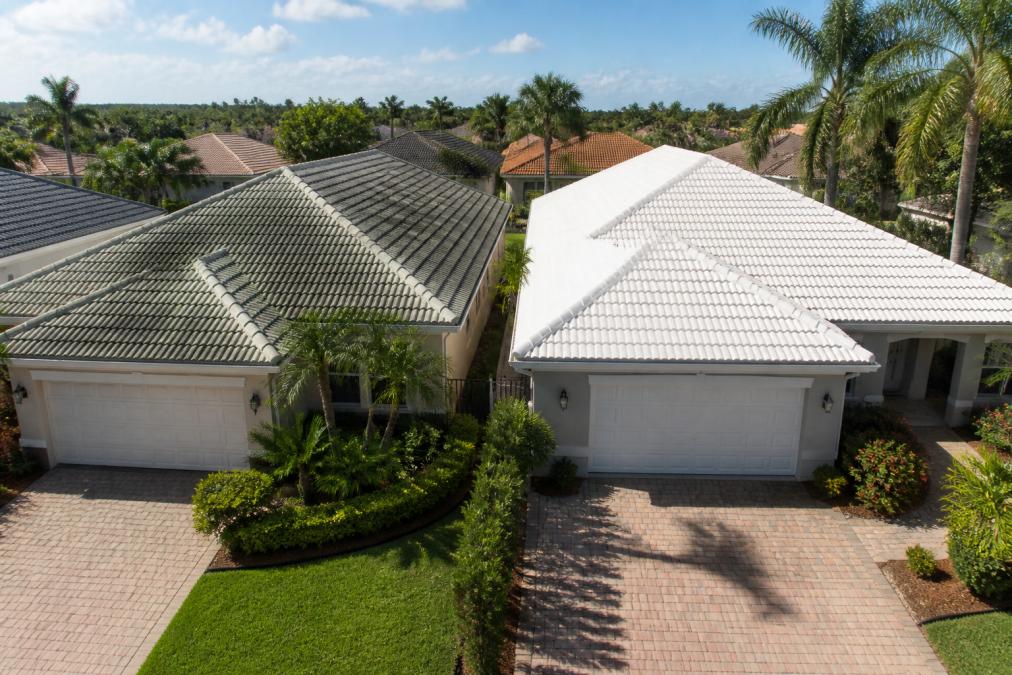
You don’t need a calendar to tell you something’s wrong. Your roof will show you first. Watch for these signs:
- Black streaks running down the slope of the roof
- Green or gray patches near the edges and valleys
- Moss or lichen growing between shingles or tiles
- Granule loss in gutters or at the base of downspouts
- Stains on ceilings inside the house
- Visible debris like leaves, twigs, and pine needles
How to Remove Black Streaks from Roof Shingles
The safe way to remove black streaks from roof shingles is a low-pressure soft wash with a cleaning solution, not a pressure washer. High pressure strips granules and can void your roof warranty.
Here’s how the process works:
- Inspect the roof for damage, loose shingles, and weak spots
- Cover plants and fixtures below the work area
- Apply a cleaning solution that kills algae, mold, and mildew at the root
- Let it dwell so the growth dies instead of just washing off
- Rinse with low pressure to flush away dead growth and debris
- Check gutters and clear any loosened material
Pressure washing a shingle roof can strip the protective granules and leave permanent streaks. It can also void your manufacturer warranty, which means you pay for the damage yourself.
Soft Wash Roof Cleaning Benefits: Why It’s Safer Than Pressure Washing
Soft washing cleans a roof with low pressure and specialized solutions, so the roof surface stays intact while the growth dies. That’s the core difference from pressure washing.
The benefits add up fast:
- Protects shingle granules so the roof keeps its protective layer
- Kills algae and mold at the source instead of just blasting the surface
- Lasts longer because dead growth doesn’t regrow as quickly
- Safer for your landscaping when done correctly
- Keeps your warranty intact with most manufacturers
Exterior Home Cleaning Services: More Than Just Your Roof
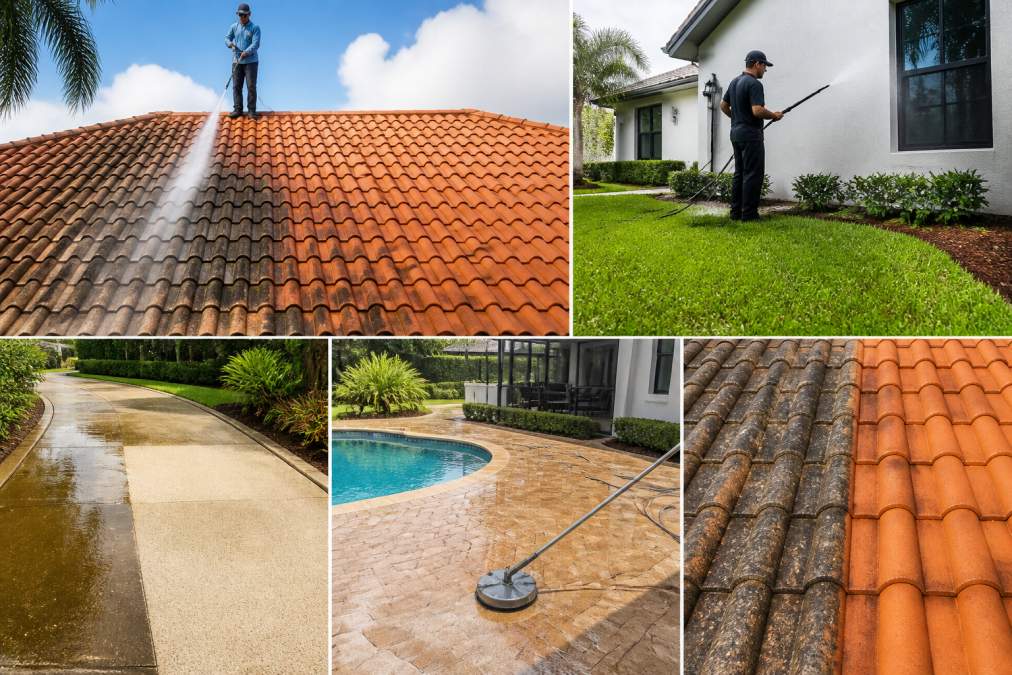
A clean roof matters, but it’s rarely the only dirty surface on a property. Exterior home cleaning services handle the whole envelope of the house, and most homeowners bundle them for a reason.
Typical services include:
- House wash to remove mold, mildew, and grime from siding and stucco
- Driveway cleaning to lift oil stains, rust, and black algae
- Pool deck cleaning to clear slippery growth around wet areas
- Gutter cleaning to keep water moving away from the roof
- Roof soft washing to handle the highest and most visible surface
Paver Sealing and Roof Maintenance: Protecting Your Whole Property
Roof maintenance protects the top of your home. Paver sealing protects the ground around it. Together, they keep a property looking maintained year-round.
Here’s why that matters alongside roof care:
- Sealed pavers resist mold and algae that spread to other surfaces
- A clean roof and sealed driveway keep curb appeal high
- HOAs notice both, and both affect compliance
- Sealing extends the life of the pavers, just like cleaning extends roof life
Schedule paver sealing and roof cleaning in the same visit when you can. Both surfaces dry at similar rates, and one trip saves you the hassle of two separate appointments.
DIY vs. Professional Roof Cleaning: What You Need to Know
You can clean a single-story roof yourself, but steep pitches, two-story homes, and heavy growth are jobs for a professional. Safety is the first reason, and roof damage is the second. The third, and the one most guides skip, is your warranty.
When DIY is reasonable
DIY works when:
- The roof is low-slope and easy to reach
- Growth is light and limited to one area
- You can work safely from the ground with a long-reach sprayer
- You’re using a low-pressure method and a solution labeled for roof surfaces
Even then, the margin for error is narrow. Walking a wet roof is the leading cause of homeowner falls, and a pressure washer at the wrong setting can strip granules in a single pass.
When to call a professional
Call a professional when:
- The roof is steep or more than one story high
- Growth covers a large area or has been there for years
- You see moss, lichen, or granule loss
- Your HOA has issued a deadline or fine
- You’re not sure what your shingle manufacturer allows
The warranty angle most guides miss
Roofing manufacturers publish care guidance for a reason. the Asphalt Roofing Manufacturers Association notes that proper maintenance helps roofing products reach their expected service life, and manufacturer care documents, Owens Corning’s roofing maintenance guidance among them, point to gentle cleaning methods. Pressure washing is the opposite of gentle. If a claim adjuster determines that high pressure stripped your granules, the manufacturer can deny the claim, and you pay for the replacement yourself.
The insurance and liability angle
A cheap crew that isn’t licensed or insured leaves you holding the bill if someone gets hurt on your property or your roof gets damaged. Ask for a certificate of insurance before booking, and confirm the company carries both general liability and workers’ compensation. Freedom Wash Club is licensed and insured, and we back every job with a 100% satisfaction guarantee.
The long-term math
A professional soft wash costs more per visit than a DIY sprayer and a jug of solution. But the comparison isn’t visit-to-visit, it’s decade-to-decade. A roof cleaned on schedule can reach its full expected service life. A roof damaged by pressure washing or neglect often needs replacement years early, and replacement costs many times what maintenance does. When you frame it that way, professional cleaning isn’t the expensive option.
| Situation | Best Approach | Why |
|---|---|---|
| Light growth, low roof | DIY | Safe to reach, low risk |
| Heavy black streaks | Professional soft wash | Kills growth at the source |
| Steep or two-story roof | Professional | Safety and warranty risk |
| HOA deadline or fine | Professional | Fast scheduling, guaranteed result |
| Snowbird, away most of year | Maintenance plan | No on-site presence needed |
| Unsure about warranty terms | Professional | Avoids a denied claim |
Frequently Asked Questions
How often should roof be cleaned to prevent mold and algae?
In humid climates like South Florida, roofs should be cleaned every 12 to 18 months to prevent mold and algae growth. Homes with heavy tree cover or shaded areas may need cleaning every 8 to 12 months. Regular cleaning stops gloeocapsa magma and other organisms from eating into shingle granules, which can lead to costly replacements.
Can pressure washing damage roof shingles?
Yes, pressure washing can strip away protective granules, crack shingles, and void your roof warranty. Soft washing uses low pressure and specialized cleaning solutions to safely remove algae, moss, and lichen without harming the roof surface. Always choose a professional contractor who uses soft wash methods for asphalt shingles, clay tiles, and cedar shake.
Does roof cleaning extend the lifespan of shingles?
Absolutely. Removing algae, moss, and debris prevents moisture retention and granule loss, which are leading causes of premature roof failure. Regular soft washing can add years to your roof’s life and help you avoid expensive repairs. It also protects your manufacturer guidelines and roof warranty, which often require proper maintenance.
What are the benefits of soft wash roof cleaning?
Soft wash roof cleaning benefits include safe removal of black streaks, algae, and lichen without damaging shingles, tiles, or metal roofing. It uses biodegradable solutions and low pressure to kill organisms at the root, so they don’t return quickly. This method also protects your roof warranty, boosts curb appeal, and prevents structural integrity issues caused by moisture retention.
Roof growth never stops in a warm, wet climate, and waiting only raises the cost of fixing it. Freedom Wash Club handles roof soft washing, house wash, driveway cleaning, pool deck cleaning, and paver sealing for homes and businesses across South Florida. We’re licensed and insured, we schedule by phone or text with no in-person estimate needed, and every job comes with a 100% satisfaction guarantee. Get started with Freedom Wash Club and keep your property clean, protected, and HOA-ready.