Table of Contents
- Why Hiring Insured Pressure Washing Companies in Florida Matters
- The Real Cost of an Uninsured Contractor
- Benefits of Soft Wash Roof Cleaning for Florida Homes
- How to Verify Contractor Insurance Before You Book
- Finding a Professional Driveway Cleaning Service Near Me
- Florida Licensing and Regulatory Nuances for Pressure Washing
- Liability Risks Homeowners Face With Uninsured Contractors
- What to Look for in a Pressure Washing Service Agreement
- Frequently Asked Questions
Last Updated: September 17, 2026
Why Hiring Insured Pressure Washing Companies in Florida Matters
Hiring insured pressure washing companies in Florida is the most important decision you’ll make about your home’s exterior. This guide breaks down how to verify coverage, what a certificate of insurance should show, and why uninsured crews put your property at risk.
An uninsured crew that damages your roof or injures a worker leaves you exposed to repair bills and liability claims.
A common mistake is assuming a low quote means a good deal. Uninsured operators cut costs by skipping general liability insurance and workers’ compensation. If something goes wrong, that savings becomes your expense.
The Real Cost of an Uninsured Contractor
The cheapest quote often carries the highest total cost. Uninsured contractors skip general liability insurance and workers’ compensation premiums, which is why their bids come in lower, until something breaks.
Benefits of Soft Wash Roof Cleaning for Florida Homes
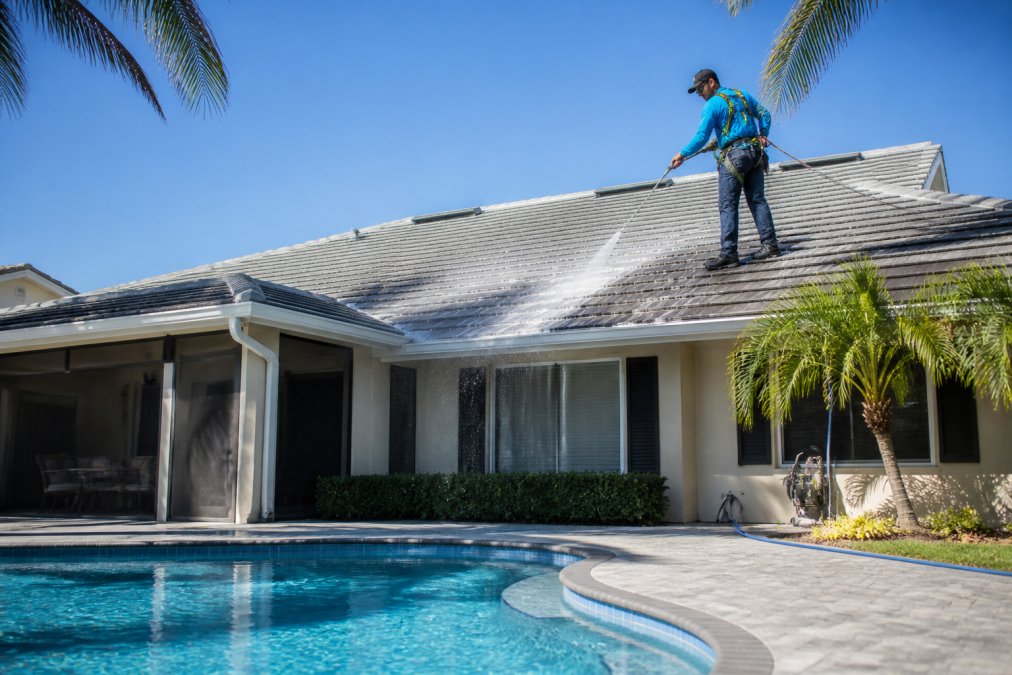
Soft washing is the safest method for asphalt shingle and tile roofs. It uses low pressure plus specialized cleaning solutions to kill mold, algae, and mildew at the root rather than blasting them off the surface.
How Soft Washing Removes Mold and Algae Without Damage
Technicians apply a diluted cleaning solution that kills organic growth, let it dwell, then rinse at low pressure, removing dead mold and mildew without disturbing the roof surface. Results last far longer than a pressure-only wash.
How to Verify Contractor Insurance Before You Book
Verification takes about ten minutes and protects you from thousands in potential liability, yet most homeowners never do it. Asking “are you insured?” over the phone and hearing “yes” proves nothing. Here is the actual process.
Step 1: Request the Certificate of Insurance (COI)
Ask for the COI before scheduling, not the day of service. A legitimate company emails or texts it within minutes. The COI is issued by the insurance agent or carrier, not typed up by the contractor, so if you get a screenshot of a screenshot, ask for the original PDF.
Step 2: Read the Four Required Elements
Every valid COI shows:
- Insured name, must match the business name on your quote, not a similar-sounding entity
- Policy type and number, general liability and workers’ compensation are separate policies with separate numbers
- Coverage limits, look for the per-occurrence and aggregate amounts; a policy with very low limits may not cover a roof replacement
- Effective and expiration dates, the policy must be active on your scheduled service date, not just today
The certificate also lists the insurer’s name and the agent’s phone number. That is the number you call.
Step 3: Call the Agent, Not the Contractor
This step catches fraud, and almost nobody takes it. Call the number printed on the COI and ask three questions:
- Is this policy currently active?
- Does it cover pressure washing, soft wash roof cleaning, and exterior home cleaning work?
- Is the business name on the policy the same one I am hiring?
Call the phone number on the certificate, not the number the contractor gives you. A fraudulent COI can list a real insurer with a fake policy number, and one call to the agency catches it.
Step 4: Ask About Additional Insured Endorsement
An additional insured endorsement adds you (or your HOA) to the contractor’s liability policy for the job’s duration, so damage claims go against their policy instead of yours. Not every contractor offers it, but a professional can request it from their agent, worth asking for roof cleaning or paver sealing near a structure.
Step 5: Confirm Workers’ Compensation Separately
General liability covers property damage; workers’ compensation covers crew injuries. These are separate policies, and a company can carry one without the other. Ask for the workers’ compensation policy number and confirm it with the same agent call.
What to Do If They Hesitate
If a company can’t produce a COI, gives a policy number but no agent contact, or pressures you to skip verification, that’s your answer. Every licensed and insured exterior cleaning company keeps a current certificate on hand.
Quick Verification Checklist
- Request the COI before scheduling
- Confirm the insured name matches the company you are hiring
- Check general liability limits and expiration date
- Confirm workers’ compensation coverage separately
- Call the agent listed on the COI to verify active status
- Ask whether the policy covers roof cleaning, driveway cleaning, pool deck cleaning, and paver sealing
- Request additional insured endorsement if your HOA requires it
Finding a Professional Driveway Cleaning Service Near Me
Searching for a professional driveway cleaning service near me returns dozens of near-identical results. The differentiator isn’t the website, it’s whether the company can prove licensing, insurance, and a track record.
| Service | Method | What to Verify |
|---|---|---|
| Roof cleaning | Soft washing, low pressure | Insurance covers roof work |
| Driveway cleaning | Pressure washing, surface cleaner | Experience with concrete and pavers |
| Pool deck cleaning | Surface cleaning, chemical treatment | Slip-resistance preserved |
| House wash | Low-pressure exterior cleaning | Siding and paint protection |
| Paver sealing | Clean, dry, seal | Workmanship warranty offered |
Florida Licensing and Regulatory Nuances for Pressure Washing
Here’s the confusion most homeowners run into: pressure washing is not a state-licensed trade in Florida the way electrical or plumbing work is. No single “pressure washing license” exists, which surprises people who expect to check a license number like they would for a contractor.
What exists instead is a patchwork:
- Local business tax receipts, many municipalities and counties require a business tax receipt to operate within their limits. This is a local registration, not a skill or insurance credential.
- Occupational licenses, some cities require an occupational license for any business operating in the jurisdiction.
- State contractor licenses, these apply to structural work, roofing, and certain repairs. If a pressure washing job crosses into repair or restoration, a state-licensed contractor may be required. Basic surface cleaning generally does not trigger this.
- Environmental regulations, cleaning solutions and wastewater runoff are regulated. Many municipalities restrict what can enter storm drains, and some require containment or recovery of wash water.
Why This Matters for Your Hiring Decision
Because the state doesn’t license pressure washing, anyone with a truck and a wand can advertise. That’s why insurance verification matters more than license checks here: a local business tax receipt proves city registration, not general liability or workers’ compensation coverage.
Environmental Rules You Should Ask About
Florida’s storm drains often flow directly to waterways, and cleaning solutions, mold-killing chemicals, and dirty wash water can carry contaminants into them. Some municipalities restrict chemical runoff, and a contractor who ignores this can expose you to fines as the property owner.
Some municipalities restrict chemical runoff into storm drains. A contractor who ignores this can expose you to fines as the property owner. Ask how they contain and dispose of wastewater before booking.
Building Codes and Structural Intersections
Florida building codes govern certain exterior work when cleaning intersects with structural repairs. If soft washing reveals rotted fascia or a failing roof deck, the repair may require a licensed contractor. A company familiar with local requirements flags these issues rather than washing over them.
What to Actually Check
- Confirm the company has a local business tax receipt if your municipality requires one
- Verify general liability insurance and workers’ compensation, this is the real credential
- Ask about wastewater containment and disposal practices
- Ask whether the company carries any specialty certifications for roof cleaning or paver sealing
- Confirm they will pull permits if the job crosses into regulated repair work
The takeaway: in Florida, licensing for pressure washing is local and light. Insurance is the credential that actually protects you. Spend your verification time there.
Liability Risks Homeowners Face With Uninsured Contractors
Homeowners carry more risk than they expect when hiring uninsured crews. Property damage is obvious, but the less visible exposure involves injuries and chemical damage that surfaces weeks later.
What to Look for in a Pressure Washing Service Agreement
A written service agreement protects both parties, spelling out the scope of work, surfaces cleaned, methods used, and what happens if results fall short.
Frequently Asked Questions
Do you need insurance for a pressure washing company in Florida?
Yes. General liability insurance and workers’ compensation are essential for any pressure washing business in Florida. General liability covers property damage or injuries caused during work. Workers’ compensation covers employee injuries on the job. Without these policies, homeowners can be held financially responsible if something goes wrong. Always ask for a certificate of insurance before booking.
How can I verify if a pressure washing company is properly licensed and insured?
Ask the company to provide a certificate of insurance directly from their insurer. Call the insurance provider to confirm the policy is active and covers pressure washing work. For licensing, check with your county or the Florida Department of Business and Professional Regulation. A legitimate insured pressure washing company will provide these documents without hesitation.
What are the risks of hiring an uninsured pressure washing contractor?
If an uninsured contractor damages your roof, driveway, or siding, you may have to pay for repairs out of pocket. If a worker gets injured on your property, you could face a liability claim. Uninsured contractors also often lack proper training, which increases the risk of surface damage from high-pressure cleaning or improper chemical use.
Does professional pressure washing include paver sealing and roof cleaning?
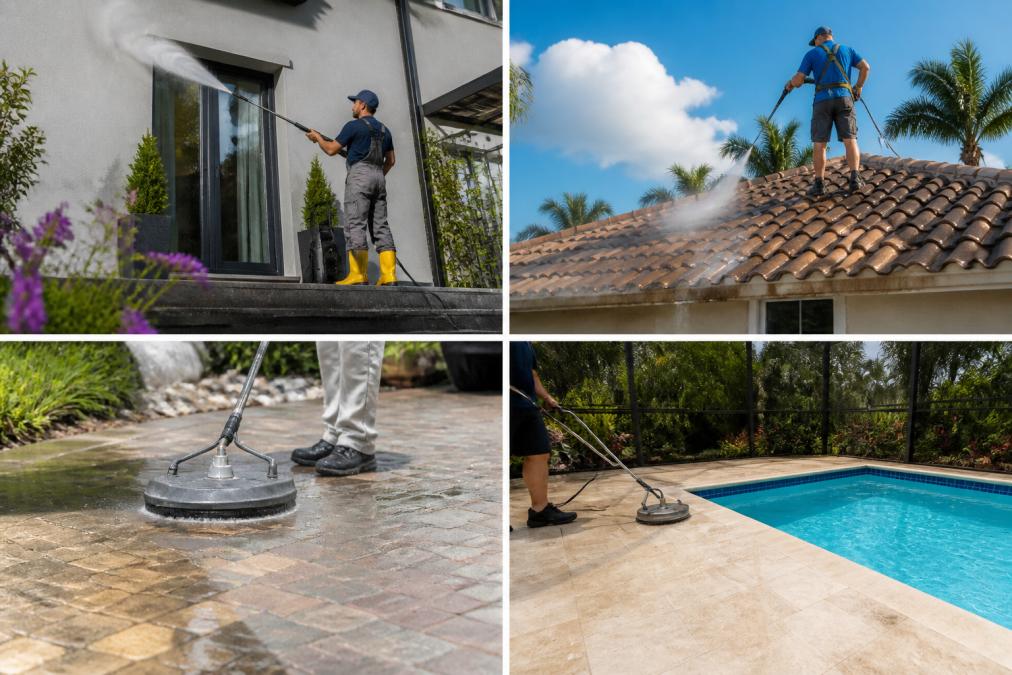
Many full-service companies offer paver sealing, soft wash roof cleaning, house washing, driveway cleaning, and pool deck cleaning as part of their service menu. Ask specifically what is included in your quote. Paver sealing typically requires a separate step after cleaning and drying. Soft washing is the recommended method for roofs because it uses low pressure and specialized cleaning solutions.
Protecting your property from mold, algae, and costly damage starts with choosing a contractor you can trust. Freedom Wash Club has served South Florida homeowners for over a decade with licensed and insured pressure cleaning, paver sealing, soft wash roof cleaning, house wash, driveway cleaning, and pool deck cleaning. Every job comes with a 100% satisfaction guarantee and easy scheduling by phone or text. Get started with Freedom Wash Club and receive your free quote today.