Table of Contents
- Why Florida Roofs Need Eco Friendly Cleaning
- What Is Soft Washing and How Does It Work?
- Soft Wash Roof Cleaning Benefits for Your Home
- How to Remove Black Streaks from Roof Shingles Safely
- Protecting Landscaping During Roof Cleaning
- Paver Sealing and Exterior Maintenance for Florida Properties
- DIY vs. Professional Eco Friendly Roof Cleaning
- Frequently Asked Questions
Last Updated: September 20, 2026
Why Florida Roofs Need Eco Friendly Cleaning
Eco friendly roof cleaning methods in Florida start with one fact: this state’s heat and humidity never stop working on your roof. At Freedom Wash Club, we’ve spent over a decade watching what that combination does to shingles, tiles, and the black streaks homeowners hate.
How Humidity and Heat Drive Algae Growth
Warm, damp air is a growth engine. In South Florida, roofs stay wet longer after rain, and overnight dew adds more moisture. That’s the perfect setup for algae, mold, and mildew.
- Algae feeds on moisture and limestone filler in shingles
- Mildew and mold follow the same damp zones
- Shade trees and poor airflow make it worse
- Rainy season speeds up the whole cycle
What Is Soft Washing and How Does It Work?
Soft washing is a low-pressure cleaning method that uses specially mixed cleaning solutions to kill algae, mold, and mildew at the root. It relies on the cleaning mix, not force, to do the work. That distinction matters because the organisms behind black roof streaks are alive, and killing them is what makes the stains stay gone.
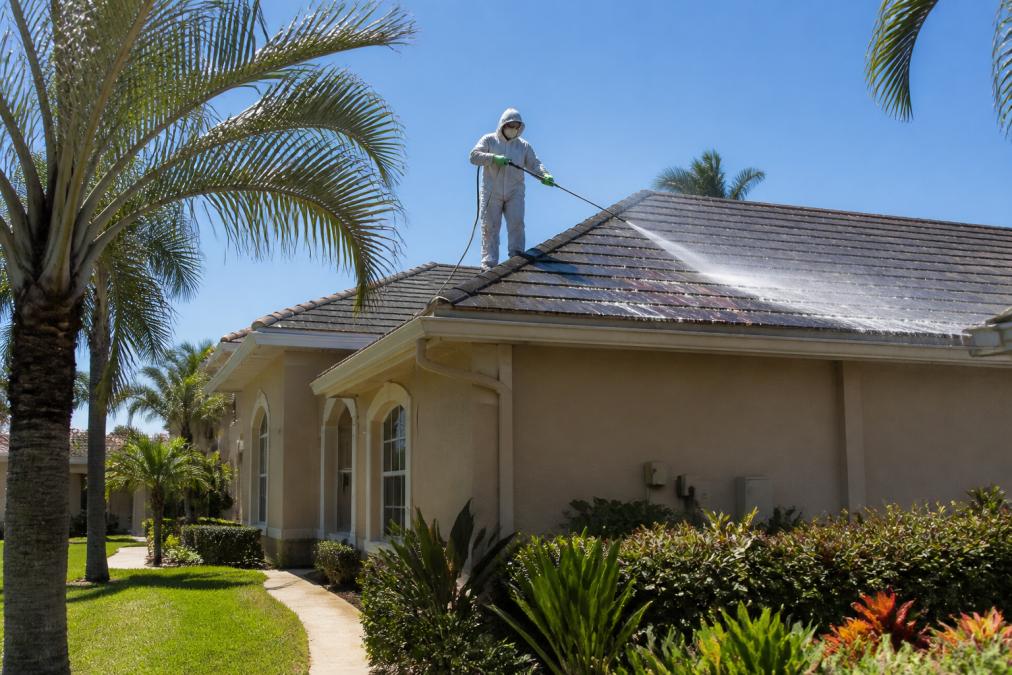
Here’s the basic process:
- Inspect the roof and note problem areas
- Protect plants, gutters, and fixtures
- Apply the cleaning solution at low pressure
- Let it dwell so it kills growth at the source
- Rinse gently and check the results
What’s Actually in an Eco-Friendly Soft Wash Mix
Most “eco-friendly” roof cleaning claims are vague. A trustworthy provider should be able to tell you what’s in the tank and why. The typical eco-conscious soft wash mix is built from a few core components:
- Biodegradable surfactants, these break the surface tension of water so the solution spreads evenly and clings to the growth instead of running off.
- Sodium hypochlorite at a diluted concentration, the same active ingredient used in pool and drinking-water treatment, applied at a strength low enough to kill algae without destroying shingles.
- Buffers and stabilizers, these keep the mix from being unnecessarily aggressive on metal flashing, gutters, and paint.
- Water, the majority of the tank.
Ingredient Transparency and Safety Data Sheets
A provider that genuinely uses eco-friendly methods should be able to hand you a Safety Data Sheet (SDS) for every product in the tank. SDS documents are standardized under the Occupational Safety and Health Administration (OSHA) Hazard Communication Standard and list the chemical identity, health hazards, first-aid measures, and handling precautions for a product. If a company can’t or won’t share them, that’s a signal.
Ask these questions before you hire:
- What’s the active ingredient, and at what dilution?
- Do you have an SDS for each product you’ll use?
- How do you neutralize or rinse runoff before it reaches plants and ponds?
- Are the surfactants biodegradable, and do they break down in soil?
Low-Pressure Cleaning vs. Pressure Blasting
Pressure blasting forces water under shingles and can strip granules, crack tiles, and void roof warranties. Soft washing never needs that kind of force.
| Method | Pressure Level | Best For | Main Risk |
|---|---|---|---|
| Soft washing | Low | Shingle and tile roofs | None when done correctly |
| Pressure blasting | High | Concrete and driveways | Shingle damage, leaks |
| DIY spray and rinse | Very low | Light surface dust | Growth returns fast |
How Soft Washing Protects Your Roof Warranty
Most asphalt shingle manufacturers condition their warranties on proper maintenance. Pressure washing a shingle roof can strip the protective granules and physically damage the mat, which gives a manufacturer grounds to deny a claim. Soft washing, done at low pressure with a manufacturer-safe solution, keeps the roof within the terms of its warranty.
Ask any roof cleaner how they protect your plants before they start. A crew that wets down landscaping first and rinses after is a crew that knows what it’s doing.
Soft Wash Roof Cleaning Benefits for Your Home
Soft wash roof cleaning benefits go beyond appearance. The method removes the growth that causes roof discoloration, and it does so without damaging the surface.
- Protects surface integrity. No stripped granules, no cracked tiles.
- Extends roof longevity. A clean roof sheds water better and lasts longer.
- Improves curb appeal. Streak-free roofs change how a home looks from the street.
- Supports property value. A well-kept exterior reads as a well-kept home.
- Uses less harsh chemistry. Lower pressure means less risk of chemical runoff into gutters and beds.
How to Remove Black Streaks from Roof Shingles Safely
To remove black streaks from roof shingles safely, treat the growth rather than scrubbing it. Those streaks are alive, and killing them is what makes them go away for good.
- Identify the stain type first (algae, mildew, or dirt)
- Test a small, hidden area before treating the whole roof
- Apply a soft wash solution at low pressure
- Let it dwell, then rinse gently
- Repeat on stubborn sections after a few days
Understanding Gloeocapsa Magma and Mildew Buildup
Gloeocapsa magma is the cyanobacteria behind most black roof streaks. It arrives as airborne spores, settles on shingles, and feeds on moisture and filler materials.
Protecting Landscaping During Roof Cleaning
Protecting landscaping during roof cleaning comes down to preparation. Plants, grass, and shrubs are sensitive to cleaning solutions, so a good crew covers and rinses them before, during, and after the job.
- Cover delicate plants and outdoor furniture
- Pre-wet garden beds and grass
- Divert runoff away from ponds and pools
- Rinse everything thoroughly when the job ends
The most common mistake homeowners make is hiring the lowest bid and skipping plant protection. The savings disappear fast when you’re replacing shrubs.
Paver Sealing and Exterior Maintenance for Florida Properties
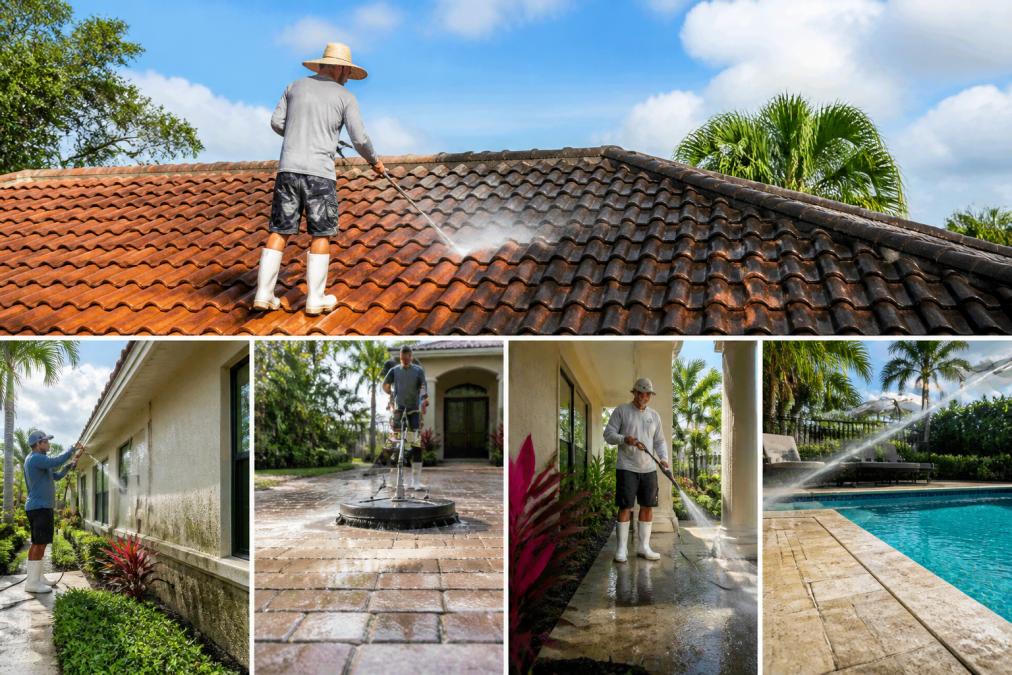
Paver sealing and exterior maintenance keep the rest of your property as clean as the roof. Driveways, pool decks, and walkways take a beating from sun, rain, and foot traffic.
Here’s a simple maintenance rhythm that works:
- Roof: soft wash every 12-18 months
- Driveway and pool deck: clean and seal as needed
- House exterior: wash yearly to stop mildew
- Pavers: reseal when water stops beading
A full exterior plan beats one-off cleaning. Roof, driveway, house wash, and pavers on a schedule keeps the property looking new year-round.
DIY vs. Professional Eco Friendly Roof Cleaning
DIY vs. professional eco friendly roof cleaning is really a question of risk. You can buy a soft wash mix and a pump sprayer, but roofs are steep, slippery, and easy to damage. The right answer depends on your roof type, your comfort with heights, and how much growth you’re dealing with.
A Florida-Specific Cleaning Frequency Guide
Climate drives how often a roof needs attention. In this region, the combination of year-round warmth, high humidity, and salt air near the coast accelerates organic growth. A practical schedule looks like this:
- Coastal properties: inspect every 6 months and plan a soft wash every 12 months. Salt air and constant moisture push growth faster than inland.
- Inland and suburban properties: inspect annually and soft wash every 12-18 months.
- Heavily shaded roofs: check every 6 months. Tree cover blocks airflow and keeps shingles damp longer, so growth returns sooner.
- North-facing roof planes: these dry slowest and usually need attention first.
When DIY Is Actually Reasonable
DIY can work in a narrow set of conditions:
- The roof is single-story and low-slope, and you can reach it safely from a ladder without stepping onto the surface.
- Staining is light and limited to one or two small areas.
- You’re comfortable working at height and have someone spotting you.
- You’re using a pump sprayer or garden sprayer, never a pressure washer.
Even then, DIY soft washing has real limits. You need to pre-wet and cover landscaping, mix the solution at a safe concentration, avoid spraying on a windy day, and rinse everything thoroughly. Miss a step and you can burn shrubs or leave streaks.
When to Call a Professional
Call a pro when any of these apply:
- The roof is steep, two stories or higher, or has multiple valleys and dormers.
- Growth covers large areas or has been ignored for years.
- You have tile roofing, which is brittle and easy to crack underfoot.
- Your HOA has rules about cleaning methods or approved contractors.
- You have a roof warranty you want to keep intact.
A professional crew has the fall protection, the chemical know-how, the insurance, and the experience to clean without damage. Most DIY jobs either miss the growth at the root or see it return within months because the solution wasn’t strong enough or didn’t dwell long enough.
The Hidden Costs of a Bad DIY Job
The savings from a DIY attempt can disappear fast. A stripped shingle roof may need premature replacement. A cracked tile can leak into the attic. Burned landscaping means replacing shrubs and sod. And if a fall happens, the medical and liability costs dwarf any cleaning bill.
If you can’t safely reach the roof, can’t confirm the right dilution, or can’t protect your landscaping, hire a pro. The risk isn’t worth the savings.
Frequently Asked Questions
What is the most eco friendly way to clean a roof?
Soft washing with biodegradable solutions is the most eco friendly roof cleaning method. It uses low pressure and specialized cleaning agents to kill algae, mold, and mildew at the root without damaging shingles. This approach avoids harsh chemicals and high-pressure water that can strip granules, void warranties, and send chemical runoff into storm drains. Professional soft wash services use targeted applications that protect both your roof and the surrounding environment.
How do you remove black streaks from roof shingles without harsh chemicals?
Black streaks come from gloeocapsa magma, a type of algae that feeds on limestone in asphalt shingles. To remove them without harsh chemicals, apply a biodegradable soft wash solution that breaks down the algae’s cell structure. Let it dwell on the surface, then rinse with low pressure. This method lifts stains without scrubbing or pressure blasting, preserving shingle granules and extending roof longevity. Regular preventative care keeps streaks from returning.
Can eco friendly cleaning methods damage landscaping?
Eco friendly methods are designed to protect landscaping when applied correctly. Professional soft wash technicians pre-wet plants, cover sensitive vegetation, and use biodegradable solutions that break down safely. After cleaning, they rinse all surrounding areas thoroughly. This approach prevents chemical runoff from harming grass, shrubs, or flower beds. Always hire a licensed and insured provider who follows vegetation protection protocols to avoid any risk to your yard.
How often should you have your roof professionally cleaned in Florida?
Most Florida homes benefit from professional roof cleaning every 12 to 24 months. The state’s humidity, heat, and frequent rain create ideal conditions for algae, mold, and mildew growth. Homes shaded by trees or located near water may need cleaning more often. Regular preventative care preserves curb appeal, maintains property value, and helps you stay compliant with HOA exterior cleanliness standards. A soft wash roof cleaning is gentler than pressure washing and safe for asphalt shingles and clay tiles.
Florida’s climate will keep testing your roof every single year. The fix is a cleaning method that kills growth without wrecking shingles, plus a maintenance plan that covers the whole exterior. Freedom Wash Club handles soft wash roof cleanings, house wash, driveway cleaning, pool deck cleaning, and paver sealing across South Florida. Get started with Freedom Wash Club and keep your roof, driveway, and pavers looking their best all year.