Table of Contents
- What Polymeric Sand Is and How It Works
- Polymeric Sand vs Regular Sand: Key Differences
- Joint Stability and Paver Movement Control
- Weed and Grass Growth Prevention
- Polymeric Sand Disadvantages and Limitations
- How to Apply Polymeric Sand to Pavers
- How Long Does Polymeric Sand Take to Dry
- Why Professional Paver Sealing and Maintenance Matter
- Frequently Asked Questions
Last Updated: October 20, 2026
What Polymeric Sand Is and How It Works
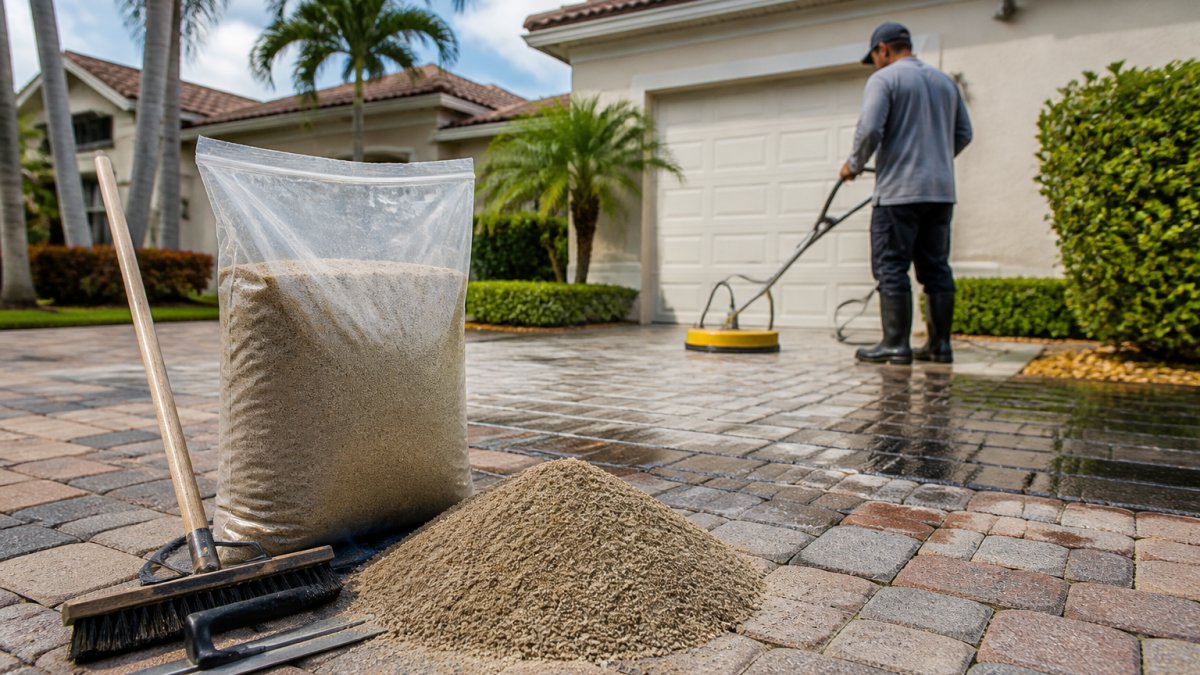
Polymeric sand is a specialized joint filler designed to stabilize pavers and improve the overall durability of paved surfaces. Understanding the benefits of polymeric sand for pavers helps homeowners make informed decisions about their outdoor spaces. Unlike regular sand, polymeric sand contains polymer additives that activate when exposed to water, creating a strong bond that hardens the joints between pavers. This transformation happens through a chemical process where water triggers the polymers to bind together, locking the sand particles in place.
The way it works is straightforward. You sweep polymeric sand into the joints between your pavers, spray it lightly with water, and let it cure. The water activates the polymer additives, which then harden and create a flexible yet stable joint. This flexibility matters because pavers naturally shift slightly with temperature changes and ground movement. A rigid joint would crack, but polymeric sand moves with the pavers while keeping them locked in position.
At Freedom Wash Club, we’ve seen homeowners transform their patios and driveways using this approach. The result is a finished appearance that looks clean and professional while providing structural support that regular sand simply cannot match. Regular sand washes away with rain and foot traffic. Polymeric sand stays put, maintaining joint integrity for years.
The key to success with polymeric sand is proper joint preparation. Remove old sand and debris completely before applying new polymeric sand. Any dirt or old material trapped in the joints prevents the polymer from bonding effectively.
Polymeric Sand vs Regular Sand: Key Differences
The difference between polymeric sand and regular sand comes down to durability, stability, and long-term maintenance. Regular sand is inexpensive and easy to apply, but it offers minimal joint protection. Rain washes it away. Foot traffic displaces it. Weeds grow through it. Within a few months, regular sand joints look messy and fail to support the pavers properly.
Polymeric sand, by contrast, hardens when activated by water and creates a strong bond that resists erosion and displacement. Here’s how they compare:
| Feature | Polymeric Sand | Regular Sand |
|---|---|---|
| Water resistance | Excellent | Poor |
| Weed prevention | Very effective | Minimal |
| Durability | 5-10+ years | 6-12 months |
| Flexibility | Maintains movement | Rigid, cracks easily |
| Application | Requires water activation | Simple sweep and done |
| Cost | Higher upfront | Lower upfront |
| Maintenance | Minimal | Frequent replacement |
The trade-off is clear. Polymeric sand costs more initially but saves money and effort over time because you won’t need to replace it constantly. Regular sand is cheaper now but becomes expensive when you factor in repeated replacement and the time spent maintaining joints.
One thing many homeowners miss: polymeric sand performance depends on proper installation. If you don’t activate it correctly with water, or if you apply it to joints that are too shallow, it won’t perform as advertised. The joint width and depth matter significantly. Joints that are too narrow trap moisture and prevent proper curing. Joints that are too shallow don’t hold enough sand to create a stable bond.
Joint Stability and Paver Movement Control
Pavers naturally shift due to temperature changes, ground settling, and foot traffic. Without proper joint support, this movement causes pavers to separate, creating uneven surfaces and safety hazards. Polymeric sand prevents this by locking pavers in place while allowing controlled movement.
The polymer additives create a flexible bond that moves with the pavers rather than resisting their natural shift. This flexibility is what makes polymeric sand superior to rigid alternatives. Concrete grout, for example, cracks when pavers move because it cannot flex. Polymeric sand accommodates movement while maintaining structural integrity.
When joints are properly filled with polymeric sand, the entire paved surface becomes more stable. Individual pavers support each other through the hardened sand joints, distributing weight more evenly. This reduces the stress on any single paver and extends the lifespan of your entire installation.
Avoid applying polymeric sand to joints that are too deep or too wide. Joints deeper than 2 inches or wider than 1 inch don’t compact the sand properly, preventing the polymer from bonding effectively. This leads to poor performance and wasted material.
Weed and Grass Growth Prevention
One of the most visible benefits of polymeric sand for pavers is its ability to prevent weeds and grass from growing through joints. Regular sand offers almost no weed protection. Seeds find their way into loose sand, germinate, and create an unsightly appearance that requires constant pulling and maintenance.
Polymeric sand creates a barrier that makes it extremely difficult for weed seeds to establish roots. The hardened joint structure physically blocks seed penetration. This doesn’t mean weeds become impossible, but they become rare rather than routine. Most homeowners report minimal weed growth after switching to polymeric sand.
The hardened surface also makes weeds that do appear easier to remove. They don’t have loose sand to anchor into, so pulling them out requires less effort. You’re not fighting through soft sand that collapses around the root system.
For commercial properties and HOA-managed communities, this weed prevention is invaluable. It keeps exteriors looking maintained without constant upkeep. For homeowners preparing their properties for sale, a weed-free patio or driveway makes a strong impression. Clean, well-maintained outdoor spaces increase perceived property value.
Polymeric Sand Disadvantages and Limitations
Polymeric sand isn’t perfect. Understanding its limitations helps you make an informed decision about whether it’s right for your project.
Cost and upfront investment are real considerations. Polymeric sand costs more per unit than regular sand. For large installations, this adds up. However, the math shifts when you factor in replacement frequency and maintenance time over five to ten years.
Installation requirements can be tricky. You must activate the sand with the right amount of water. Too little water and the polymer won’t cure properly. Too much water and it can stain the pavers or create a haze on the surface. Getting the water activation right takes attention to detail.
Climate sensitivity matters more than many guides acknowledge. Polymeric sand performs best in moderate climates. In extremely hot, dry regions, the sand may cure too quickly or unevenly. In very wet climates with constant rain, overactivation can occur. Freeze-thaw cycles in cold climates can stress the polymer bonds over time, though modern formulations handle this better than older products.
Joint preparation is critical. If you apply polymeric sand over old sand, dirt, or debris, it won’t bond properly. Complete removal of old material is mandatory. This preparation work takes time and effort.
Not ideal for all applications. Polymeric sand works best for standard paver installations with normal joint widths and depths. Irregular joints, very narrow gaps, or oversized joints present challenges.
Polymeric sand delivers excellent results when installed correctly on properly prepared joints in moderate climates. It underperforms in extreme conditions or when installation steps are skipped.
How to Apply Polymeric Sand to Pavers
Applying polymeric sand correctly is the difference between a five-year installation and one that fails within months. Follow these steps carefully.
Step 1: Prepare the joints
Remove all old sand, dirt, debris, and vegetation from between the pavers. Use a joint knife or specialized tool to clean out loose material. Compressed air or a shop vacuum helps remove fine dust.
Step 2: Sweep polymeric sand into joints
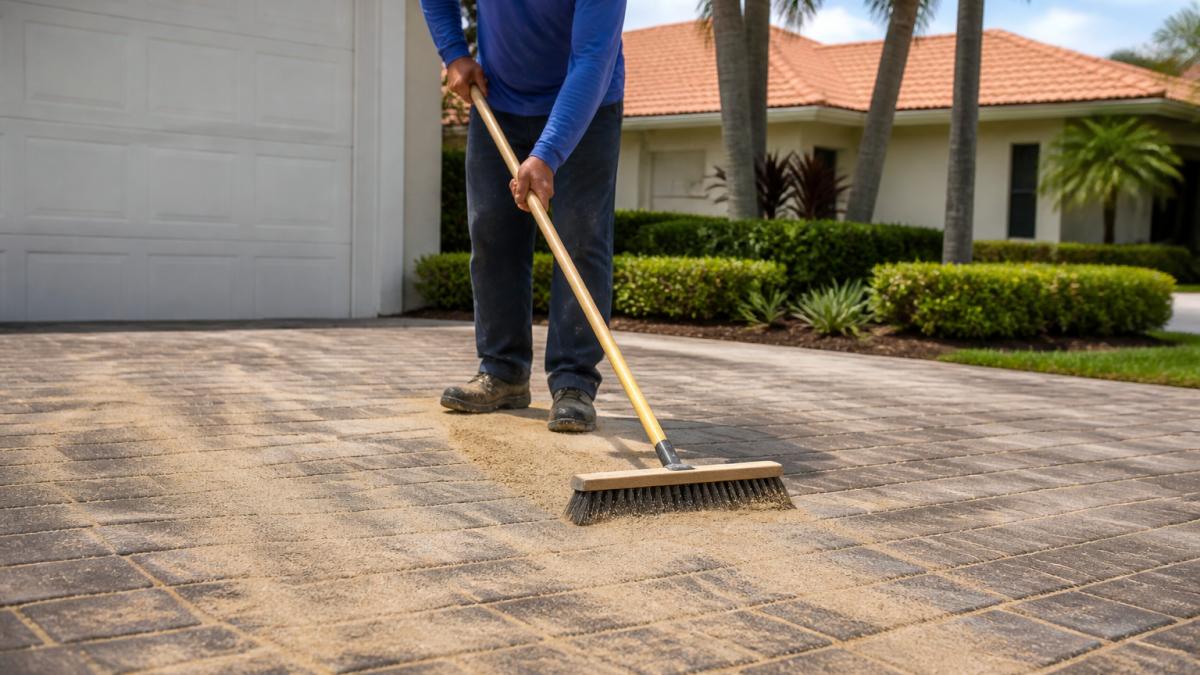
Pour polymeric sand onto the paved surface and sweep it into the joints using a push broom. Work at a 45-degree angle to the paver direction. Make multiple passes to ensure joints are completely filled.
Step 3: Remove excess sand
Sweep away excess sand from the paver surface. Use a leaf blower to remove remaining particles. A clean surface prevents staining and haze when you activate the sand.
Step 4: Activate with water
Spray the entire area lightly with water using a garden hose or low-pressure sprayer. The goal is even moisture, not saturation. Start at one end and work systematically across the surface. The sand should darken as it absorbs water, indicating proper activation.
Step 5: Allow curing time
Do not walk on the pavers or expose them to water for at least 24 to 48 hours. Most polymeric sand formulations require this curing window. Check the product instructions for specific timing. During curing, the polymer bonds harden and create the stable joint.
Homeowners with patios, driveways, or walkways experiencing weed growth or joint deterioration. Best results on projects with standard paver sizes and normal joint widths.
How Long Does Polymeric Sand Take to Dry
The drying and curing process for polymeric sand involves two distinct phases: initial set and full cure. Understanding the difference helps you know when your pavers are safe to use.
Initial set occurs within 24 to 48 hours after water activation. During this phase, the polymer begins bonding and the sand starts hardening. You should avoid walking on the pavers or exposing them to water during this period. Rain during initial set can disrupt the curing process and compromise joint quality.
Full cure typically takes 5 to 7 days. After this period, the joints reach maximum hardness and flexibility. The polymers have fully bonded, and the joints can handle normal foot traffic, temperature changes, and moisture exposure without issue.
Temperature and humidity affect curing speed. Warm, dry conditions speed curing. Cool, damp conditions slow it down. If you apply polymeric sand during a cold, rainy period, expect longer curing times. Some products specify extended curing windows for cold weather applications.
Avoid pressure washing or heavy water exposure during the first week. The joints need time to fully harden before they encounter sustained water pressure. Once fully cured, polymeric sand resists water pressure and erosion effectively.
Why Professional Paver Sealing and Maintenance Matter
While polymeric sand provides excellent joint stabilization, comprehensive paver care involves more than just joint filling. Professional sealing and maintenance protect your entire investment and extend the lifespan of your paved surfaces.
Sealing protects paver surfaces from staining, UV damage, and weathering. A quality sealer creates a protective barrier that repels water, prevents staining from dirt and organic growth, and maintains the color and appearance of your pavers. Sealed pavers resist mold and algae growth, which is particularly important in humid climates.
Regular maintenance prevents small problems from becoming expensive repairs. Cracks, loose pavers, and eroding joints start small but worsen quickly without attention. Professional inspection catches these issues early when they’re inexpensive to fix. Waiting until problems are severe means replacing entire sections of pavement.
Professional cleaning removes buildup that damages pavers over time. Mold, algae, dirt, and organic debris trap moisture against paver surfaces, accelerating deterioration. Regular soft wash roof cleanings and professional house wash services remove these contaminants before they cause permanent damage.
Freedom Wash Club combines polymeric sand installation with professional paver sealing and exterior home cleaning to keep your property looking pristine while protecting your investment. Our team handles the technical details, proper joint preparation, correct water activation, appropriate sealing products, so your pavers stay stable and beautiful for years.
Protecting your paved surfaces requires more than hoping regular sand holds up. Polymeric sand stabilizes joints and prevents weeds, but professional paver sealing and maintenance complete the picture. Freedom Wash Club brings over a decade of experience to every project, combining quality materials with proper installation techniques.
Frequently Asked Questions
What is the difference between polymeric sand and regular sand?
Regular sand is loose material that shifts with paver movement and allows weeds to grow through joints. Polymeric sand contains polymer additives that harden when activated by water, creating a flexible bond that locks pavers in place and resists weed growth. Regular sand requires frequent refreshing; polymeric sand lasts years with proper maintenance.
Does polymeric sand prevent weeds between pavers?
Polymeric sand significantly reduces weed and grass growth by sealing joints and blocking weed seeds from taking root. However, it does not eliminate weeds entirely, seeds can still germinate on the paver surface itself. Combined with regular sweeping and occasional professional driveway cleaning, polymeric sand keeps joints nearly weed-free for years.
How long does polymeric sand take to dry and cure completely?
Polymeric sand hardens within 24-48 hours after water activation, but full cure can take up to 7 days depending on weather and humidity. During this period, avoid heavy foot traffic and rain. In humid climates like South Florida, curing may take slightly longer. Professional installation ensures proper activation and timing for best results.
Can polymeric sand wash out of paver joints?
Quality polymeric sand resists washout when properly installed and compacted. However, poor application, inadequate compaction, or heavy pressure from power washing can dislodge it. Professional paver sealing and driveway cleaning services use techniques that protect polymeric sand while removing dirt and algae without compromising joint integrity.