Table of Contents
- Identifying Mold, Algae, and Moss on Your Roof
- Roof Cleaning Safety Precautions You Must Follow
- Tools and Cleaning Supplies You’ll Need
- Step-by-Step Process to Remove Mold From Roof
- Soft Wash Roof Cleaning vs. Pressure Washing
- How to Remove Black Streaks From Roof Shingles
- When to Call Exterior Home Cleaning Services
- Preventative Maintenance to Stop Mold From Returning
- Frequently Asked Questions
Last Updated: September 26, 2026
How to Remove Mold From Roof Safely
Mold on your roof doesn’t just look bad, it eats away at shingles and can lead to expensive repairs if left alone. At Freedom Wash Club, we’ve helped homeowners tackle this problem the right way, without damaging their roofs or voiding warranties in the process.
Most people either ignore mold until it becomes structural, or they damage shingles with wrong methods. This guide shows you how to remove mold from roof safely with step-by-step instructions and the precautions that prevent costly mistakes.
Identifying Mold, Algae, and Moss on Your Roof
Before cleaning, identify what’s growing on your shingles, treatment depends on whether it’s mold, algae, or moss.
Mold appears as black or dark green spots in clusters, thriving in moist, shaded areas and spreading faster than algae. Algae creates uniform black streaks following water runoff, indicating moisture retention. Moss looks thick and fuzzy in clumps; it holds moisture and can lift shingles, making it particularly destructive.
Your cleaning method depends on what’s present: mold and algae respond to chemical treatment, while moss usually needs physical removal first, then chemical treatment.
Check north-facing sections and tree-shaded areas, mold magnets. Black vertical streaks indicate algae; thick, spongy patches indicate moss.
Roof Cleaning Safety Precautions You Must Follow
Most DIY injuries happen when people skip safety steps to save time.
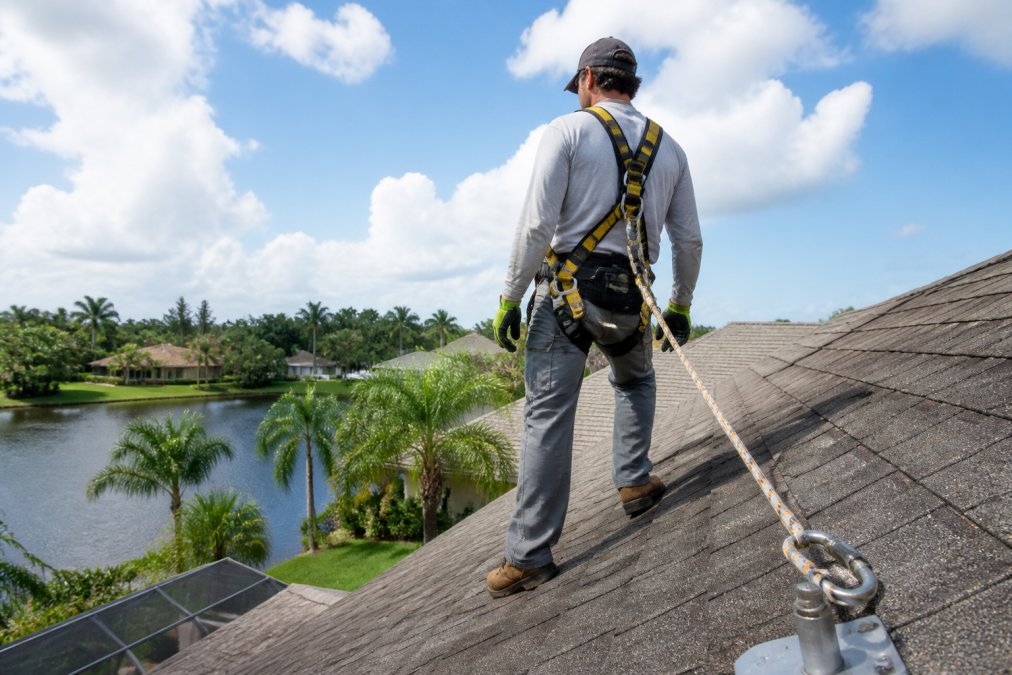
Wear proper protective equipment: safety harness (if pitched), slip-resistant shoes, gloves, eye protection, and respirator mask to protect against mold spores and chemical fumes.
Never work alone. Have someone on the ground to call for help, hand supplies, and monitor your safety.
Check the weather. Avoid windy days and rain within 24 hours, your solution needs time to work. Choose early morning or late afternoon on a dry, calm day.
Secure your ladder properly. Place on level ground with someone holding the base, angle at roughly 75 degrees, and extend at least three feet above the roofline.
Know your roof’s limits. Steep roofs (over 8/12 pitch) are dangerous for DIY work. If your roof is steep, hire a professional. Your safety is worth more than the cost of a service call.
Watch for power lines. If your roof is near power lines, stay back at least 10 feet. Wet conditions and metal tools near power lines create electrocution risk.
Tools and Cleaning Supplies You’ll Need
Essential tools:
- Soft-bristled brush or broom (never a pressure washer on high settings, it damages shingles)
- Garden sprayer or pump sprayer (2-gallon capacity works well)
- Safety harness and rope (if your roof is pitched)
- Slip-resistant shoes
- Gloves, eye protection, and respirator mask
- Ladder with stabilizer bar
- Bucket for mixing solutions
- Garden hose with spray nozzle
Cleaning solutions, choose one:
Oxygen bleach is a choice for cleaning: mix one part powder to four parts water, let sit 15-20 minutes, then rinse. It kills mold and algae without harsh fumes and breaks down into water and oxygen.
Trisodium phosphate (TSP) is effective but can damage vegetation below, so manage runoff carefully.
Sodium hypochlorite (regular bleach) works but risks shingle damage and strong fumes, use only as a last resort, diluted heavily (1:10).
Never mix cleaning solutions. Combining bleach with other chemicals creates toxic fumes. Stick with one product and rinse thoroughly before applying anything else.
Step-by-Step Process to Remove Mold From Roof
Follow these steps in order. Rushing through any step leads to incomplete cleaning or damage.
Step 1: Prepare and inspect (15 minutes)
Put on all safety gear, check harness or ladder setup twice, and identify problem areas.
Step 2: Clear loose debris (20 minutes)
Use a soft brush to gently sweep away leaves, pine needles, and dirt. Don’t scrub hard, you’re just removing the loose stuff. This helps your cleaning solution make contact with the actual mold and algae.
Step 3: Mix your cleaning solution (5 minutes)
Follow the mixing instructions for whatever product you chose. Pour it into your pump sprayer. Test the spray pattern on a section of roof you’ll clean anyway, you want even coverage, not a heavy stream that damages shingles.
Step 4: Apply the cleaning solution (30 minutes)
Spray the solution evenly across all affected areas. Work from top to bottom so the solution flows downward. Don’t oversaturate, you want the surface wet, not dripping. Let the solution sit for 15-20 minutes. This is the “dwell time” when the chemical does its work breaking down mold and algae.
Step 5: Scrub gently (15 minutes)
Use your soft-bristled brush to scrub away loosened mold and algae. Use gentle pressure, aggressive scrubbing damages shingle granules and voids warranties. You’re not trying to sand the roof; you’re helping the solution do its job.
Step 6: Rinse thoroughly (30 minutes)
Rinse the entire roof with your garden hose. Start at the top and work downward. Rinse until the water runs clear. This removes all the dead mold, algae, and chemical residue. Incomplete rinsing leaves residue that can damage shingles over time.
Step 7: Final inspection (10 minutes)
Walk the roof one more time. Look for any spots you missed. If you see mold or algae still present, apply solution again to those areas and repeat the scrub-and-rinse process.
Total time: 2-3 hours for an average roof.
Soft Wash Roof Cleaning vs. Pressure Washing
This distinction is critical because it directly affects whether your roof survives the cleaning intact.
Soft wash roof cleaning uses low-pressure water combined with cleaning solutions. The water pressure stays below 500 PSI (pounds per square inch). Soft wash is gentle on shingles, doesn’t dislodge granules, and doesn’t void warranties when done correctly.
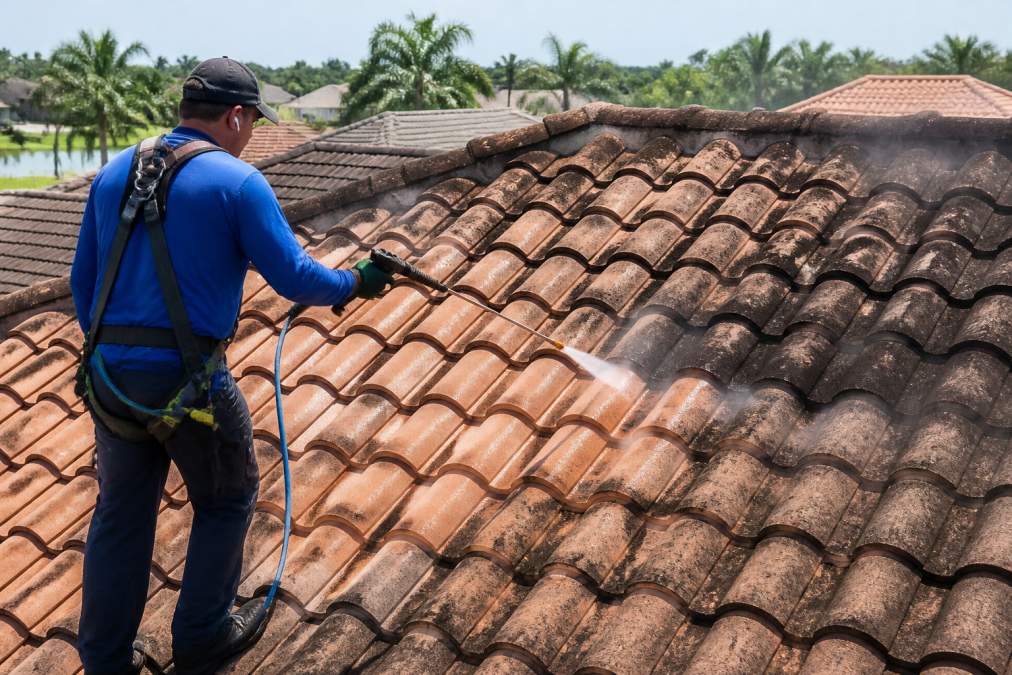
Pressure washing uses high-pressure water, typically 2,500-4,000 PSI. It removes debris fast, but it also damages asphalt shingles. Pressure washing strips granules from shingles, shortens roof life, and almost always voids manufacturer warranties. Insurance companies and roofers consistently warn against pressure washing roofs.
The choice is simple: soft wash roof cleaning is the right method. Pressure washing might look faster, but you’re paying for that speed with roof damage.
If you’re doing this yourself, your garden hose at normal pressure is essentially a soft wash system. You’re not applying enough force to damage shingles. Professional companies like Freedom Wash Club use specialized soft wash equipment that applies the right pressure and solution mix without risk.
Never use a pressure washer on your roof. Even “low-pressure” settings on residential pressure washers exceed safe limits for shingles. The damage might not be visible immediately, but it shortens your roof’s lifespan and voids most warranties.
How to Remove Black Streaks From Roof Shingles
Black streaks are usually algae, and they’re one of the most common roof problems homeowners face. The good news: they’re also one of the easiest to treat.
Black streaks follow water runoff patterns down your roof. They’re almost always algae, not mold. Algae grows because moisture sits on the shingles long enough for spores to take hold.
Why they happen: Shaded areas stay damp longer. Debris collects and holds moisture. Algae spores travel through the air and land on your roof. Once they’re there, they multiply.
How to remove them: Apply your chosen cleaning solution directly to the streaked areas. Let it sit for 15-20 minutes. The solution breaks down the algae’s protective layer. Scrub gently with a soft brush. Rinse thoroughly. For stubborn streaks, apply solution again and let it sit longer, sometimes 30 minutes for heavy growth.
Prevention: This is where most people fail. After you clean the streaks away, you need to prevent them from coming back. A preventative biocide treatment stops algae spores from taking root. This is applied after your final rinse and left to dry on the shingles. It keeps working for 12-18 months.
Many homeowners clean their roofs once and wonder why the streaks return within a year. Without preventative treatment, algae spores just land again and start growing.
When to Call Exterior Home Cleaning Services
Some roof jobs are beyond DIY. Knowing when to call a professional saves you money and keeps you safe.
Call a professional if:
- Your roof pitch is steeper than 8/12 (very steep). Working on steep roofs requires specialized equipment and training.
- You have a complex roof with multiple levels, valleys, or dormers. These increase fall risk and make thorough cleaning harder.
- Your roof is over 25 years old. Older shingles are fragile. Professional soft wash equipment is gentler than DIY methods.
- You’re uncomfortable working at heights. Honestly assessing your comfort level prevents accidents.
- You have extensive mold or moss growth. Heavy growth often requires multiple treatments and specialized fungicides.
- You need a warranty on the work. Professional services guarantee their results and back them up if problems develop.
If you’re unsure about DIY, a professional service can be a smart investment.
Preventative Maintenance to Stop Mold From Returning
Cleaning your roof once isn’t enough. Mold and algae return unless you break the conditions that let them grow.
Frequently Asked Questions
What kills mold on your roof?
Oxygen bleach and trisodium phosphate (TSP) are effective solutions for killing mold on asphalt shingles without damaging them. Sodium hypochlorite (bleach) works but poses higher risks to shingle integrity and roof longevity. Soft wash methods using low-pressure application with appropriate chemical dwell time ensure spore removal while protecting your roof structure. Always rinse thoroughly after treatment and consider professional exterior home cleaning services if you’re uncertain about the right approach for your specific roof pitch and shingle type.
Is pressure washing safe for roof shingles?
High-pressure washing can damage asphalt shingles by stripping granules, creating weak spots, and potentially voiding your roof warranty. Soft wash roof cleaning is the safer alternative, using low-pressure application with appropriate cleaning solutions instead. If mold or algae growth is severe, professional roof cleaning services understand the risks and use methods that protect your investment while removing organic debris and mildew stains effectively.
How often should you clean your roof to prevent mold?
Regular roof maintenance schedules reduce the need for intensive cleaning and extend roof integrity. Driveway cleaning and pool deck cleaning on similar schedules also prevent organic growth across your entire property.
Will mold damage roof shingles?
Yes, mold and algae growth can damage roof shingles over time by retaining moisture, promoting deterioration, and compromising the protective granule layer on asphalt shingles. Early removal prevents costly repairs and maintains roof longevity. Mold remediation should address not just surface discoloration but also the underlying moisture conditions that encourage fungicide-resistant growth. Professional roof cleaning combined with proper drainage and ventilation prevents long-term damage.