Table of Contents
- Why Driveway Cleaning Is Critical for Home Resale
- Your Exterior Home Cleaning Checklist for Sellers
- How to Clean a Driveway Without a Pressure Washer
- Pressure Washing vs. Soft Washing for Driveways and Roofs
- Paver Sealing Benefits for Resale: Protecting Your Investment
- DIY vs. Professional Driveway Cleaning Services
- Frequently Asked Questions
Last Updated: September 14, 2026
Why Driveway Cleaning Is Critical for Home Resale
Cleaning driveway for home resale is one of the highest-use exterior maintenance tasks a seller can complete before listing. Buyers form their first impression within seconds of pulling up, and a stained, mildewed driveway contradicts every other improvement made inside the home. This guide from Freedom Wash Club covers the exact methods, timing, and material-specific protocols that move the needle on property valuation.
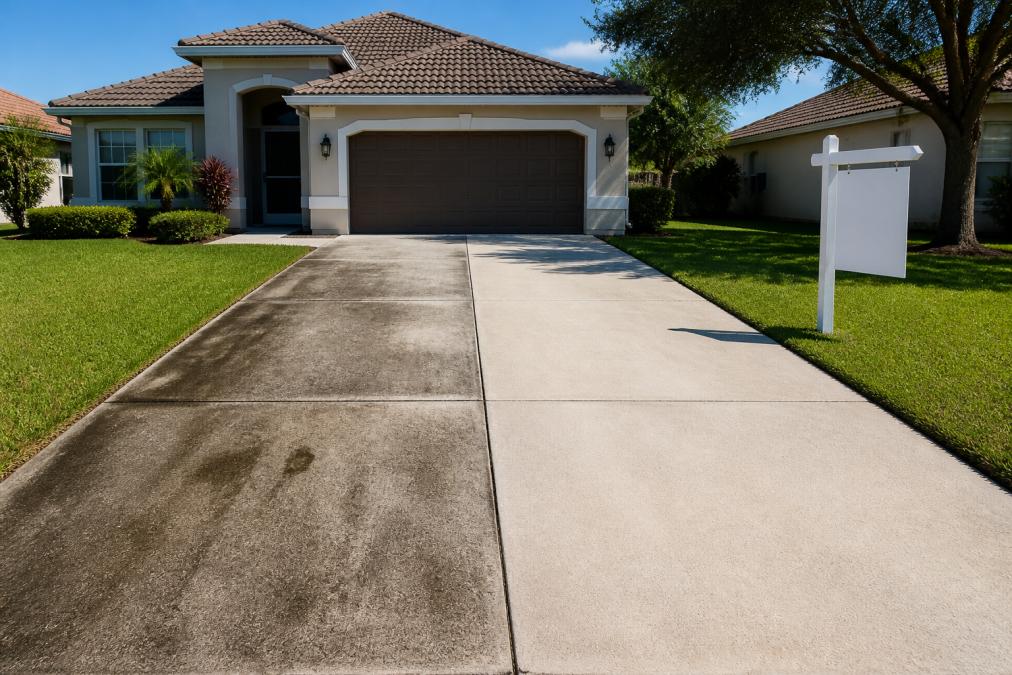
A driveway is the largest single hardscape surface a buyer sees. When it’s coated in black mildew streaks, rust-colored irrigation stains, or embedded oil spots, the message is clear: deferred maintenance. That impression colors how buyers read the roof, the siding, and the asking price.
How Curb Appeal Impacts Property Valuation
Curb appeal is the measurable effect that a home’s exterior appearance has on buyer perception and, ultimately, on the price a property commands. Real estate agents consistently report that exterior aesthetics influence appraisal outcomes and negotiation use, though the exact premium varies by market, material, and neighborhood (NAR Report Reveals Home Staging Boosts Sale Prices and Reduces Time on Market).
Here’s what most sellers miss: the driveway is judged differently than the lawn or the paint. A patchy lawn reads as seasonal. A stained driveway reads as neglect. Buyers mentally deduct the cost of restoration from their offer, and they usually overestimate it.
Surface integrity matters too. Mildew and mold on concrete and pavers hold moisture against the surface, and freeze-thaw cycles or heavy rain can widen existing cracks (Freezing Rain and Sleet). Cleaning is not purely cosmetic; it’s part of protecting the surface.
The driveway is the one exterior surface every single buyer walks or drives across. It gets more physical contact than any other part of the property, which makes its condition disproportionately influential.
Your Exterior Home Cleaning Checklist for Sellers
An exterior home cleaning checklist for sellers should sequence tasks by visibility and buyer traffic patterns, not by what’s easiest. Start with the surfaces buyers touch and photograph, then work outward.
The pre-listing sequence that works:
- Driveway and walkways, the entry path sets the tone
- House wash, siding, soffits, and fascia show streaking first
- Roof, soft wash roof cleaning removes the black streaking buyers read as age
- Pool deck, algae and efflorescence on pool surrounds read as neglect
- Patios and walls, the last surfaces buyers inspect closely
A common mistake is cleaning the house and leaving the driveway, or the reverse. Buyers notice the contrast immediately. Partial cleaning looks worse than none.
Pre-Listing Cleaning Tasks That Matter Most
The tasks that matter most are the ones tied to buyer perception and inspection risk. Mildew on a roof or algae on a pool deck can surface in a home inspection report and become a negotiation item. Removing it before listing takes that use away from the buyer.
Timing matters as much as method. Schedule exterior cleaning roughly one to two weeks before professional photography and the first open house. That window is long enough for surfaces to dry completely, and short enough that nothing has time to re-soil before showings begin.
Cleaning too early is a real mistake. In humid climates, mold and mildew can begin recolonizing within weeks (the EPA). If you clean a month before listing, buyers may tour a driveway that already shows fresh streaks.
How to Clean a Driveway Without a Pressure Washer
You can clean a driveway without a pressure washer using a stiff-bristle brush, a degreaser or oxygenated detergent, and consistent agitation. The process takes longer, but it is safer for delicate surfaces and entirely viable for routine soil and organic staining.
Here’s the manual method, step by step:
- Clear the surface. Remove vehicles, sweep leaves, and pull weeds from expansion joints.
- Pre-treat stains. Apply a degreaser to oil spots and let it dwell. Do not let it dry.
- Apply detergent. Mix an oxygenated cleaner per label directions and spread it across the slab.
- Scrub in sections. Work a manageable area with a stiff brush using circular motion.
- Rinse thoroughly. Push soapy water away from the garage and landscaping.
- Repeat stubborn areas. Old organic staining often needs a second dwell cycle.
Manual Scrubbing and Detergent Application for Stubborn Stains
Stubborn stains respond to dwell time, not brute force. Let the detergent sit for the full interval on the label before scrubbing. Most people scrub immediately, which wastes product and effort.
Different stains need different chemistry. Rust from irrigation systems responds to an acid-based remover. Oil and grease need a surfactant degreaser. Organic staining from mold and mildew responds to oxygenated cleaners. Matching the product to the stain is the difference between a clean slab and a wasted afternoon.
Work in the shade or on an overcast day. Detergents dry out in direct sun before they finish working, and dried product leaves a residue that looks like a new stain.
Pressure Washing vs. Soft Washing for Driveways and Roofs
Pressure washing and soft washing are two distinct methods, and choosing the wrong one is the most expensive mistake in exterior cleaning. Pressure washing uses a high-pressure nozzle to blast away grime mechanically. Soft washing uses low pressure combined with cleaning solutions to dissolve organic growth at the root.
Material-Specific Protocols
Most guides stop at the method name. The real decision is material-specific:
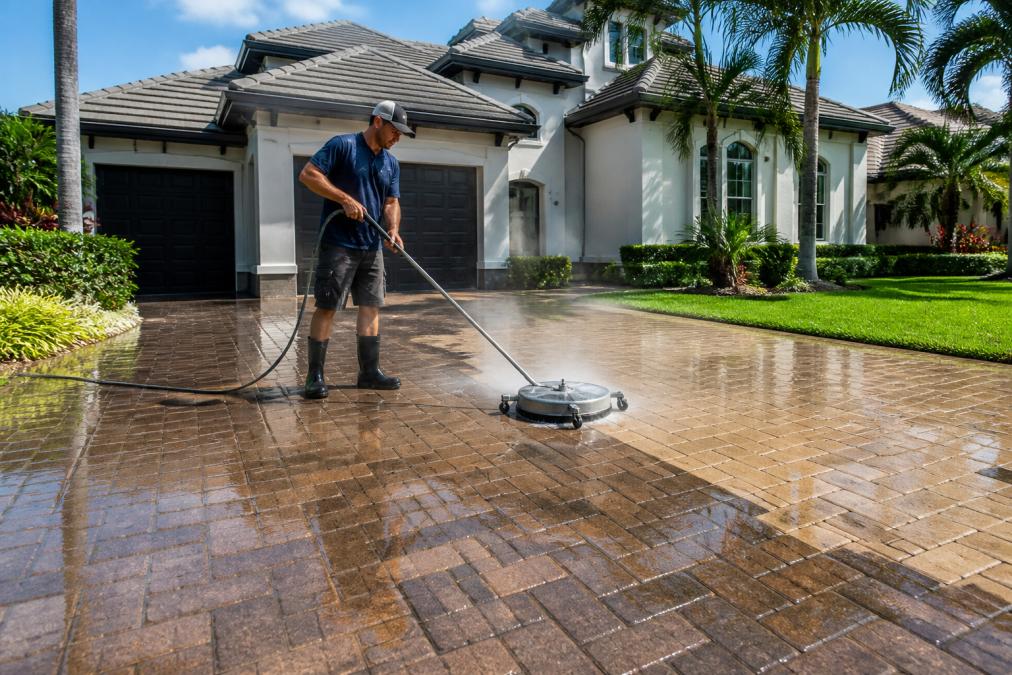
Concrete driveways. Pressure washing is usually appropriate. Use a surface cleaner attachment to avoid zebra striping, and keep the nozzle moving. For oil stains, pre-treat with a degreaser and allow dwell time before washing.
Asphalt driveways. Soft washing only. High pressure etches the binder and accelerates deterioration. Even a consumer-grade electric pressure washer can damage asphalt at close range.
Paver driveways. Soft washing, followed by re-sanding if joint sand has eroded. High pressure blows out joint sand and destabilizes the surface. After cleaning, paver sealing locks in joint sand and reduces weed growth.
Stamped concrete. Soft washing or low-pressure pressure washing. High pressure can erode the release agent and dull the pattern.
Shingle roofs. Soft wash roof cleaning only. Pressure washing strips granules and can void manufacturer warranties.
Pool decks. Soft washing. High pressure etches the surface and can pit the finish. Algae and efflorescence respond to chemical treatment, not force.
| Surface | Recommended Method | Why It Matters |
|---|---|---|
| Concrete driveway | Pressure washing | Withstands high pressure; removes embedded grime |
| Asphalt driveway | Soft washing | High pressure damages the binder |
| Paver driveway | Soft washing | Preserves joint sand and surface finish |
| Stamped concrete | Soft washing or low pressure | Protects release agent and pattern |
| Shingle roof | Soft wash roof cleaning | Protects granules and warranty |
| Pool deck | Soft washing | Prevents etching and surface pitting |
Why Soft Washing Works on Organic Growth
The black streaking on roofs is a living organism, not dirt. Blasting it off the surface leaves the root structure behind, and it returns within months. Soft washing treats the growth itself, which is why the results last far longer. The same principle applies to mildew on concrete, algae on pool decks, and organic film on pavers.
When to Choose Soft Wash Roof Cleaning
Choose soft wash roof cleaning whenever the surface cannot tolerate high pressure: asphalt shingles, tile, painted surfaces, and any roof with visible granule loss. The method relies on a cleaning solution applied at low pressure, then a careful rinse.
Never let anyone pressure wash an asphalt shingle roof. The immediate result may look clean, but granule loss shortens roof life and can trigger a warranty denial that costs far more than the cleaning saved.
Safety and Landscaping Protection
Chemical runoff can harm landscaping if not managed. Professional soft washing includes pre-wetting plants, covering sensitive areas, and rinsing after application. DIY soft washing often skips these steps, which is why plant damage is a common complaint after homeowner-applied roof cleaning.
If you are comparing quotes, ask which method the provider plans to use on each surface. A provider who quotes pressure washing for a shingle roof or an asphalt driveway is not the right choice.
Paver Sealing Benefits for Resale: Protecting Your Investment
Paver sealing benefits for resale come down to three things: appearance retention, joint stability, and stain resistance. Sealing locks in joint sand, reduces weed growth between pavers, and creates a barrier that keeps oil and organic stains from penetrating the surface.
Unsealed pavers are porous. Every spill, every irrigation cycle, and every season of organic growth works its way into the material. Once staining penetrates, cleaning becomes far harder and sometimes impossible without replacement. Sealing after a thorough paver cleaning is what preserves the result.
Freedom Wash Club handles paver sealing as part of its exterior cleaning services, alongside house wash, driveway cleaning, and pool deck cleaning. The sequence matters: clean first, seal second, and never seal over active mold or algae.
DIY vs. Professional Driveway Cleaning Services
DIY cleaning makes sense for light, routine soil on a concrete slab with no delicate surfaces nearby. Professional cleaning makes sense the moment you have a roof, pavers, asphalt, or a deadline. The real decision comes down to three variables: surface material, stain severity, and timeline.
A Decision Framework for Sellers
Use this sequence to decide whether to rent, buy, or hire:
- Identify the surface. Concrete is DIY-friendly. Pavers, asphalt, and shingle roofs are not.
- Grade the staining. Light organic film responds to detergent and a brush. Embedded oil, rust, or years of mildew usually needs professional treatment.
- Check the calendar. If photography or an open house is inside two weeks, hire out. DIY on a large driveway can consume a full weekend or more.
- Assess risk tolerance. Roof work, chemical application near landscaping, and high-pressure equipment all carry injury and property-damage exposure.
The Real Cost Comparison
Most homeowners underestimate the true cost of DIY because they count only the rental or product price. A complete accounting includes:
- Equipment rental or purchase. Pressure washers rent by the day or half-day at most equipment yards; surface cleaners and extension wands are often separate line items.
- Cleaning chemistry. Degreasers, oxygenated cleaners, and rust removers are sold per gallon or per concentrate, and stubborn stains can consume multiple applications.
- Consumables. Brushes wear out, nozzles clog, and hoses fail.
- Time. A large driveway can take a full day or more with manual scrubbing, plus dry time before sealing or photography.
- Risk. A single mistake on asphalt, pavers, or a roof can cost more to repair than the entire professional job.
Professional pricing is typically quoted per square foot or as a flat rate after an on-site or photo-based assessment. Because surface area, surface type, and stain severity drive the number, a quote is the only accurate figure. Freedom Wash Club provides free quotes rather than published rates.
Where DIY Falls Short
- Delicate surfaces. Pavers, asphalt, and roofs need method-specific handling. High pressure on asphalt etches the binder; high pressure on pavers blows out joint sand.
- Biological growth. Mold and mildew return quickly without proper treatment. A surface rinse removes the visible layer but leaves the root structure behind.
- Timeline pressure. HOA deadlines and listing dates don’t wait for a free weekend.
- Liability. Roof work carries real injury and property damage risk, and chemical runoff can harm landscaping if not managed.
When to Hire Out
Hire a professional when any of the following is true:
- The driveway is asphalt, paver, or stamped concrete.
- The roof shows black streaking.
- The pool deck has algae or efflorescence.
- The listing date is inside two weeks.
- The home is in an HOA with exterior maintenance standards.
Freedom Wash Club is licensed and insured, with more than a decade of experience across residential and commercial properties. Scheduling happens by phone or text with no in-person estimate required, which matters when an HOA has given you a deadline. The 100% satisfaction guarantee backs the work.
For most sellers, the break-even point is simple: if the driveway is concrete and lightly soiled, DIY can work. If it is any other material, or if the timeline is tight, professional cleaning is the lower-risk path.
Frequently Asked Questions
Does cleaning a driveway increase home value?
A clean driveway dramatically improves first impressions, which is a major factor in property valuation. While the exact dollar increase depends on your market, removing mold, oil stains, and grime signals that the home is well-maintained. This can lead to faster sales and stronger offers, as buyers perceive the property as move-in ready rather than a fixer-upper.
What is the best way to clean concrete before selling?
For concrete, start by removing weeds and sweeping debris. Apply a concrete-safe detergent to lift oil and dirt, scrubbing stains manually. If you use a pressure washer, use a fan tip to avoid etching the surface. For deep-set stains or to prepare for sealing, professional driveway cleaning ensures the surface is prepped correctly without damage.
Should I seal my pavers before listing my home?
Sealing pavers before listing stabilizes the joint sand, prevents weed growth, and enhances color, which boosts curb appeal. It also protects the surface from future stains during open houses. The paver sealing benefits for resale include a lower maintenance burden for the new owner and a visual ‘finished’ look that justifies a higher asking price.
How often should I clean my driveway to maintain property value?
In South Florida, driveways should be cleaned at least once a year to prevent mold and mildew buildup. If you are preparing for a sale, schedule a cleaning 2-4 weeks before listing. For year-round maintenance, especially for snowbirds, a recurring service keeps the exterior home cleaning checklist on track and avoids HOA violations.
Selling a home means every surface is being judged, and the driveway is judged first and hardest. Freedom Wash Club restores curb appeal with professional driveway cleaning, soft wash roof cleaning, house wash, paver sealing, and pool deck cleaning, backed by licensed and insured crews, 10+ years of experience, and a 100% satisfaction guarantee. Get started with Freedom Wash Club and put a driveway on the market that buyers read as cared-for rather than deferred.