Table of Contents
- Why Steep Roofs Demand a Different Approach
- Soft Wash Roof Cleaning: The Safest Method for Steep Slopes
- Roof Safety Equipment for Steep Pitches: What You Need
- How to Remove Black Streaks from Roof Shingles Without Damage
- Step-by-Step: Safe Roof Cleaning for Steep Pitches
- When to Call Exterior Home Cleaning Services for Your Roof
- Common Mistakes to Avoid on Steep Roofs
- Post-Cleaning Maintenance
- Frequently Asked Questions
Last Updated: September 12, 2026
Why Steep Roofs Demand a Different Approach
Safe roof cleaning for steep pitches is the practice of removing algae, mold, and debris from high-slope roofs using methods that keep the worker anchored and the shingles intact. It differs from flat-roof work because gravity works against you at every step.
On a low-slope roof, you can walk carefully and keep your balance. On an 8:12 slope or steeper, a single misstep sends you sliding (osha.gov). The pitch also changes how water and cleaning solution behave: runoff accelerates, which means chemicals reach your gutters and landscaping faster than you expect.
That combination of fall risk and chemical runoff is why steep-pitch cleaning has its own rules. This guide from Freedom Wash Club covers the equipment, methods, and mistakes that separate a clean roof from a damaged one.
The most common mistake on steep roofs is treating them like walkable ones. Standing on a steep slope without fall protection is how preventable injuries happen. If you cannot stay anchored, stay off the roof.
Soft Wash Roof Cleaning: The Safest Method for Steep Slopes
Soft wash roof cleaning is the safest method for steep slopes because it cleans from the ground or roof edge using low pressure and a cleaning solution rather than force. The solution does the work; you never need to stand on the pitch.
The process relies on a pump sprayer or dedicated soft wash system that delivers a diluted sodium hypochlorite mix at low pressure. On an asphalt shingle roof, this kills the algae at the root instead of blasting granules off the surface.
For steep pitches, the practical advantage is reach. A telescoping wand lets you treat the lower third of the roof from a ladder, then let gravity carry the solution up and across the field as it runs. You apply from the bottom and work up, keeping runoff controlled.
Soft washing pairs naturally with other exterior services. Many homeowners schedule EPA guidance on safe use of bleach-based cleaners alongside roof treatment, since the same solution handles organic growth on siding.
Roof Safety Equipment for Steep Pitches: What You Need
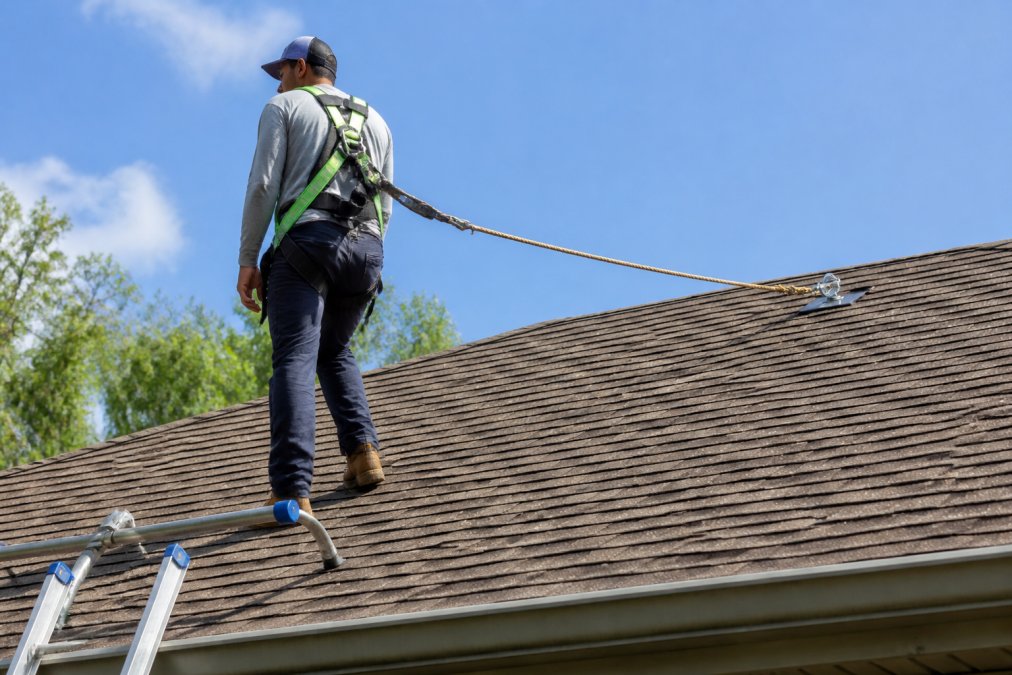
Roof safety equipment for steep pitches centers on a complete fall arrest system: a full-body harness, a rated roof anchor, a shock-absorbing lanyard or lifeline, and a backup means of attachment. Non-slip footwear and a ladder stabilizer round out the minimum kit. Most competitors stop at that list. The detail below is what actually keeps a worker on an 8:12 or steeper pitch.
Fall arrest hardware, item by item
- Full-body harness: Look for a class III harness with a dorsal D-ring at the upper back and side D-rings at the hips. A waist belt alone is a positioning device, not fall arrest, and it will not keep an unconscious worker upright after a fall.
- Roof anchor: Permanent anchors are bolted through the deck into rafters; temporary anchors clamp over the ridge. Either way, the anchor must be rated for the load and installed per the manufacturer’s instructions. Never tie off to a vent pipe, chimney, or satellite mast, none of those are engineered for fall arrest loads.
- Connector and lanyard: A shock-absorbing lanyard limits the force transmitted to the body during a fall. A self-retracting lifeline (SRL) is the better choice on steep pitches because it keeps the line taut as you move, reducing free-fall distance to inches rather than feet.
- Rope grab and lifeline: If you are working from a roof anchor with a vertical lifeline, a rope grab lets you slide up the line and locks on a sudden pull. This is the standard setup for steep-slope work where a horizontal lifeline is impractical.
- Ladder stabilizer: A standoff stabilizer keeps the ladder feet from slipping and spreads the load across the roof edge instead of concentrating it on two points. On a steep pitch, this is the difference between a ladder that stays put and one that kicks out when you shift weight.
- Non-slip footwear: Soft rubber soles grip shingle granules better than hard soles. Look for shoes with a deep tread and a heel that catches on the shingle course. Avoid smooth-soled work boots, they slide on granules, especially when the roof is damp.
PPE beyond the harness
Eye protection, chemical-resistant gloves, and a respirator matter when you are misting cleaning solution overhead. A half-face respirator with acid-gas cartridges is the common choice for bleach-based mixes; a simple dust mask will not stop mist. Wear long sleeves and pants to limit skin contact, and keep a hose or eyewash nearby in case of splashback.
Why this matters
The OSHA fall protection standards for construction treat falls as a leading cause of workplace fatalities in construction, and roof work is one of the highest-risk categories. The gear above exists because gravity does not negotiate. If any piece is missing, damaged, or past its service life, the system fails as a whole.
Inspect your anchor point before every job. A roof anchor that has sat in the sun for years can look fine and still fail under load. Check the strap for UV cracking, the fasteners for corrosion, and the attachment point for movement. Retire any harness that has been involved in a fall, even if it looks intact.
How to Remove Black Streaks from Roof Shingles Without Damage
Removing black streaks from roof shingles without damage means killing the algae that causes them rather than scrubbing or pressure washing the surface. Those streaks are gloeocapsa magma, a cyanobacteria that feeds on limestone filler in asphalt shingles.
Pressure washing is the wrong tool. High pressure strips the protective granules, and once they are gone, the shingle ages fast. The correct approach is a low-pressure chemical treatment that kills the organism and lets rain rinse the dead residue away over the following weeks.
A cling additive helps the solution stay on the shingle long enough to work, which matters on a steep pitch where runoff is fast. Apply the mix in sections, let it dwell, then rinse lightly. You should see the streaks fade within days, not instantly.
Metal roof cleaning follows a different path. Never use bleach-based solutions on metal, since they can corrode the finish. A manufacturer-approved cleaner and gentle rinse protect both the coating and the roof integrity.
Step-by-Step: Safe Roof Cleaning for Steep Pitches
The steps below assume you are treating from a ladder and roof edge with fall protection in place. If at any point you cannot stay anchored, stop and call a professional.
- Set up fall protection. Anchor your harness to a rated point and confirm the lifeline has no slack that allows a long fall.
- Stabilize the ladder. Fit a ladder stabilizer and set the feet on firm, level ground.
- Protect the perimeter. Cover plants, and pre-wet landscaping so runoff is diluted.
- Mix your solution. Use a diluted bleach-based mix with a cling additive for shingle roofs.
- Apply from the bottom up. Mist the lower section, let gravity carry solution upward as it runs.
- Let it dwell. Give the solution time to kill the algae before any rinse.
- Rinse lightly. Use low pressure to clear residue without stripping granules.
- Clear the gutters. Flush debris so runoff does not back up.
The single rule that prevents most steep-roof damage: apply low and let gravity work, never spray down from the top. Downward spraying pushes concentrated solution into one area and accelerates runoff.
When to Call Exterior Home Cleaning Services for Your Roof
Exterior home cleaning services make sense whenever the pitch, height, or condition of your roof puts you at risk. A steep-pitch roof with a two-story drop is not a weekend project.
Call a professional when any of these apply:
- The slope is 8:12 or steeper and you have no fall arrest training
- The roof has loose shingles, soft spots, or visible wear
- You cannot safely anchor a harness
- The algae covers more than a small section
- Your HOA has set a compliance deadline
Freedom Wash Club handles these jobs with licensed, insured crews and a satisfaction guarantee, so you are not carrying the risk. Scheduling is done by phone or text, and no in-person estimate is needed.
Common Mistakes to Avoid on Steep Roofs
The mistakes below cause most of the damage and injuries on steep roofs. Each one is avoidable.
| Mistake | Why It Hurts | The Fix |
|---|---|---|
| Pressure washing shingles | Strips granules, ages the roof | Use low-pressure soft washing |
| Skipping fall protection | Fall risk on any pitch above walking grade | Anchor a full-body harness |
| Spraying top-down | Concentrated runoff, uneven cleaning | Apply bottom-up |
| Using bleach on metal | Corrodes the finish | Use a manufacturer-approved cleaner |
| Ignoring gutters | Debris backs up, water pools | Flush gutters after cleaning |
| Cleaning in high wind | Drift and overspray onto plants | Wait for calm conditions |
Weather and timing matter as much as technique. Cleaning in direct midday heat dries the solution before it works, and wind carries mist onto cars and landscaping. Early morning on a calm day gives the best results.
Post-Cleaning Maintenance
Roof cleaning is not a one-time event. Post-cleaning maintenance keeps algae from returning and protects the work you paid for. On a steep pitch, the goal is specific: reduce how often anyone has to go back up on that slope. Every maintenance step below is chosen to extend the interval between cleanings.
Material-specific maintenance
- Asphalt shingles: After a soft wash roof cleaning, the dead algae residue rinses away over the following weeks. A light rinse of the roof and gutters a few times a year removes debris before it feeds new growth. Avoid walking the roof for inspection, use binoculars from the ground or a drone, and only go up when fall protection is in place.
- Metal roofs: Rinse with plain water to remove dust and pollen, and re-check the finish for scratches or chalking. Never use bleach-based solutions on metal, since they can corrode the coating. A manufacturer-approved cleaner and a gentle rinse protect both the finish and the roof integrity.
- Tile roofs: Tile is brittle on a steep pitch, so maintenance is mostly about keeping valleys and gutters clear. A soft rinse and a visual check for cracked or slipped tiles from the ground is usually enough between professional cleanings.
Reducing the frequency of steep-pitch sessions
- Trim tree branches that shade the roof. Shade and moisture are what algae need; a roof that dries quickly grows less.
- Keep gutters flowing. Debris that backs up holds moisture against the roof edge and feeds growth. Flush gutters after every cleaning and again in late fall.
- Address flashing and vent leaks early. A small leak keeps the surrounding shingles damp, which is where algae starts.
- Schedule on a cycle, not on a crisis. Most homes in humid climates need a roof treatment every 18 to 36 months. Booking on that interval avoids the emergency call when the roof is fully streaked.
The rest of the exterior
The same care applies to the rest of your property. Paver sealing protects driveways and pool decks from stains and shifting sand, and regular house wash and exterior home cleaning keep the whole exterior consistent. Driveway cleaning removes the organic film that makes concrete slick, and pool deck cleaning keeps the surface safe and free of algae between seasons. Bundling these services with a roof treatment means one visit instead of several, and it keeps the property looking maintained year-round.
If you are a snowbird, a maintenance plan keeps the property in shape while you are away. Freedom Wash Club offers maintenance plans built around seasonal and year-round properties, so the roof, pavers, siding, and deck are handled on a schedule instead of a scramble.
Frequently Asked Questions
What is the safest way to clean a steep roof?
The safest method for steep roofs is soft washing from a stable position, such as a ladder with a stabilizer or a roof anchor with a full harness system. Avoid walking on pitches above 6:12. Use a pump sprayer to apply a cleaning solution with a cling additive, let it dwell, then rinse with low pressure. This approach prevents falls and protects shingle granules from damage.
Can you pressure wash a steep roof?
No, pressure washing a steep roof is dangerous and can void your roof warranty. High pressure strips shingle granules, forces water under flashing, and creates a serious fall hazard. Instead, use a soft wash system that relies on cleaning solutions and low pressure. This method removes black streaks and algae without damaging the roof surface.
How do professionals access steep roofs for cleaning?
Professionals use a combination of ladder stabilizers, roof anchors, and full harness systems. They often apply cleaning solutions from a ladder or from a standing seam using an extension wand. For very steep pitches, they may use a rope descent system. Never attempt to walk on an 8:12 slope or higher without fall protection and proper training.
Is soft washing better than pressure washing for steep roofs?
Yes, soft washing is far better for steep roofs. It uses low pressure and specialized cleaning solutions to kill algae and mold at the root. Pressure washing can blast away shingle granules, leading to premature roof failure. Soft washing also reduces chemical runoff when applied carefully and is the recommended method by roofing manufacturers.
Steep roofs punish guesswork, and the cost of a mistake is measured in damaged shingles or a fall. If your roof is too steep to treat safely, that is the signal to bring in a licensed crew rather than push your luck. Freedom Wash Club offers soft wash roof cleanings, house wash and exterior home cleaning, driveway cleaning, pool deck cleaning, and paver sealing, all backed by a 100% satisfaction guarantee. Get started with Freedom Wash Club and receive your free quote by phone or text today.